How to Get a Debt Consolidation Loan With Bad Credit
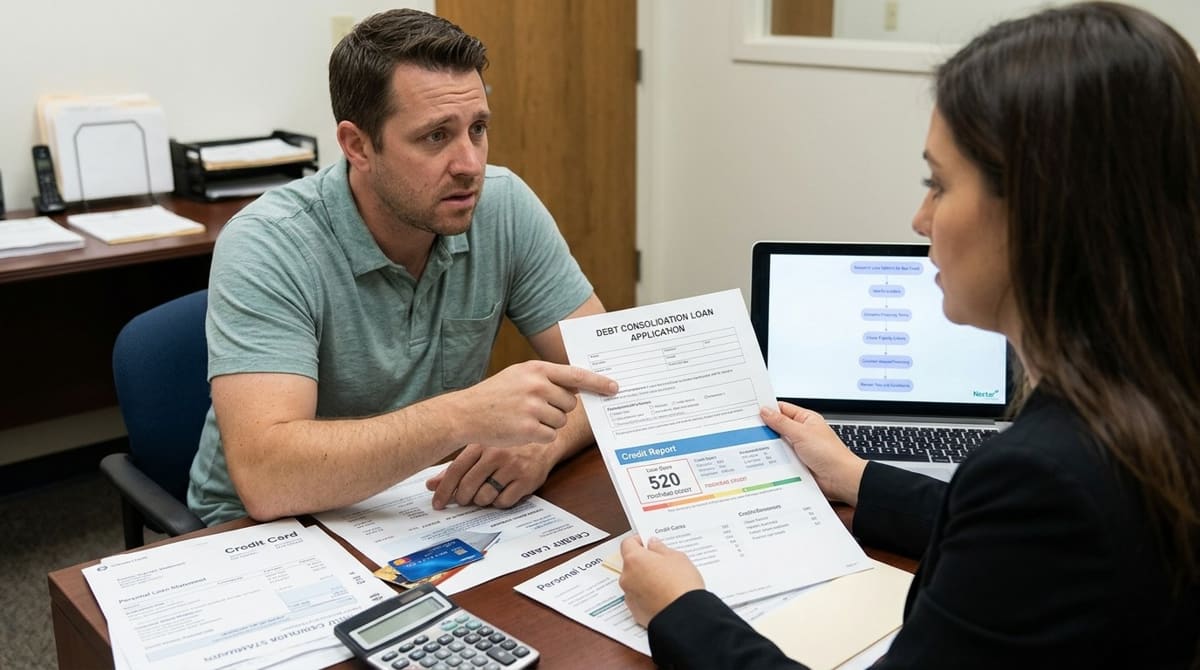
You can get a debt consolidation loan with bad credit. Lenders look at more than your score. They also look at your income and how much of it already goes to debt. To get started, check your credit reports, add up what you owe, and see what offers you qualify for without a hard credit check. Then compare the total cost of each offer and have the lender pay your creditors directly. A consolidation loan only helps if the new loan costs less than what you pay now.
If your credit has taken a hit, juggling several balances can feel like running in place. One payment and one end date sounds like relief, and it can be. But bad-credit loans often come with high rates and fees, so a loan can quietly cost more than the debt it replaces. This guide shows how to find out before you sign.
What Counts as "Bad Credit," and Can You Still Get Approved?
There's no single official line, but across standard credit score ranges, lenders usually call a FICO score below about 580 "poor," and many treat scores into the low 600s as "fair”. Different lenders draw the line in different places, so a score that gets a "no" from one can get a "yes" from another.
Your score is only part of the picture. Many lenders also look at:
Your income and how steady it is. A regular paycheck helps a lot.
Your debt-to-income ratio (DTI). This is the share of your monthly income that goes to debt payments. A lower number looks better.
How long you've been at your job.
Recent missed payments or accounts in collections.
So a low score doesn't automatically mean "no." But it does mean fewer lenders will say yes, and the ones that do will charge more.
Who this tends to work for: people with steady income whose main problem is high-interest credit card balances. If you're currently on payments and using a personal loan to pay off credit card debt would cut your interest, consolidation can make sense.
Who it may not work for: people whose income is unstable or already stretched thin, or whose debts are mostly past due. In that case a loan with a high rate can add pressure instead of taking it off. We'll cover other options below.
What a Bad-Credit Consolidation Loan Really Costs
This is the part many people skip, and it's the most important one.
Lenders that work with lower credit scores often advertise rates from the high teens up to about 36%. Some lenders also cap rates around that level. Your actual rate depends on your credit, income, and the loan length. Always check the current numbers on any lender's own site.
Some loans charge an origination fee, often taken out of the money you receive. If you borrow $10,000 with an 8% fee, you get $9,200 but repay the full $10,000 plus interest. Always ask whether the fee is taken from the loan amount.
The loan helps only if the total cost of the loan is lower than what you'd pay by staying put. Here's an example. These numbers are made up and rounded, just to show the math.
Say you owe $12,000 across three credit cards that average 28% interest, and you pay about $470 a month.
Stay on cards | Loan A | Loan B | |
Interest rate | 28% | 24% | 33% plus 8% fee |
Monthly payment | ~$470 | ~$470 | ~$575 |
Time to pay off | ~39 months | 36 months | 36 months |
Total you pay | ~$18,400 | ~$16,950 | ~$20,700 |
Loan A saves roughly $1,450 and gives you a firm end date. Loan B has a higher monthly payment and costs about $2,300 more than staying on the cards, even though it feels like a "fresh start." (If you kept paying $575 a month on the cards, you'd finish in about 29 months and pay around $16,600, so Loan B costs about $4,100 more than that.)
The takeaway is simple: don't judge a loan by its monthly payment. Judge it by the total you'll pay.
Step-by-Step: How to Get a Debt Consolidation Loan With Bad Credit
1. Check Your Credit Reports and Score
Start at AnnualCreditReport.com, where you can see your reports from the three credit bureaus for free. Look for mistakes, like accounts that aren't yours or payments marked late that you paid on time. Fixing errors can raise your score and lower the rates you're offered. Also note which accounts are hurting you most.
2. Add Up Your Debts and Figure Out Your DTI
Make a simple list: each debt, its balance, its interest rate, and its minimum payment. Add the minimums, then divide by your monthly income before taxes. That's your DTI. Lenders will calculate it too, so it helps to know it first. This list also shows which debts cost you the most, which are the ones most worth paying off with a loan.
3. Prequalify With a Soft Credit Check
Many lenders let you see likely rates without hurting your score. This is called prequalifying and uses a soft check. A hard check happens when you formally apply, and it can lower your score a few points for a while. Prequalify with several lenders so you can compare, and only apply to the one you pick.
4. Compare Offers by Total Cost, Not Monthly Payment
For each offer, write down the interest rate (APR), fees, loan length, and total repayment. Also check for prepayment penalties, which are charges for paying early. If you can, choose a lender that sends the money straight to your creditors. It makes it harder to spend the money by accident.
5. Boost Your Odds: Cosigner, Collateral, or Credit Union
If offers are weak, a few things can help:
A cosigner. Someone with stronger credit agrees to repay if you can't. This can lower your rate, but it puts their credit and finances on the line too. Only ask someone who understands that.
Collateral. When comparing secured and unsecured debt options, a secured loan is backed by something you own, like a car or savings. Rates may be lower, but if you stop paying, you can lose what you pledged.
A credit union. Credit unions are member-owned and often more flexible with lower scores. Federal credit unions also offer payday alternative loans capped at 28% APR, but those are small (up to $2,000), so they won't cover a large debt.
6. Apply, Pay Off Your Creditors, and Stop Using the Cards
Once you choose, apply and read the loan agreement before signing. Set up automatic payments so you never miss one. After the old balances are paid off, the hardest part begins: not running the cards back up. Many people find it easier to put the cards away or lower their limits. Otherwise you can end up with the loan and new card debt.
Where to Get a Debt Consolidation Loan With Bad Credit
You have a few types of places to look. Each has trade-offs.
Where | What to expect | Watch out for |
Credit unions | Often lower rates and more flexible rules for members | You must join; not all offer larger loans |
Online lenders | Quick prequalification, willing to work with lower scores | Higher rates and origination fees |
Banks | Can be a good fit if you already have a long history there | Usually stricter credit requirements |
Secured loans (home equity loan or HELOC) | Lower rates because your home backs the loan | You could lose your home if you can't repay |
401(k) loan | Easy to get, no credit check | Borrowing from your retirement; repayment may come due quickly if you leave your job |
Check any lender before you share personal details. Confirm they're licensed in your state through your state's financial regulator. Search the CFPB complaint database for their name, and look at your state attorney general's website and the Better Business Bureau. If a lender won't tell you the APR and fees up front, move on.
Alternatives If You Can't Get Approved or the Math Doesn't Work
A loan isn't the only way out. Depending on your situation, one of these may fit better.
Debt management plan (DMP). A nonprofit credit counseling agency can set up a plan where you make one monthly payment to them, and they pay your creditors. They often negotiate lower interest rates. You usually pay a small monthly fee, and the plan commonly asks you to close the cards in it. A DMP isn't a loan, so you don't need good credit to join. Look for a nonprofit agency and ask for all fees in writing.
A 0% balance transfer card. If your credit allows, moving balances to a card with a 0% introductory rate can give you time to pay without interest. Check the transfer fee and what the rate becomes when the intro period ends.
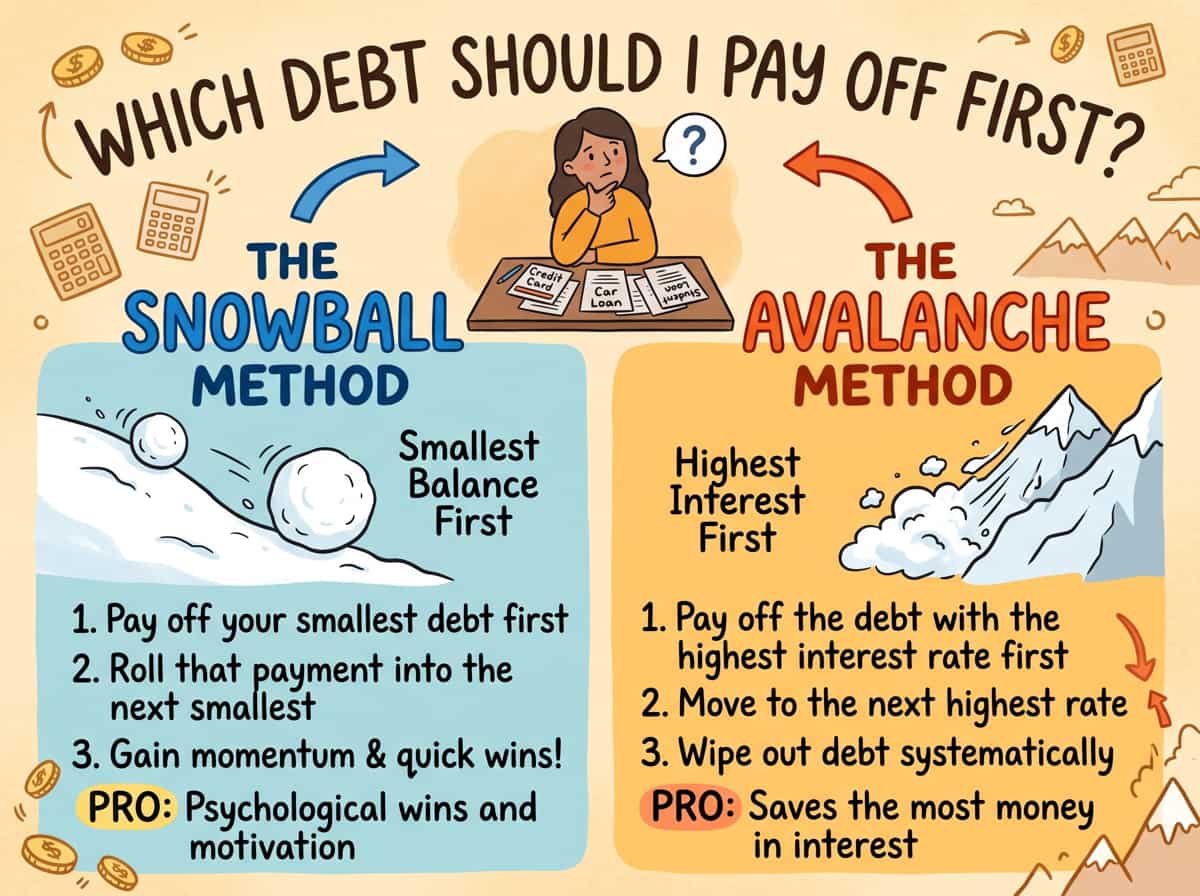
Pay-down strategies. You can compare the avalanche vs. snowball debt payoff methods and do this on your own:
Avalanche: pay extra toward the highest-interest debt first. This saves the most money.
Snowball: pay off the smallest balance first. This gives you quick wins to keep you going.
Learning credit card debt negotiation can help you get a lower rate, waived fees, or a hardship plan with a short, honest call.
Settlement and bankruptcy. These are bigger steps with serious trade-offs.
Debt settlement can damage your credit, creditors may refuse to settle or may sue, and forgiven debt can count as taxable income.
Bankruptcy has lasting effects too, so understand what steps to know before filing for bankruptcy and talk to a nonprofit credit counselor or a licensed bankruptcy attorney first.
When Consolidation Is the Wrong Move
A consolidation loan may not be the right answer if:
The new rate isn't lower than what you're paying now, once fees are counted.
Your spending habits haven't changed. A new loan won't fix a budget that doesn't balance.
Your debt is small enough that you could pay it off in a few months on your own.
If any of these sound like you, a free session with a nonprofit credit counselor is a good first step.
Consolidation Scams to Avoid
People with bad credit are common targets for scams, so slow down and watch for these signs:
Upfront fees for a "guaranteed" loan. Real lenders take their costs out of the loan or add them to what you repay. The FTC has taken action against companies that charged a fee for a consolidation loan and never delivered one.
Debt relief companies that charge before helping. Under federal rules, companies that sell debt relief by phone generally can't collect fees until they've settled at least one of your debts. Be very careful if someone asks for money first.
Claims of government connection. No legitimate lender needs to pretend to be a government program.
Pressure to act now, or requests for your bank login.
Before you apply, confirm that the lender is licensed, has a complaint record you can check, and states the APR and fees clearly up front.
If you think you've run into a scam, report it at Report Fraud FTC or to the CFPB.
Next Steps
Getting a debt consolidation loan with bad credit is possible, but the best loan is the one that actually lowers what you pay and that you can afford every month. Check your credit reports, total your debts, and compare prequalified offers by total cost. If the numbers don't work, a nonprofit credit counselor or professional debt relief services can walk you through other options. You don't have to figure this out alone, and a calm, careful plan usually beats a fast decision.
Frequently Asked Questions
What credit score do you need for a debt consolidation loan?
There's no single minimum. Some lenders approve scores in the 500s, though rates will be high. Lenders also weigh your income and debt-to-income ratio, so a low score isn't automatically a "no."
Will a consolidation loan hurt my credit?
It can dip a little at first because of the application and the new account. Over time, on-time payments and lower card balances can help your score. Missed payments will hurt it.
Can I consolidate with no credit check?
Be careful. Loans advertised with "no credit check" often have very high costs. Prequalifying with a soft check is a safer way to see your options.
Is a secured consolidation loan a good idea with bad credit?
It can lower your rate, but you could lose the asset you pledge if you can't pay. Only consider it if your payments fit comfortably in your budget.
Is a debt management plan better than a loan?
It can be, especially if you can't qualify for a loan at a fair rate. A nonprofit counselor can look at your whole situation and help you compare.
Ready to Get Started?
Get a free consultation with a certified debt consultant to see if debt settlement is right for you.
Get Free ConsultationAbout the Author
Bhupinder Bajwa
.
Related Articles
What Are Debt Relief Loans?
10 min read
Which Debt Should I Pay Off First?
10 min read
What to Know Before Getting a Debt Consolidation Loan
10 min read
Low Income Debt Relief Programs And Options
14 min read
4 Common Debt Consolidation Mistakes to Avoid
10 min read
Can Debt Consolidation Really Help?
13 min read
Get Your Free Consultation
Speak with a certified debt consultant to explore your options.
Start NowNo obligation • Free consultation
Related Posts
- What Are Debt Relief Loans?
10 min read
- Which Debt Should I Pay Off First?
10 min read
- What to Know Before Getting a Debt Consolidation Loan
10 min read
- Low Income Debt Relief Programs And Options
14 min read