What Are Debt Relief Loans?
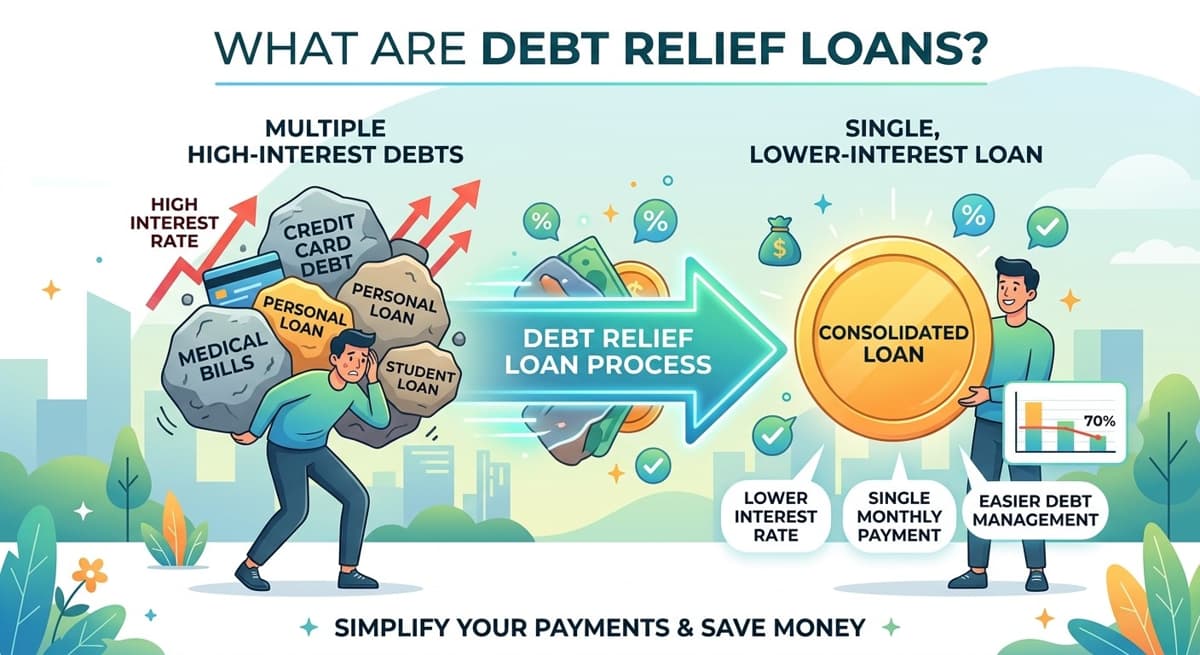
A debt relief loan is a loan you use to pay off other debts, usually credit cards, so you make one monthly payment instead of many. Ideally, it comes with a lower interest rate and a fixed end date, which can make your debt easier to manage and cheaper to clear.
If you moved to the U.S. from South Asia, or your family did, you may be juggling more than most: building credit from zero, helping relatives back home, or covering family business costs. Card balances on top of that get heavy fast.
What Are Debt Relief Loans?
A debt relief loan is a loan taken out to pay off other debts. You borrow one lump sum, use it to clear your credit cards or other balances, and then repay the new loan in fixed monthly payments over a set number of years. Instead of many due dates, you have one.
These loans are most often used for credit card balances. They can also cover medical bills, personal loans and store cards. They are usually not the right tool for federal student loans, because rolling those into a private loan can mean losing protections such as income-based repayment. Mortgages and car loans are normally handled separately.
How Do Debt Relief Loans Work?
Add up what you owe. List every balance, interest rate and monthly payment, so you know exactly what you are trying to fix.
Check your options. Many lenders show an estimated rate with a soft credit check, which does not affect your score.
Apply and get approved. The lender reviews your income, credit history and current debts, then offers an amount, rate and term.
Receive the money. Some lenders pay your creditors directly. Others send the funds to you, and you pay off the balances yourself.
Make one monthly payment. Most of these loans have a fixed rate and end date, so you always know what you owe and when you'll be done.
Stop adding new debt. The loan only helps if the paid-off cards stay paid off.
Here is a simple example. Say you owe $15,000 on credit cards at about 24% interest. These numbers are for illustration only; your rates will differ.
Option | Monthly payment | Time to pay off | Total interest |
Keep the cards (24%) | $334 | About 10 years | About $23,600 |
5-year loan (12%) | $334 | 5 years | About $5,000 |
Types of Debt Relief Loans
There is more than one way to borrow your way out of debt. Each has its own trade-offs, so it helps to know the main options before you apply.
Personal debt consolidation loan
Debt consolidation loans are the most common choice. It is usually unsecured, which means you don't put up your home or car. Rates depend on your credit and income.It suits people with steady income and fair-to-good credit who want a clear payoff date and are weighing whether debt consolidation can really help.
Home equity loan or HELOC
These let you borrow against the value of your home, often at lower rates. The big risk: your home is the collateral. If you can't keep up with payments, you could lose it. Think carefully before turning card debt into house debt.
401(k) loan
Some employer plans let you borrow from your own retirement savings. There is no credit check, but you lose investment growth, and if you leave your job, the balance may be due quickly. Unpaid amounts can be taxed and penalized.
Credit union and community lender options
Credit unions and community development lenders often offer lower rates and more flexible rules than big banks. Some also serve newcomers and people with thin credit files. Ask whether they accept an ITIN or look at income, not just credit scores.
Balance transfer card
Not a loan, but a popular alternative. You move balances to a card with a low or 0% introductory rate. It only works if you can pay it off before the promotional period ends.
Debt Relief Loan vs. Debt Settlement vs. Debt Management Plan vs. Bankruptcy
People often mix these up. They are very different, especially in how they affect your credit and your wallet, so it helps to compare your debt relief options side by side.
Debt Relief (Consolidation) Loan
With a debt consolidation service, a new loan pays off your old debts, so you make just one payment. Your credit score may dip a little at first, but it can improve over time with on-time payments. You will pay interest, plus possible fees. It is best for people with steady income and decent credit.
Debt Settlement
In a debt settlement program, a company negotiates with your creditors to accept less than you owe, usually after you stop paying them. This can seriously damage your credit. You will pay company fees, and any forgiven debt may be taxable. It is a last resort and needs great caution.
Debt Management Plan
Through a credit counselling and debt management plan, a counselor negotiates lower rates with your creditors, and you make one monthly payment to the agency. . The effect on your credit is mixed, and your cards are often closed. There is usually a small monthly fee. It is best for people who can repay in full but need lower rates.
Bankruptcy
Bankruptcy is a court process that erases or restructures your debt. The impact on your credit is severe and stays on your report for 7 to 10 years. You will also pay legal and court fees. It is meant for debt that is truly unmanageable when other professional debt relief services are no longer enough.
Which fits you? If you can afford the payments but the interest is crushing you, a loan or a management plan may help. If you are already behind and falling further, talk to a nonprofit credit counselor before you sign anything. A free session can show you which path makes sense.
Pros, Cons and Real Costs
Pros
One payment instead of many
Often a lower interest rate than credit cards
A fixed end date, so you can see the finish line
Can help your credit over time as balances drop and payments stay on time
Cons and risks
Higher rates if your credit is weak, sometimes no better than your cards
Origination fees, often taken out of the loan before you receive it
A longer term can lower your monthly payment but raise the total interest you pay
Secured loans put your home or savings at risk
The biggest trap: running the cards back up, leaving you with the loan and new card debt, which is one of the most debt consolidation mistakes to avoid
How to read the true cost
Look at the APR, not just the interest rate. APR includes fees, so it shows the real yearly cost of borrowing. For example, a $15,000 loan with a 5% origination fee means about $750 comes off the top, so you receive less than you borrow. Then multiply your monthly payment by the number of months to see the total you will repay. Check current average rates at federalreserve.gov and consumerfinance.gov, so a lender's offer doesn't catch you off guard.
Debt Challenges South Asian Families in the U.S. Often Face
Every family's story is different, and none of this applies to everyone. But some situations come up often, and knowing them can help you find the right solution sooner.
Starting over with no U.S. credit history
Most U.S. lenders can't see the credit history you built in India, Bangladesh, Pakistan, Nepal or Sri Lanka. You may start with no score at all, which can lead to high-interest cards or store financing. On-time payments and low balances build a score over time.
Supporting family abroad and community lending
Many households send money home for parents, siblings, weddings, medical care or school fees. Some also borrow from relatives or join community savings groups. These can be lifelines, but they can strain a budget too. Before you co-sign a loan for a relative, ask yourself: could I pay this if they can't?
Immigration costs and family business debt
Visa, green card and legal fees add up. So do the costs of a family-run shop, restaurant, motel or taxi business. When business loans and personal cards get mixed together, it is hard to see what is actually owed. Keeping them separate makes any debt plan clearer, especially if you ever need to settle SBA loan debt.
Language barriers and affinity scams
Scammers know people trust someone who speaks their language or shares their community. Be careful with anyone who approaches you through a community group, a place of worship or a social media post promising to wipe out your debt. Real help never rushes you.
Need help in your language? Ask trusted debt relief solutions whether they offer interpreters or services in Bengali, Hindi, Urdu, Punjabi, Gujarati, Tamil or Nepali. Some community organizations can also point you to trusted help.
How to Qualify and Apply
Lenders usually look at four things: your credit score and history, your income and job stability, your debt-to-income ratio (how much of your monthly income already goes to debt payments), and a valid ID. Rules about a Social Security number versus an ITIN differ by lender, so ask before you apply.
Here is a simple checklist:
Check your credit reports for free at annualcreditreport.
Prequalify with a few lenders using a soft check.
Compare APRs, fees and loan terms, not just the monthly payment.
Read the fine print for origination fees and early-payoff penalties.
Choose a lender that pays your creditors directly, if possible.
If you don't qualify, don't panic. You can build credit with a secured card or credit-builder loan, ask a trusted person with good credit to co-sign (keeping the risks above in mind), or explore debt relief programs and options with a nonprofit credit counselor.
Conclusion and Next Steps
A debt relief loan can turn a messy pile of payments into one clear plan, but only if the new rate is lower and you stop adding new debt. It is a tool, not a magic fix.
Your next step: list what you owe, check a few prequalified offers, and book a free session with a debt relief expert to compare your options. Take your time. The right choice is the one you fully understand and can afford.
Frequently Asked Questions
Are debt relief loans the same as debt settlement?
No. A debt relief loan pays your debts in full using new borrowed money. Debt settlement asks creditors to accept less than you owe, usually after you stop paying, which can badly damage your credit and may come with fees.
Will a debt relief loan hurt my credit score?
It might dip slightly at first because of the credit check and a new account. Over time, on-time payments and lower card balances often help your score. Missing payments, though, will hurt it.
Can I get one without a Social Security number?
Sometimes. Some lenders, especially credit unions and community lenders, accept an ITIN, but many do not. Ask each lender before you apply, so you avoid unnecessary credit checks.
What credit score do I need?
There is no single cutoff, since each lender sets its own. A higher score usually means a lower rate. If your score is low or you have no U.S. credit history, a credit union or a co-signer may open more doors.
Can I get one with bad credit?
It is possible, but the rate may be high enough that it doesn't save you money. Compare the total cost with what you pay now. A nonprofit credit counselor can often suggest better options.
Do debt relief loans affect my immigration status?
Taking out or repaying a loan is not, by itself, an immigration problem. But immigration rules are complex and every case is different. If you have concerns, talk to a licensed immigration attorney before making big financial decisions.
Ready to Get Started?
Get a free consultation with a certified debt consultant to see if debt settlement is right for you.
Get Free ConsultationAbout the Author
Bhupinder Bajwa
.
Related Articles

How Do Debt Management Plans Work
9 min read

What’s It Like to Go Through Debt Relief
10 min read
Which Debt Should I Pay Off First?
10 min read

How to Negotiate Your Credit Card Debt
11 min read

Does Debt Settlement Work? What to Know Before You Start
11 min read
What to Know Before Getting a Debt Consolidation Loan
10 min read
Get Your Free Consultation
Speak with a certified debt consultant to explore your options.
Start NowNo obligation • Free consultation
Related Posts
- How Do Debt Management Plans Work
9 min read
- What’s It Like to Go Through Debt Relief
10 min read
- Which Debt Should I Pay Off First?
10 min read
- How to Negotiate Your Credit Card Debt
11 min read