What to Know Before Getting a Debt Consolidation Loan
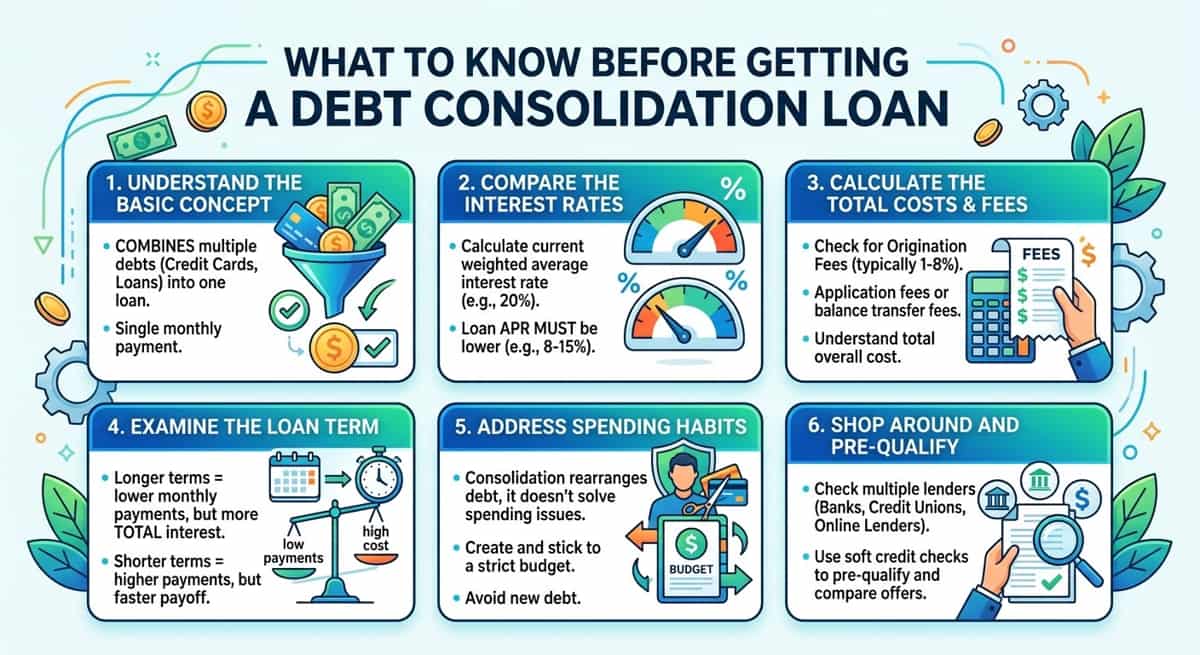
A debt consolidation loan combines several debts into one loan with one monthly payment. It helps only if the new loan costs you less overall and you stop adding new debt.
If you are juggling credit cards, a car loan, maybe some medical bills, and sending money to your family back home, one simple payment sounds like a relief. For many people, it is. But many of us arrive in the U.S. with no credit history, learn the system as we go, and say yes to the first offer that shows up..
What Is a Debt Consolidation Loan and How Does It Work?
A debt consolidation loan is a new loan you use to pay off other debts. After that, you only repay the new loan, in equal monthly payments, until it is gone.
Say you have three credit cards, each with a different due date and interest rate. With a consolidation loan, the lender pays off those cards (or sends you the money to do it). From then on, you make one payment a month, to one lender, at one fixed rate.
People commonly consolidate credit cards, store cards, medical bills, and older personal loans. Most loans last between two and seven years.
A few terms you will see along the way:
APR: the yearly cost of borrowing, including some fees.
Term: how long you have to repay the loan.
Unsecured loan: no collateral needed. Most consolidation loans are this type.
Secured loan: backed by something you own, like a car or home. If you stop paying, the lender can take it.
When a Debt Consolidation Loan Makes Sense
It can help when:
The new interest rate is clearly lower than what you pay on your cards today. Add up what you pay across all your debts and compare it to the loan's APR.
You can comfortably afford the payment. After paying it, you should still have room for rent, food, and the money you send home.
Your credit is strong enough to qualify for a rate that is actually better than your cards.
It can backfire when:
The loan runs much longer. A lower monthly payment can hide a much bigger total bill, because you pay interest for more years.
Fees eat up the savings. Some lenders take a fee out of the loan before you get the money.
The cards fill up again. Once the cards show a zero balance, spending on them again can leave you with the loan and new card debt.
The real problem is income, not interest. If you are short every month because of a job loss, fewer hours, or big family expenses, a new loan will not fix that. A nonprofit credit counselor can help you look at the bigger picture.
Situation | Good fit? | Why |
High-interest card debt, steady income, decent credit | Often yes | A lower rate can save real money |
Good credit, but you keep spending on the cards | Risky | You may end up with double the debt |
Income dropped recently, payments already hard | Not yet | Talk to a nonprofit counselor first |
Small balance you could pay off in a few months | Usually no | Fees may cost more than you save |
What South Asian Borrowers in the U.S. Should Check First
Most debt guides are written as if everyone grew up with U.S. credit cards and a family that understood the system. Many of us did not. Here are the things that matter most for our situations.
If you are new to U.S. credit
Credit history from India, Pakistan, Bangladesh, Sri Lanka, or Nepal usually does not follow you here. So even if you paid every bill on time for ten years back home, lenders here may see you as brand new. That can mean higher rates or smaller loan offers. Some services say they can bring in credit data from other countries, but they only work with certain countries and lenders. If you try one, check it carefully first.
Your visa or tax ID
Lenders set their own rules. Some work with people on H-1B or F-1 OPT visas, green card holders, and citizens. Some require a Social Security number, while others accept an ITIN. Check a lender's rules before you apply. Each full application can add a hard inquiry to your credit report, and you do not want to collect them for nothing.
Family responsibilities
Sending money to parents, helping a sibling with tuition, supporting a relative who is moving here: these are real, regular expenses. Put them in your budget before you pick a loan payment. A payment that looks fine on paper can fall apart in the month a family member needs urgent help.
Money borrowed from family or community
Many of us have borrowed from a relative, a friend, or a community savings group. These loans are often unwritten, built on trust, and often interest-free. Think carefully before folding them into a bank loan. Decide on purpose which debts to include. Often it makes sense to keep paying the informal ones on the schedule you agreed on.
If you avoid interest for religious reasons
If paying interest goes against your beliefs, that is a serious concern and worth taking seriously. A qualified religious scholar can guide you on what is acceptable for your faith. A nonprofit credit counselor can also talk through options like negotiating with your creditors.
How Much Does a Debt Consolidation Loan Really Cost?
Interest rate (APR) and loan length
Your rate depends mostly on your credit history and score. For a deeper breakdown of how rates and repayment terms work. Check out: Consolidating credit card debt.
People with limited or fair credit may see rates close to what they already pay on credit cards, and then consolidation saves little.
The loan length matters just as much. A longer loan lowers your monthly payment but usually costs you more in total interest.
Fees to look for
Origination fee: a one-time fee, often a percentage of the loan, usually taken out of the money you receive.
Prepayment penalty: a charge for paying the loan off early. Many lenders do not have one, so ask.
Late fees: what you pay if you miss a due date.
Before you sign, ask one simple question: “What is the total amount I will pay back, including all fees?”
Two examples (illustrative numbers, rounded)
These are made-up examples to show how the math can work out. Your numbers will be different.
What you pay now | After consolidating | Result | |
Example 1: $15,000 in card debt | 24% APR, paying $450 a month. About 56 months to pay off, about $10,000 in interest. | Loan at 12% APR for 3 years with a 5% fee ($750). About $498 a month, about $2,900 in interest plus the fee. | Saves roughly $6,300 |
Example 2: $15,000 in card debt | 19% APR, paying $600 a month. About 32 months to pay off, about $4,250 in interest. | Loan at 17% APR for 7 years. About $307 a month, about $10,750 in interest. | Costs roughly $6,500 more |
In Example 2, the payment drops by almost half, which feels like a win. But you would pay interest for four and a half more years, and the total cost goes up a lot. That is why the total cost matters more than the monthly payment.
Who Qualifies? Credit Score, Income, and Documents
Lenders usually look at four things:
Your credit score and credit history
Your income and how steady it is
Your debt-to-income ratio (how much of your monthly income already goes to debt)
How long you have been at your job
Documents lenders commonly ask for include a government ID, a Social Security number or ITIN (depending on the lender), recent pay stubs, tax returns, and bank statements.
What happens to your credit score? When you apply, the lender does a hard inquiry, which can cause a small, temporary dip. After that, paying off your cards lowers your credit card balances compared to your limits, which can help your score over time.
A smart move before you apply: many lenders offer pre-qualification with a soft check, which does not affect your score. Use it to compare offers from a few lenders before you choose one.
Alternatives to a Debt Consolidation Loan
A loan is not your only option. Depending on your situation, exploring alternative debt options such as tailored debt management or relief programs might fit your budget better and save you thousands.
0% balance transfer cards
A balance transfer card lets you move card debt to a new card with 0% interest for a limited time, often 12 to 21 months. Most charge a transfer fee, often 3% to 5%. It works well if you can pay off the balance before the offer ends. If you cannot, the rate jumps and you are back where you started.
Nonprofit debt management plan
A nonprofit credit counseling agency, such as one affiliated with the National Foundation for Credit Counseling (NFCC), can set up a plan where you make one payment to the agency, and it pays your creditors. The agency may be able to lower your interest rates. There is usually a small monthly fee, and your credit cards are typically closed while you are on the plan.
Talking directly to your creditors
Many credit card companies have hardship programs. If you lost income or had an emergency, call and ask. You may get a lower rate, a lower payment, or more time. It costs nothing to ask.
Borrowing against your home or retirement savings
A home equity loan or a 401(k) loan may offer lower rates, but the risk is serious. If you cannot repay a home equity loan, you could lose your home. Money taken from a retirement account can set back your savings and may have tax effects.
Debt settlement and bankruptcy
A professional debt settlement program allows you to negotiate and pay significantly less than you owe.
Bankruptcy option is a legal process with long-lasting effects. If you are thinking about either one, speak with a licensed attorney first.
Debt Relief Scams That Target Immigrant Communities
People in tough spots are often targeted by scammers, and new arrivals can be especially vulnerable. Watch out for:
Fees up front. For services sold over the phone, federal rules generally bar companies from charging you before they have actually settled or reduced your debt.
Big promises. Claims like “we will erase your debt” or “we will fix your credit” are red flags.
Telling you to stop paying your creditors and send the money to them instead.
Pressure. “This offer ends today” is a warning sign, and so is any talk of a special government program you have to pay to join.
To check a company, search your state attorney general's website, the CFPB's complaint database, and the Better Business Bureau. If you run into a scam, report it to the FTC and the CFPB.
One more thing: a recommendation from someone in your own community does not guarantee a company is honest. Scammers use word of mouth, too. Check any company yourself, even if a friend or relative vouches for it.
Step-by-Step Checklist Before You Apply
List every debt. Write down each balance, interest rate, and minimum payment.
Check your credit reports. Get them free at AnnualCreditReport.com, and dispute any mistakes.
Build a real monthly budget. Include the money you send to family.
Pre-qualify with two or three lenders. Use soft checks only.
Compare the total cost, not just the monthly payment.
Read the loan agreement. Look for fees, penalties, and the final amount you will repay.
Plan to stay out of new debt. Consider speaking with a nonprofit credit counselor before you sign anything.
Final Thoughts and Next Steps
A debt consolidation loan is a tool, not a cure. It can save you money and make life simpler if the numbers work and you stop adding new debt. It can also cost you more if you rush in. Take a little time to compare your options, ask questions, and look at the total cost.
A good next step is to speak with a nonprofit credit counselor, or reach out to Ooraa Debt relief solution for a conversation about your situation. There is no pressure and no shame in asking for help.
Ready to Get Started?
Get a free consultation with a certified debt consultant to see if debt settlement is right for you.
Get Free ConsultationAbout the Author
Bhupinder Bajwa
.
Related Articles
Low Income Debt Relief Programs And Options
14 min read
4 Common Debt Consolidation Mistakes to Avoid
10 min read
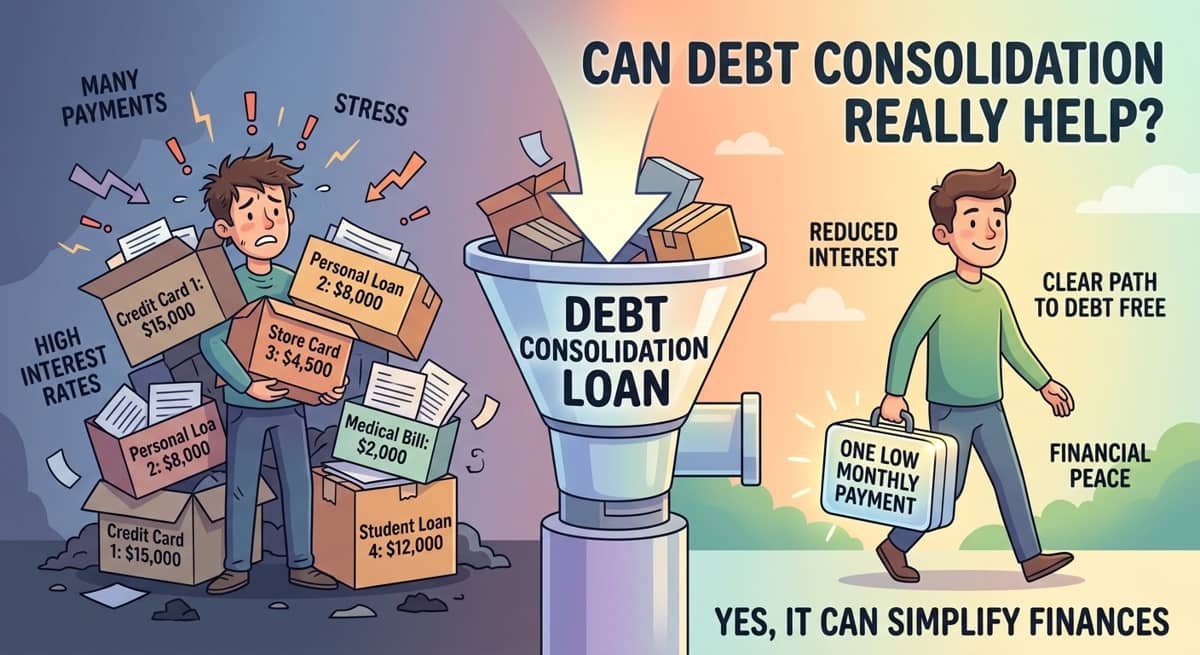
Can Debt Consolidation Really Help?
13 min read
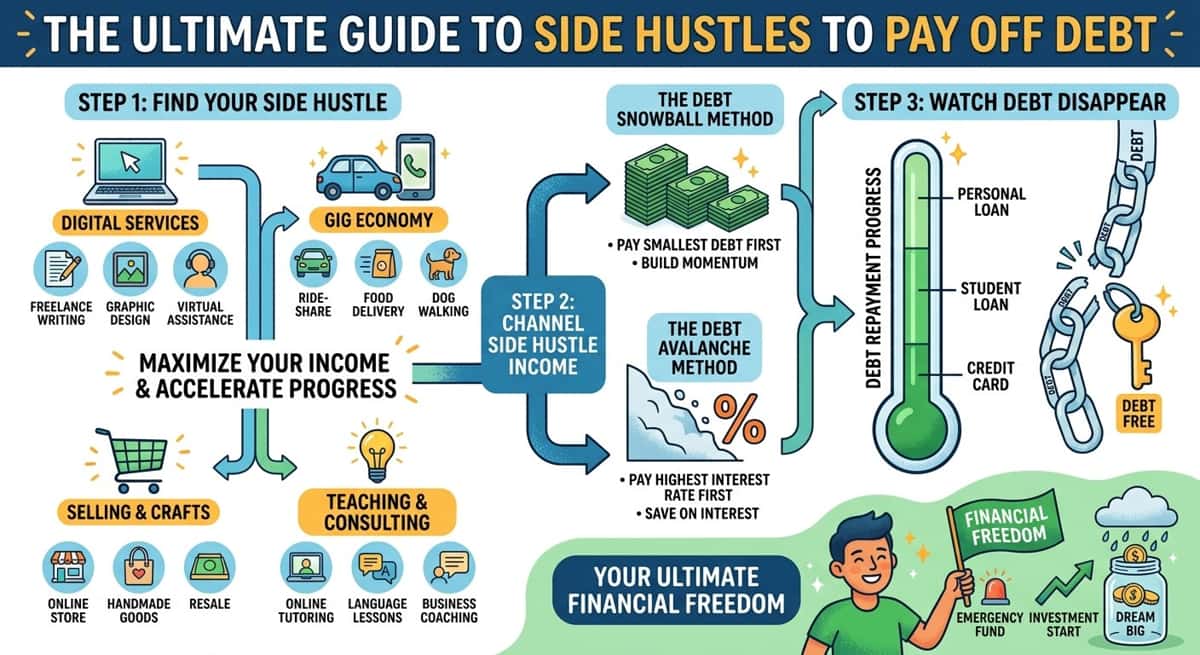
The Ultimate Guide To Side Hustles To Pay Off Debt
12 min read
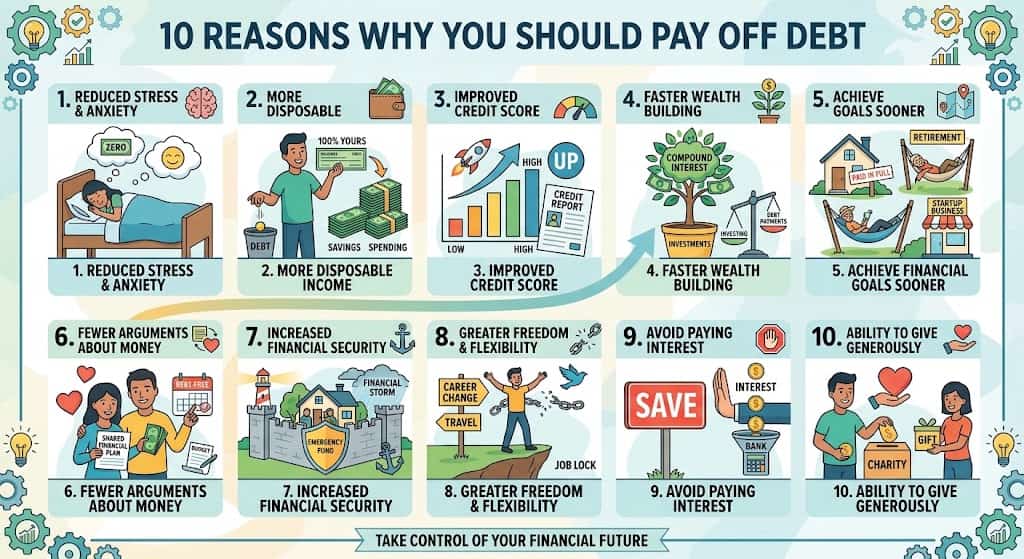
10 Reasons Why You Should Pay Off Debt
9 min read
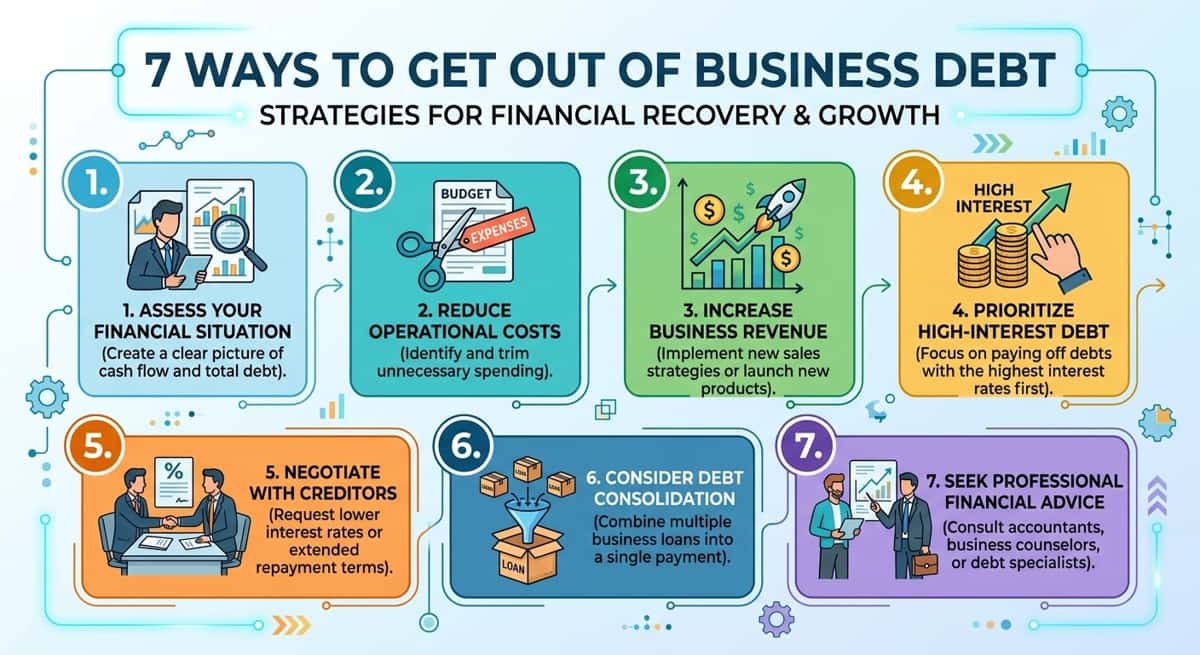
7 Ways To Get Out Of Business Debt
11 min read
Get Your Free Consultation
Speak with a certified debt consultant to explore your options.
Start NowNo obligation • Free consultation
Related Posts
- Low Income Debt Relief Programs And Options
14 min read
- 4 Common Debt Consolidation Mistakes to Avoid
10 min read
- Can Debt Consolidation Really Help?
13 min read
- The Ultimate Guide To Side Hustles To Pay Off Debt
12 min read