Credit Score Ranges: What They Mean and How They Work
Your credit score is a three-digit number that tells lenders how likely you are to repay what you borrow. It affects whether you get approved for an apartment, a car loan, a credit card or a home, and how much interest you pay.
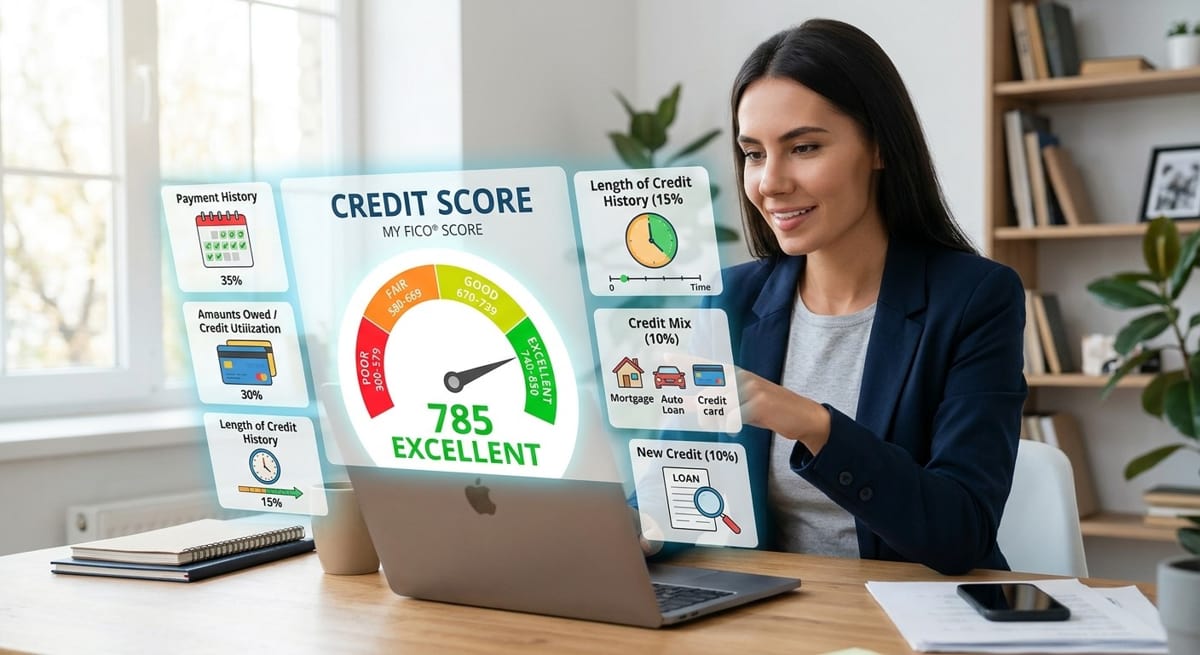
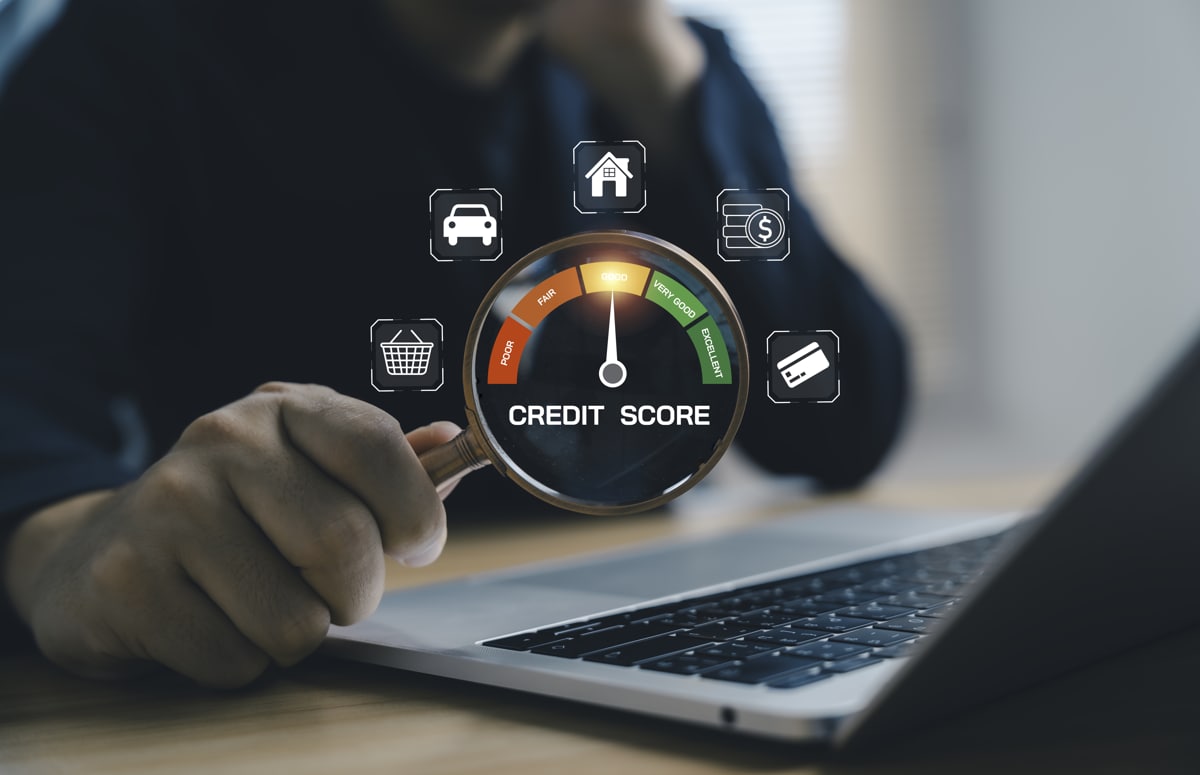
Most FICO Scores run from 300 to 850. They fall into five ranges: Poor (300–579), Fair (580–669), Good (670–739), Very Good (740–799) and Exceptional (800–850). The average American FICO Score is 714, which sits in the Good range.
If you are new to the U.S., rebuilding after a hard stretch with debt, or helping a parent or sibling sort out their finances, this guide is for you. It explains what each range means, how scores are calculated, and what to do next.
Credit Score Ranges at a Glance
There are two main scoring companies in the U.S.: FICO and VantageScore. Both use a 300 to 850 scale, but they draw the lines between ranges in different places.
FICO Score 8
Range | Label |
300–579 | Poor |
580–669 | Fair |
670–739 | Good |
740–799 | Very Good |
800–850 | Exceptional |
VantageScore 3.0
Range | Label |
300–600 | Poor |
601–660 | Fair |
661–780 | Good |
781–850 | Excellent |
Notice that a 665 is “Fair” at FICO but “Good” at VantageScore. The number is the same, but the label changes with the model.
Some FICO scores built for auto lenders and credit card companies use a wider scale, from 250 to 900. So don’t be surprised if a lender shows you a score that looks different from the one in your banking app.
What Each Credit Score Range Means in Real Life
A score is just a number until you try to rent a home, buy a car or apply for a card. Here is what each range usually looks like in practice, using FICO labels.
Poor (300–579)
Lenders see higher risk here. You may be denied regular credit cards and loans, asked for a larger security deposit on an apartment or utilities, or offered only secured cards. Approvals that do come usually carry high interest rates.
Fair (580–669)
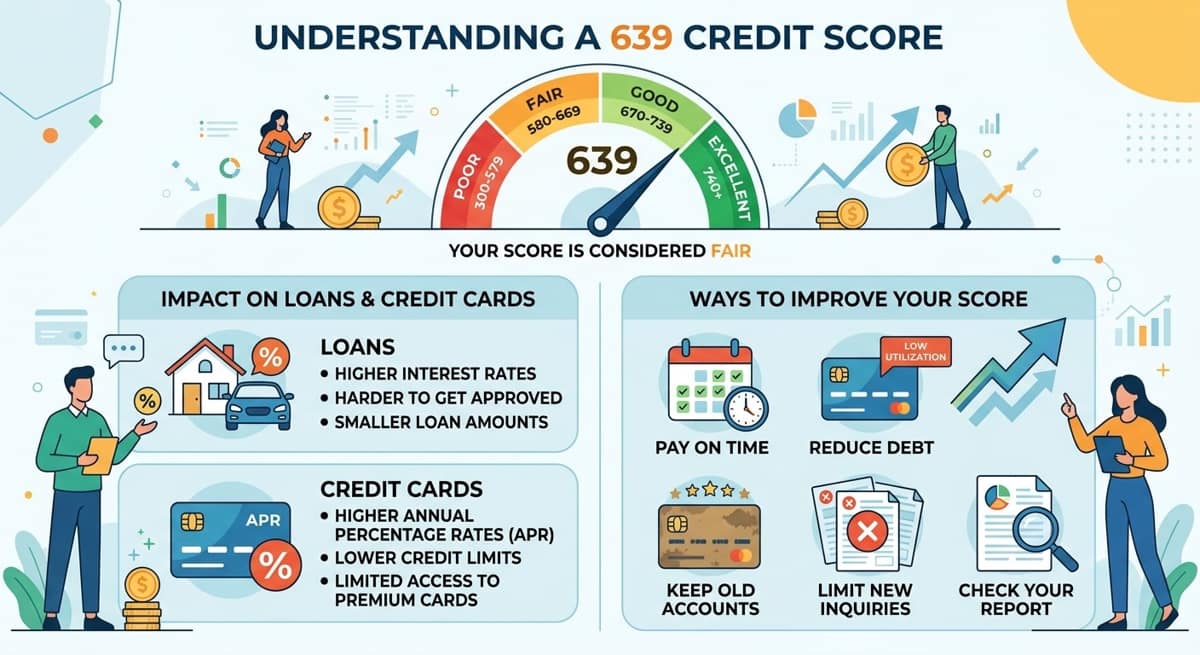
You can get approved for some loans and cards, but the terms are less friendly. A car loan might come with a rate several points higher than a neighbor with a better score pays. Many people land here after a few late payments or a high card balance.
Good (670–739)
This is where most Americans are. You can qualify for many credit cards, auto loans, mortgages and debt consolidation loans at reasonable rates. Moving from the bottom of this range to the top can still save you real money over the life of a loan.
Very Good (740–799)
Lenders see you as a low-risk borrower. You’re likely to be approved for most products and offered better rates and rewards cards. Landlords also tend to approve applications in this range quickly.
Exceptional (800–850)
You’re likely to qualify for the best offers. But you don’t need a perfect 850. The difference between 780 and 830 rarely changes what a lender offers you, so don’t stress about squeezing out every last point.
How Credit Scores Work: The Five Factors
Your score comes from the information in your credit reports, which are kept by three companies: Equifax, Experian and TransUnion. A scoring model looks at five things and gives each a different weight.
Factor | Weight (FICO) | What it means |
Payment history | 35% | Do you pay on time? |
Amounts owed | 30% | How much of your limit are you using? |
Length of credit history | 15% | How long have your accounts been open? |
New credit | 10% | Have you applied for a lot of credit recently? |
Credit mix | 10% | Do you have different types, like cards and loans? |
Payment history and amounts owed together make up 65% of a FICO Score. That is where to focus.
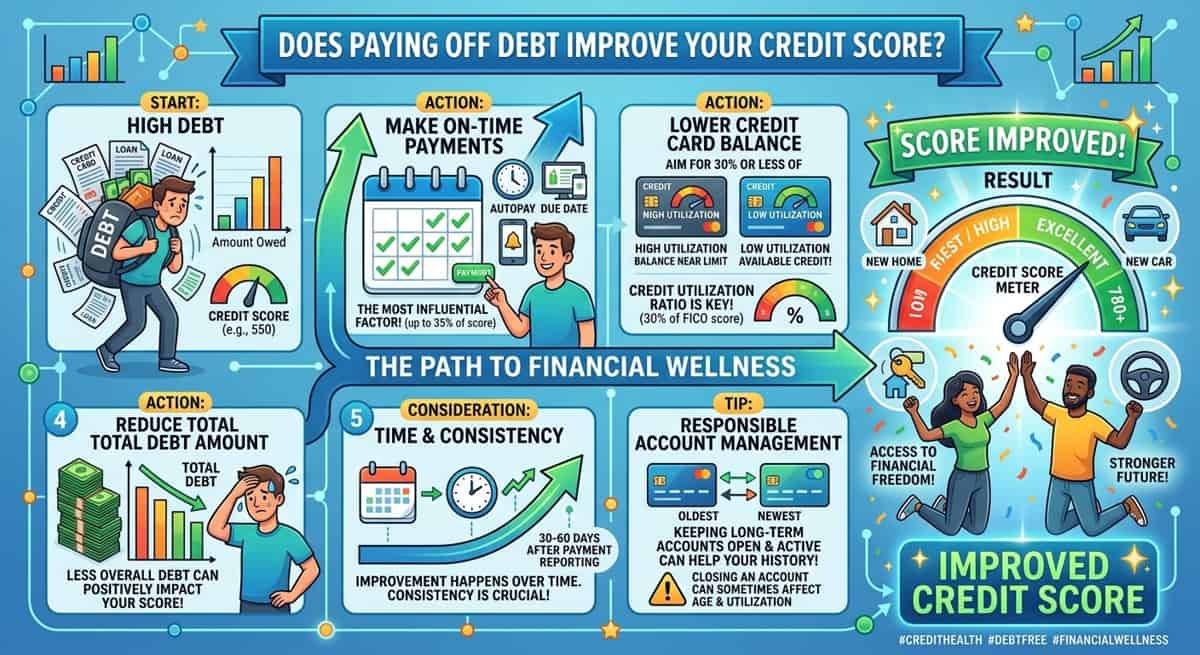
Two habits matter most. First, pay every bill by its due date, even if it’s only the minimum. A single payment that’s 30 days late can drop your score and stay on your report for years. Second, try to keep your card balances well below your limits if you are juggling multiple cards. Figuring out which debt to pay off first can help you bring your balances down faster. Using less than 30% of your limit is a common rule of thumb, and lower is better.
Your score does not include your income, your job, where you were born, your nationality or your immigration status. It only reflects how you’ve handled credit.
Why You Have More Than One Score
Many people are surprised to find their scores differ from app to app. That’s normal. FICO and VantageScore each have several versions, and each bureau may hold slightly different information about you. A free score on your phone may not match the one a lender pulls.
This matters most when you buy a home. In April 2026, federal housing agencies announced that Fannie Mae, Freddie Mac and the FHA would accept two newer models, VantageScore 4.0 and FICO Score 10T, for mortgages. Fannie Mae and Freddie Mac later opened VantageScore 4.0 to all approved lenders, though Classic FICO is still available. Lenders must use the same model for everyone on a single loan.
The practical advice is simple: when you apply for a mortgage, ask your lender which score model they use. Then look at your own reports so you aren’t surprised.
Credit Scores for South Asian Newcomers and Families in the U.S.
Credit works differently here than in many countries, and it can feel unfair when you’ve managed money well your whole life. These are the situations we hear about most.
Starting at Zero in the U.S.
You may have paid every loan and card on time back home, but that history generally does not follow you to the United States. Most newcomers start with no score at all. That isn’t a bad score. It just means lenders have nothing to look at yet. The good news is that you can build one, and many people reach the Good range within a couple of years of steady habits.
SSN, ITIN and Foreign Credit History Options
A Social Security number (SSN) makes it easiest to open accounts. If you don’t have one yet, an Individual Taxpayer Identification Number (ITIN) can often be used in the meantime, although your history isn’t automatically merged if you get an SSN later. Check with your lender on how to link the two.
Some newcomers can also use their home-country record. Nova Credit works with partner lenders so newcomers can apply using their foreign credit history. Which countries and lenders are covered changes over time, so check their site before you plan around it.
If you’re starting from nothing, a secured credit card is a common first step. You put down a deposit, use the card for small purchases and pay it off each month. Just make sure the card reports to all three bureaus.
Joint Accounts, Co-Signing and Authorized Users
Helping family is a strong tradition in many households. Co-signing a loan or sharing a credit card can open doors for a cousin or a new arrival. But if the other person pays late, your score drops too, and you are fully responsible for the debt. Before you co-sign, ask yourself whether you could cover the payments if you had to.
Being added as an authorized user on a family member’s old, well-managed card can help your score, provided the issuer reports it to the bureaus.
Savings Circles and Cash Habits That Don’t Build a Score
Many families save through informal community groups, pay rent in cash or send money home regularly. These are smart ways to manage money, but they usually aren’t reported to credit bureaus, so they don’t build a score. Look for ways to add reported payments, like a card, a credit-builder loan or a rent-reporting service.
Where Does Your Score Stand? Averages and Benchmarks
It helps to know how you compare. The average FICO Score was 714 in FICO’s Fall 2026 report. FICO also found that a record 48.1% of consumers had a score of 750 or higher. The average VantageScore 4.0 was 701, about 13 points below the FICO average. The gap exists because the two companies use different formulas, not because one is wrong.
If your score is lower than average, you are far from alone. Scores can move up as your habits change.
How to Check Your Scores and Reports for Free
You can get your credit reports from Equifax, Experian and TransUnion at AnnualCreditReport.com, the official site. It’s free, and the bureaus currently let you check each report weekly. Many banks and card companies also show a free score in their apps, and myFICO offers a free way to view your FICO Score. Be careful with sites that ask for a card number “just to see” your report.
Reading Your Report and Disputing Errors
Look closely for mistakes. Common ones include a misspelled or reversed name, which is more likely with names that have been transliterated into English, duplicate accounts, old addresses and accounts that aren’t yours.
If you find an error, you can file a dispute with the bureau that shows it. The Consumer Financial Protection Bureau (CFPB) has step-by-step instructions. Keep copies of everything you send.
If Your Score Is Fair or Poor: Next Steps and Debt Relief Options
A low score is a snapshot, not a verdict. Here’s how to start improving it.
First Moves
Make at least the minimum payment on every account, every month. Pay down card balances where you can. And if you’re about to miss a payment, call the lender before it’s late. Many will work with you if you reach out early.
Debt Relief Options and Their Score Impact
If bills feel out of reach, there are several debt relief paths. Each affects your score differently.
Option | How it works | Typical effect on your score |
Nonprofit credit counseling and a debt management plan | A counselor sets up one monthly payment to your creditors, often at lower interest | Can be mild; accounts may be closed, but on-time payments help over time |
Hardship programs | Your lender temporarily lowers payments or interest | Varies by lender and how it’s reported |
Debt settlement | You or a company negotiate to pay less than you owe | Usually hurts your score, since accounts may go unpaid first |
Bankruptcy | A court process that reorganizes or clears debts | Serious drop; stays on your report for up to 10 years |
Negative items like late payments generally stay on your report for about seven years. No option raises your score by a set number of points, so be wary of anyone who says otherwise.
Avoiding Debt Relief Scams
Walk away from any company that asks for large fees before doing any work, promises to erase your debt or guarantees a certain score. Check that a provider is legitimate before sharing personal information. If a relative or friend recommends someone, look up the company independently too.
Key Takeaways and Next Steps
Your credit score runs from 300 to 850, and where you land affects what you pay for credit. Two habits do the most: paying every bill on time and keeping your card balances low. If you’re new to the U.S., start building your credit history early, and be careful when sharing accounts with family, since their late payments can affect you too.
You don’t have to figure this out alone. A good first step is pulling your free credit reports and checking them for mistakes. Then, if debt is weighing on you, book a free, no-obligation consultation with our team today. We’ll review your situation, explain your options in clear, plain language, and help you choose a path that fits your goals and your family.
Ready to Get Started?
Get a free consultation with a certified debt consultant to see if debt settlement is right for you.
Get Free ConsultationAbout the Author
Bhupinder Bajwa
.

Get Your Free Consultation
Speak with a certified debt consultant to explore your options.
Start NowNo obligation • Free consultation