Can Debt Consolidation Really Help?
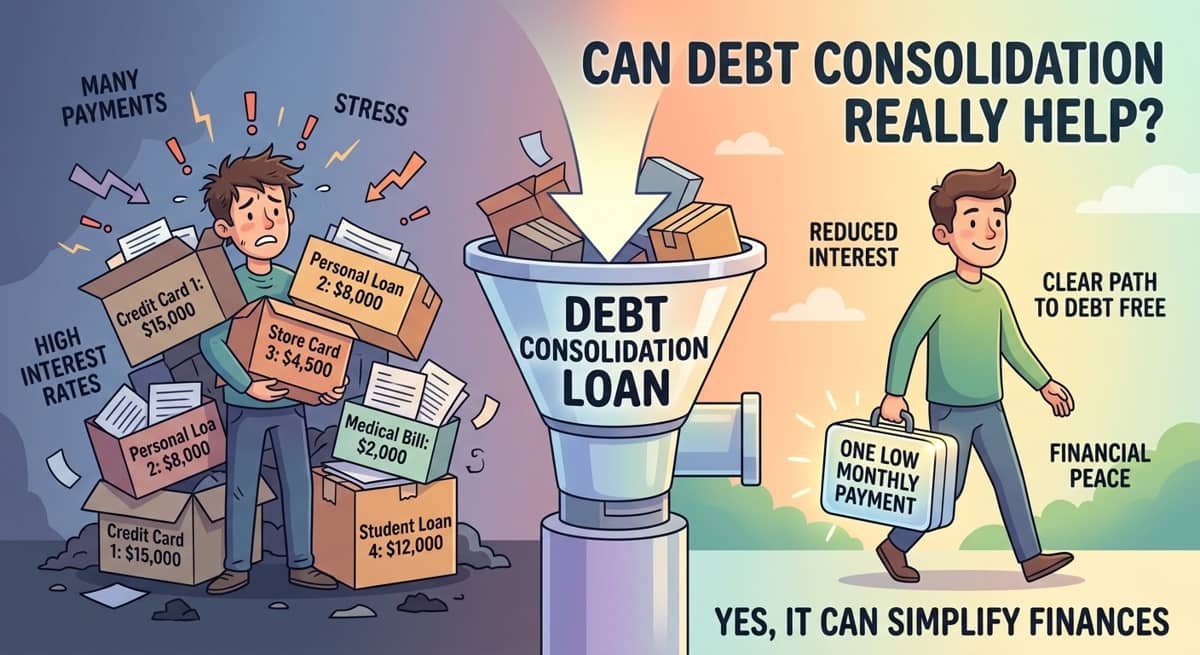
It's 11 p.m. The kids are asleep, and you're at the kitchen table with your phone. Three credit card bills, a car payment, and the money you send home every month for your parents' medicine. The minimum payments keep going up, but the balances barely move.
Then you see an ad: "Combine all your debt into one low payment." It sounds like exactly what you need. It also sounds too good to be true.
So, can debt consolidation really help? Sometimes, yes. Other times it only moves the problem around. This guide walks you through how to tell the difference, using plain numbers and real-life situations, including the ones many South Asian families in the US face.
Does Debt Consolidation Work?
A structured debt consolidation program can help if it lowers your interest rate and you stop adding new debt. It won't help if the new rate is higher, the fees are large, or your spending habits stay the same. .
It usually helps when:
The new interest rate is clearly lower than what you pay now
You have steady income and can make the payment every month
The fees are small compared to what you'll save
You're ready to stop using the cards you just paid off
It usually doesn't help when:
The new loan has a higher rate or a much longer term that costs more overall
Fees eat up most of the savings
The debt is still growing because spending is bigger than income
You'd have to put your home up as security for a small debt
This guide is for education. It isn't personal financial advice, and your situation may be different.
What Is Debt Consolidation and How Does It Work?
Debt consolidation means taking several debts and turning them into one. You get one new loan or one new plan, use it to pay off the others, and then make a single monthly payment.
The goal is usually one of two things: a lower interest rate, or a payment plan with a clear end date. Interest rate is often written as APR, which is just the yearly cost of borrowing money. A lower APR means more of each payment goes toward the actual debt instead of interest.
What happens to your credit
Your credit score may dip a little at first. When you apply for a new loan or card, the lender checks your credit, and that can lower your score for a short time. A new account can also lower the average age of your credit history.
But there's good news too.If you pay off your credit cards with the new loan, your credit card usage drops. Lenders like to see low credit utilization ratios, which is one of the fastest ways to improve your credit standing over time. And if you pay on time every month, your score can climb over the following months.
The catch: paying off a card is not the same as closing it. If you pay off your cards and then start using them again, you can end up with the new loan and new card balances. That's the most common way consolidation goes wrong.
What consolidation does not do
Consolidation doesn't make your debt smaller. If you owe $18,000 before, you still owe about $18,000 after. It changes how you pay, not how much you owe.
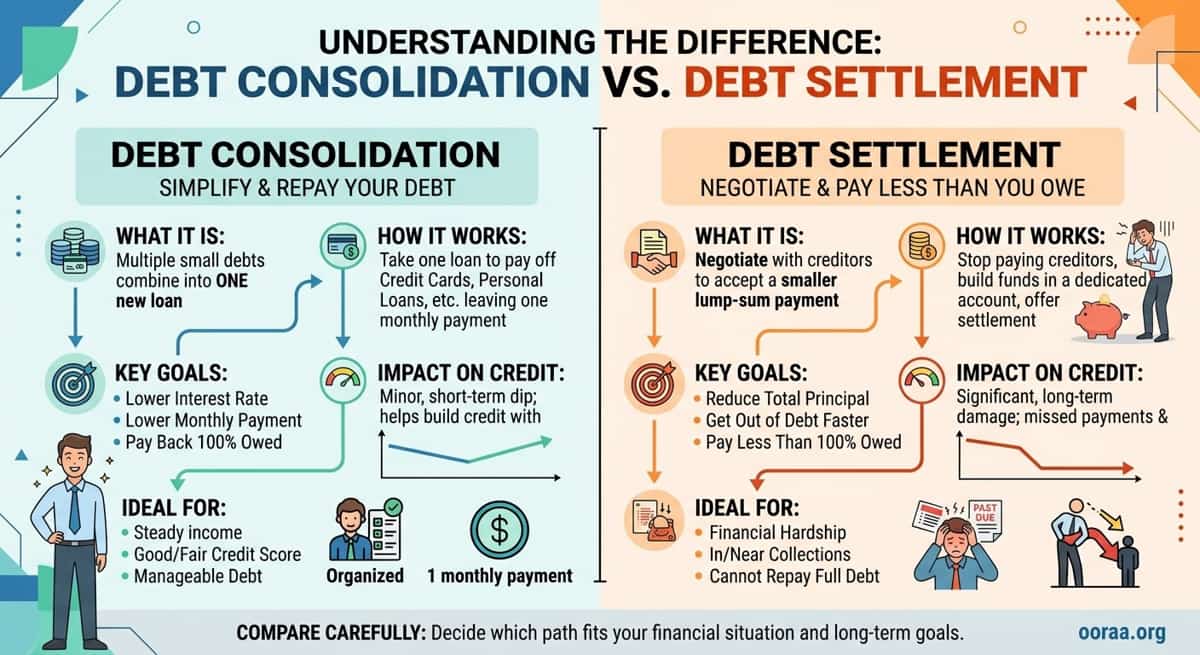
It's also different from debt settlement, where a company tries to convince your lenders to accept less than you owe. Check out our detailed breakdown on debt consolidation vs debt settlement to see which approach matches your financial situation. Settlement can seriously damage your credit and comes with risks we'll cover below. Consolidation, done right, keeps your credit safe.
Why This Question Matters for South Asians Living in the US
Many families in our community carry debt for reasons that don't show up in typical money advice.
Getting started in a new country. Security deposits, a first car, furniture, and moving costs often go on credit cards.
Supporting family back home. Monthly transfers to parents, tuition for a younger sibling, or an emergency for a relative can quietly turn into card balances.
Weddings and big family events. These matter deeply, and they're expensive.
Medical bills. Sometimes for you, sometimes for parents who visit or come to live here.
Business loans. Many families run a gas station, motel, grocery store, or restaurant, and personal and business debt can get tangled together.
Student loans. Whether it's your own or one you took for a child.
Why many people wait too long to get help
In many of our families, debt is something you carry quietly. People worry about what relatives will think, so they don't ask anyone. Some turn to informal savings groups, called committees, kameti, or chit funds, because they feel safer than a bank. Those groups can be a real strength. But they don't build your US credit history, and they can't help when the debt is on high-interest cards.
The result is that people often wait until the pressure is huge. If you've been there, you're not alone, and it isn't a sign of failure. It means you've been carrying a lot.
Why generic advice often doesn't fit
Most online advice assumes you've lived in the US for years, have a long credit history, and have a Social Security number. If you're newer here, hold a work visa, or have an ITIN instead of a Social Security number, a lot of that advice doesn't apply. Some lenders won't work with you at all, and others charge more. And after being burned by high fees or confusing terms, it's natural to be careful about who to trust.
That's why this guide covers both the basics and the parts most articles skip.
Types of Debt Consolidation Compared
There isn't one kind of consolidation. Here are the four main ways people do it.
Option | Best for | Typical requirements | Main risk |
Personal consolidation loan | Steady income and fair to good credit | Credit check, proof of income | Fees and a rate that may not be lower for weaker credit |
0% balance transfer card | Smaller balances you can pay off within the promo period | Good credit to qualify | Transfer fee, and a high rate once the promo ends |
Home equity loan or HELOC | Homeowners with equity and large debts | Home ownership, equity, credit check | Your home is the security |
Debt management plan (nonprofit) | People struggling to keep up with card payments | Enroll through a credit counseling agency | You may need to close cards; monthly fee |
Rates change often. Check current figures from the CFPB, the Federal Reserve, or the lender before deciding.
Personal consolidation loan
You borrow a set amount, pay off your cards, and repay the loan in fixed monthly payments over a few years. It's simple and predictable. Look closely at the APR and any "origination fee," which is a charge for setting up the loan.
0% balance transfer credit card
You move your balances to a new card that charges no interest for a set period. It can save a lot of money, but only if you can pay it off before the offer ends. Most cards charge a transfer fee, often a few percent of the amount moved.
Home equity loan or HELOC
These use your home as security, so rates can be lower. But if you can't pay, you could lose your house. That's a big risk to take for credit card debt.
Debt management plan through a nonprofit
A credit counseling agency works with your card companies to set up one monthly payment, often at reduced interest. It isn't a loan. It's a plan, and it's often a good option for people who don't qualify for a good loan rate.
Who Benefits Most, and Who Should Think Twice?
A quick self-check
Before you apply for anything, ask yourself:
Do I know my credit score range? Good scores usually get better rates.
What's my debt-to-income ratio? That's simply your monthly debt payments divided by your monthly income. If it's very high, lenders may say no or charge more.
Is the new APR clearly lower than what I pay now? If not, it's not worth doing.
Is my income steady? You need to make the payment every month without fail.
Do I know why the debt built up? If the cause is still happening, such as ongoing medical costs or regular overspending, consolidation alone won't fix it.
If you can answer "yes" to most of these, consolidation is worth a serious look.
When consolidation can backfire
The debts are small. If you owe a few hundred dollars, fees may cost more than you save.
You use the freed-up cards again. This is the biggest trap. A cleared card feels like new room to spend.
You put your home at risk. Using your house for unsecured debt is rarely worth it.
The fees erase the savings. A low monthly payment can hide a long term and a high fee.
A Worked Example With Real Numbers
Let's look at a made-up but realistic family. We'll call them Priya and Arjun. This is an example, not a real client.
They owe $18,000 across three credit cards at an average of 24% APR. They want to be debt-free in four years.
If they keep the cards and pay them off in 4 years:
Monthly payment: about $587
Total interest paid: about $10,170
If they take a consolidation loan at 12% APR, over 4 years, with a 5% fee:
To net $18,000 after the fee, they borrow about $18,950
Monthly payment: about $499
Total cost (interest plus the fee): about $5,950
The difference:
About $88 less per month
About $4,200 saved over four years
These numbers are for illustration. Your rate depends on your credit, income, and the lender.
Here's the important part. The savings didn't come from consolidation itself. They came from the lower rate and from Priya and Arjun sticking to the plan. If they had used the paid-off cards again, that $4,200 would have vanished, and they'd owe more than before.
Special Considerations for Immigrants and Newcomers
Your visa status and getting approved
Whether you can get a consolidation loan can depend on your status and paperwork. Some lenders accept an ITIN (Individual Taxpayer Identification Number) instead of a Social Security number. Others require a Social Security number, a certain length of time in the US, or a US credit history. Policies change, so ask each lender directly before you apply, and don't apply to lots of lenders at once. Every hard credit check can lower your score.
If you're on a work visa such as H-1B or F-1 OPT, some lenders look at how long your status lasts. Green card holders and citizens generally have more choices.
If you have a short or no US credit history
If you're new here, your home-country credit history usually doesn't transfer. You can start building US credit with a secured credit card or a credit-builder loan, and by paying every bill on time. Some people apply with a co-signer, a trusted person with good credit who agrees to be responsible for the loan if you can't pay. Think carefully before asking anyone, and before agreeing to be one. If you miss payments, it affects both of you and can strain relationships.
Will debt affect my immigration status?
This is a fear many people have but few ask about. In general, having ordinary debt, like credit card balances, is not an immigration problem in itself. But every case is different, and rules can change. If you're worried about how money matters could affect a green card, visa renewal, or citizenship application, talk to a licensed immigration attorney. Don't rely on a friend, a website, or a "consultant."
Sending money home without falling deeper into debt
Supporting family is a value many of us hold dearly, and you shouldn't have to feel guilty about it. But if transfers are being paid by credit card, debt will keep growing. Build the amount you send into your monthly budget first, just like rent. If the amount is more than you can afford, have an honest conversation with your family. It's better to send a smaller amount reliably than a large amount that puts you in trouble.
Alternatives If Consolidation Isn't the Right Fit
Nonprofit credit counseling and debt management plans
A nonprofit credit counselor looks at your whole situation, often for free or a low cost, and can suggest options. Look for agencies affiliated with the National Foundation for Credit Counseling (NFCC). Some offer help in languages other than English, so ask before you book.
Talking to your lenders directly
Many banks and card companies have hardship programs. You can call and ask for a lower rate, a reduced payment for a few months, or a waived fee. It costs nothing to ask, and people are often surprised by how helpful they are.
Debt settlement
In debt settlement, a professional team negotiates directly with your creditors to accept less than you owe. Through a structured debt settlement and resolution program, specialists work to lower your principal balance and create a single manageable payoff plan.
Bankruptcy
Bankruptcy is a last resort, but it exists for a reason. Before taking a step that impacts your credit for up to 10 years, consider exploring bankruptcy debt relief alternatives to reduce what you owe without filing court papers.
Red Flags: How to Avoid Debt Relief Scams Targeting Immigrant Communities
Sadly, some companies and individuals target people who are new to the country or nervous about asking for help. Watch for these warning signs:
They charge big fees upfront. For debt settlement services sold by phone, US federal rules generally don't allow charging before results are delivered. Confirm current rules with the Federal Trade Commission (FTC).
They promise guaranteed approval or say they'll "erase" your debt.
They tell you to stop talking to your creditors.
They aren't licensed, or they work only through word of mouth. Someone in your community being friendly doesn't make their advice safe.
They rush you or make you feel you'll lose the offer if you wait.
How to check before you sign:
Look up the company in your state's licensing records
Search their name in the Consumer Financial Protection Bureau (CFPB) complaint database and with the Better Business Bureau
Ask for every fee and term in writing, and take time to read it
A Step-by-Step Path to Decide and Act
List every debt. Write down each balance, interest rate (APR), and minimum payment. Seeing it all in one place is often a relief in itself.
Check your credit reports. You can get free reports at AnnualCreditReport.com. Look for mistakes, and note your score range.
Work out your monthly numbers. Subtract your regular expenses, including money you send home, from your income. What's left is what you can put toward debt.
Compare at least three offers. Look at the APR, the fees, the length of the loan, and the total cost, not just the monthly payment.
Fix the reason it happened. If spending outpaced income, make a small budget change. If it was an emergency, try to build a small cushion, even $500, so the next surprise doesn't go on a card.
Automate and track. Set up automatic payments so you never miss one, and check in once a month to see your progress.
Conclusion: Your Next Step
So, can debt consolidation really help? Yes, when the rate is lower, the fees are small, and you're committed to not building the debt back up. If those things aren't true for you, other options may fit better, and there's no shame in that.
You don't have to figure this out alone. A good first step is a free conversation with a nonprofit credit counselor, who can look at your real numbers and help you choose. Even just writing down your debts today is a real start.
Ready to Get Started?
Get a free consultation with a certified debt consultant to see if debt settlement is right for you.
Get Free ConsultationAbout the Author
Bhupinder Bajwa
.
Related Articles
What Debts Can Be Included in Debt Relief?
13 min read
Secured vs Unsecured Debt Consolidation: What's the Difference?
8 min read
What’s The Difference Between Debt Consolidation And Debt Settlement?
12 min read
Debt Consolidation vs. Debt Relief: Which Option Fits Your Situation?
10 min read
Can You Consolidate Debt With a Low Credit Score?
11 min read
When a Debt Consolidation Loan Truly Solves the Problem
11 min read
Get Your Free Consultation
Speak with a certified debt consultant to explore your options.
Start NowNo obligation • Free consultation