What’s It Like to Go Through Debt Relief

It's 2 a.m. and you're awake again, doing the math in your head. The credit card minimums. The car payment. The money you sent home last month for your mother's surgery. The loan from your cousin that you promised to repay by spring. The numbers never add up, and you can't tell anyone.
If that sounds familiar, you are not alone. Debt is not a character flaw. A job loss, a medical bill, a family emergency, or the cost of starting over in a new country can push anyone there. Asking for help is a practical step, the same as seeing a doctor when something hurts.
What Is Debt Relief Actually Like?
Debt relief usually feels like relief mixed with discipline. Most plans last about three to five years. You can expect fewer calls from collectors, one simpler monthly payment, a temporary drop in your credit score, and a tighter budget while you pay things off.
How it feels for you depends on a few things. The method you choose matters, and so does the type of debt you have and how much income you have each month. Some people finish faster. Others hit bumps along the way. No honest company can promise a specific result, so be careful with anyone who does.
What Types of Debt Relief Could You Go Through?
Debt relief is a broad term. Here are the four most common paths.
Credit Counseling and Debt Management Plans
A nonprofit credit counselor reviews your money, then works with your credit card companies to lower your interest rates. You make one monthly payment to the counselor, who divides it among your creditors. Most plans take three to five years, and your cards are usually closed.
Debt Settlement
A professional debt settlement program tries to get your creditors to accept less than the full amount you owe. It sounds great, but there are real risks. Companies often tell you to stop paying your creditors while they negotiate. That can lead to late fees, collection calls, damaged credit, and even lawsuits. Any amount that is forgiven may also count as taxable income.
Bankruptcy (Chapter 7 and Chapter 13)
Filing for bankruptcy is a legal process that can erase some debts (Chapter 7) or set up a court-approved repayment plan (Chapter 13). For many people it is the last resort. Talk to a bankruptcy attorney first. If your immigration status is a concern, speak to an immigration attorney too.
Negotiating Directly and Hardship Programs
You can simply call your lenders to ask about hardship programs or learn how to reduce credit card debt through negotiation directly. Many offer lower interest rates, smaller payments, or paused payments for a short time. It costs nothing to ask, so it's often worth trying before you pay anyone else.
What Does the Debt Relief Timeline Look Like?
Every program is different, but most follow a similar path. To make it real, here is a composite example (an invented story based on common situations, not one specific person). Let's call him Ravi. He's a software engineer in Texas on an H-1B visa. He has $42,000 in credit card debt and is still repaying a loan he took to help his parents in India.
Weeks 1–2: Intake and Honest Assessment
The first step is the hardest: listing everything you owe including credit cards, personal loans, and money borrowed from family or friends so you can figure out which debt should pay off first. Ravi almost left out his uncle's loan because it felt too personal to write down.
You'll review your income, expenses, and credit report with a counselor. It can feel uncomfortable to show every detail. Most people say it also feels like weight lifting, because the full picture finally exists on paper.
Months 1–3: Stabilizing
You stop using the cards that got you into trouble. Some will be closed or frozen. Your budget gets tighter, and your lifestyle changes with it.
Collector calls often slow down once a plan is in place. You also have rights. You can ask a collector to contact you in writing, and you can ask them to stop calling you at work. Your credit score will likely drop during this stage. That's normal and temporary.
Months 3–12: The Long Middle
Many people say this is the hardest stretch. The plan is working, but nothing feels different yet. Balances are going down slowly. Friends are buying new things and taking trips, and it's easy to feel left behind.
This is when surprises show up: a car repair, a flight home for a family event. That's why even a small emergency fund of $500 to $1,000 matters. Without it, one bad month can derail everything.
Years 2–4: The Finish Line
Now the progress is visible. Balances are much lower. The first account is paid off or closed, and you feel proud. When Ravi made his first final payment, he said he stared at the confirmation screen for a full minute.
At the end, make sure you get a written letter confirming each account is paid or settled. Keep those papers for at least seven years.
Moments Nobody Warns You About
Some things catch people off guard. You may be turned down for a new card. A landlord may ask questions about your credit. And in the year after a settlement, a tax form can arrive that you weren't expecting. We cover that below.
What Does Debt Relief Feel Like Emotionally?
The money side is only half the story. The emotional side is just as real.
Relief and Shame at the Same Time
Most people feel two things at once. There's relief that someone is finally helping. There's also shame that they needed help at all. Both feelings are normal. Feeling ashamed doesn't mean you did something wrong. You made decisions with the information and options you had at the time.
How It Affects Family and Marriage
Money stress can show up at home. Spouses may disagree about where cuts should come from. One partner may have hidden the debt from the other, or from in-laws, for months or years. Joint decisions can feel heavy.
If you can, sit down together, put every number on the table, and decide as a team. Blame doesn't help. A clear plan does.
What Helps People Stay on Track
People who stick with it usually have a few things in common. They have one person who knows the full story and checks in with them. They write down their goals, such as "debt-free by 2030, so we can buy a home." And they notice when stress is getting too heavy.
If you feel hopeless, can't sleep for days, or can't enjoy anything, talk to a doctor or a mental health counselor. That's part of taking care of your finances too, because stress affects every decision you make.
What Does Debt Relief Cost, and How Does It Affect Your Credit?
Credit Score Impact
Expect a drop. How much depends on the method. A debt management plan usually has a smaller effect, though closing cards can lower your score. Settlement and bankruptcy tend to hurt more. Late payments can stay on your credit report for seven years. A Chapter 7 bankruptcy can stay for up to ten, and Chapter 13 for up to seven.
The good news is that the damage fades over time, especially if you pay everything on time afterward. For current details, see the Consumer Financial Protection Bureau (CFPB).
Fees and Total Cost
Nonprofit credit counseling agencies often charge a small setup fee and a modest monthly fee. For-profit settlement companies usually charge a percentage of the debt they settle or of the amount you owe.
There are also rules. For-profit companies that sell debt relief by phone generally can't collect a fee until they have settled or reduced at least one of your debts, you have agreed to it in writing, and you've made at least one payment. If a company wants a large fee upfront, walk away. Always ask for the full cost in writing before you sign.
Taxes on Forgiven Debt
If a lender forgives $600 or more, it may send you a Form 1099-C, and the IRS may treat the forgiven amount as income. There is an exception if you were insolvent, meaning your debts were larger than your assets, when the debt was forgiven. A tax professional can help you figure out what applies. You can also read the IRS guidance on canceled debt.
How Can You Spot a Debt Relief Scam?
Newcomers and immigrant communities are often targeted by aggressive or dishonest companies. Some even advertise in community languages and on community radio to build trust fast. Knowing the signs of a debt relief scam protects you and your family.
Watch out for companies that:
Ask for large fees before doing any work.
Promise guaranteed results or claim to be a "government program."
Tell you to stop talking to your creditors, or to change your mailing address so their mail goes to the company.
Say they're a nonprofit but can't prove it.
Avoid explaining the risks in plain language.
How to Verify a Provider
Check whether the agency belongs to the National Foundation for Credit Counseling (NFCC). Look up the company with your state attorney general's office. Search for complaints on the FTC and CFPB websites. Ask for every fee and risk in writing, and take your time before you sign.
Support in your own language is a real service and can make things easier to understand. Just make sure the company is also legitimate.
Is Debt Relief Right for You?
Ask yourself these questions:
How much of your income goes to debt each month? If it's more than you can manage, relief may help.
Can you still make minimum payments? If not, act sooner rather than later.
What kind of debt is it? Credit cards and personal loans (unsecured) are treated differently from car loans or mortgages (secured).
Do you have immigration or job concerns? Get professional advice first.
Have you tried the simpler options? Call your lenders and ask about hardship plans.
If you're unsure, speak to a nonprofit credit counselor before you sign with any for-profit company. The first conversation is often free.
Life After Debt Relief: Rebuilding
Finishing the plan is a big win, but it's also the start of something new.
Start rebuilding your credit with a secured credit card or a credit-builder loan, and pay on time, every time. Build a small emergency fund before you put money into investments. Talk with your family about the roles money plays now, including how much you send home each month and how that fits your budget.
Then look ahead. Maybe it's a first home, a business, or sponsoring a relative to join you. Those goals are much easier to reach on solid ground.
Conclusion and Next Steps
Debt relief is not magic, and it isn't easy. It's a structured plan that takes time, patience, and honest conversations. But for many people it brings something worth far more than the money: a night of real sleep.
Your next step is a simple one. Gather your latest statements and book a free consultation with a nonprofit credit counselor. If you want personalized support in your preferred language with zero upfront fees, explore our debt management solutions or contact us for a free debt consultation to see what options fit your budget.
Ready to Get Started?
Get a free consultation with a certified debt consultant to see if debt settlement is right for you.
Get Free ConsultationAbout the Author
Bhupinder Bajwa
.
Related Articles
Which Debt Should I Pay Off First?
10 min read
Low Income Debt Relief Programs And Options
14 min read
What Debts Can Be Included in Debt Relief?
13 min read
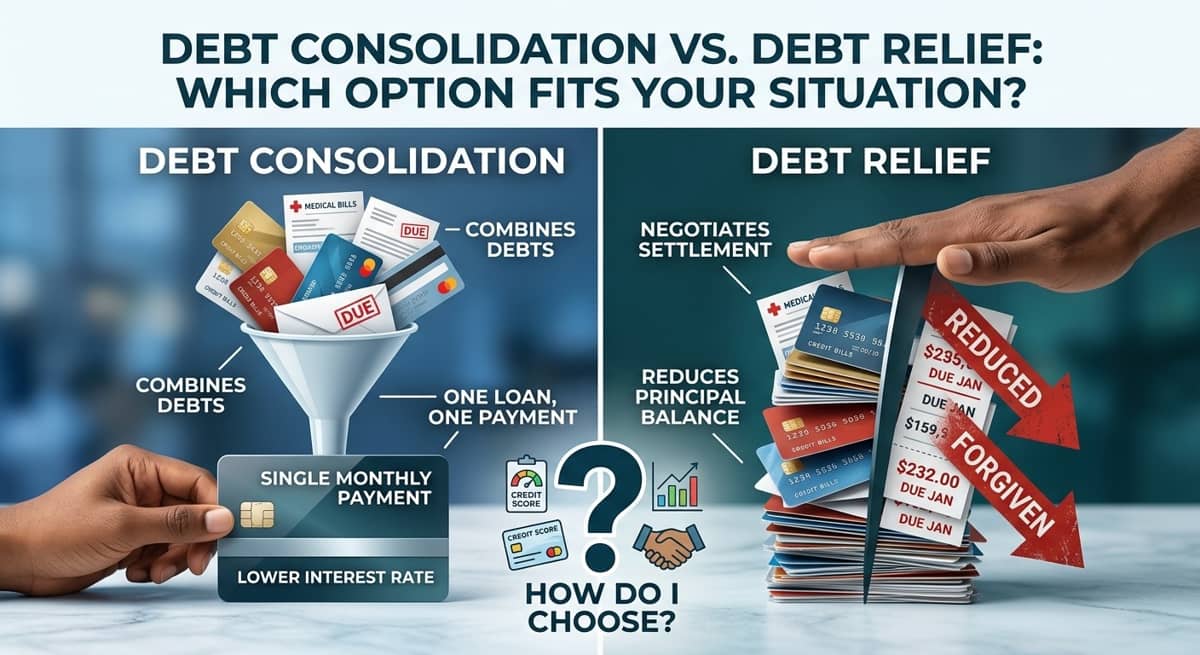
Debt Consolidation vs. Debt Relief: Which Option Fits Your Situation?
10 min read

Do Debt Relief Programs Work?
11 min read
Debt Management- The Right Program
9 min read
Get Your Free Consultation
Speak with a certified debt consultant to explore your options.
Start NowNo obligation • Free consultation