Getting a letter from the IRS is stressful for anyone. But if you're a first-generation immigrant or newer to the US tax system, it can feel even more overwhelming, especially when the letter asks you to fill out a form you've never heard of.
This is common in South Asian communities across the US, where many families run their own businesses (motels, gas stations, convenience stores, trucking companies, restaurants) or work as independent consultants and 1099 contractors. These situations often come with more complicated finances than a typical W-2 job, which means more questions when the IRS gets involved.
IRS Form 433 is one of the most common forms you'll come across if you owe back taxes and want to work out a solution.
What Is IRS Form 433?
Think of Form 433 as a financial snapshot the IRS asks you to fill out. Officially, it's called a Collection Information Statement. Before the IRS agrees to let you pay off your tax debt over time, settle it for less, or temporarily pause collection, they want to see the full picture of your finances: how much you earn, what you own, what you owe, and what you spend each month.
In other words, the IRS isn't just taking your word for it when you say you can only afford a certain payment. Form 433 is how they verify that.
Why the IRS Requests This Form
The IRS's job is to collect what's owed, but they also don't want to push someone into a payment plan they truly cannot afford. Form 433 gives them a documented way to figure out what's realistic for your household or business. It also protects you once your numbers are on record, the IRS has a harder time asking for more than you can reasonably pay.
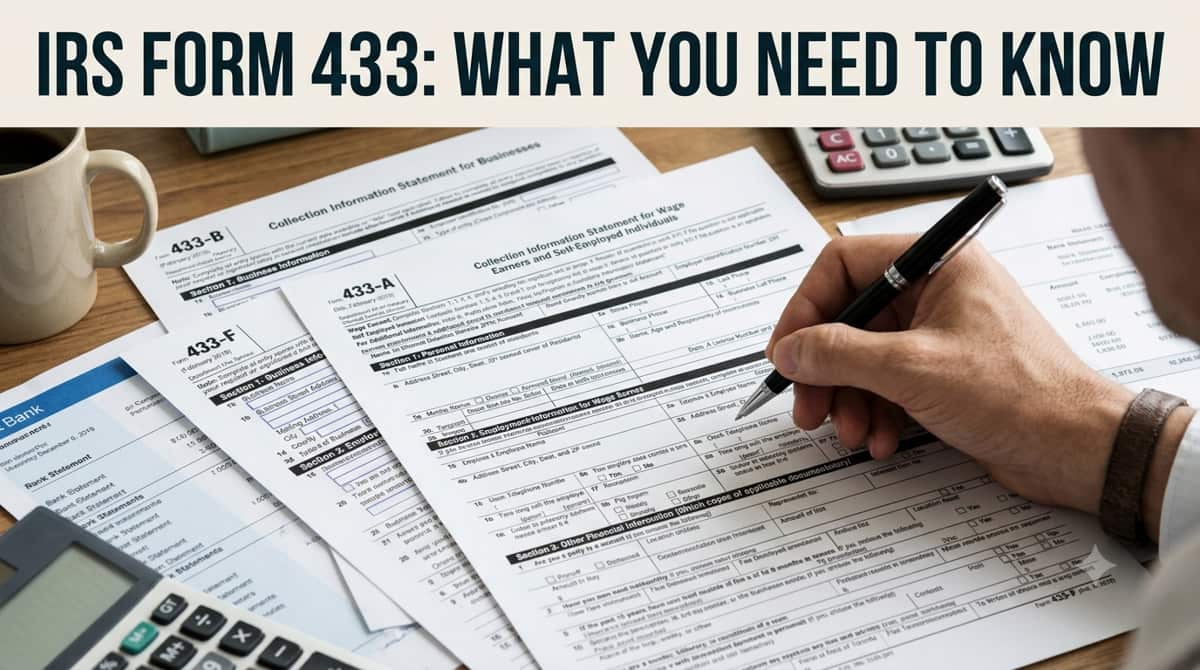
The Three Versions of Form 433 — Which One Applies to You?
Not every taxpayer fills out the same version of Form 433. The one you need depends on whether you're an individual, a business owner, or someone applying for a simpler payment plan.
Form | Used For | Typical Filer |
Form 433-A | Individuals / self-employed | Wage earners, sole proprietors |
Form 433-B | Businesses | LLCs, corporations, partnerships |
Form 433-F | Simplified version | Streamlined installment agreements |
Form 433-A: Individuals and Self-Employed Taxpayers
Form 433-A is the version most people fill out. It's meant for individuals, including those who are self-employed or run a business as a sole proprietor (meaning the business isn't a separate legal entity from you). If you're a salaried employee with a side gig, a freelancer, an Uber or truck driver, or someone who runs a small shop under your own name, this is likely your form.
It asks for details about your household income, employment, bank accounts, real estate, vehicles, and monthly living expenses. It's thorough, but it's designed to capture your full financial reality, not to trap you.
Form 433-B: Businesses
If your business is structured as an LLC, corporation, or partnership separate from you personally, you'll likely need Form 433-B instead. This is common for South Asian-owned businesses like restaurants, motels, gas stations, and trucking companies that are registered as formal business entities rather than run under an individual's name.
Form 433-B asks for business-specific financial details: business bank accounts, accounts receivable, business assets and equipment, payroll, and monthly operating expenses. If you and your family co-own the business, you'll need to gather records that reflect the business as its own entity, separate from personal finances.
Form 433-F: The Simplified Version
Form 433-F is a shorter, simpler version of the form. The IRS typically uses it for streamlined installment agreements cases where the amount owed and monthly payment fall within certain limits, making a full financial deep-dive unnecessary. Not everyone qualifies to use this shorter version, but if you do, it can save you time and paperwork.
When Do You Need to File Form 433?
You don't need to fill out Form 433 just because you owe taxes. It typically comes into play in a few specific situations:
You want a payment plan for a balance that's too large to qualify for the IRS's simplest online agreement
You're applying for an Offer in Compromise, where you propose to settle your tax debt for less than the full amount
You're requesting Currently Not Collectible status because you genuinely cannot afford to pay right now
An IRS Revenue Officer has contacted you directly and asked for it as part of a collections case
If you're unsure which situation applies to you, it's worth reviewing any letter the IRS sent you closely it usually specifies which form and version they need.
What Documents and Information You'll Need
Before you sit down to fill out Form 433, gather your paperwork. Having everything ready makes the process faster and reduces the chance of mistakes. Here's a general checklist:
Recent pay stubs or proof of self-employment income
Bank statements (typically the last 3 months)
Your ITIN or Social Security number
Business financial records, if applicable
Vehicle titles and loan information
Mortgage statements or rental agreements
A list of monthly household or business expenses
A few notes for immigrant filers specifically: if you file taxes with an ITIN instead of a Social Security number, that's completely fine the IRS accepts ITIN filers on Form 433. If you co-own property with family members abroad, or your business income flows through a family member's name, gather documentation that shows your share as clearly as possible. It's better to over-document than to leave the IRS guessing.
How to Fill Out Form 433: A Step-by-Step Overview
Step 1: Gather Your Financial Records
Start by collecting everything from the checklist above. Having your documents organized before you begin will make the rest of the process much smoother and help you avoid leaving sections blank.
Step 2: Report Income Accurately
List all sources of income wages, self-employment earnings, rental income, and any side work. If your business deals in cash, like many restaurants and convenience stores do, make sure you're reporting it accurately rather than only what shows up in your bank account. The IRS cross-checks this information, and inconsistencies can slow down or jeopardize your case.
Step 3: List Assets and Equity
This includes bank accounts, vehicles, real estate, retirement accounts, and business equipment. If you own property jointly with a relative including property overseas be prepared to disclose your share. Leaving this out isn't a shortcut; it can come back to hurt your case later.
Step 4: Detail Monthly Living Expenses
Here you'll list your actual monthly costs: rent or mortgage, utilities, groceries, insurance, transportation, and more. The IRS compares your expenses against its own "allowable expense" standards, which are national and local averages for typical costs. One important note: money sent abroad to support family (remittances) is generally not counted as an allowable expense by the IRS, even though it may be a real and significant part of your monthly budget. It helps to know this going in so there are no surprises.
Step 5: Review and Submit
Before submitting, double-check every section for accuracy and completeness. Missing information is one of the most common reasons a Form 433 gets sent back or delays your case. Once it's complete, submit it along with any other required forms for your specific request (like an Offer in Compromise application).
Common Mistakes to Avoid When Filing Form 433
A few small errors can slow down your case significantly. Watch out for these:
Underreporting cash income is especially common in cash-heavy businesses. The IRS often has its own estimates reach out to a knowledgeable tax professional for typical income in certain industries and will flag numbers that seem too low.
Forgetting to disclose jointly-held or overseas assets even partial ownership needs to be reported.
Miscalculating living expenses using rough estimates instead of real numbers from your bank statements.
Submitting outdated bank statements the IRS usually wants recent, not old, records.
Not accounting for remittances as scrutinized cash flow large or regular transfers abroad may raise questions, so be ready to explain them clearly.
How Form 433 Connects to Debt Relief Options
Form 433 and Installment Agreements
If you're asking to pay your tax debt off in monthly installments, Form 433 helps the IRS determine what you can realistically afford each month based on your income and expenses.
Form 433 and Offer in Compromise
If you're hoping to settle your tax debt for less than the full amount owed, Form 433 is a required part of that application. The IRS uses it to assess whether your offer is reasonable based on your true financial ability to pay.
Form 433 and Currently Not Collectible Status
If you genuinely can't afford to pay anything right now, Form 433 is how you prove that to the IRS. If approved, they'll pause active collection efforts, though the debt itself doesn't disappear.
Special Considerations for South Asian Immigrants and Families
A few realities come up often in South Asian households dealing with the IRS:
ITIN filers without a Social Security number can file Form 433 just like anyone else this is a normal and accepted part of the process.
Mixed-status households, where family members have different visa or residency statuses, may find the paperwork more complex, but the form itself doesn't ask about immigration status directly.
Family or co-signed business debt is common when multiple relatives are involved in running a business together. Be prepared to clarify who owns what share of the business and its debts.
Hesitation to share financial details with a government agency is understandable, especially if you come from a place where that kind of disclosure felt risky. It's worth knowing that Form 433 is a standard, routine part of resolving tax debt in the US, used by millions of taxpayers every year not a red flag or an investigation.
Language access the IRS offers multilingual phone support and resources if English isn't your first language, which can make the process feel less intimidating.
One important clarification: tax debt itself is generally a separate matter from your immigration status. However, if you have specific concerns about how tax issues might intersect with your visa or residency situation, it's worth speaking with an immigration attorney directly, since that's outside the scope of what a tax form can tell you.
Should You File Form 433 Yourself or Hire Help?
Some people fill out Form 433 on their own, and for straightforward situations a single income source, no business, simple expenses that's often manageable. But if your finances are more complex, like a family-owned business, multiple income streams, or property shared across relatives, it may be worth hire a tax attorney who's handled cases like yours before.
The upside of doing it yourself is saving money. The upside of hiring help is having someone who knows exactly what the IRS is looking for, can catch mistakes before they cause delays, and can speak on your behalf if things get complicated.
Conclusion & Next Steps
When it comes to IRS Form 433, the initial impression can be daunting and maybe even terrifying, but at its heart is an opportunity for you to warm up the IRS so that they can see what your finances truly look like in order for everyone to move toward a resolution and relief whether through an installment agreement or payment plan with the agency, with an offer in compromise, or simply respite from collections. A little time spent putting together the correct documentation and understanding which version applies to you helps immensely with a smoother going about it.
If you find yourself in a family business, multiple income sources, or property across relatives, reach out to a knowledgeable tax professional that is familiar with the IRS process and the types of financial structures found with immigrant-owned businesses. Given that guidance, yes, you can like resolve tax debt and you will not need to go it alone
Ready to Get Started?
Get a free consultation with a certified debt consultant to see if debt settlement is right for you.
Get Free ConsultationAbout the Author
Bhupinder Bajwa
.
Related Articles
IRS Tax Fraud: Types, Penalties, Warning Signs, and What to Do
11 min read
What Is the Difference Between Tax Fraud and an Honest Tax Mistake?
11 min read
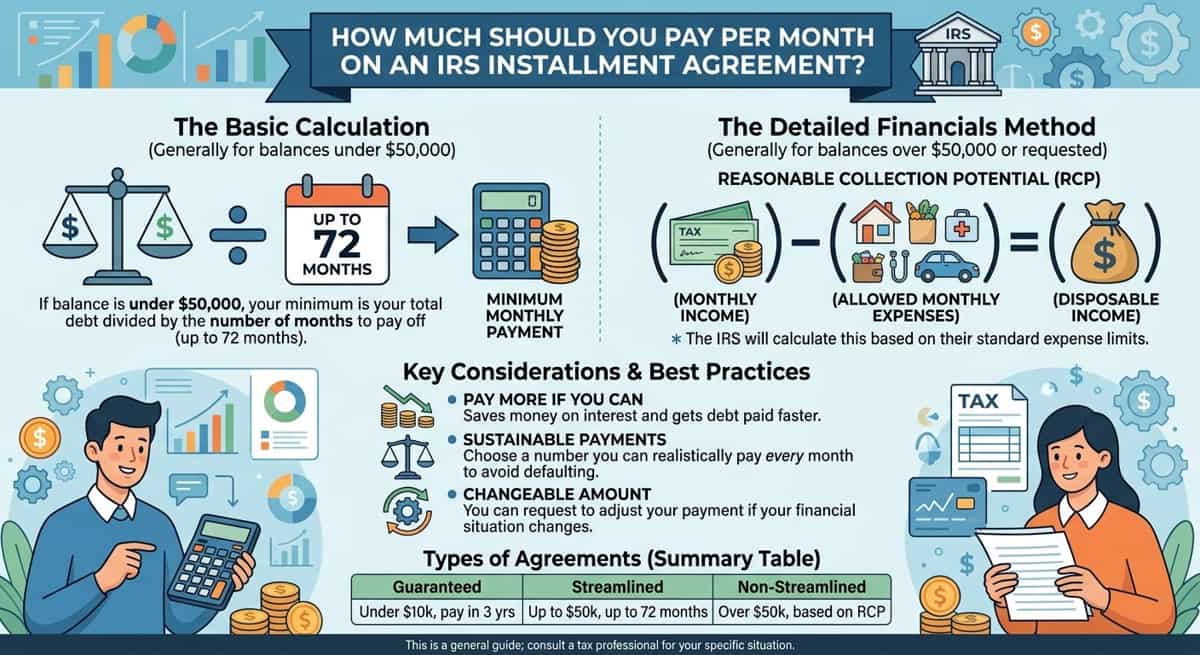
How Much Should You Pay Per Month on an IRS Installment Agreement?
10 min read
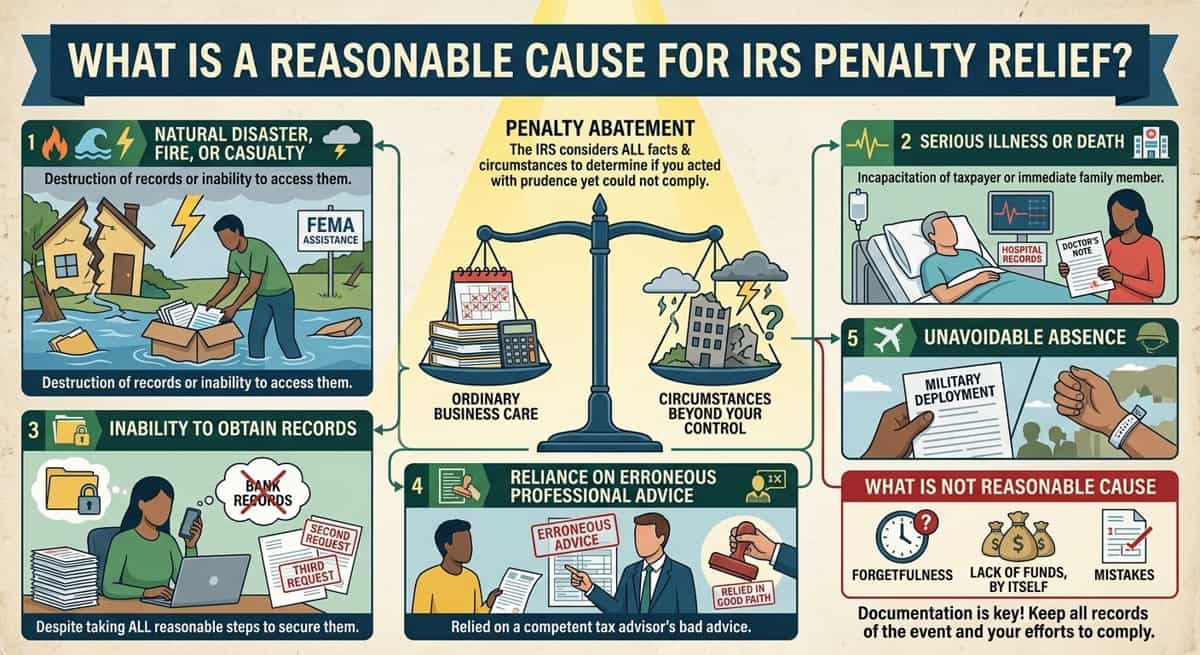
What Is a Reasonable Cause for IRS Penalty Relief
12 min read
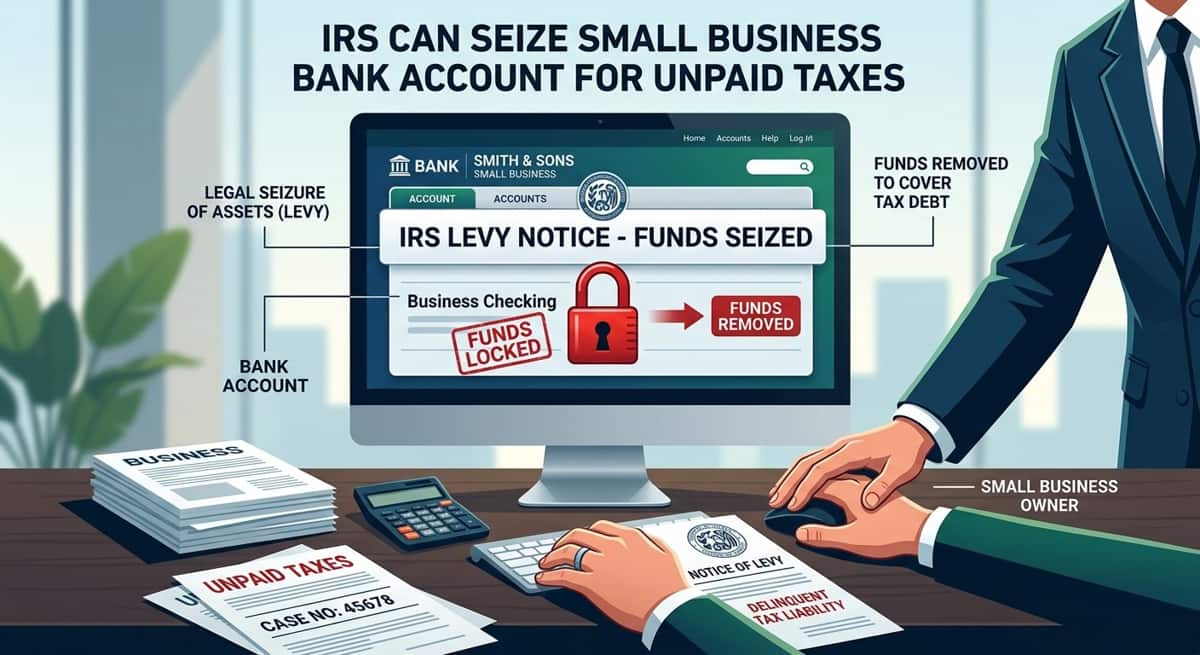
Can the IRS Seize a Small Business Bank Account for Unpaid Taxes?
11 min read
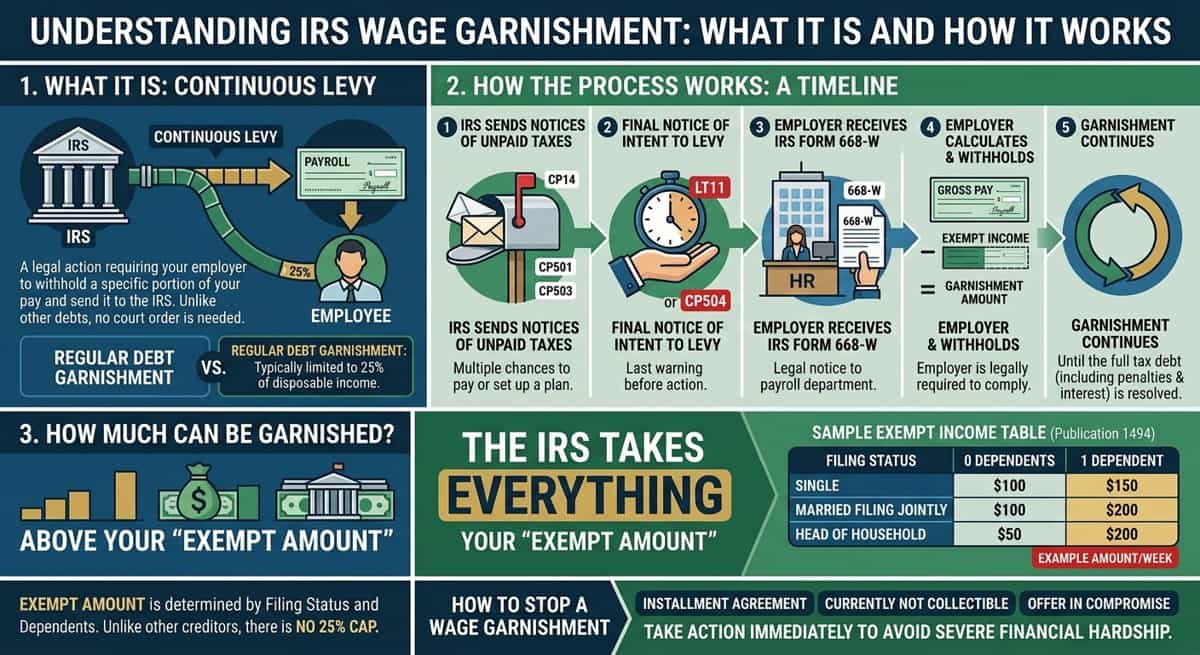
What Is an IRS Wage Garnishment and How Does It Work?
10 min read
Get Your Free Consultation
Speak with a certified debt consultant to explore your options.
Start NowNo obligation • Free consultation