
How Much Should You Pay Per Month on an IRS Installment Agreement?
Getting a letter from the IRS about a payment plan is stressful enough without also having to guess what number to write down. Pick too low, and your proposal can get rejected. Pick too high because you panicked or wanted the problem gone, and one missed payment down the road can default the whole agreement and put you right back where you started only with less patience from the IRS this time.
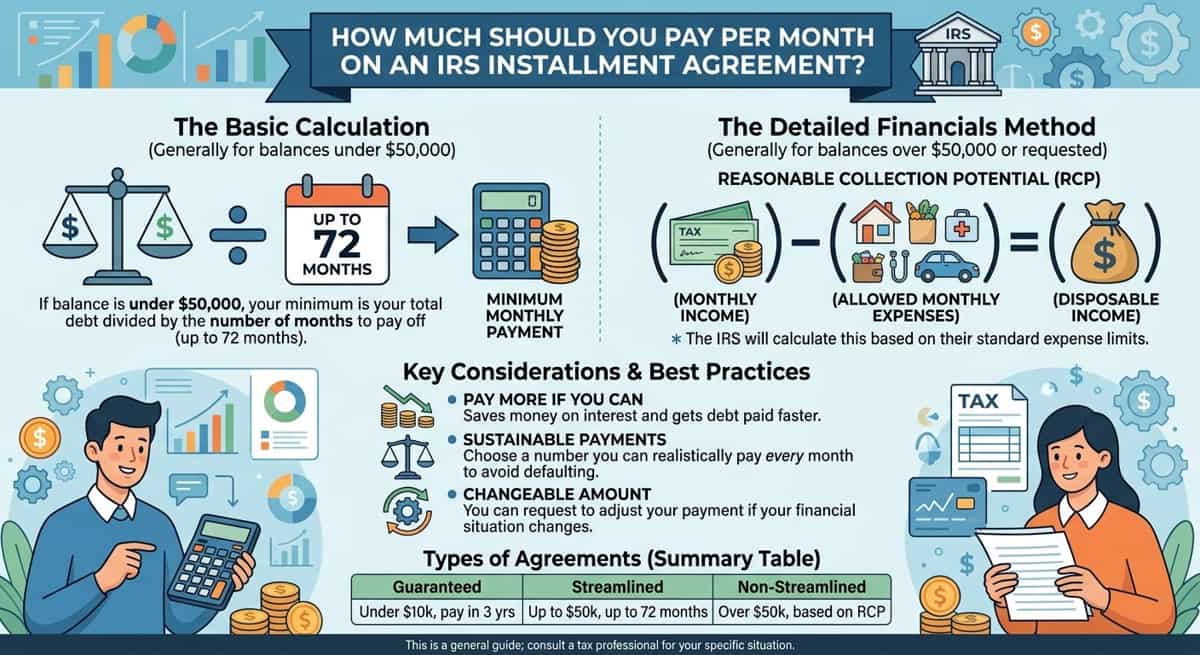
Your minimum monthly payment is either your total balance divided by the number of months you have left to pay (usually up to 72 months), or the amount left over after your necessary monthly expenses are subtracted from your income whichever number is higher. If you can comfortably pay more than that minimum, it's almost always worth doing, since it saves you money on interest and gets the IRS out of your life faster.
How the IRS Actually Calculates Your Minimum Monthly Payment
There are really two different ways the IRS figures out your minimum payment, and which one applies to you depends mostly on how much you owe.
If your balance is smaller (generally under $50,000), the IRS usually just wants your debt paid off within 72 months. So the math is simple: take your total balance and divide it by the number of months you have left. That's your minimum.
If your balance is larger, or if the IRS asks for a full financial picture, they'll instead look at what you actually earn versus what you actually need to spend to live and expect you to pay whatever's left over each month. This second method is called your Reasonable Collection Potential, and it's worth understanding even if you don't think it applies to you, because the IRS can request it at any time.
Reasonable Collection Potential (RCP), Explained Simply
Reasonable Collection Potential sounds complicated, but the idea behind it is pretty simple: the IRS wants to know what you could realistically pay them, based on your income, your expenses, and anything you own that could be sold or borrowed against.
In plain terms, it works out to:
(Your monthly income − your allowed monthly expenses) × the months left before your debt expires, plus any equity you have in things like a home, car, or savings.
For example, if you bring home $6,000 a month and the IRS allows $4,500 in monthly expenses, your "disposable income" is $1,500. That $1,500 is roughly what they'll expect as your minimum monthly payment, separate from any assets you might have.
The tricky part isn't the math, it's the "allowed expenses" part. The IRS doesn't just accept whatever you say you spend. They compare it against their own standard expense limits, and that's where a lot of people run into trouble.
IRS Allowable Living Expenses vs. Real South Asian Household Budgets
The IRS's expense standards are built around a fairly generic American household. Housing, food, transportation, healthcare they all have set limits based on your county and family size. But real life, especially in many South Asian households, doesn't always fit that mold.
Say you send $400 a month to your parents in India, Pakistan, Bangladesh, or Sri Lanka to help cover their living costs. Or you live with your in-laws and contribute to a shared household budget instead of paying rent in your own name. Or you regularly give to your temple, mosque, or gurdwara. Or your spouse is on a dependent visa and can't legally work, so your household is really running on one income even though the IRS sees two adults.
The honest answer is that the IRS generally will not count remittances or religious giving as "necessary" expenses, no matter how important they feel to your family. What they will sometimes consider, especially with documentation, is genuine shared housing costs or a documented single-income household. The lesson here isn't to hide these realities, it's to know upfront which ones the IRS will factor into your payment and which ones you'll need to plan around separately, so you're not caught off guard by a number that doesn't match your actual monthly life.
The 4 Types of IRS Installment Agreements and What They Mean for Your Payment
Not every IRS monthly Payment Agreement works the same way. The type of agreement you're offered can have a big effect on how your monthly payment amount is calculated.
Type | Who It's For | How Payment Is Set |
Guaranteed Installment Agreement | Balances under $10,000 | IRS must approve if you can pay it off within 3 years payment is simply balance ÷ 36 months |
Streamlined Installment Agreement | Balances up to $50,000 | No detailed financials needed payment is balance ÷ up to 72 months |
Non-Streamlined (Regular) Agreement | Balances over $50,000, or when the IRS asks for more detail | Full financial disclosure required payment based on your Reasonable Collection Potential |
Partial Payment Installment Agreement (PPIA) | When you genuinely can't pay the full balance even over time | You pay less than the full amount, but the IRS reviews and can adjust it every couple of years |
Most people with everyday tax debt end up in the Guaranteed or Streamlined categories, which is good news. Those are the simplest, fastest, and least invasive ways to set up with installment assistance.
Step-by-Step: How to Calculate Your Own Minimum Payment
You don't need to guess. Here's how to work out a realistic number before you talk to the IRS or a tax professional:
Confirm your exact balance. Log into your IRS online account or request a transcript so you know precisely what you owe, including penalties and interest.
Figure out which agreement type you likely qualify for, based on the balance table above.
If you're under $50,000, run the simple formula: balance ÷ months remaining (up to 72). That's your baseline minimum.
If you're over $50,000 or the IRS requests it, fill out Form 433-F (or 433-A for more complex cases) to calculate your income minus your allowable expenses.
Compare the two numbers. The IRS will generally hold you to whichever is higher, the simple formula or your actual disposable income.
Once you have that number, you'll know whether it's something your monthly budget can actually absorb, or whether you need to look at other options before you commit.
Common Mistakes South Asian Taxpayers Make When Setting Their Payment Amount
Over the years, a few patterns show up again and again in this community, and they're worth naming directly so you can avoid them.
Underreporting income from cash-heavy businesses. If you run a motel, gas station, restaurant, or convenience store, and your reported income doesn't match the payment you're proposing, the IRS will notice the gap and it can trigger a closer look at your entire return.
Avoiding IRS letters out of fear tied to immigration status. This is one of the most common and costly mistakes. Ignoring notices doesn't make the debt disappear, it just means your agreement defaults, penalties keep growing, and your options narrow.
Not accounting for a single-income household on a joint return. If your spouse is on a dependent visa and isn't working, the IRS still sees a joint filing, so it's worth clearly documenting the real income picture.
Agreeing to a payment that's too high just to "make it go away fast." Family pressure to resolve debt quickly is real, but a payment you can't sustain leads to default which puts you in a worse position than if you'd started with a realistic number.
Not disclosing foreign bank accounts or assets. If you have savings or property back home, this can affect your Reasonable Collection Potential, and leaving it out can cause bigger problems later if it surfaces.
What Happens If You Set Your Payment Too Low or Too High?
If you propose a payment that's lower than what the IRS calculates you can afford, they can simply reject it and come back with their own number or ask for more financial documentation before approving anything.
If you set your payment too high just to get it approved quickly, you're taking on real risk. Missing even one payment can default the entire agreement, and once that happens, the IRS can resume collection actions like levies, right where they left off sometimes with less patience than before.
The safest approach is a number you know you can pay every single month, even in a tighter month, rather than the highest number you could technically afford in a good one.
Can You Change Your Payment Amount After the Agreement Is Set Up?
Yes. If your financial situation changes, a job loss, a pay cut, a new baby, a family member depending on you more than before you can request to lower your monthly payment. The IRS will generally ask for updated financial information to support the change.
The reverse is true too. If your income improves, you can increase your payment or pay off the balance early with no penalty, which reduces the total interest you'll pay over time.
How Immigration Status (H-1B, Green Card, ITIN) Affects Your Installment Agreement
This is one of the biggest sources of stress in this community, so it deserves a direct, honest answer: owing the IRS money, on its own, is not an immigration enforcement issue. The IRS and immigration authorities operate separately, and simply having tax debt or setting up a payment plan does not, by itself, put your visa status or green card application at risk.
That said, unresolved tax compliance can matter in certain immigration processes, like naturalization or some visa renewals, where you may be asked to show that your taxes are filed and in good standing. This is exactly why setting up and staying current on an installment agreement rather than avoiding the issue is usually the safer path for your immigration paperwork, not a riskier one.
If you're unsure how your specific situation intersects with an upcoming immigration filing, that's a conversation worth having with both a tax professional and an immigration attorney, since the two areas don't always overlap the way people assume.
Should You Set This Up Yourself or Hire a Tax Professional?
For straightforward situations, doing it yourself is completely reasonable. If your balance is under $50,000, your income comes from a regular W-2 job, and your finances are simple, the IRS's online payment agreement tool can get you set up in one sitting.
It's worth contact with a tax professional if any of the following apply to you: you're self-employed or run a cash-based business, you're negotiating a Partial Payment Installment Agreement, you're filing with an ITIN and want to make sure everything is documented correctly, or you have unfiled returns from previous years that need to be cleaned up first. In these cases, a professional can often get you a lower, more sustainable payment than you'd land on by guessing.
Key Takeaways
Your minimum payment is either balance ÷ months remaining, or your income minus allowable expenses whichever is higher.
The IRS's expense standards don't always reflect real South Asian household budgets, like remittances or shared family housing.
Owning the IRS and setting up a payment plan is not, by itself, an immigration risk avoiding it tends to cause more problems than addressing it.
Choose a payment you can sustain every month, not the highest number you can technically afford in a good month.
If your finances are anything but simple self-employment, cash businesses, ITIN filings a tax professional can usually get you a better outcome than doing it alone.
Ready to Get Started?
Get a free consultation with a certified debt consultant to see if debt settlement is right for you.
Get Free ConsultationAbout the Author
Bhupinder Bajwa
.
Related Articles
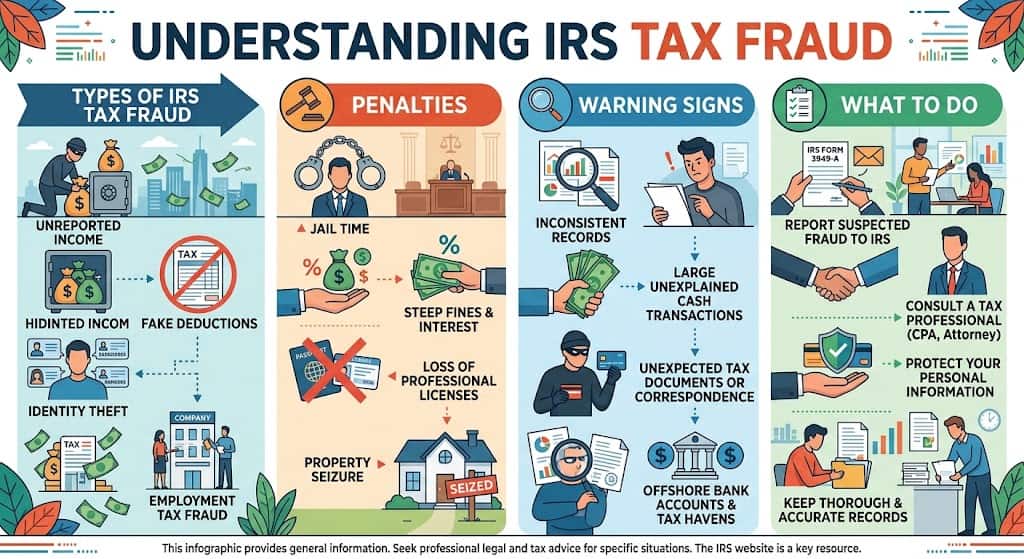
IRS Tax Fraud: Types, Penalties, Warning Signs, and What to Do
11 min read
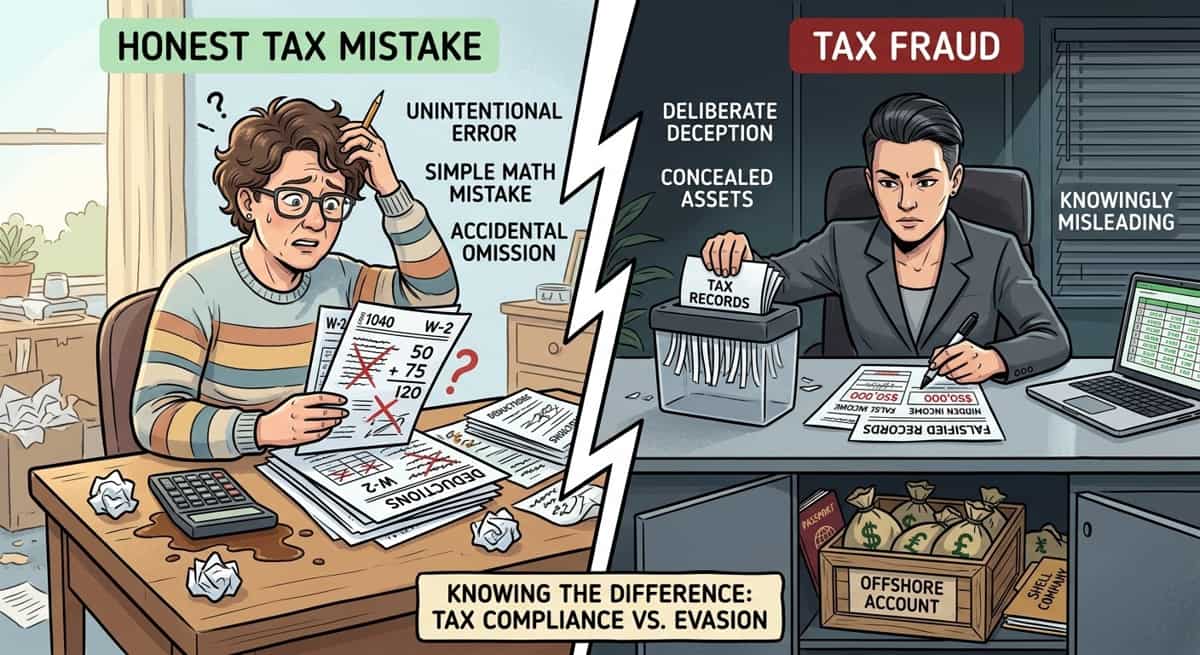
What Is the Difference Between Tax Fraud and an Honest Tax Mistake?
11 min read
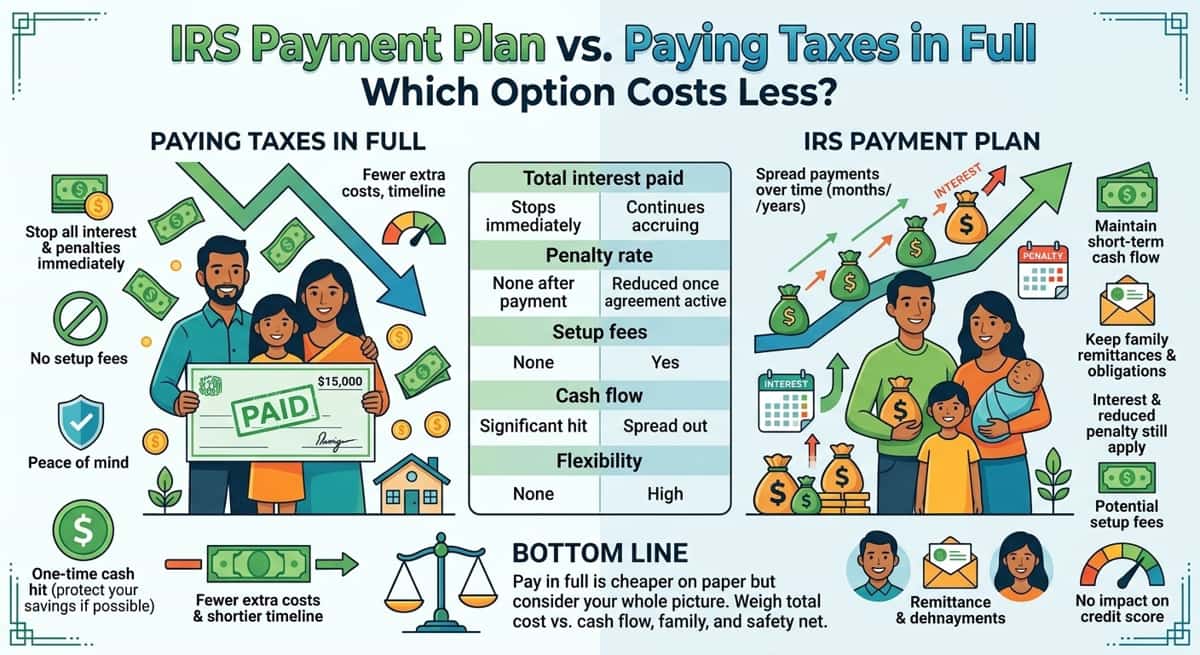
IRS Payment Plan vs. Paying Taxes in Full: Which Option Costs Less?
12 min read
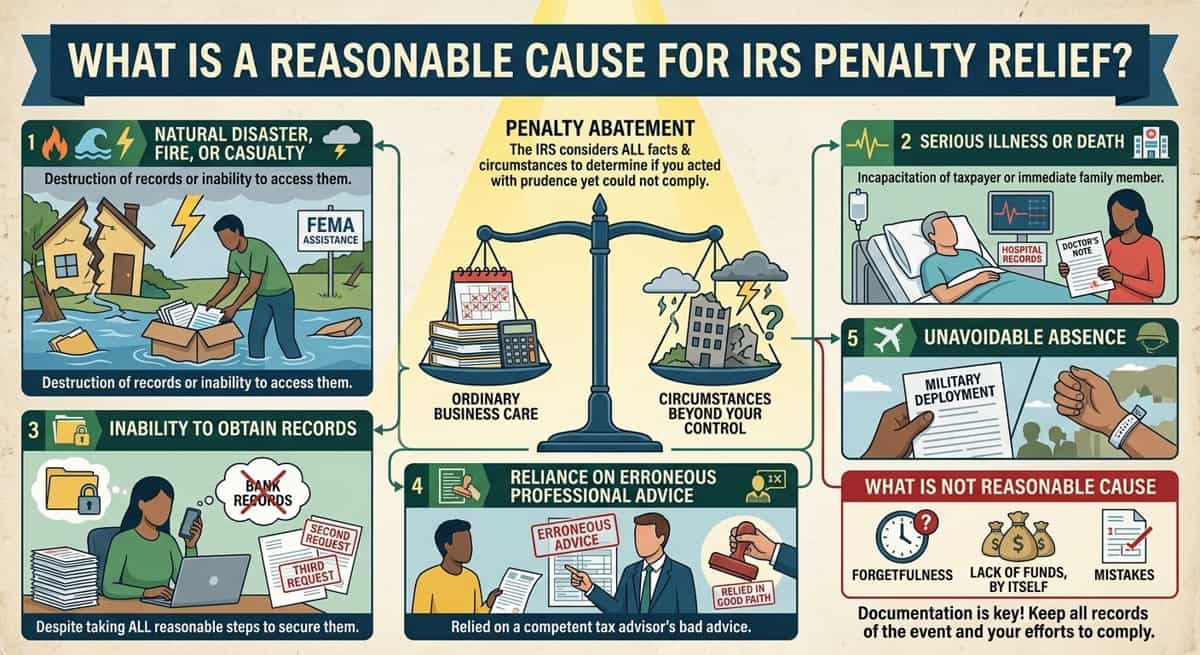
What Is a Reasonable Cause for IRS Penalty Relief
12 min read
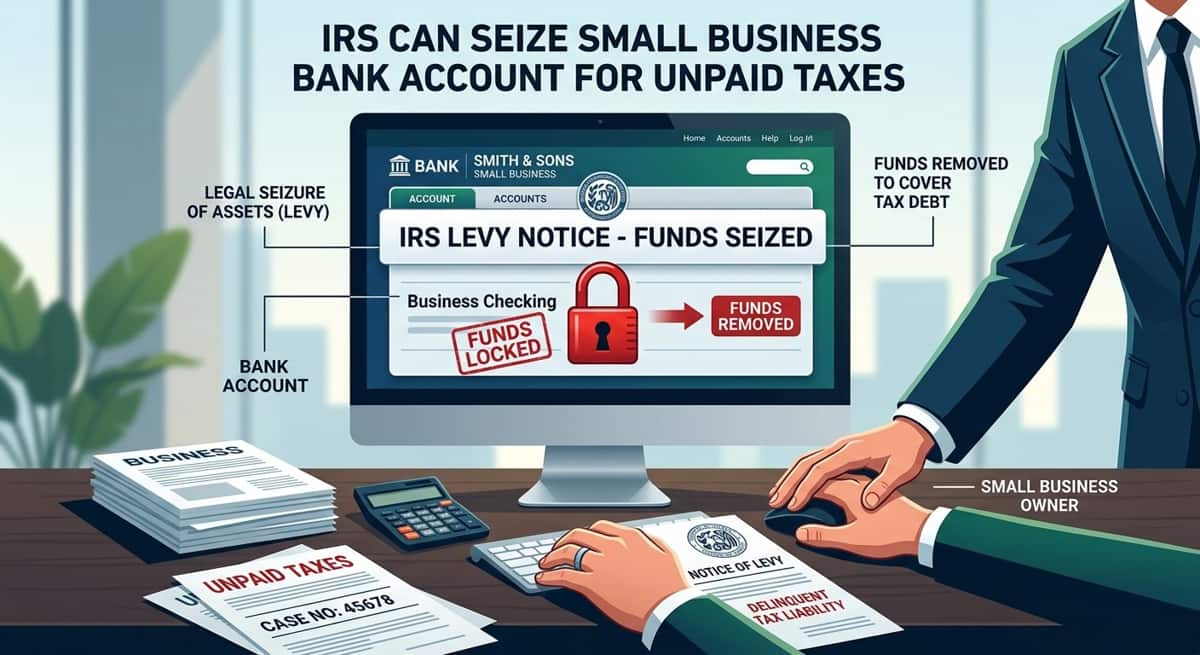
Can the IRS Seize a Small Business Bank Account for Unpaid Taxes?
11 min read
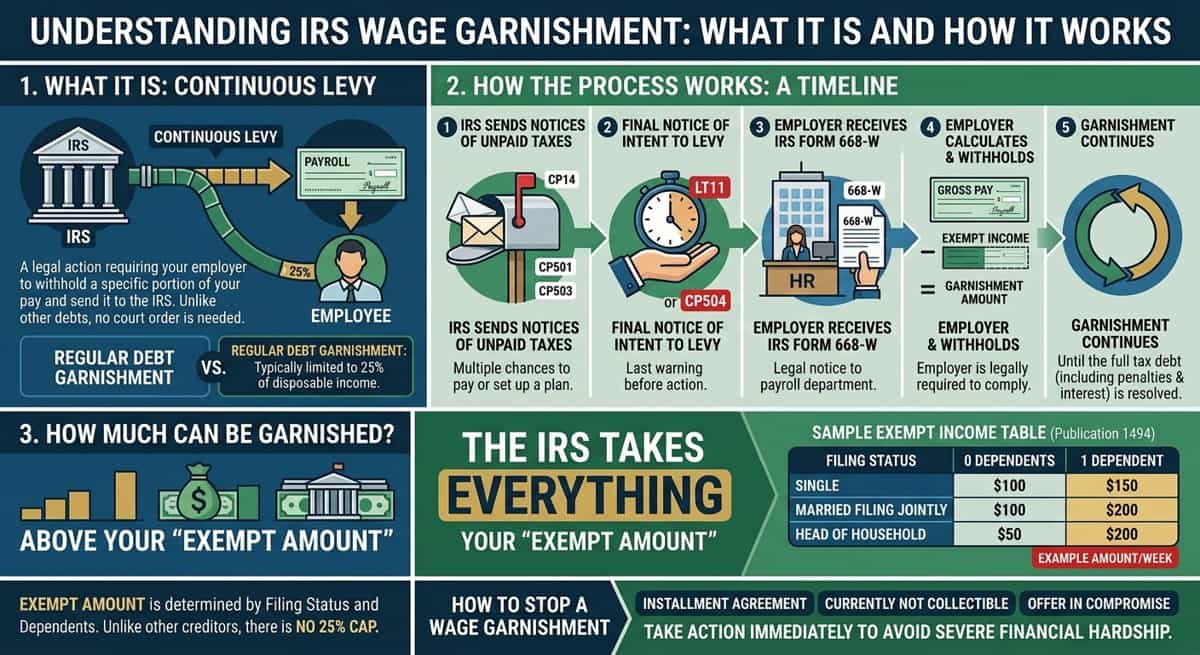
What Is an IRS Wage Garnishment and How Does It Work?
10 min read
Get Your Free Consultation
Speak with a certified debt consultant to explore your options.
Start NowNo obligation • Free consultation