
What Is a Reasonable Cause for IRS Penalty Relief
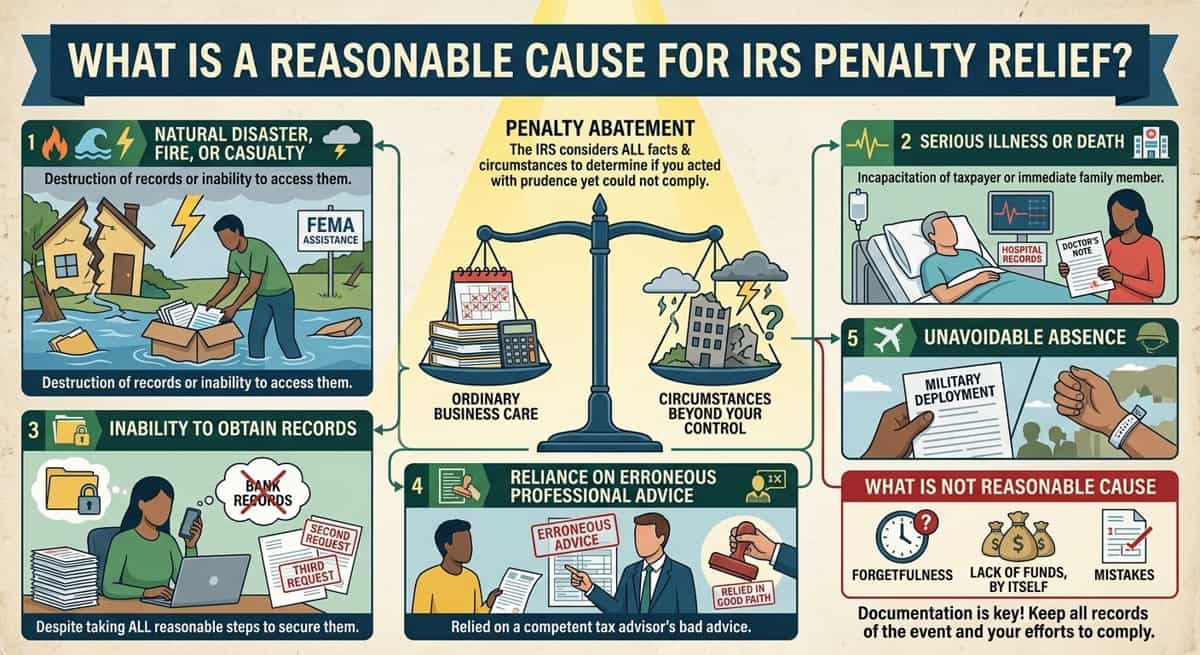
If the IRS has hit you with a penalty and you're wondering whether you have any way to fight it, "reasonable cause" is the term you need to know. In plain terms, it means you had a real, honest reason for filing late, paying late, or making a mistake something outside your normal control and the IRS can agree to remove the penalty if you can show that. It won't erase what you owe in taxes, but it can wipe out the extra charges stacked on top. Below, we'll walk through exactly what counts, what doesn't, and how families like yours have used this to get relief.
What Does "Reasonable Cause" Mean in IRS Terms?
The IRS doesn't expect perfection. It expects you to act the way a responsible person would if they were trying their best to meet their tax obligations. That's the actual standard the IRS uses, and it's sometimes called "ordinary business care and prudence." If something happened that got in the way of that even though you were trying to do the right thing the IRS can agree to forgive the penalty.
This is different from simply not having the money to pay, or finding the tax rules confusing. Reasonable cause is about why you couldn't file or pay on time, not about whether you agree with the amount you owe. For example, if you were hospitalized the week your return was due, that's a reason connected to your ability to act. If you just didn't get around to it, that's not.
The IRS lays this standard out in its own internal manual, and the same basic test applies whether the penalty is for filing late, paying late, or an accuracy issue on your return. Every request is looked at based on your specific facts, so two people with similar situations can sometimes get different outcomes depending on how well they explain and document what happened.
Why Reasonable Cause Matters More for South Asian Immigrant Households
If you or your parents came to the U.S. from India, Pakistan, Bangladesh, Sri Lanka, or Nepal, your tax situation is often more layered than it looks on paper. Many families are filing U.S. taxes for the first time in their lives, sometimes juggling a visa status, a green card process, or a recent citizenship all while learning a completely new tax system with no one to explain it in a way that actually makes sense.
It's also common for South Asian households to run small businesses that deal heavily in cash motels, gas stations, grocery stores, restaurants, salons, or rideshare work. Cash-based income is harder to track, easier to under-report by accident, and more likely to trigger penalties or even threats of IRS small business bank account seizures simply from bookkeeping gaps.
On top of that, a lot of families rely on a "tax guy" in the community, someone who isn't a licensed CPA or Enrolled Agent to prepare returns quickly and cheaply. When that person makes an error or misses a form, the penalty still lands on you, not them.
And then there's the financial ripple effect within the family. Money sent home to parents or siblings, joint bank accounts held with relatives abroad, or property back home can all come with tax reporting rules most people have never heard of. A penalty that seems small on a notice can quietly grow with interest and put real strain on a family that's already sending part of every paycheck overseas. Understanding reasonable cause isn't just a technical fix for many of these households, it's the difference between a manageable setback and a debt spiral.
The Legal Standard Explained: "Ordinary Business Care and Prudence"
When the IRS reviews a reasonable cause request, it's really asking four questions:
What actually happened that kept you from filing or paying on time?
Was it something you couldn't reasonably have avoided? Not just inconvenient genuinely outside your control.
What did you do once the obstacle passed? Did you file or pay as soon as you reasonably could, or did more time slip by?
What's your track record? A first-time slip-up with an otherwise clean filing history is viewed differently than a repeated pattern of late filing.
The IRS isn't looking for a perfect excuse, it's looking for evidence that you were acting like someone who takes their tax responsibilities seriously, and that something specific and real got in the way. Vague statements like "I was busy" or "it was a stressful year" rarely hold up on their own. Specific, documented events do.
Situations the IRS Commonly Accepts as Reasonable Cause
Death, Serious Illness, or Incapacitation
If you, your spouse, or an immediate family member responsible for handling the taxes passed away, became seriously ill, or was hospitalized around the filing deadline, this is one of the most commonly accepted reasons. The key is timing the illness or death needs to reasonably explain why the deadline was missed, and you'll want documentation like medical records or a death certificate.
Natural Disasters and Federally Declared Emergencies
Fires, floods, hurricanes, and other disasters that damage your home, records, or ability to function normally are recognized reasons. If the IRS has already issued disaster relief for your area, you may not even need to ask but if your situation was unique, you can still request relief individually.
Reliance on Erroneous Written Advice from the IRS or a Tax Professional
If you followed written advice from the IRS itself, or from a paid tax preparer, and that advice turned out to be wrong, you may qualify especially if you gave your preparer accurate and complete information and had no reason to doubt them. This matters a lot in South Asian communities, where informal preparers are common. If you can show you relied in good faith on someone you paid to get it right, that carries real weight. Verbal advice from a friend or relative generally does not count the same way.
Inability to Obtain Records
Sometimes you simply can't get the documents you need in time. Records were destroyed, held by a former employer or bank, or stuck overseas. If you can show you made a genuine effort to get what you needed and it wasn't available through no fault of your own, this can support a reasonable cause claim.
Unavoidable Absence (Travel Abroad, Family Emergencies)
This one comes up often for South Asian families. A sudden trip back to India, Pakistan, or Bangladesh for a family emergency, a funeral, or an urgent situation especially if the person responsible for the taxes was the one who had to travel can qualify. Visa or consular delays that kept someone from returning on time strengthen the case further. The important thing is showing that the person who needed to sign, file, or arrange payment genuinely wasn't able to during that window.
What Does NOT Count as Reasonable Cause
It helps to know where the line is drawn, because some common excuses simply don't hold up:
"I didn't know I had to file" or "I didn't understand the rules." Being new to the U.S. tax system on its own usually isn't enough, though it can support a stronger argument when combined with other factors.
"My preparer forgot to file it." If you didn't give your preparer what they needed, or didn't follow up to confirm it was filed, this alone often won't qualify.
"I couldn't afford to pay." Not having the money is a cash flow problem, not a reasonable cause though there are separate tax relief and resolution options that can help with that.
"The return was too complicated." Complexity is expected to be handled by getting help, not treated as an excuse.
General forgetfulness or being busy. Without a specific, documented event behind it, this rarely succeeds.
None of this means you're out of options if your situation falls into one of these categories. You still have protections under your rights as a taxpayer when dealing with the IRS, and tools like first-time penalty relief (covered below) might work better.
Special Situation: Foreign Accounts, FBAR, and Remittance-Related Penalties
This is one of the biggest blind spots for South Asian families, and it deserves its own section. If you have a bank account, fixed deposit, property, or investment back home worth more than certain thresholds, the U.S. requires you to report it even if you never earned a dollar of U.S. income from it. Two forms come up most often:
FBAR (FinCEN Form 114): Required if the combined value of your foreign accounts was over $10,000 at any point during the year. This includes joint accounts with parents or siblings.
Form 8938: A separate foreign asset disclosure required at higher thresholds, filed with your tax return.
Missing these isn't rare; plenty of people genuinely had no idea an account back home needed to be reported to the IRS. If that's your situation, reasonable cause can sometimes apply, but there's also a separate, often better path: the IRS's Streamlined Filing Compliance Procedures, designed specifically for people who didn't willfully hide foreign accounts and simply didn't know the rules.
There's also the question of large money transfers sending money home for a parent's medical care, a sibling's wedding, or buying property for the family. Big gifts or inheritances from abroad can trigger a reporting requirement (Form 3520), even though there's usually no tax owed on the gift itself. The penalty here almost always comes from not reporting it, not from the money itself which is exactly the kind of honest, understandable mistake reasonable cause exists for.
First-Time Penalty Abatement (FTA) vs. Reasonable Cause
Before you go through the work of writing a reasonable cause letter, check whether you qualify for something simpler: First-Time Penalty Abatement.
FTA doesn't require you to prove anything happened to you. If you've filed and paid on time for the past three years, and this is your first penalty of this kind, the IRS will often remove it just because of your clean history, no story, no documentation, no explanation needed.
Reasonable cause, by contrast, requires you to explain and support what happened, but it can apply even if you don't have a clean three-year history, and even for larger or repeated penalties. Many tax professionals suggest requesting FTA first since it's faster and easier, and only building a reasonable cause case if FTA doesn't apply or doesn't fully resolve the penalty.
How to Request IRS Penalty Relief: Step-by-Step
Identify the exact penalty and check FTA eligibility first. Look at your IRS notice to see which penalty was charged (late filing, late payment, or accuracy-related), and check your filing history for the last three years.
Gather your documentation. Medical records, death certificates, disaster declarations, travel records, correspondence with your preparer anything that backs up your explanation.
Write a clear reasonable cause statement. Explain what happened, when it happened, how it prevented you from filing or paying, and what you did as soon as you were able to. Keep it factual and specific rather than emotional.
File Form 843, or respond directly to the notice. Form 843 (Claim for Refund and Request for Penalty Abatement) is the standard form for this, though sometimes a written response to the specific notice you received works just as well. Attach your documentation.
Follow up, and appeal if needed. IRS response times vary, but if your request is denied, you generally have the right to appeal through the IRS Office of Appeals or, in some cases, request a Collection Due Process hearing. A denial isn't always the final word.
Documents That Strengthen a Reasonable Cause Claim
The strength of your case usually comes down to your paperwork. Useful documents include:
Medical records or hospital discharge papers
A death certificate, if applicable
FEMA or state disaster declarations
Travel records, flight bookings, or visa/passport stamps showing dates abroad
Emails or letters from your tax preparer
Bank or account statements showing when foreign accounts were discovered or reported
A clear timeline showing when the obstacle started and when it ended
The goal is to make it easy for the IRS reviewer to connect the dots between what happened to you and why the deadline was missed.
Common Mistakes South Asian Taxpayers Make When Requesting Relief
Writing a vague explanation. "There were personal issues" doesn't tell the IRS anything. Be specific about what happened and when.
Not translating or certifying foreign documents. If your proof of a death certificate, medical record, or property document is in Hindi, Urdu, Bengali, or another language, get a certified translation before submitting it.
Waiting too long after the situation resolves. The IRS expects you to act promptly once you're able to. Waiting months after your trip abroad or your recovery can weaken your case.
Mixing up FTA and reasonable cause. Applying for the wrong one, or not checking FTA eligibility first, can cost you time.
Relying only on informal advice. A well-meaning relative or unlicensed preparer isn't the same as a professional who can actually build your case and represent you if the IRS pushes back.
When to Work With a Licensed Tax Professional
You don't need a professional for every situation, but it's worth bringing one in if:
You have foreign accounts or property and aren't sure what needs to be reported
The penalty involves multiple years or a large dollar amount
You're facing an audit alongside the penalty
Your case depends on documents that need translation or verification
You've already tried resolving it yourself and been denied
Look for a licensed tax attorney all of whom are authorized to represent you directly in front of the IRS. Be cautious of preparers who promise guaranteed results, charge unusually low fees for complex cases, or aren't willing to put their credentials and contact information in writing. If you need help negotiating with the IRS, you can schedule a free debt consultation with Ooraa to explore your options.
Key Takeaways
Reasonable cause means the IRS can remove a penalty if something genuine and out of your control kept you from filing or paying on time.
Common qualifying events include serious illness, death in the family, natural disasters, bad advice from a preparer, and unavoidable travel abroad.
Simply not knowing the rules or not being able to afford the tax bill usually isn't enough on its own.
Foreign accounts, remittances, and gifts from family abroad are a major, often-overlooked source of penalties for South Asian households and there are specific programs built for exactly this situation.
Check First-Time Penalty Abatement before building a full reasonable cause case it's often faster and easier.
Good documentation and a clear timeline make or break your request.
For anything involving foreign assets, multiple years, or an audit, working with a licensed CPA, EA, or tax attorney is worth it.
Ready to Get Started?
Get a free consultation with a certified debt consultant to see if debt settlement is right for you.
Get Free ConsultationAbout the Author
Bhupinder Bajwa
.
Related Articles
IRS Tax Fraud: Types, Penalties, Warning Signs, and What to Do
11 min read
What Is the Difference Between Tax Fraud and an Honest Tax Mistake?
11 min read
How Much Should You Pay Per Month on an IRS Installment Agreement?
10 min read
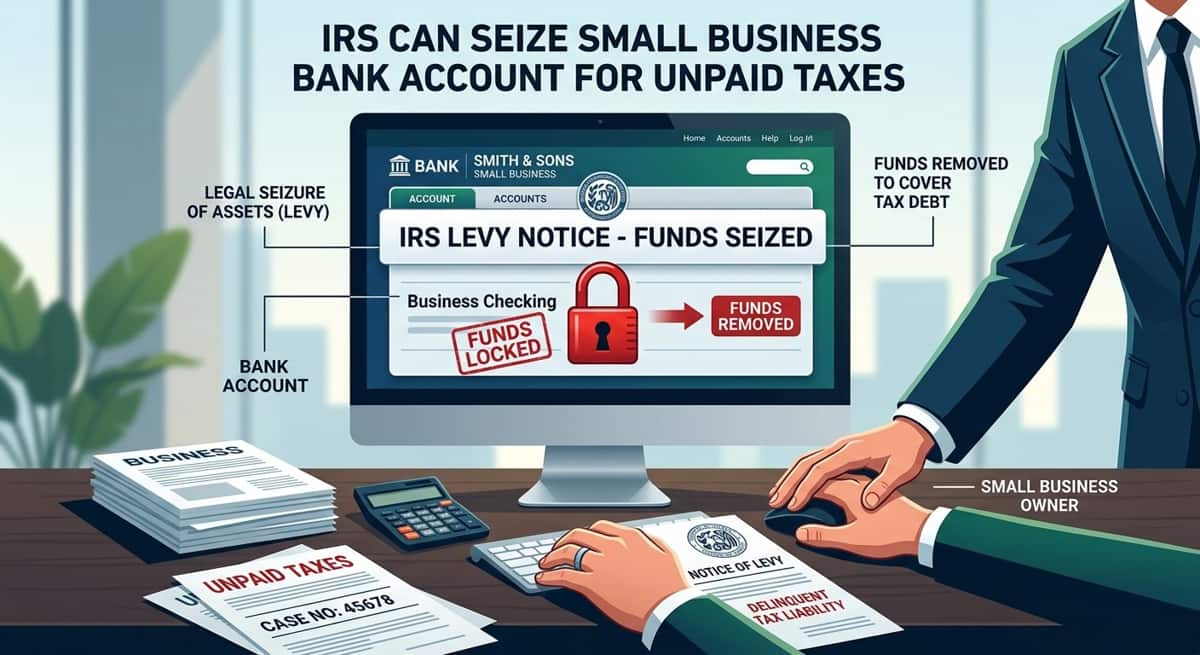
Can the IRS Seize a Small Business Bank Account for Unpaid Taxes?
11 min read
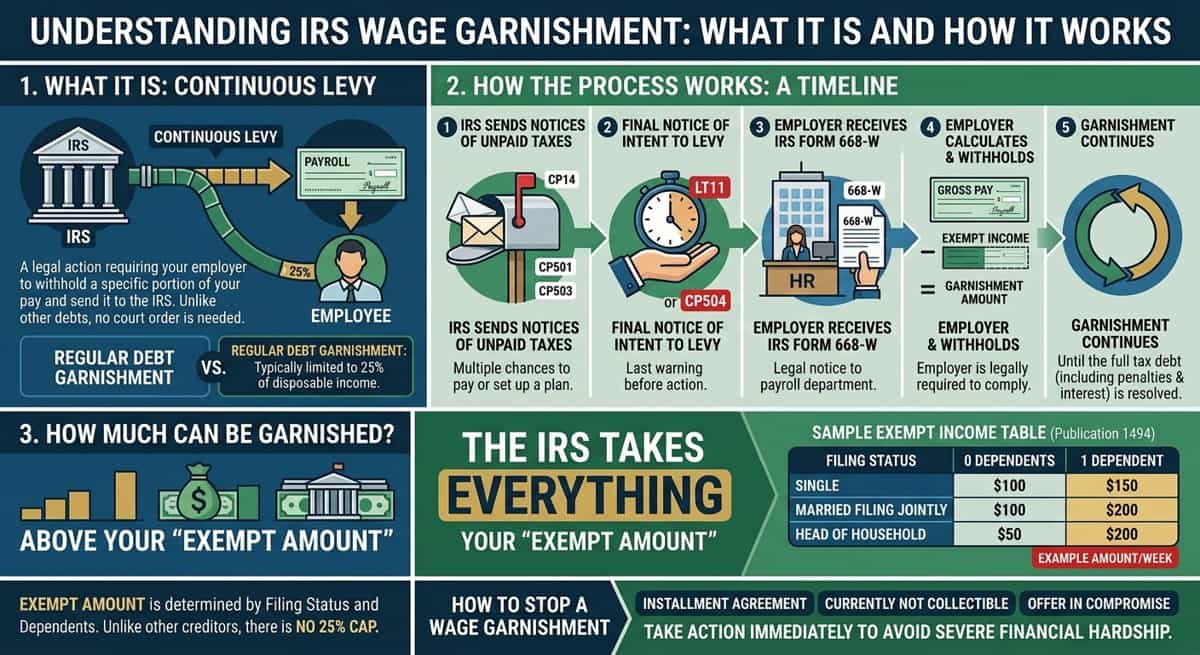
What Is an IRS Wage Garnishment and How Does It Work?
10 min read
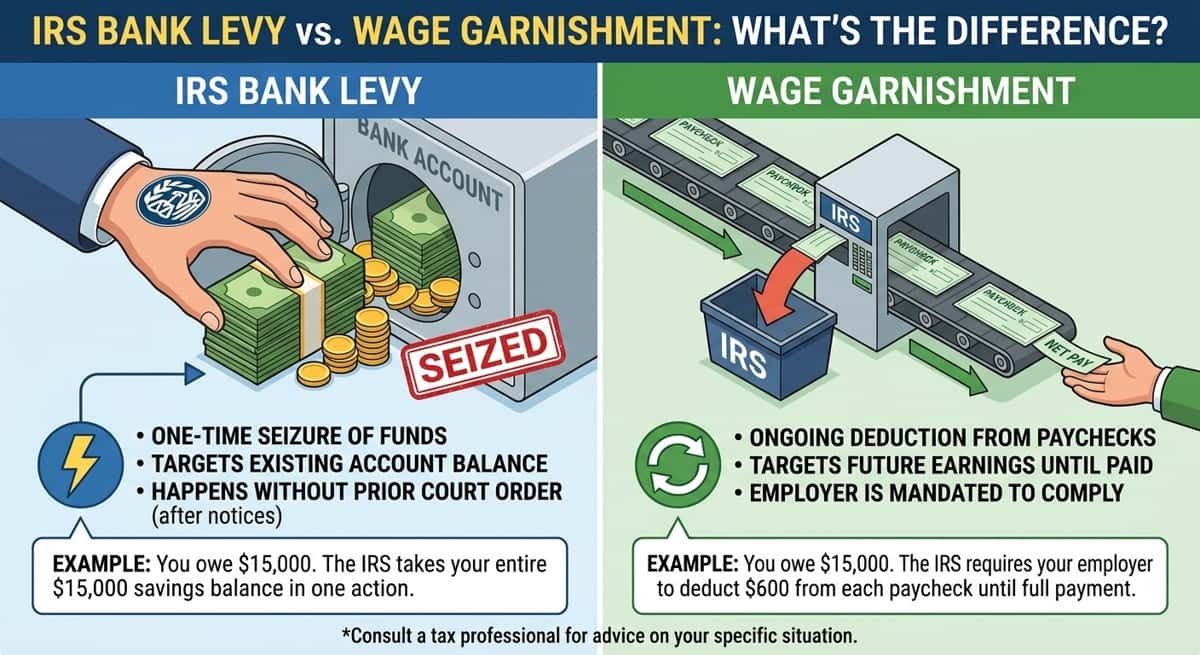
IRS Bank Levy vs. Wage Garnishment: What's the Difference?
11 min read
Get Your Free Consultation
Speak with a certified debt consultant to explore your options.
Start NowNo obligation • Free consultation
Related Posts
- IRS Tax Fraud: Types, Penalties, Warning Signs, and What to Do
11 min read
- What Is the Difference Between Tax Fraud and an Honest Tax Mistake?
11 min read
- How Much Should You Pay Per Month on an IRS Installment Agreement?
10 min read
- Can the IRS Seize a Small Business Bank Account for Unpaid Taxes?
11 min read