
What Is an IRS Wage Garnishment and How Does It Work?
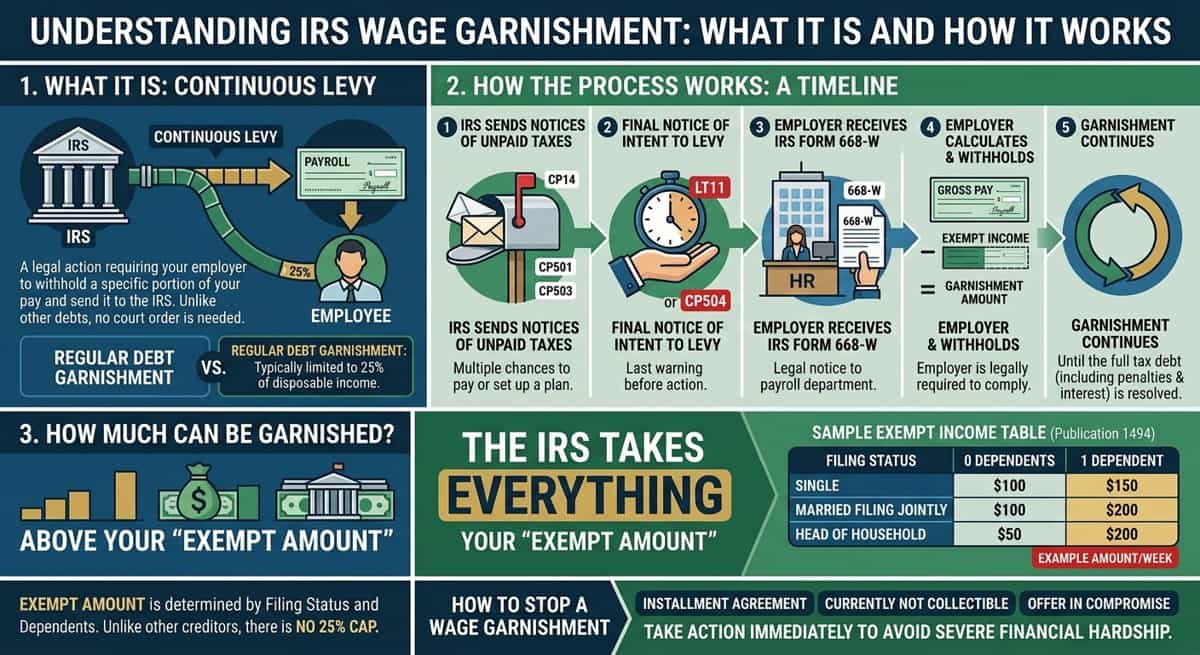
If part of your paycheck has suddenly gone missing and a letter from the IRS arrived a few weeks earlier, you're probably dealing with a wage garnishment the IRS calls it a levy. It's a legal action that requires your employer to hold back a portion of your pay and send it directly to the IRS until a tax debt is settled.
For a lot of immigrant and first-generation families, this kind of letter carries extra weight. Money problems are often handled quietly within the family, and a notice from a federal agency can feel far more serious than it usually is. If you're newer to how U.S. taxes work, the whole process can feel confusing on top of everything else.
This guide walks through what a wage garnishment actually is, how the IRS gets to that point, how much of your pay it can legally take, and most importantly the real steps you can take to stop it.
What Is an IRS Wage Garnishment, Exactly?
A process of IRS wage garnishment is when the IRS legally requires your employer to withhold a set portion of your paycheck and send it to the government to pay off a tax debt you owe. It keeps happening every pay period until the debt is paid off, settled, or otherwise resolved.
Here's what makes it different from most other kinds of debt collection: under Section 6331 of the tax code, the IRS doesn't need to take you to court first. A private creditor, a credit card company, a medical provider, or a lender has to sue you and win a judgment before they can touch your wages. The IRS skips that step. It can move straight to garnishment once it has followed its own notice process, which is one reason people are often caught off guard by how fast things escalate once the paperwork starts arriving.
It also helps to have two terms that get mixed up constantly: Know the difference between a levy and a lien. A lien is the government's legal claim against your property; it doesn't take anything from you directly, it just secures the debt. A levy is the actual seizure, and a wage garnishment is one specific form of levy. Knowing which one you're dealing with matters, because the notices and next steps aren't the same.
How Does IRS Wage Garnishment Work? The Step-by-Step Process
Garnishment doesn't happen overnight. It's the last stop in a process that usually plays out over months, sometimes longer, and there are several points along the way where you can still act.
The debt goes unpaid. You file a return with a balance due, or the IRS adjusts your return and assesses additional tax, and it isn't paid.
A series of notices starts arriving detailing what the IRS can legally do to collect, building up to a notice called CP504 Notice of Intent to Seize (Levy) Your Property.
The Final Notice arrives. This is the Final Notice of Intent to Levy and Notice of Your Right to a Hearing. Once this shows up, a 30-day clock starts.
You have the right to request a hearing. During that 30-day window, you can ask for a Collection Due Process (CDP) hearing to dispute the debt or propose an alternative.
If nothing is resolved, the IRS contacts your employer. The IRS sends Form 668-W directly to your employer.
Your employer is legally required to comply. They must begin withholding the specified amount from each paycheck and send it to the IRS if they don't have a choice in the matter.
It continues until something changes. The garnishment stays in place until the debt is paid off, an agreement is reached, or the IRS releases the levy for another reason.
If there's one detail to underline in this entire process, it's the 30-day window after the Final Notice. That's the point where you still have real options and real leverage. Once that window closes without a response, things move out of your hands.
What This Means for Immigrants and South Asian Families in the U.S.
A wage garnishment brings up questions that go beyond the money itself, especially for families still building their footing in the U.S. system. It's worth addressing these directly.
Does it affect your visa, green card, or citizenship application? Wage garnishment is a civil tax collection matter, it is not a criminal issue and it is not an immigration enforcement action on its own. That said, unresolved tax debt can complicate certain immigration filings down the road, since some green card and naturalization applications ask about tax compliance. Resolving the debt, rather than letting it sit, protects those future steps.
Does it work differently if you file with an ITIN instead of a Social Security number? The notice and employer withholding process is largely the same either way. What can differ is how quickly the IRS can verify your income and identity, which is one more reason to respond early rather than let notices pile up unopened.
There's also a cultural layer worth naming honestly. In many South Asian households, opening a government letter about money let alone talking about it at the dinner table isn't something that comes naturally. That instinct to handle it quietly, or not open the mail at all, is exactly what turns a manageable notice into a garnishment. The families who come out of this the fastest are usually the ones who dealt with the first letter, not the fifth one.
And to be clear: this is not a permanent mark against you. It's a resolvable administrative process with defined steps on both sides. The sooner it's addressed, the fewer of those steps you'll have to go through.
How Much of Your Paycheck Can the IRS Legally Garnish?
This is where IRS garnishment really stands apart from what most people picture when they hear "wage garnishment." A private creditor is capped by federal law at taking no more than 25% of your disposable income. The IRS isn't bound by that same cap.
Instead, the IRS calculates an "exempt amount" , the portion of your paycheck you're allowed to keep based on your filing status, how often you're paid, and the number of dependents you claim. Everything above that exempt amount can be taken. Because the standard exemption amounts tend to be modest, this can mean a much larger chunk of a paycheck disappears compared to what a private creditor could ever legally touch.
The exact dollar figures for these exemptions change every tax year, so rather than listing numbers here that could be outdated by the time you read this, the most reliable move is to check the IRS's own Publication 1494, which lists the current tables directly.
Warning Signs You May Be at Risk of Wage Garnishment
Garnishment rarely shows up without warning. Watch for these signs that things are heading in that direction:
A CP14 notice — the IRS's first letter telling you a balance is due
Follow-up notices labeled CP501 and CP503, each one a step further in urgency
A CP504 notice of Intent to Seize, the last stop before the Final Notice
Certified mail from the IRS that's gone unopened or unclaimed
A missed payment on an existing installment agreement
Catching any of these early especially before a CP504 is the single easiest way to avoid garnishment altogether.
The Ripple Effects of Wage Garnishment Beyond Your Paycheck
The impact of a garnishment rarely stays contained to the paycheck it comes out of.
Household budgeting takes an immediate hit, and for families who regularly send money to relatives abroad, that strain often shows up on both sides of the world at once. In households where income is shared or filed jointly, a garnishment can affect a spouse's finances even when the debt technically belongs to one person. And for many people, one of the hardest parts isn't the money at all, it's knowing their employer now has visibility into a private financial matter, which can feel like an unwelcome intrusion into something that was meant to stay personal.
Layered on top of the financial strain, there's often real emotional weight stress at home, tension between partners, a sense of falling behind. None of that is unusual, and none of it is permanent. The good news is that every one of these effects has a clear off-ramp, which is exactly what the next section covers.
How to Stop or Reduce an IRS Wage Garnishment
There isn't just one way out. Depending on your situation, one of these paths is likely to fit:
Pay the balance in full. The most direct route, when it's realistic.
Set up an Installment Agreement. Spreads the debt into manageable monthly payments and typically stops the garnishment once it's in place.
Apply for an Offer in Compromise. Lets you settle the debt for less than the full amount owed, if you qualify based on your financial situation.
Request Currently Not Collectible (CNC) status. If paying anything right now would create genuine financial hardship, the IRS can pause collection entirely for a period.
Prove economic hardship. Using Form 433-A along with documentation of your income and expenses, you can show that the levy is preventing you from covering basic living costs.
Request a Collection Due Process hearing. If you believe the process wasn't followed correctly, this is your formal way to challenge it.
Work with an Enrolled Agent, CPA, or tax attorney. A qualified professional can negotiate directly with the IRS on your behalf.
One thing worth setting expectations on: even once you and the IRS agree on a resolution, the garnishment doesn't stop the same day. There's usually a short lag before your employer receives the release notice, so don't be alarmed if a paycheck or two still shows the deduction after an agreement is reached.
What to Do If You've Just Received an IRS Notice
If a notice just landed in your mailbox, here's the order to work through it in:
Don't ignore it. This is the single most damaging thing you can do at this stage.
Confirm the debt is legitimate. Cross-check it against your own tax filings and records before assuming it's accurate.
Write down every deadline on the notice. Especially the 30-day window if it's a Final Notice.
Gather your income and expense documentation. You'll need this regardless of which path you take next.
Reach out to the IRS or a qualified representative before the deadline closes. Waiting until the last few days limits your options.
Consider the Taxpayer Advocate Service. If you're facing significant financial hardship, this independent office within the IRS can help, often at no cost.
When to Bring in a Debt Relief or Tax Resolution Professional
A qualified tax resolution professional, an Enrolled Agent, CPA, or tax attorney steps in as your representative with the IRS. They can request holds on collection, negotiate payment terms, file the paperwork for an Offer in Compromise or CNC status, and generally take the direct back-and-forth off your plate.
Before hiring anyone, it's worth checking their credentials. Enrolled Agents, CPAs, and attorneys are all legitimate options, and Enrolled Agents specifically hold what's called Circular 230 standing with the IRS, which is a good baseline to look for.
Unfortunately, this space also attracts predatory operators, and immigrant communities are frequently targeted directly. Be cautious of any company that guarantees a specific settlement amount before reviewing your full financial picture, pressures you to sign quickly, or asks for large upfront fees with no clear scope of work. A legitimate professional will want to see your actual numbers before promising an outcome.
Key Takeaways
An IRS wage garnishment follows a defined legal process, not a surprise attack; there are notices, deadlines, and real windows where you can still act before your paycheck is affected. The most important one is the 30-day period after the Final Notice of Intent to Levy.
This is a resolvable situation, not a permanent setback. Whether that means setting up a payment plan, proving financial hardship, or bringing in a professional to negotiate on your behalf, there's a path forward for nearly every circumstance. The outcomes are consistently better for people who respond early rather than let the notices sit.
Ready to Get Started?
Get a free consultation with a certified debt consultant to see if debt settlement is right for you.
Get Free ConsultationAbout the Author
Bhupinder Bajwa
.
Related Articles
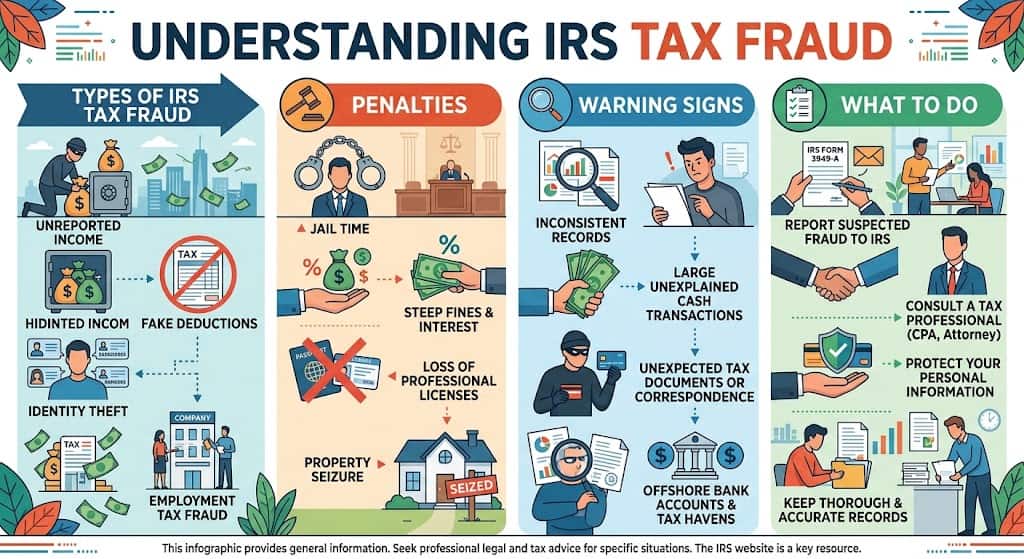
IRS Tax Fraud: Types, Penalties, Warning Signs, and What to Do
11 min read
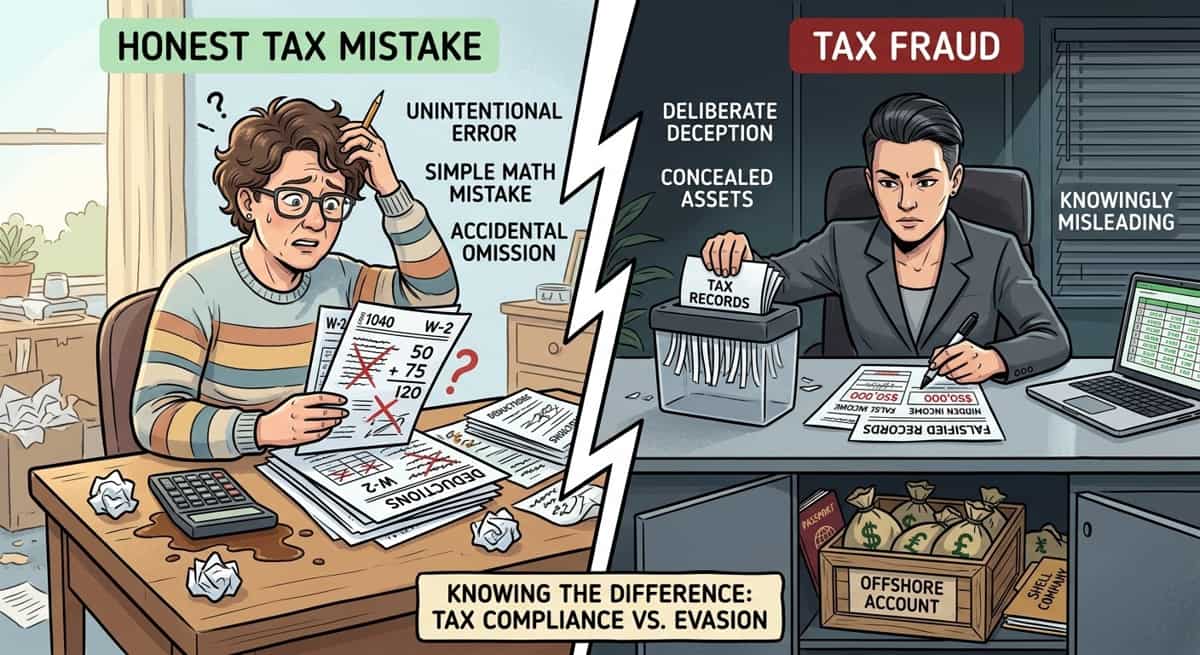
What Is the Difference Between Tax Fraud and an Honest Tax Mistake?
11 min read
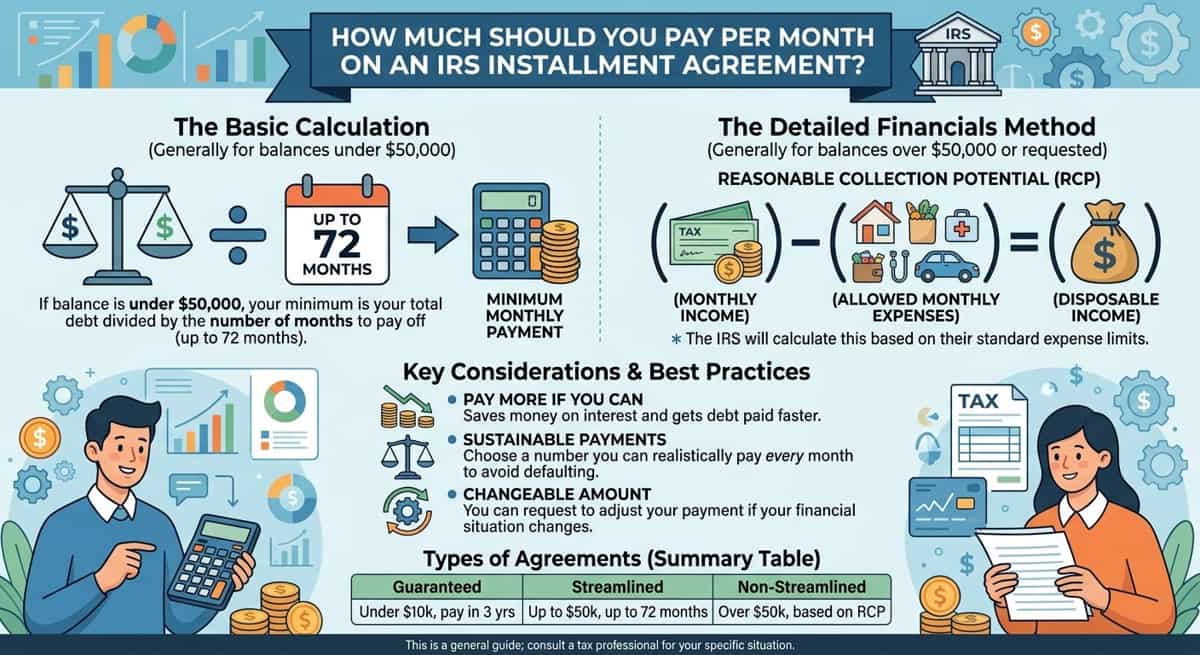
How Much Should You Pay Per Month on an IRS Installment Agreement?
10 min read
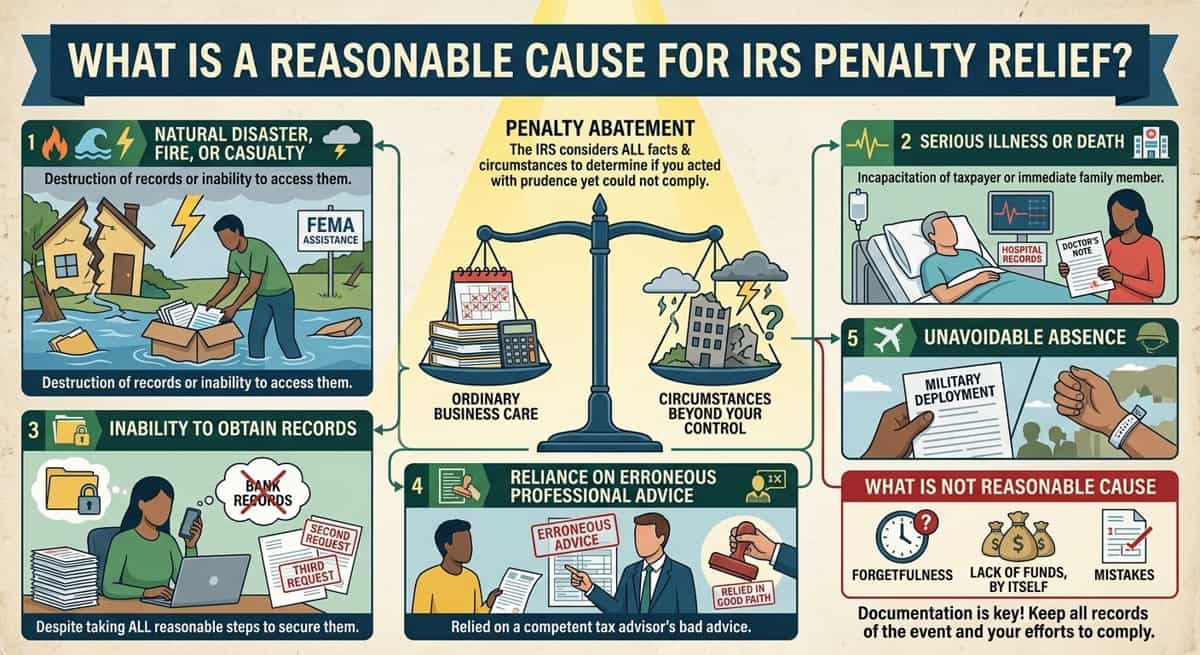
What Is a Reasonable Cause for IRS Penalty Relief
12 min read
Can the IRS Seize a Small Business Bank Account for Unpaid Taxes?
11 min read
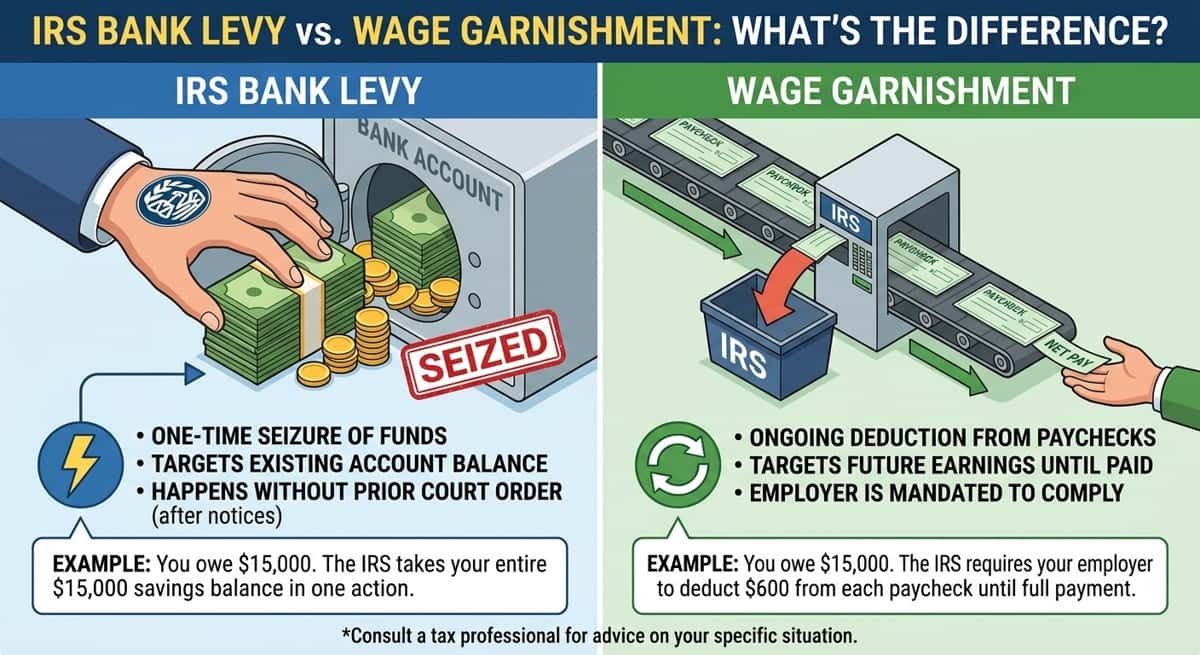
IRS Bank Levy vs. Wage Garnishment: What's the Difference?
11 min read
Get Your Free Consultation
Speak with a certified debt consultant to explore your options.
Start NowNo obligation • Free consultation