How to Use a Debt Validation Letter to Protect Yourself
The envelope looks official. Inside, a company you’ve never heard of says you owe $1,847. Maybe it’s a credit card you closed years ago. Maybe it’s a medical bill you thought insurance covered. Maybe the name is right, but the amount feels wrong. Your stomach drops, and you wonder: should I call them, pay to make this go away, or tuck the letter in a drawer?
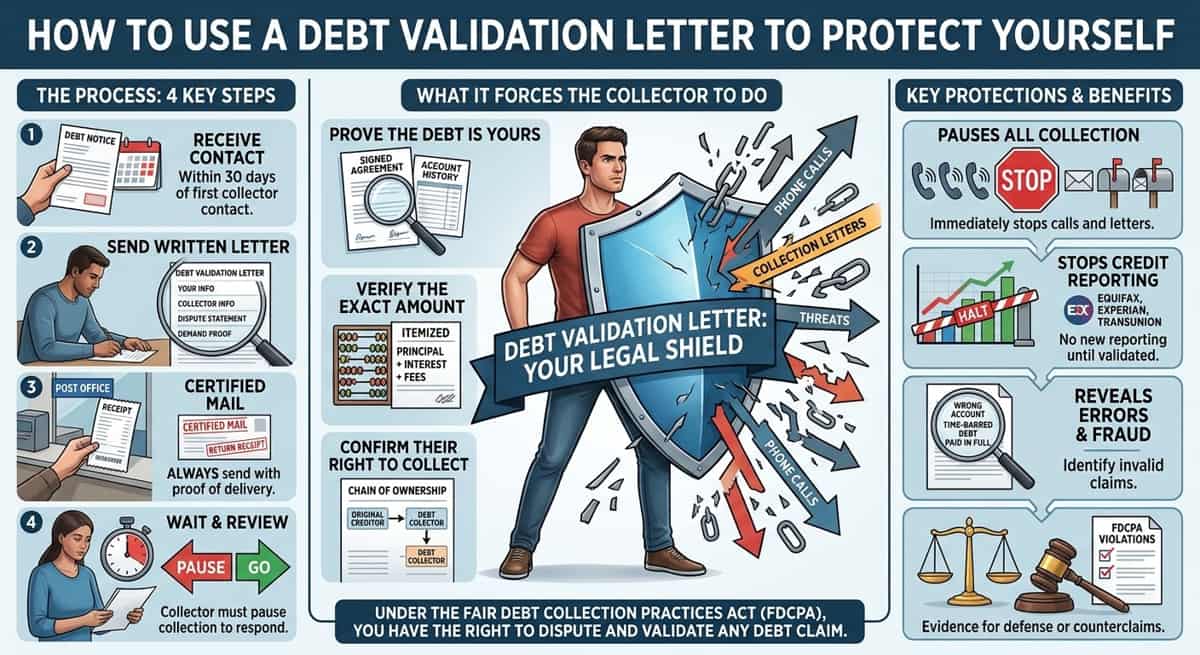
Take a breath. You have rights, and one simple tool that can help: a debt validation letter. It’s a written request asking a debt collector to prove the debt is yours and the amount is correct. If you send it within 30 days of getting the collector’s notice, it can pause collection on the amount you’re disputing while they check.
In this guide, we’ll walk through the timeline, the exact steps, what to put in your letter, mistakes to avoid, and a few things South Asian families in the U.S. often run into.
What Is a Debt Validation Letter, and What Does It Do?
A debt validation letter is a letter you send to a debt collector, asking them to prove that you owe the money they’re chasing. It’s also called a debt verification or dispute letter.
People often mix up two different things, so let’s separate them:
Validation notice | Your validation letter | |
Who sends it | The debt collector | You |
When | Usually in the collector’s first contact, or within 5 days after | Within 30 days of getting the notice |
Purpose | Tells you who they are, what they say you owe, and how to dispute it | Asks them to prove the debt and, if needed, name the original creditor |
The collector’s notice should show how much they say you owe, who the debt came from, and an end date for your 30-day window to dispute it. Your letter does three useful things. It creates a paper trail. It can pause collection on the disputed amount. And it makes the collector go back and check their records instead of simply pushing you to pay.
It won’t make the real debt disappear. But it makes sure you only deal with debts that are truly yours, in the right amount.
Who Is Protected, and When Does It Apply?
The main federal protections come from a law called the Fair Debt Collection Practices Act, along with a rule from the Consumer Financial Protection Bureau (CFPB) known as Regulation. They mostly apply to:
Third-party debt collectors, meaning companies hired to collect on someone else’s behalf
Debt buyers, meaning companies that purchase old debts and then try to collect them
They cover personal debts such as credit cards, medical bills, personal loans, auto loans, and student loans. They generally don’t cover business debts.
One important detail: the original company you borrowed from, like your bank, is usually not covered by these federal rules when it collects its own debt. Some states add extra rules that reach original creditors, so it’s worth checking your state’s rules.
Good to know: These federal protections are about the type of debt, not your passport. They apply to personal debts whether you’re a citizen, green card holder, student, or on a work visa.
Want to understand where your debt sits in the collection process and how to handle it? Explore debt relief options and see how our debt resolution process works.
The 30-Day Rule: Understanding Your Timeline
Time matters here. Sending your letter inside the 30-day window gives you the strongest protection.
How the 30-day window works
Your collector’s notice should include a specific end date for disputing the debt. Under Regulation F, your 30 days start when you receive the notice, not when it was written. Because mail takes time, collectors are allowed to assume you received it at least five business days after they sent it. Weekends and public holidays don’t count toward those five days. In most cases, the date printed on your notice already does this math for you, so use that date as your deadline.
A worked example
Say a collector mails a notice on Monday, March 2.
March 2: Notice is sent
March 9: Assumed received (five business days later)
April 8: Last day of your 30-day window
If your notice shows a different date, trust that one. And don’t wait for the last day. Mail early so you’re never racing the clock.
What if you missed the 30 days?
It’s not the end of the road. You can still dispute the debt and ask for proof after 30 days. The difference is that the collector isn’t required to stop collecting while they look into it. That’s why acting early is worth it.
How to Send a Debt Validation Letter: Step by Step
1. Don’t pay, promise, or admit anything yet
It’s tempting to send a little money to calm things down. Hold off.In some states, a small payment or even a written statement like “yes, I owe this” can restart the statute of limitations on debt collection, making an old debt easier to collect or sue over. Verify first, then decide.
2. Read the notice and gather the details
Write down the collector’s name and address, the account number, the amount they claim, the name of the original creditor, and the dates on the notice. Keep the envelope too, since the postmark can matter later.
3. Check your own records
Does this debt look familiar? Look through old statements and emails. Pull your free credit reports at AnnualCreditReport.com, and if you spot errors dragging down your score, take steps to repair bad credit early. Ask yourself whether the account could belong to someone else, like a relative who used your details, a former roommate, or an ex-partner. Mix-ups and identity theft happen more than people think.
4. Write the letter
Keep it short, polite, and factual. You’ll find a ready-to-use template in the next section.
5. Send it by certified mail with return receipt
Certified mail with a return receipt gives you proof of when the collector got your letter. Make a copy of everything you send, and take a photo of the mailing receipt. Many notices also list an email or website for disputes. You can use those too, but keep the certified mail as your backup proof.
6. Keep a simple log
Use a notebook or phone note. Write down every call, letter, and message: the date, the time, who you spoke with, and what was said. If the collector ever breaks the rules, this log becomes your strongest evidence.
What to Include in Your Letter (Plus a Free Template)
Include:
Your name and mailing address
The collector’s name and address
The account number or reference from their notice
A clear statement that you dispute the debt
A request that they verify the debt and name the original creditor
Leave out:
Your full Social Security number (the last four digits at most, and only if needed)
Bank account or card numbers
Angry words, long explanations, or legal arguments
What Happens After You Send the Letter
The collector’s duties
If your written request reaches the collector inside the 30-day window, they must pause collecting the amount you’re disputing until they respond properly to your request. The law doesn’t give an exact number of days for their reply, so be patient, and keep your certified mail receipt handy.
Three things that can happen
They send proof. You’ll see documents about the debt. Now you can decide whether to negotiate a payment plan, pay, or keep disputing if something still looks off.
They don’t reply, or they can’t verify it. Collection on that debt should stay paused. Don’t assume it’s over, though. Keep your records safe.
They keep pushing anyway. If they call, threaten, or collect before responding, you can file a complaint with the CFPB or the Federal Trade Commission (FTC). Your log and copies will help.
What about your credit report?
A validation letter doesn’t erase a correct debt from your credit report. If something on your report is wrong, you can dispute it separately with the credit bureaus. If you ever get a court summons, that’s a different matter entirely. Respond by the deadline on the paperwork, and don’t rely on your letter to stop a lawsuit.
Common Mistakes That Weaken Your Protection
Ignoring the notice. Silence can be treated as agreement.
Fix: mark your deadline on a calendar today.
Disputing only by phone. Calls leave no proof.
Fix: always follow up in writing.
Writing “I know I owe this.” That can hurt you.
Fix: only say you’re disputing and asking for proof.
Making a “good faith” payment too soon. It may restart the clock on an old debt in some states.
Fix: verify first.
Paying someone to “handle it” upfront. Be careful with anyone who demands fees before doing any work or promises to delete debt from your record.
Fix: start with free help from nonprofit counselors.
Special Considerations for South Asian Families in the USA
Every family’s story is different, but we hear certain situations again and again in our community.
You’re new to the U.S. Maybe you arrived on an H-1B, an F-1 student visa, or a green card, and your credit history is short. A collection notice for an account you don’t recognize could be a mix-up or identity theft. Check your records and verify before you assume it’s yours.
Money is shared with family. Joint accounts, co-signed loans, and informal loans among relatives and friends are common. Be clear about whose name is actually on the debt before you respond. And if you’re supporting family overseas, remember that your monthly remittances matter. Use practical budgeting tips to get out of debt faster so you know what you can truly afford before agreeing to any payment plan.
Someone threatens your immigration status. Some collectors, and plenty of scammers, say things like “you’ll be deported” or “we’ll have you arrested.” Unpaid consumer debt is not a crime, and collectors are not allowed to threaten actions they can’t legally take. If you hear this, write down exactly what was said and report it to the CFPB or FTC. If you’re worried about your immigration situation, speak with an immigration attorney.
Language can be a barrier. You can ask in writing to receive information in the language you’re most comfortable with, though collectors aren’t always required to provide it. The CFPB also accepts complaints in many languages. A trusted community organization can help you read and respond.
It feels shameful, so you stay quiet. Many people in our community carry debt in silence, worried about what relatives will think. You’re not alone, and asking for proof isn’t dishonorable. It’s smart. Also know that collectors have limits on contacting your family, neighbors, or employer, and they can’t tell them about your debt.
When to Get Professional Help
A letter is a great first step, but some situations need more support. Reach out to a nonprofit credit counselor or consumer-law attorney if:
You’ve been sued or received a court summons
Someone is threatening to garnish your wages
Several collectors are contacting you
The debts are large, old, or confusing
Look for NFCC-affiliated agencies, explore credit counseling for debt management , or check with HUD-approved housing counselors and local legal aid offices. If you’d like a friendly second pair of eyes on your situation, our team is happy to walk you through our debt relief programs for financial hardship, with no pressure and clear expectations about what we can and can’t do.
A word of caution: be wary of anyone who charges big fees upfront or guarantees they can wipe debt off your credit report. Honest help doesn’t come with guarantees like that.
Key Takeaways and Next Steps
Act within 30 days. Find the end date on your notice and mark it on your calendar.
Put it in writing. Send a short, polite letter by certified mail with a return receipt, and keep copies.
Keep records. Log every call, letter, and message.
Not sure where to begin? Download our free checklist, or reach out for a free consultation about your situation.
Ready to Get Started?
Get a free consultation with a certified debt consultant to see if debt settlement is right for you.
Get Free ConsultationAbout the Author
Bhupinder Bajwa
.
Related Articles
How to Settle SBA Loan Debt: Complete Guide to Debt Relief Options
11 min read
What to Know Before Getting a Debt Consolidation Loan
10 min read
Low Income Debt Relief Programs And Options
14 min read
The Ultimate Guide To Side Hustles To Pay Off Debt
12 min read
10 Reasons Why You Should Pay Off Debt
9 min read
7 Ways To Get Out Of Business Debt
11 min read
Get Your Free Consultation
Speak with a certified debt consultant to explore your options.
Start NowNo obligation • Free consultation