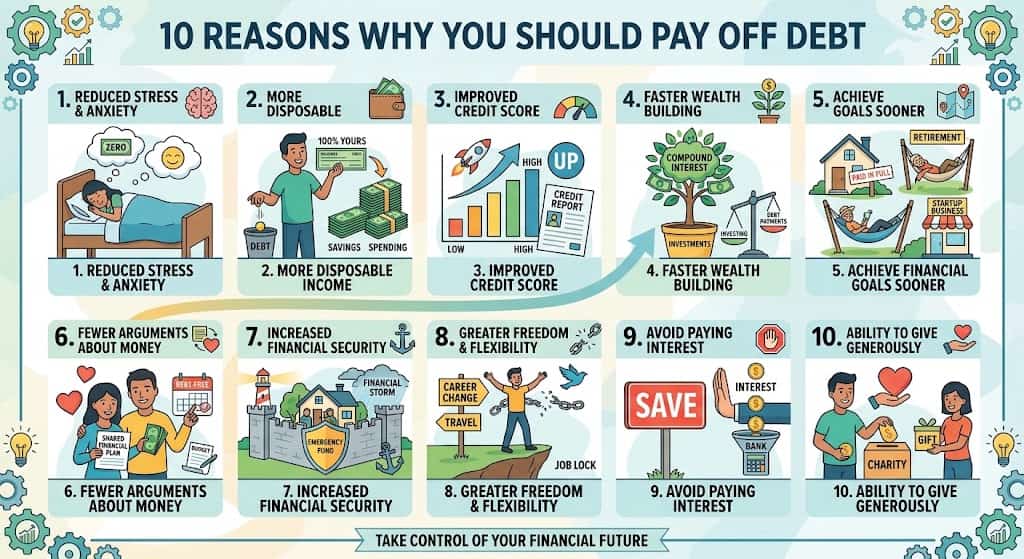
10 Reasons Why You Should Pay Off Debt
It's 11 p.m. and you're staring at your phone, doing the math again. The credit card balance from your cousin's wedding gift. The personal loan you took out to help pay for your sister's dowry back home. The money you send to your parents every month, no matter what. And somewhere in between all of that, you're wondering when or if you'll ever feel financially free.
If this sounds familiar, you're not alone. Many South Asian families living in the USA carry debt quietly, often while still supporting relatives abroad and keeping up appearances at home. This guide walks through ten real, practical reasons why paying off debt should be a priority not just for your bank account, but for your peace of mind, your family, and your future in this country.
Paying off debt improves your credit score, reduces daily stress, frees up money for your family and your goals, and helps you build real financial stability through a customized debt relief program. For South Asian households juggling remittances, family obligations, and immigration paperwork, becoming debt-free also means having more control over your own life and a stronger ability to support the people you love, without it costing you your future.
Why Debt Hits Different in South Asian Households
Debt doesn't feel the same for everyone. In many South Asian families, money isn't just a personal matter, it's a family matter. You might be paying off a loan from a big, expensive wedding. You might have taken a gold loan back home that's still being paid off by relatives, or co-signed a loan for a sibling or cousin who needed help. On top of your own bills, there's often an unspoken expectation to send money home every month, regardless of your own financial situation.
Then there's the silence around it. Many of us grew up hearing "log kya kahenge" what people say, which makes it hard to admit when money is tight, let alone ask for help. Add to that the challenge of building credit from scratch after moving to the US, often with little or no credit history from back home, and it's easy to see why debt can pile up quietly and stay hidden for years.
This is exactly why generic debt advice doesn't always work for our community. The reasons to pay off debt below are written with these realities in mind because your situation is different, and your path to financial freedom should reflect that.
10 Reasons You Should Pay Off Debt
Here are ten reasons paying off debt matters not just in theory, but in the real, everyday life of a South Asian household balancing family, culture, and finances in the USA.
1. It Boosts Your Credit Score and Financial Credibility
Your credit score plays a bigger role in your life than most people realize it affects your ability to rent an apartment, get approved for a car loan, or qualify for a mortgage. One of the biggest factors in your score is credit utilization ratio, which simply means how much of your available credit you're using. The lower your balances, the better your score tends to look.
This matters even more if you're new to the US financial system. Many immigrants arrive with no credit history at all, which means every payment counts double toward building trust with lenders. Paying off debt, especially credit cards is one of the fastest ways to raise your score and open doors that were previously closed, whether that's a better apartment, a car loan, or your first mortgage.
2. It Reduces Financial Stress and Mental Health Strain
Debt doesn't just affect your wallet it affects your sleep, your mood, and your relationships. Research consistently links debt with higher anxiety and stress levels, and that stress often shows up in ways we don't immediately connect to money: irritability, trouble concentrating, or feeling constantly on edge.
For many in our community, there's an added layer of pressure. You might be carrying the weight of family expectations, worried about being judged if others found out about your loans, or feeling like you have to appear financially "put together" even when you're struggling. Paying off debt lifts more than a balance off your statement; it lifts a weight off your mind.
3. It Frees Up Cash Flow for Remittances and Family Support
If you're regularly sending money to parents, siblings, or extended family back home, you already know how quickly it adds up. Now imagine doing that while also paying interest on credit cards or personal loans. Every dollar going toward interest is a dollar that isn't going toward your family, your savings, or your own goals.
Paying off debt frees up your monthly cash flow, which means you can support your loved ones more consistently and without the guilt of wondering if you're falling behind on your own bills to do it. It's not about sending less, it's about being able to send more, sustainably, without debt quietly working against you in the background.
4. It Increases Your Loan Eligibility for Future Goals
Whether you're planning to buy a home, start a business, or sponsor a family member's visa, your debt-to-income ratio matters. Lenders and immigration paperwork alike look closely at how much debt you're carrying compared to how much you earn.
If you're preparing to file an Affidavit of Support (Form I-864) for a spouse or parent, or applying for a mortgage, high debt levels can work against you. Paying down what you owe strengthens your financial profile, making it easier to qualify for the loans and the life milestones you're working toward.
5. It Saves You Thousands in Interest Payments
Here's a number that surprises a lot of people: if you carry a $5,000 credit card balance at 22% interest and only make minimum payments, you could end up paying more than double that amount over time just in interest. That's money that could have gone toward a down payment, your children's education, or a trip home to see family.
Exploring solutions like credit card debt settlement to pay off high-interest balances faster is one of the most effective ways to keep more of your hard-earned money in your own pocket instead of handing it over to a bank.
6. It Protects You from Predatory Lending and High-Interest Traps
Many of us grew up with informal lending systems committees, chit funds, or borrowing from family and friends. These can work well when trust and timing align. But when informal systems fall through, people sometimes turn to high-interest credit cards, payday loans, or predatory lenders to fill the gap, without realizing how quickly those costs can spiral.
Paying off existing debt reduces your reliance on these high-cost options and gives you more breathing room, so a financial emergency doesn't push you into a lending trap that's even harder to climb out of.
7. It Strengthens Your Ability to Build Generational Wealth
For many South Asian immigrants, the goal isn't just to get by, it's to build something lasting for the next generation. Debt gets in the way of that. Every dollar spent on interest is a dollar that isn't being invested, saved, or passed down.
Once your debt is paid off, you're able to redirect that money toward things that actually grow your family's future: retirement accounts, your children's education fund, or your first investment property. Getting out of debt isn't the finish line, it's the starting line for building real, lasting wealth.
8. It Improves Your Immigration and Financial Sponsorship Standing
If you're on a path toward sponsoring a family member, adjusting your immigration status, or even applying for certain visas, your financial stability can come under review. High debt levels or a low credit score can raise questions during these processes, while a strong financial picture makes things smoother.
Paying off debt isn't just a personal finance win for many in our community, it's also a practical step that supports bigger life goals, like bringing family members to the US or securing your own long-term status.
9. It Gives You Leverage to Negotiate Better Financial Products
Lenders and insurance companies pay close attention to your credit history when deciding what to offer you. A strong track record of paying off debt often means access to credit cards with better rewards, lower interest rates, and even lower insurance premiums.
Over time, this adds up to real savings. Being debt-free or actively working to become debt-free puts you in a stronger negotiating position for nearly every financial product you'll need in the years ahead.
10. It Restores a Sense of Control and Long-Term Financial Independence
Maybe the biggest reason of all: paying off debt gives you back a sense of control. No more mentally calculating interest before you fall asleep. No more feeling like your paycheck already belongs to someone else the moment it arrives.
For many South Asian Americans, financial independence also means something deeper: being able to support your family on your own terms, without debt quietly dictating your choices. That kind of freedom is worth working toward.
How to Start Paying Off Debt as a South Asian Household in the USA
Knowing why to pay off debt is one thing actually doing it is another, especially when family obligations are part of the equation. A few starting points:
Pick a payoff method that fits you. The debt snowball method (paying off your smallest balance first for quick wins) works well if you need motivation. The debt avalanche method (paying off your highest-interest debt first) saves you more money over time if you can stay consistent.
Have an honest conversation at home. If remittances or family loans are part of your monthly budget, working with multilingual debt consultants who understand cultural dynamics can help you build a plan that respects both your family obligations and your budget. A short-term adjustment now can prevent bigger financial strain later.
Know when to get outside help. If your debt feels unmanageable on your own, a nonprofit credit counselor (look for agencies affiliated with the National Foundation for Credit Counseling) can help you build a realistic plan often at low or no cost. Be cautious of for-profit debt settlement companies that promise quick fixes; they often come with high fees and can hurt your credit further.
Debt Freedom as a Path to Financial and Cultural Empowerment
Paying off debt isn't just about numbers on a statement. For South Asian families in the USA, it's about being able to support the people you love without sacrificing your own future and finally letting go of the quiet stress that debt so often carries with it.
You don't have to figure this out alone.
A nonprofit credit counselor or a fee-only financial planner familiar with immigrant finances can help you build a plan that respects both your goals and your family's needs. The path to financial freedom looks different for everyone, but it starts with one honest step forward.
Ready to Get Started?
Get a free consultation with a certified debt consultant to see if debt settlement is right for you.
Get Free ConsultationAbout the Author
Bhupinder Bajwa
.
Related Articles
7 Ways To Get Out Of Business Debt
11 min read
Is 639 A Good Credit Score? How It Affects Loans, Credit Cards And Ways To Improve It
12 min read
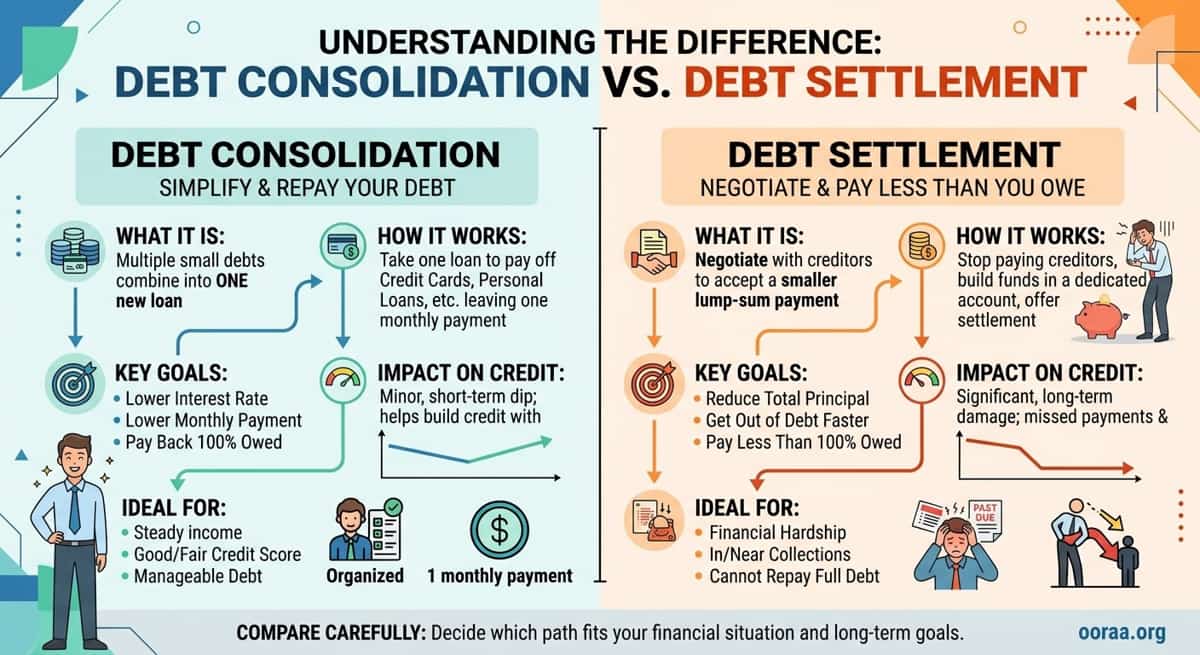
What’s The Difference Between Debt Consolidation And Debt Settlement?
12 min read
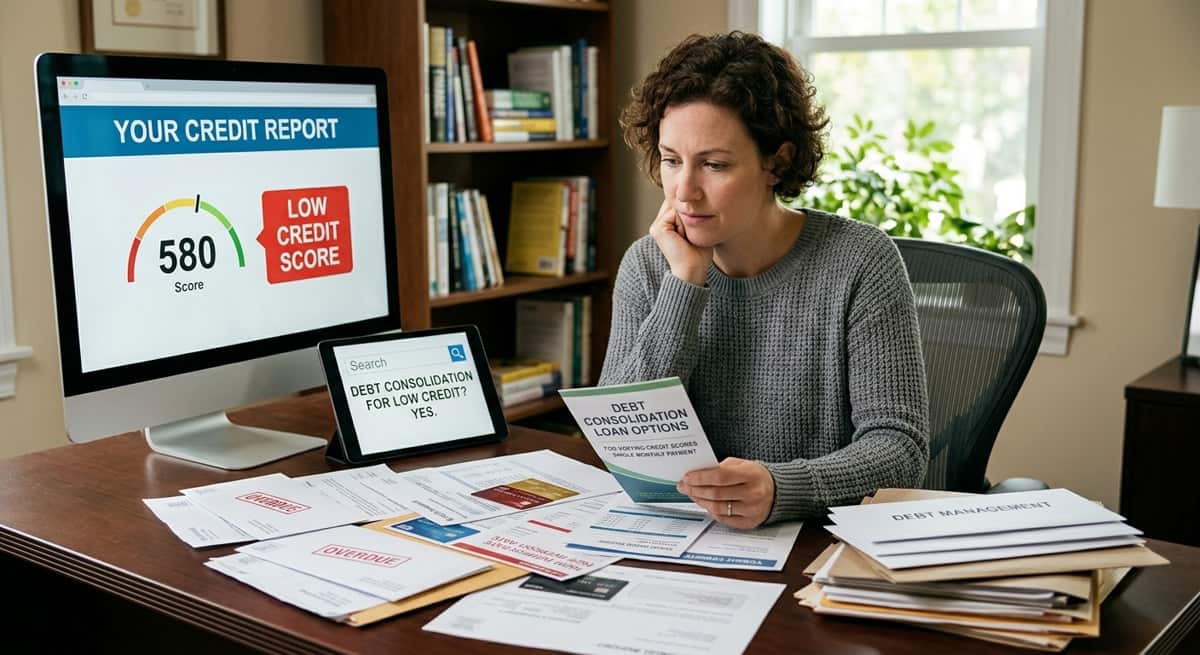
Can You Consolidate Debt With a Low Credit Score?
11 min read
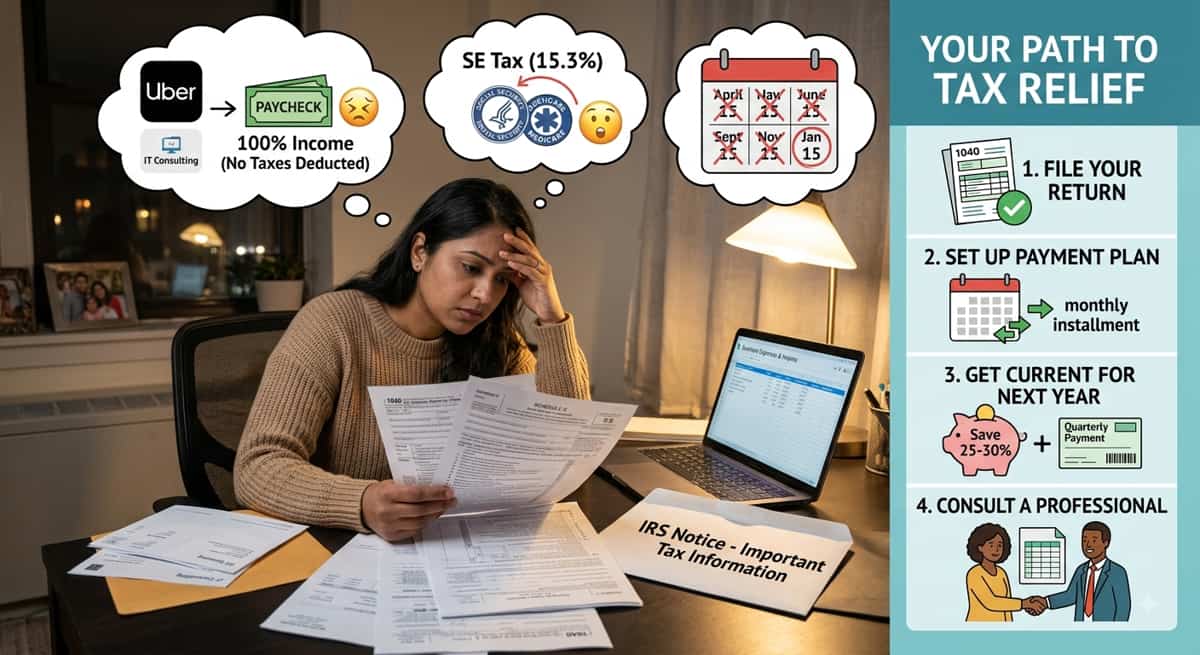
Self-Employed and Owe Taxes? A Guide for 1099 Workers
11 min read
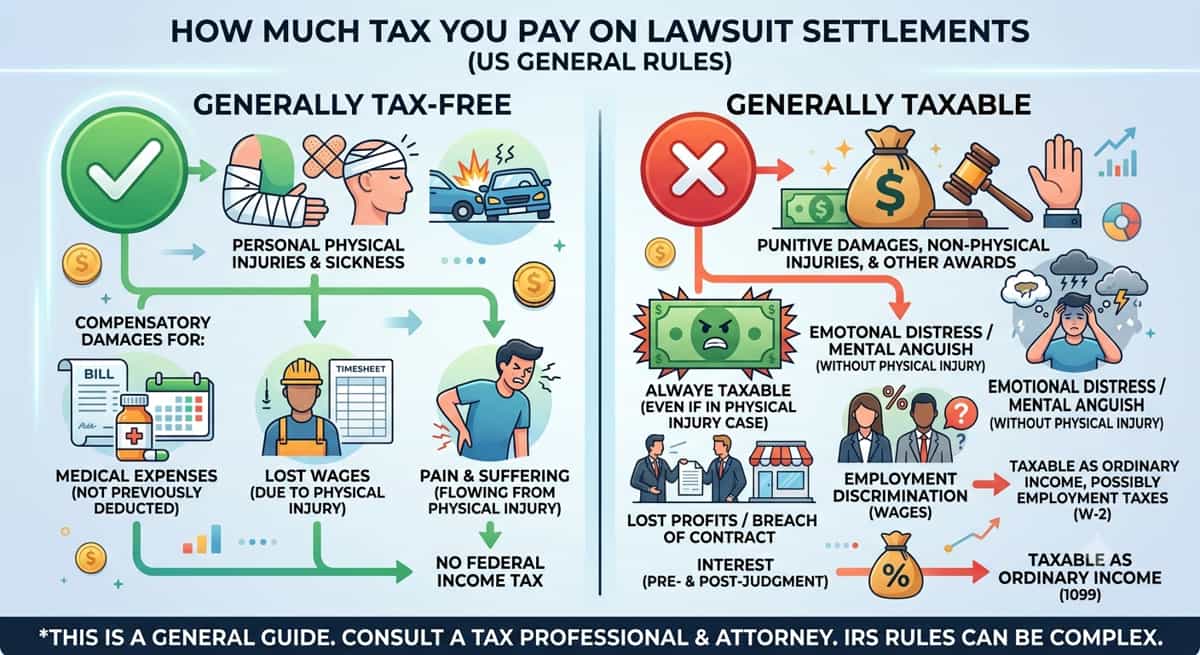
How Much Tax You Pay On Lawsuit Settlements
9 min read
Get Your Free Consultation
Speak with a certified debt consultant to explore your options.
Start NowNo obligation • Free consultation