The Ultimate Guide To Side Hustles To Pay Off Debt
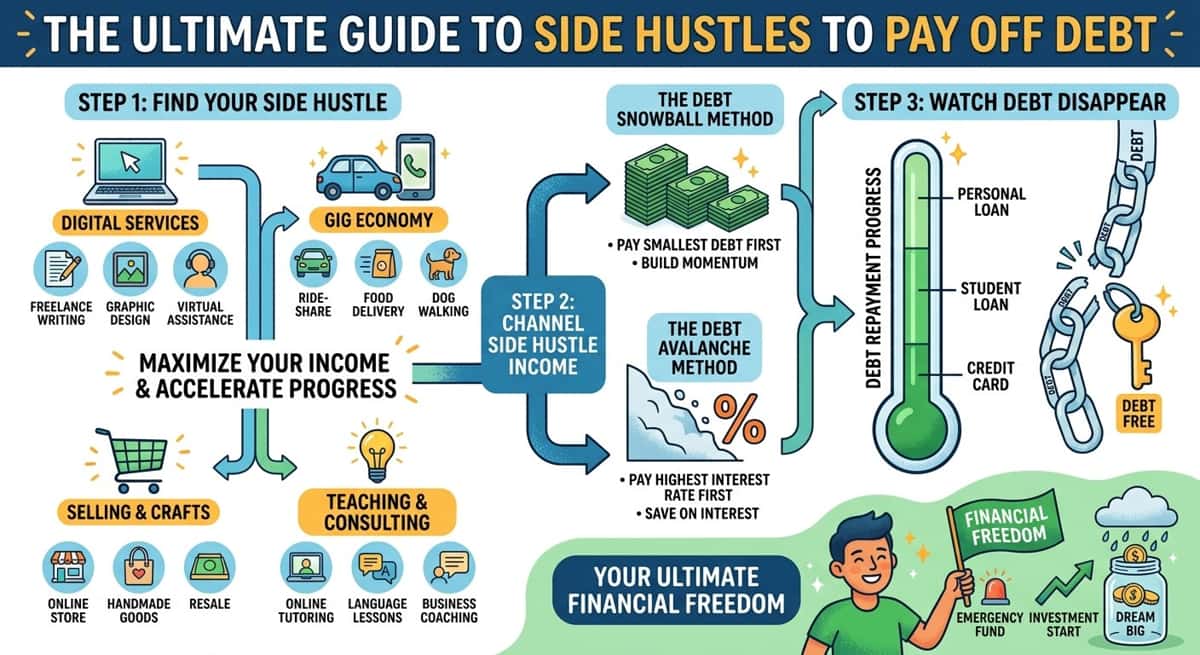
Paying off debt can feel overwhelming when your regular paycheck barely covers your monthly expenses. A side hustle can give you another way to bring in extra income and put more money toward your debt without making major changes to your everyday life. From freelance work and online tutoring to delivery driving, selling products, or offering skills you already have, there are many ways to earn additional money.
The key is choosing a side hustle that fits your schedule, skills, and financial goals. Before getting started, it’s also important to understand how much debt you have, what you can realistically earn, and how much extra income you can put toward repayment each month..
Key Takeaways
Know exactly what you owe before you start earning more.
Pick a hustle that fits your skills, your time and your visa status.
Set aside part of every payment for taxes. Side income is taxable.
Aim your extra income at one debt at a time.
If your minimum payments already feel impossible, get free help early. A side hustle alone may not be enough.
Before You Start Know Your Debt Number
Many people jump into a side hustle without knowing how much they need to earn. That's like driving without knowing your destination. Ten minutes with a pen and paper will give you a clear goal.
List Every Debt You Owe
Write down each debt, the balance, the interest rate (APR), the minimum monthly payment and the due date. Include credit cards, car loans, student loans and medical bills.
Don't leave out money you owe to family or friends. Even if nobody is chasing you, it's a real debt, and it belongs on the list. Seeing everything in one place is uncomfortable, but it's also the moment things start to feel manageable.
Find Your Monthly Gap
Now compare what you owe each month with what you can actually pay after rent, food, transport and other must-pay bills. The difference is your gap.
For example: your minimums total $900 a month, and after all your bills you can only put $650 toward debt. Your gap is $250. That's the first number your side hustle needs to cover. Anything beyond it can go toward paying debt off faster.
Side Hustle or Debt Relief Program?
Here's a simple way to decide. If your gap is small, and you have time and skills to spare, a side hustle may be all you need. If your minimum payments are already more than you earn, or you're borrowing on one card to pay another, a side hustle may not be enough so you should explore debt relief options to see what fits your situation.
How Much Can a Side Hustle Really Add?
Honest answer: it depends on your skills, your city and how many hours you can spare. Someone tutoring a few hours a week may add a few hundred dollars a month. Someone with in-demand professional skills may earn more. Someone doing delivery may earn a decent amount, but far less after gas, car wear and insurance.
What you keep is always lower than what you earn. You may pay for supplies, platform fees, transport and taxes. A quick way to think about it: if you earn $500 in a month, plan on keeping closer to 350–400 once costs and taxes are covered. Your own numbers will differ.
Here's an illustrative example, not a real client: if you tutor five hours a week at $35 an hour, that's about $175 a week, or roughly $700 a month before taxes. Over six months, that could take about $4,000 off a credit card balance, if you send nearly all of it to the debt.
Best Side Hustles for South Asians Paying Off Debt
There's no single best hustle. The right one depends on your skills, your time, how fast you need money, and what your visa allows. Here are eight that many people in our community use, along with what to watch out for.
Tutoring and Test Prep
If you're strong in math, science, coding or test prep, families are often willing to pay for help. Many parents also look for teachers of heritage languages like Bangla, Hindi, Urdu, Tamil, Punjabi or Gujarati. Rates vary a lot by subject and area, but many tutors charge somewhere in the range of $25 to $60 an hour. Startup cost is close to zero. Word of mouth in community groups and school circles is often your best source of students.
Bookkeeping and Tax-Prep Support
Many small businesses in our community, like grocery stores, restaurants and motels, need help with records. If you're good with numbers, you can offer simple bookkeeping. Preparing tax returns for pay is different. The IRS requires paid preparers to have a PTIN, and some choose to become an Enrolled Agent. Start small, be honest about what you can and can't do, and don't promise results you can't guarantee.
Freelance IT, Data, Design or Writing
If you work in tech, finance, marketing or a similar field, your day job skills may be worth money on the side. Freelance sites and your own network are common ways to find work. Startup cost is low. Be careful with your work status here. If you're on a work visa, freelancing outside your sponsor may not be allowed. See the visa section below.
Home-Based Food Business
Tiffin service, meal prep, snacks, festival sweets. Food is one of the most trusted ways our community earns extra income. But rules for selling food from home differ by state and even by county. Some places require a permit or limit what you can sell. Check your local health department before you cook for customers.
Wedding and Festival Services
Mehndi, makeup, decoration, DJ services and photography stay in demand, especially in wedding season and around Eid, Diwali and other celebrations. Income can be uneven, busy in some months and quiet in others. Building your name through referrals and photos of past work matters a lot.
Translation and Interpreting
If you're fluent in a South Asian language and English, you may find work helping with documents, community services or appointments. Some settings, like hospitals and courts, may require training or certification. Start with less formal work while you check what's needed.
Delivery and Rideshare
Delivery and rideshare can bring in cash quickly and let you choose your hours. But watch the real cost: gas, maintenance, insurance and car wear can eat a big part of your earnings. Track your expenses so you know what you're truly making per hour. Also check whether your immigration status allows this kind of work.
Reselling and E-Commerce
Some people sell South Asian clothing, jewelry, spices or home items online. You can start small, but you may need money upfront for stock, and returns or unsold items can hurt. Try a small batch first and see what sells before you spend more.
Quick Comparison
Hustle | Startup cost | Time to first income | Main skill needed | Risk level |
Tutoring | Very low | Days to weeks | Subject knowledge | Low |
Bookkeeping | Low | Weeks | Accounting basics | Medium |
Freelance work | Low | Weeks | Professional skill | Medium (visa) |
Home food | Low to medium | Days to weeks | Cooking | Medium (permits) |
Events and beauty | Medium | Weeks to months | Creative skills | Medium |
Translation | Low | Weeks | Language fluency | Low to medium |
Delivery/rideshare | Low | Days | Driving | Medium (costs) |
Reselling | Medium | Weeks | Sales sense | Medium to high |
Work Authorization and Taxes: Check These Before You Earn
This is the part people skip and later regret. A few minutes of checking now can protect you from serious problems.
Can You Legally Do This Work in Your Status?
What you're allowed to do depends on your immigration status. People on student visas (F-1), including those on OPT, or on work visas like H-1B and H-4 often face limits on outside work or self-employment. Green card holders and citizens generally do not face those limits.
Rules are detailed and change with your situation. Before you start any side work, talk with an immigration attorney or check the official USCIS website. Doing unauthorized work can create trouble for future visa or green card applications. No extra income is worth that risk.
How Side Income Is Taxed
Money you earn on your own is generally taxable, even if it's small and even if you don't get a tax form. If you work for yourself, you usually pay self-employment tax (roughly 15.3%) on top of regular income tax. You may also need to make estimated tax payments during the year instead of waiting until April.
A simple habit helps: every time you get paid, move a portion into a separate savings account for taxes. Keep receipts for business costs, since they can reduce what you owe. Tax rules and limits change, so talk with a tax professional for your situation.
ITIN and Documentation
If you don't have a Social Security number but you're eligible to file US taxes, you may be able to use an Individual Taxpayer Identification Number (ITIN). An ITIN is for tax filing only. It doesn't give you permission to work. Talk with a qualified tax professional before applying.
Where to Send Every Extra Dollar
Earning more is only half the plan. The other half is making sure the money actually reduces your debt.
Debt Avalanche vs. Snowball
The debt avalanche method means paying extra toward the debt with the highest interest rate first, while paying minimums on the rest. It saves the most money. The snowball method means paying off the smallest balance first. It saves less interest but gives you quick wins.
For example, say you have a $3,000 card at 27% interest and an $800 card at 19%. Avalanche targets the $3,000 card first. Snowball clears the $800 card first, so you feel progress sooner. If you need motivation, snowball can help you stay with it. If you want to save the most, choose an avalanche. The best method is the one you'll actually keep doing.
Negotiating and Nonprofit Credit Counseling
You can call your card company and ask about a lower interest rate or a hardship plan. It doesn't always work, but it costs nothing to ask.
Nonprofit credit counseling agencies can also help. A counselor can review your budget and may offer a debt management plan, where you make one monthly payment and the agency works with your creditors. Plans often run about three to five years. Be careful to tell nonprofit counselors apart from for-profit "debt relief" companies. They're not the same.
When a Side Hustle Isn't Enough
Sometimes the debt is simply too big. Two options to explore are debt settlement process and bankruptcy options, depending on your financial situation. Both can hurt your credit, may involve fees, and forgiven debt can sometimes be taxed. Neither is right for everyone.
If you're in this situation, please speak with a licensed professional, such as a nonprofit credit counselor or a bankruptcy attorney, before deciding. Many offer a free first conversation.
Challenges Specific to South Asian Households
Money problems in our community often come with pressures that other guides don't mention.
Family Obligations and Remittances
Sending money to parents or relatives back home is an act of love and duty. But if it keeps you from paying your own debts, the stress builds. Consider putting the support amount in your monthly budget as a fixed line, so you can plan around it. If you can, talk openly with your family about what's realistic while you work on your debt.
Community Lending and Informal Loans
Many of us have borrowed from relatives or joined a rotating savings group (called a committee, kameti or similar). These can be helpful, but unclear terms cause problems later. Whenever you borrow or lend informally, agree on the amount, the schedule and what happens if a payment is missed. Writing it down protects everyone, including the relationship.
Talking About Debt Without Shame
In many families, money troubles feel like something to hide. But waiting usually makes it harder. You might say to a trusted family member: "I'm working on paying off some debt, and I need to be careful with money for the next while. Can we talk about what I can help with?" Asking for understanding early is far easier than explaining later.
Red Flags: Side Hustle and Debt Relief Scams
When people are stressed about money, scammers know it. Watch for these warning signs:
Any job or "opportunity" that asks you to pay money upfront.
Multi-level marketing pitches promising quick wealth.
Debt relief companies that charge big fees before doing any work learn how to spot debt relief scams or tell you to stop talking to your creditors.
Money transfer services that aren't licensed.
Anyone who guarantees you'll make a certain amount.
If it sounds too good to be true, pause, ask questions, and talk to someone you trust before sending money or documents.
A 30-60-90 Day Action Plan
Days 1–30: Write down all your debts and your monthly gap. Check whether your visa or status allows the work you have in mind. Learn the basics of taxes on side income. Choose one hustle to start.
Days 31–60: Find your first customers or clients. Open a separate account to hold tax money and debt payments. Track every dollar you earn and spend on the hustle.
Days 61–90: Look at your results. Is it bringing in enough? If yes, consider doing a bit more. If not, adjust or try a different hustle. If you're still struggling, book a session with a nonprofit credit counselor.
Start Small and Stay Steady
You don’t need to fix everything at once. Start by understanding your income, expenses, and total debt, then choose one realistic way to bring in extra money. Whether that means cutting unnecessary spending, taking on a side hustle, or adjusting your repayment plan, consistency matters more than perfection.
Put any extra income toward your debt with a clear purpose and track your progress along the way. If managing everything alone feels overwhelming, a nonprofit credit counselor can help you understand your options.
Ready to Get Started?
Get a free consultation with a certified debt consultant to see if debt settlement is right for you.
Get Free ConsultationAbout the Author
Bhupinder Bajwa
.
Related Articles
10 Reasons Why You Should Pay Off Debt
9 min read
7 Ways To Get Out Of Business Debt
11 min read
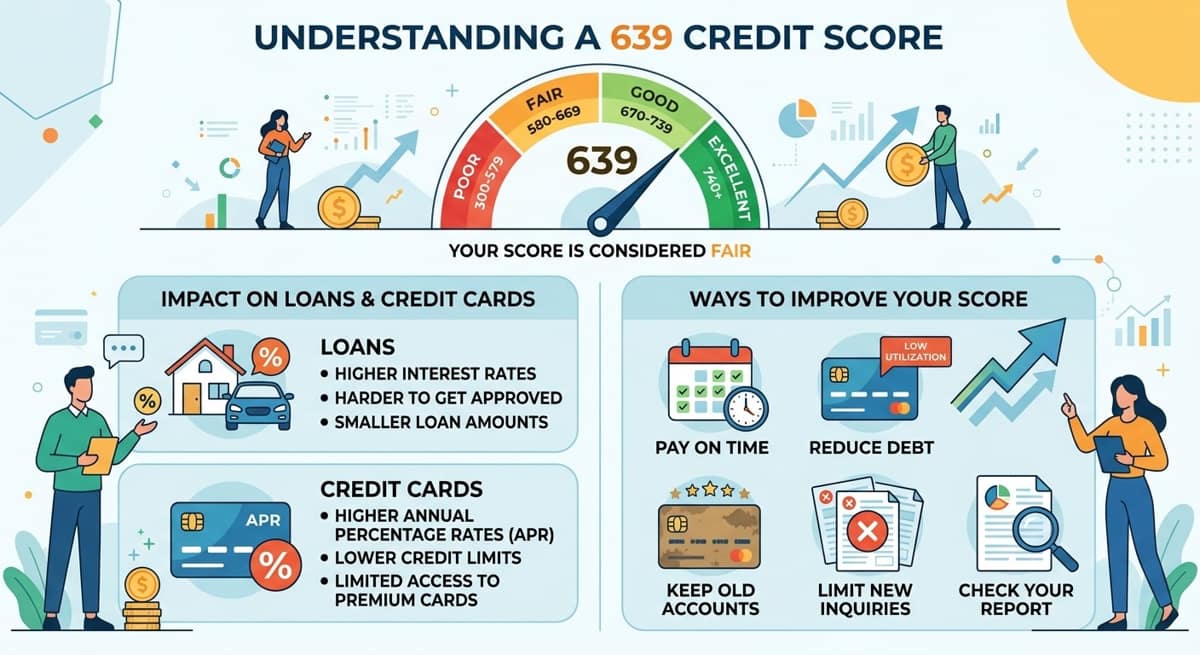
Is 639 A Good Credit Score? How It Affects Loans, Credit Cards And Ways To Improve It
12 min read
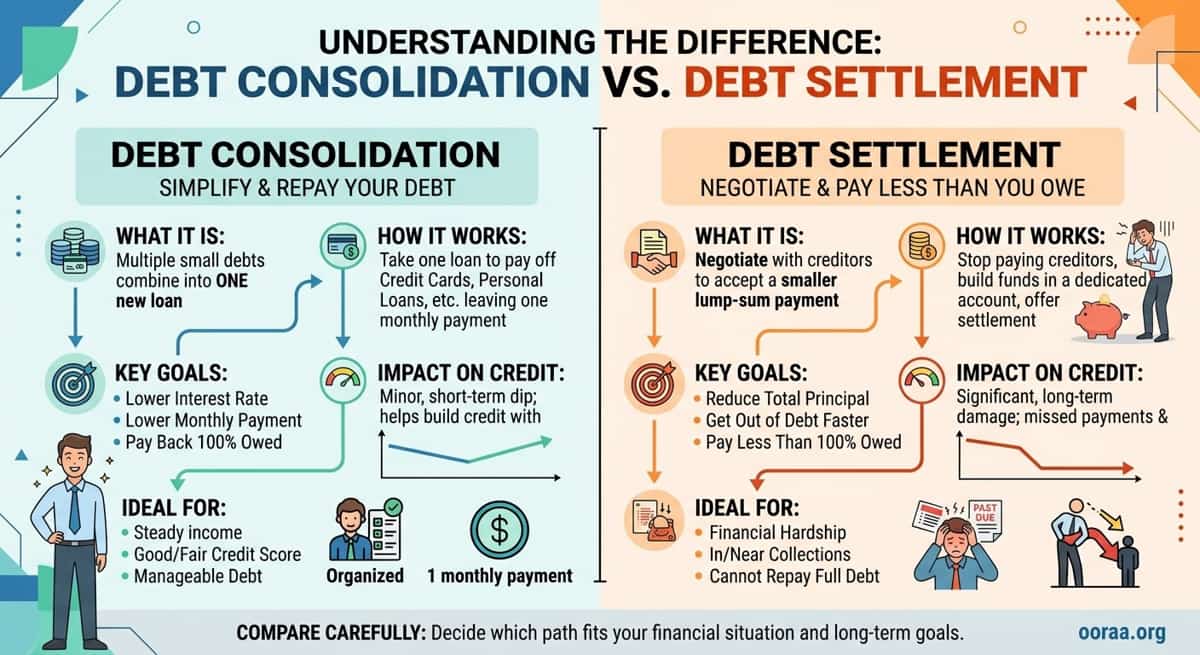
What’s The Difference Between Debt Consolidation And Debt Settlement?
12 min read
Can You Consolidate Debt With a Low Credit Score?
11 min read
Self-Employed and Owe Taxes? A Guide for 1099 Workers
11 min read
Get Your Free Consultation
Speak with a certified debt consultant to explore your options.
Start NowNo obligation • Free consultation