7 Ways To Get Out Of Business Debt
If you're reading this at 11 p.m. after closing up the store, or during a slow stretch between customers, you already know the feeling. The debt that once seemed like a normal part of growing your business, a loan to buy inventory, a line of credit to get through a slow season, a credit card that covered payroll one rough month has started to feel like something bigger than you can manage.
For a lot of business owners, especially those who put their savings, a mortgaged home, or money borrowed from family into building something of their own, this isn't just a financial problem. It's personal. The business isn't just a business. It's years of work, and often it's tied to the hopes of an entire family.
Debt trouble is common, and it's fixable. It doesn't mean you failed. It means it's time to work through it in the right order, starting with the steps that protect the most and cost the least. Plenty of businesses that looked like they were in serious trouble two or three years ago are stable today, simply because the owner tackled the debt methodically instead of all at once or not at all.
What Counts as Business Debt and Why It Hits Differently When You're Building From Scratch
Business debt covers more than just a bank loan. It includes lines of credit, unpaid supplier or vendor invoices, equipment financing, credit cards used to cover business costs, back taxes owed to the IRS or your state, and unpaid rent on your commercial space. If money is owed and it's tied to running the business, it counts.
For a lot of immigrant-owned businesses, the debt picture looks a little different than it might for a business that started with outside investors or a large bank loan. Many businesses in this position started with less capital than they needed, relied on personal credit cards or loans from family to get off the ground, and never built up much of a cash cushion in the early years. It's also common for a spouse, parent, or sibling to have co-signed a loan, which means personal assets and relationships are tied to the outcome, not just the business itself.
None of this is unusual. It's a stage that a lot of businesses pass through on the way to becoming stable, not a sign that something has gone wrong with the business itself.
Signs Your Business Debt Needs Attention Now
Some signs are easy to brush off at the moment because the business is still open and still running. But a few patterns are worth paying close attention to:
You're only making minimum payments on business credit lines, or missing them
You're taking out new debt to cover payments on old debt
Suppliers are asking for cash on delivery instead of extending you normal payment terms
You've started covering payroll or rent out of personal savings or a personal credit card
You've been avoiding calls from your lender, or you haven't looked closely at your bank statements in a while
If any of these sound familiar, it doesn't mean the business is beyond saving. It means the sooner you act, the more options you'll have. Waiting tends to shrink the list of choices; acting early keeps most of them open.
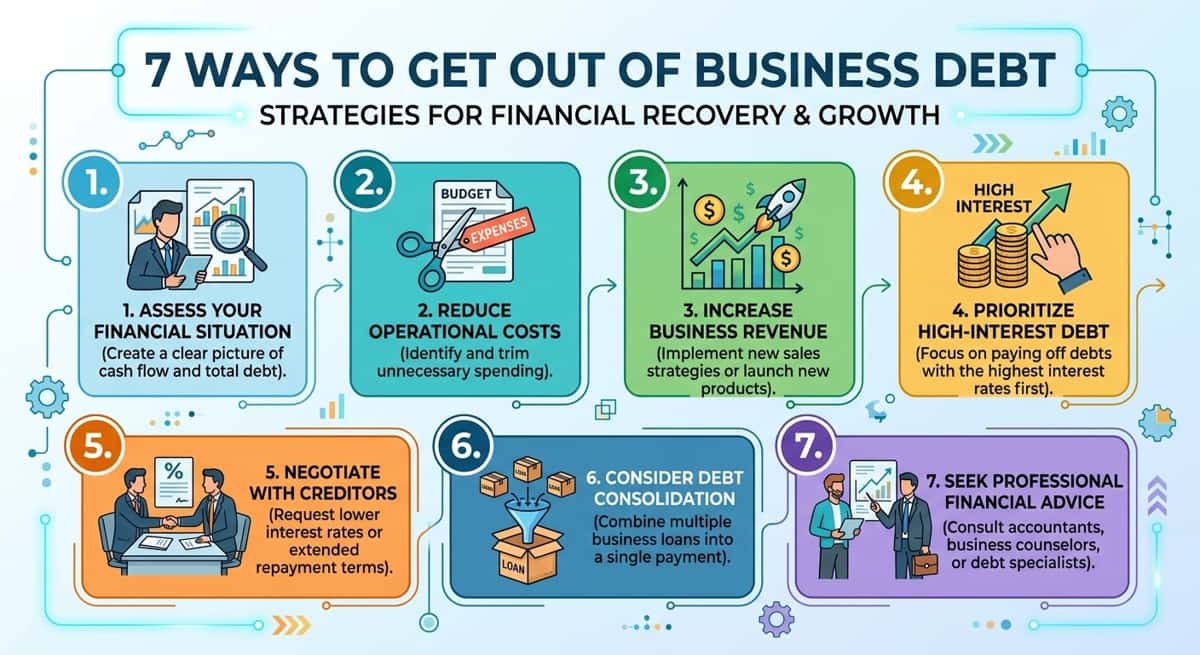
7 Ways to Get Out of Business Debt
1. Talk to Your Lenders Before They Come to You
Most lenders banks, SBA lenders, equipment financing companies have hardship options they don't advertise on their website. They'd usually rather work out a new arrangement with you than have you stop paying altogether, because that costs them more in the long run too.
When you reach out, be specific about what you're asking for: extended repayment terms, a temporary interest-only period, or a short deferral while you get through a rough patch. Come to the conversation with your numbers ready, a simple profit-and-loss summary and a cash flow projection for the next few months go a long way in showing the lender you have a real plan, not just a request.
A lot of business owners put this call off out of pride, or because they've grown up distrusting banks and formal institutions. It's worth reframing this: lenders have these conversations every day. Asking for a modified plan isn't a red flag on your record, it's a normal part of doing business, and it's usually far better for your relationship with the lender than falling silent.
Think of it the way you'd think about a supplier relationship you've had for years. If you were going to be late on a payment, you'd call ahead and explain rather than let the invoice go unanswered. Lenders respond the same way a heads-up and a plan almost always lands better than silence followed by a missed payment.
2. Consolidate High-Interest Debt Into One Predictable Payment
If you're juggling several debts at once, a merchant cash advance, a couple of credit cards, maybe a short-term loan.
A business debt consolidation loan can combine all of it into a single, lower monthly payment with one interest rate instead of several.
The upside is real: one payment is easier to plan around than five, and a lower rate can free up cash each month. But it's worth being honest about the trade-off too. Stretching the loan out over a longer term can lower your monthly payment while actually increasing the total amount you pay over time. This works best for businesses juggling multiple debts with revenue that's steady, even if it's tight, not as a way to avoid dealing with the underlying cash flow problem.
3. Cut Costs Without Cutting What Actually Makes You Money
Not all expenses are equal, and treating them that way during a debt crunch can do more harm than good. Some costs can flex without hurting the business unused software subscriptions, inventory that isn't moving, staffing schedules that can be trimmed during slow hours, supplier contracts that haven't been renegotiated in years. Others shouldn't be touched, like the staff who keep your best customers coming back, marketing that's actually bringing in business, or the inventory that sells reliably.
A simple 30-day expense review is a good place to start. Go through every recurring charge and ask whether it's paying for itself. And for family-run businesses, it's worth being honest about the costs that don't show up on a spreadsheet, unpaid hours from family members, or informal loans from relatives that were never written down. Accounting for these honestly, even if only for your own planning, gives you a truer picture of where the business actually stands.
4. Speed Up How Fast Money Comes In
Getting out of debt isn't only about spending less, it's also about getting paid faster. If you invoice customers, shortening payment terms, asking for a deposit on larger orders, offering a small discount for early payment, or accepting more payment methods can all bring cash in sooner.
For cash-heavy businesses like restaurants, retail stores, and gas stations, the equivalent move is tightening up daily reconciliation and reducing how much cash is tied up in slow-moving inventory. Money sitting on a shelf that isn't selling is money that isn't helping you pay down debt.
This is often the fastest lever available, because it doesn't require approval from a bank or anyone else, just a decision to change how the business collects money it's already owed.
5. Look Into SBA and Community-Based Relief Programs
If you have an existing SBA loan, the SBA offers hardship and workout options, but the process typically starts with your lender, not the SBA directly. Your lender can walk you through what's available and, if needed, connect you with the SBA district office for your area.
It's also worth looking beyond traditional banks. Community development financial institutions, often called CDFIs, exist specifically to offer relief loans and financial guidance to small businesses that mainstream banks might overlook. Many South Asian and immigrant business associations and local chambers of commerce also offer free advising or connections to low-interest debt relief programs built with exactly this kind of business owner in mind.
Always verify any relief program directly through an official website or your existing lender. Legitimate programs don't reach out to you first through unsolicited calls or texts asking for fees or personal information that's a pattern worth being wary of.
These community-based resources tend to be underused, partly because they're not always advertised widely and partly because owners assume help like this is reserved for businesses much larger than theirs. In most cases, that's not true; many of these programs exist specifically to reach small, owner-operated businesses that don't have a dedicated finance team to go looking for them.
6. Bring In a Business Debt or Credit Counseling Professional
Not all outside help is the same, and it's worth understanding the difference before you pick up the phone. A nonprofit business credit counselor works with you to build a realistic plan and often negotiates directly with your creditors on your behalf, usually for free or a low fee. A professional debt settlement company negotiates directly with your creditors to reduce the total balance owed often with no upfront fees until a settlement is reached. . A bankruptcy attorney handles a different kind of case entirely, one where restructuring or legal protection may be the right path.
A qualified advisor will start by reviewing your full financial picture, not just the loudest debt. From there, they'll negotiate directly with creditors where it makes sense and help you build a plan you can actually stick to.
7. Know When Restructuring or Bankruptcy Protection Is the Responsible Choice
For some businesses, formal restructuring or bankruptcy protection isn't a failure, it's a deliberate legal and financial tool used to survive and keep operating. Chapter 11 allows many businesses to reorganize their debts while continuing to run, giving them breathing room to work out a repayment plan with creditors under court protection. Chapter 7, by contrast, generally involves liquidating the business to pay off creditors, which is a very different outcome.
It requires a licensed bankruptcy or business attorney who can look at your specific situation and advise which path, if any, actually fits. What's worth taking from this section is simpler: exploring bankruptcy options early, before creditors force your hand, tends to preserve far more control over the outcome than waiting until there's no other choice left.
Common Debt Mistakes Immigrant Business Owners Should Watch For
A few patterns show up often enough to be worth naming directly, without judgment:
Mixing personal and business finances. It feels natural when you're the one who built the business, but it makes it much harder to see clearly what the business actually owes and earns.
Relying on informal family loans with no clear terms. Money borrowed from relatives without a written agreement can quietly strain both the business and the relationship when repayment gets complicated.
Avoiding professional help out of distrust or fear of judgment. Many owners assume asking for help means admitting failure, or worry about how it will look. In reality, credit counselors and advisors see these situations constantly and aren't there to judge.
Not realizing how many resources are free or low-cost. Nonprofit credit counseling, SBA guidance, and community business association advising often cost nothing but only if you know to look for them.
None of these patterns are unique to any one community, but they show up often enough among immigrant-owned businesses that they're worth naming plainly.
When to Bring in Professional Help
There's no need to wait until things feel completely out of hand. A few concrete signs suggest it's time to bring in a professional rather than continuing to handle it alone:
Your total debt payments are eating up a large share of your monthly revenue
You've missed more than one payment in the last few months
You've received a formal notice from a creditor, collector, or attorney
You're not sure anymore how much you actually owe across all your debts combined
If any of these apply, reaching out to a credentialed credit counselor or advisor isn't jumping the gun, it's exactly the right time.
Getting Out of Debt Without Losing What You Built
Business debt has a way of feeling like a verdict on everything you've worked for, but it's rarely that. More often, it's a stage that a lot of businesses pass through, work through, and come out the other side of still standing. With Ooraa, you can get guidance on your options and take practical steps toward managing business debt. The key is acting early, being honest about where things stand, and knowing which of these seven steps fits where you are right now.
If you're not sure where to start, a conversation with someone who works with a situation like yours every day can make the next steps a lot clearer.
Ready to Get Started?
Get a free consultation with a certified debt consultant to see if debt settlement is right for you.
Get Free ConsultationAbout the Author
Bhupinder Bajwa
.
Related Articles
Is 639 A Good Credit Score? How It Affects Loans, Credit Cards And Ways To Improve It
12 min read
What’s The Difference Between Debt Consolidation And Debt Settlement?
12 min read
Can You Consolidate Debt With a Low Credit Score?
11 min read
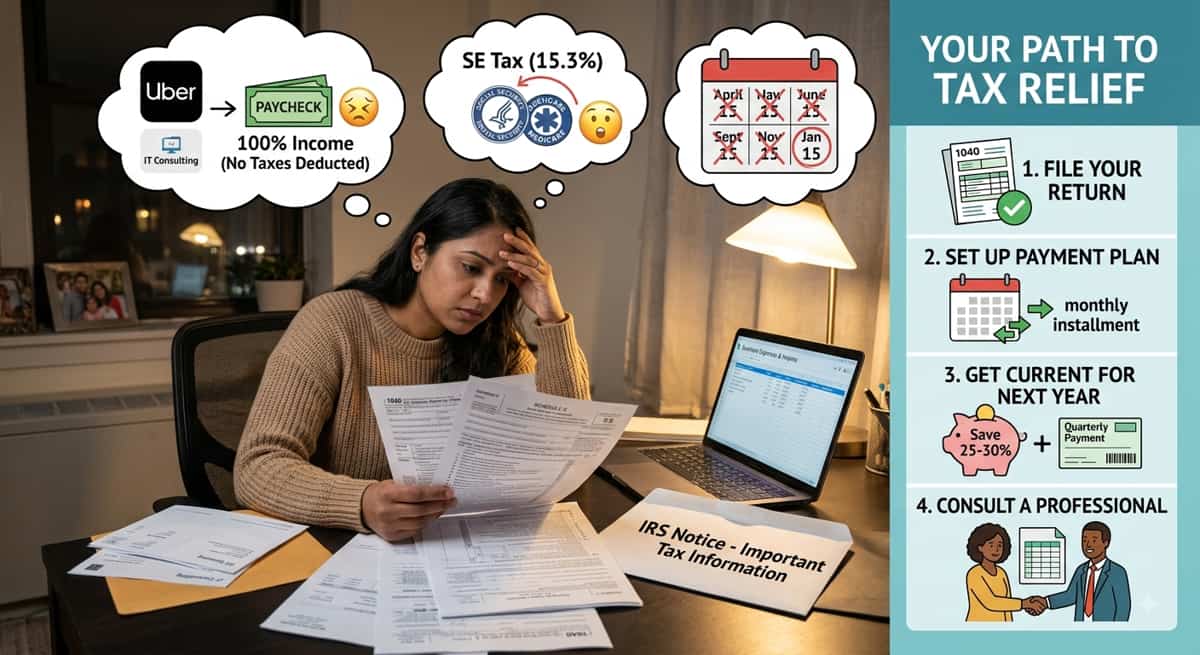
Self-Employed and Owe Taxes? A Guide for 1099 Workers
11 min read
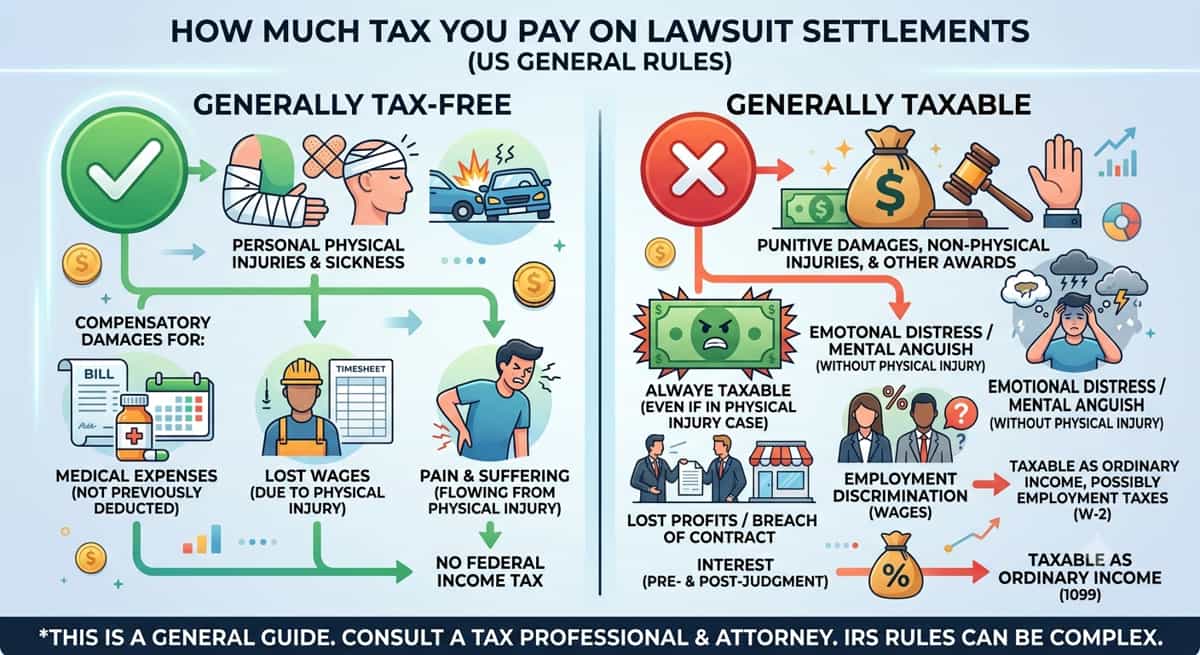
How Much Tax You Pay On Lawsuit Settlements
9 min read
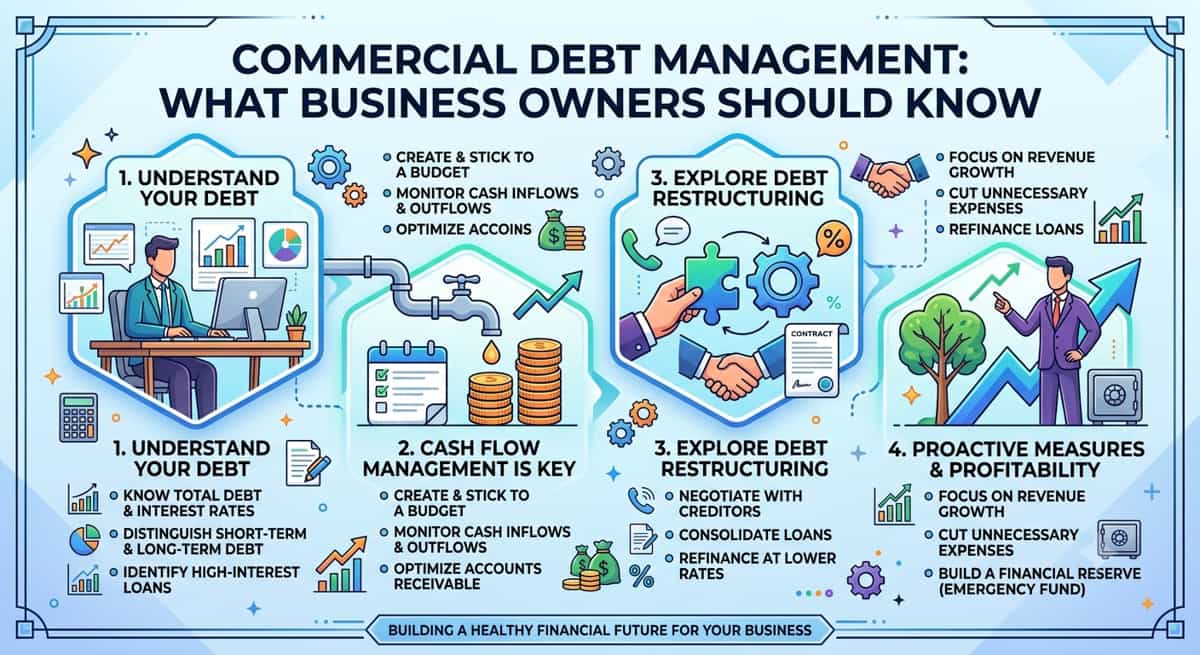
Commercial Debt Management: What Business Owners Should Know
11 min read
Get Your Free Consultation
Speak with a certified debt consultant to explore your options.
Start NowNo obligation • Free consultation
Related Posts
- Is 639 A Good Credit Score? How It Affects Loans, Credit Cards And Ways To Improve It
12 min read
- What’s The Difference Between Debt Consolidation And Debt Settlement?
12 min read
- Can You Consolidate Debt With a Low Credit Score?
11 min read
- Self-Employed and Owe Taxes? A Guide for 1099 Workers
11 min read