
How Much Tax You Pay On Lawsuit Settlements
You finally got the call your case settled, and a check is on its way. After months (maybe years) of stress, it feels like a huge weight is lifting.
Then a new worry creeps in: how much of this will the IRS take?
If you're part of a South Asian family in the U.S. especially if you or your parents grew up with a very different tax system back home this question can feel confusing and a little scary. You don't want to spend the money and then get a surprise tax bill later. You also don't want to send half of it to relatives back home only to find out you needed to keep more for taxes.
This guide breaks it down in plain English: what's taxed, what isn't, how immigration status changes things, and how a settlement fits into your bigger plan to get out of debt.
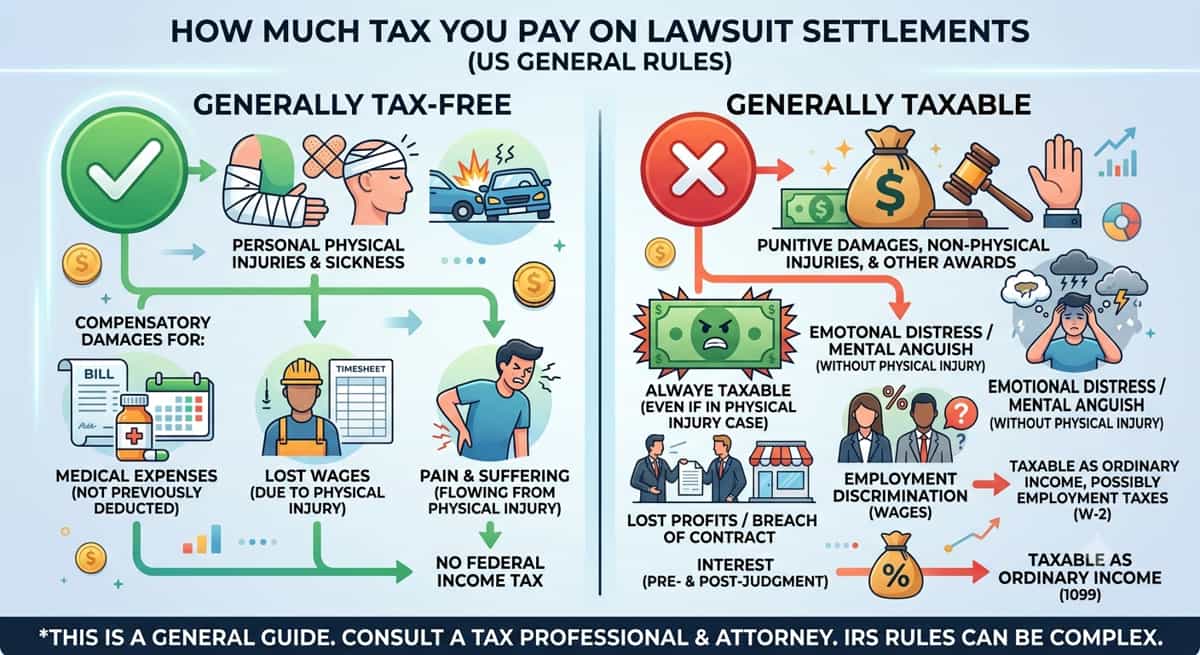
In most cases, money you get for a physical injury or physical sickness is not taxed. Money you get for lost wages, emotional distress on its own, punitive damages, or interest is taxed as regular income. The reason for your payment not the fact that you sued someone is what decides your tax bill. We'll walk through exactly how this plays out below.
What Counts as a "Lawsuit Settlement"?
A settlement is simply money paid to resolve a legal claim whether it's agreed on outside of court, awarded by a judge, or decided through mediation or arbitration.
For the families we work with, settlements usually fall into a few common buckets:
A car accident or slip-and-fall injury claim
A workplace issue being fired unfairly, discriminated against, or not paid properly
A medical mistake by a doctor or hospital
A dispute over a contract, a business deal, or a landlord
Sometimes, a settlement tied to a debt collection lawsuit
Each of these is taxed differently, which is why "is my settlement taxable?" doesn't have a single yes-or-no answer it depends on why you got paid.
The One Rule That Decides Everything
Here's the idea that explains almost every tax question about settlements: the IRS taxes your settlement the same way it would have taxed the thing the money is replacing.
So if you got money because you were physically hurt, that's treated differently than money that replaces a paycheck you lost, because paychecks are always taxable settlement or not.
The main law behind this is a section of the tax code, IRC Section 104(a)(2), and the IRS explains it in Publication 4345, "Settlements Taxability." The short version: physical injury and physical sickness payments are generally tax-free. Almost everything else is treated as regular income.
Taxable vs. Non-Taxable Settlements at a Glance
Type of Settlement | Taxable? | Why |
Physical injury or physical sickness | No | Treated as tax-free under federal law |
Emotional distress caused by a physical injury | No | Counted as part of the injury |
Emotional distress without a physical injury | Yes | Treated as regular income |
Lost wages / back pay | Yes | It's replacing taxable paychecks |
Punitive damages | Yes, always | Not treated as compensation — treated as extra income |
Interest added to a settlement | Yes | Taxed like bank interest |
Property damage (up to what the property was worth) | No | Treated as getting your own money back |
Property damage (above what the property was worth) | Yes | The extra amount is a taxable gain |
Discrimination or wrongful termination | Usually yes | Mostly treated as lost income |
One important thing: a single settlement often mixes several of these categories together. The exact wording in your settlement agreement how it splits the money between "injury," "lost wages," "emotional distress," and so on can make a real difference in your tax bill. This is worth asking your attorney to spell out clearly before you sign anything.
How Common Settlement Types Are Actually Taxed
Personal Injury or Physical Sickness
If you were hurt in a car accident, a fall, or a workplace accident, the core settlement amount is usually not taxed. For example, if you received $40,000 after a car accident to cover medical bills, pain, and recovery time, that money generally stays untaxed. One catch: if you already deducted medical expenses on a past tax return for that same injury, part of your settlement covering those same expenses may need to be reported.
Emotional Distress and Mental Anguish
This one trips a lot of people up. If your emotional distress came from a physical injury (say, ongoing anxiety after a serious accident), it's tax-free along with the injury settlement. But if you're compensated for emotional distress alone with no physical injury involved that portion is taxable. Keeping medical or therapy records that connect your distress to a physical event can matter here.
Punitive Damages
Punitive damages are extra money a court awards to punish the other side for especially bad behavior and they are almost always taxable, even in cases where the rest of the settlement is tax-free. If a jury awards $200,000 for your injury and adds $50,000 in punitive damages, that $50,000 gets taxed even though the $200,000 doesn't.
Lost Wages and Employment Settlements
If your settlement is replacing income you would have earned say, from a wrongful termination or wage dispute it's taxed just like a paycheck would be. This often comes with the added complication of Social Security and Medicare taxes being withheld too. It's worth remembering: this counts as income for other purposes as well, including if you're currently enrolled in a structured debt repayment plan to resolve your back balances.
Breach of Contract and Property Disputes
If you're settling a business dispute, a landlord issue, or a broken agreement, the part of the money that simply gets back what you originally put in usually isn't taxed. Anything above that an actual profit or gain is taxable.
Federal Taxes vs. State Taxes
Everything above covers federal taxes, which apply no matter where you live. State taxes are a separate story, and they vary. Most states that tax income follow the federal government's lead on excluding physical injury settlements, but not all of them do it exactly the same way.
If you live in a state with no income tax like Texas this part of the equation is simpler for you. If you're in a state like New York, New Jersey, California, or Illinois, where many South Asian families live, it's worth checking your specific state's rules or asking a local tax preparer, since state treatment can differ from federal treatment in the details.
Will You Get a 1099 or a W-2 for Your Settlement?
If part of your settlement is taxable, the company or insurer paying you usually has to report it to the IRS. You might receive:
A 1099-MISC for a taxable settlement payment
A W-2 for the portion that's treated as back pay or lost wages
A 1099-INT if any part of your settlement included interest
Here's a helpful tip: getting a 1099 doesn't automatically mean the entire amount is taxable it just means that portion was reported to the IRS. Keep your settlement agreement paperwork. If it clearly separates the tax-free and taxable portions, that document backs you up when you file your return.
Special Considerations If You're an Immigrant or Visa Holder
This is where things get a little more layered for many of the families we talk to.
Your visa or residency status matters. Green card holders and people on visas like H-1B or L-1 are generally taxed as U.S. residents on their full income, settlements included. Your filing status affects which tax form applies to you.
If you use an ITIN instead of a Social Security number, the company paying your settlement may still need that number to file the required tax forms have it ready.
Sending settlement money to family abroad is common, and it's completely fine to do but if the funds pass through a foreign bank account along the way, there can be separate reporting rules to be aware of, especially with larger amounts.
A general tax preparer may not be familiar with cross-border situations. If your case involves visa status, foreign accounts, or managing financial relief during a crisis, it's worth finding a CPA who has specific experience with immigrant tax situations.
How a Settlement Affects Your Debt Relief Plan
For a lot of families, a settlement check is the first real chance in years to get ahead of debt but it needs to be handled carefully if you're already working on a repayment plan.
A few things worth knowing:
If you're in an active debt settlement or credit counseling program, a lump sum like this may need to be reported, since it can affect your plan.
If bankruptcy is something you're considering, timing matters a settlement received close to a bankruptcy filing can affect what's protected and what isn't.
Before you decide how much goes toward debt and how much goes elsewhere, set aside money for taxes first. It's a common and costly mistake to pay off every debt, send money to family, and then realize there isn't enough left for the tax bill in April.
If you're not sure how a settlement fits into your specific debt situation, that's exactly the kind of question worth asking a financial counselor before you spend anything.
When to Talk to a Tax or Financial Professional
This guide gives you the framework, but every settlement is different, and the details in your specific agreement can change the outcome. Before you file your taxes, it's worth sitting down with a CPA or enrolled agent to review your settlement paperwork line by line. And if you're working through debt at the same time, a certified financial counselor can help you figure out the smartest way to use the money what to pay down first, what to set aside, and what can wait.
Nothing here replaces personalized advice. Think of this article as the questions to ask, not the final answer for your situation.
Conclusion
The short version: it's not the lawsuit itself that decides your tax bill it's what the money is replacing. Physical injury settlements are usually safe from taxes. Lost wages, emotional distress on its own, and punitive damages usually aren't. Your visa status and where you live add a few more layers. And however the tax picture shakes out, a settlement can be a real turning point for getting ahead of debt as long as you plan for taxes first and spend second.
If you're trying to figure out how a settlement fits into your bigger financial picture, Ooraa is here to help you think it through.
Ready to Get Started?
Get a free consultation with a certified debt consultant to see if debt settlement is right for you.
Get Free ConsultationAbout the Author
Bhupinder Bajwa
.
Related Articles
Which Debt Should I Pay Off First?
10 min read
How to Settle SBA Loan Debt: Complete Guide to Debt Relief Options
11 min read

Does Debt Settlement Work? What to Know Before You Start
11 min read
What to Know Before Getting a Debt Consolidation Loan
10 min read
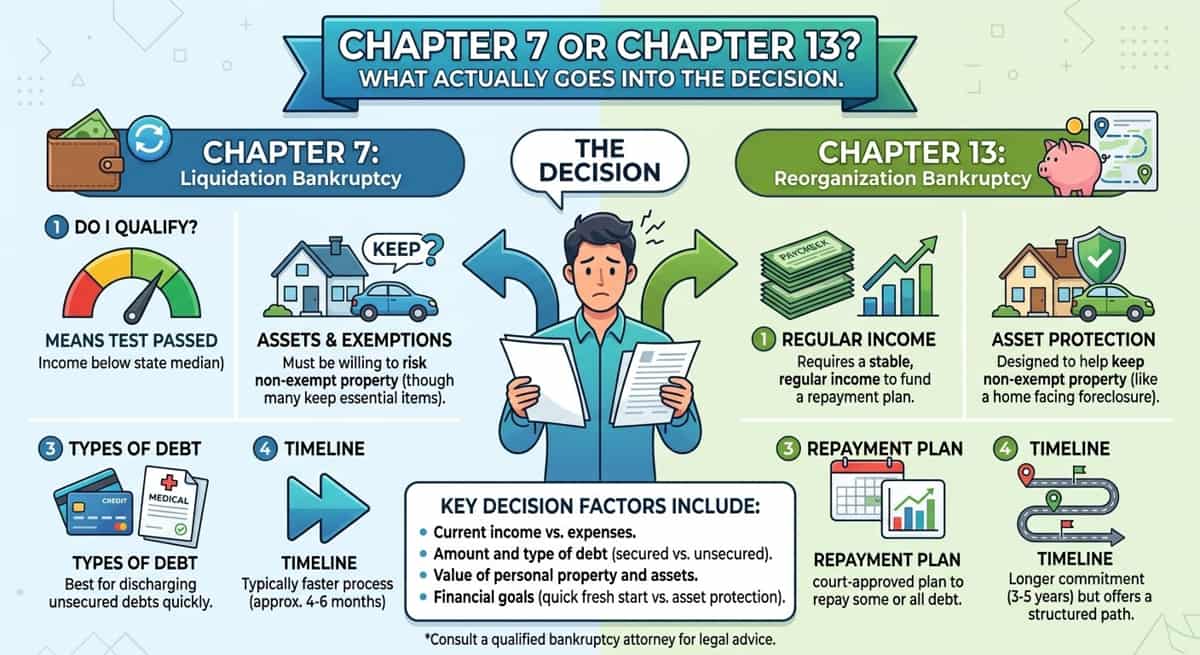
Chapter 7 Or Chapter 13? What Actually Goes Into The Decision
13 min read
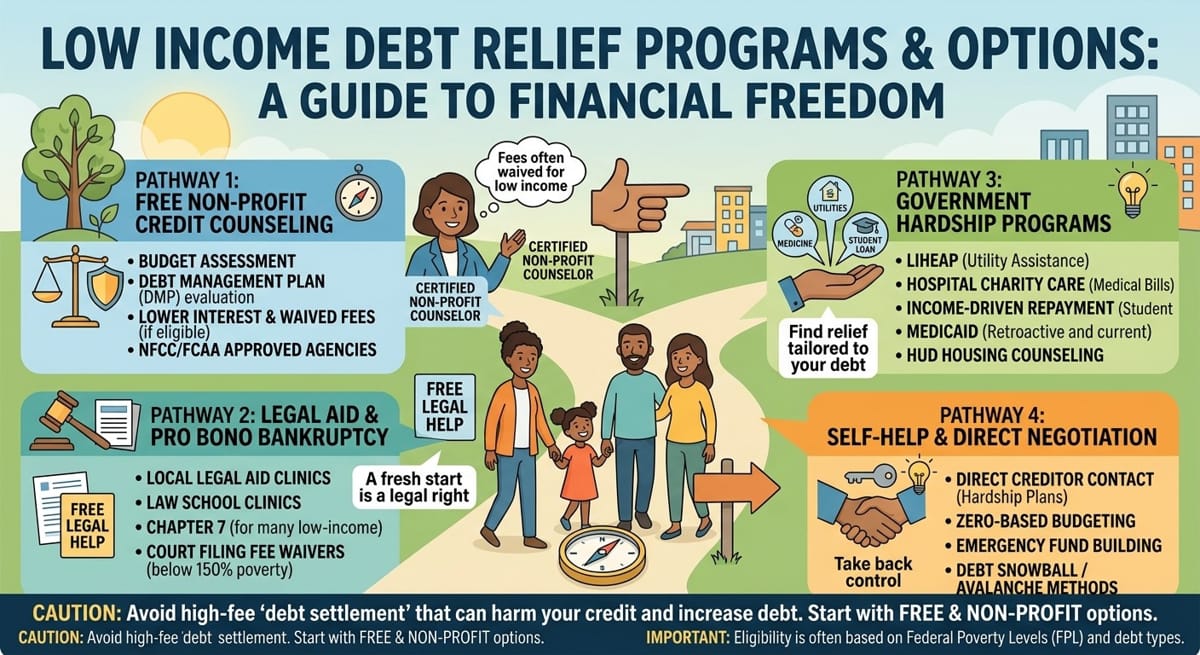
Low Income Debt Relief Programs And Options
14 min read
Get Your Free Consultation
Speak with a certified debt consultant to explore your options.
Start NowNo obligation • Free consultation