Can You Consolidate Debt With a Low Credit Score?
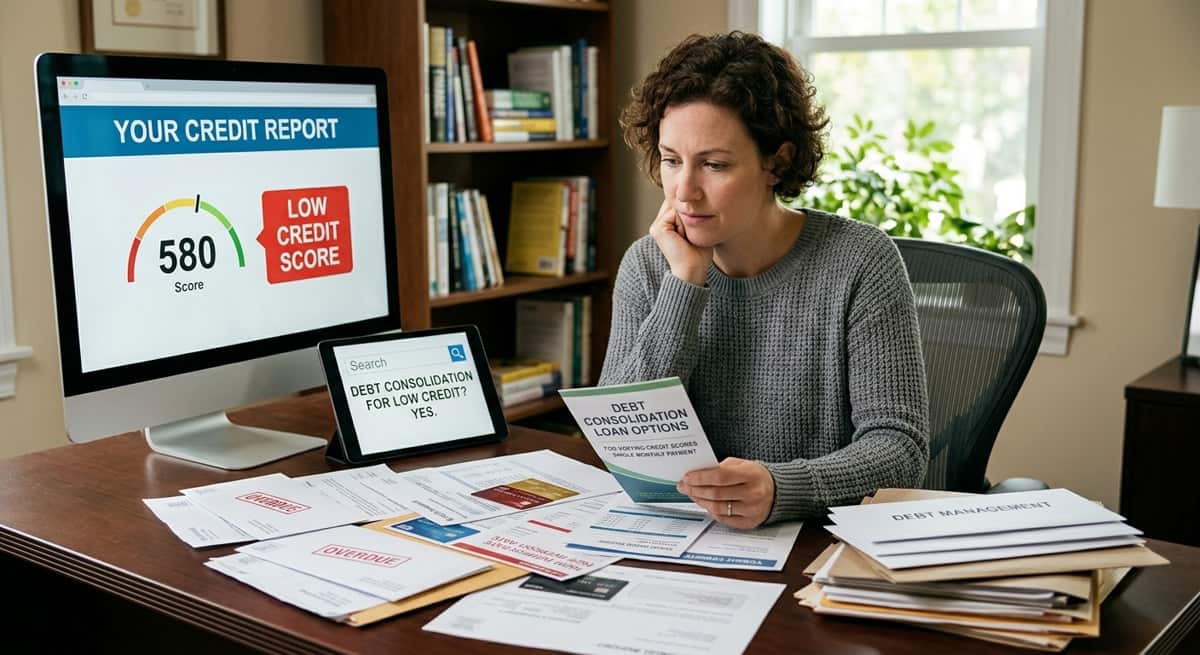
Having a low credit score can make it more difficult to handle different types of debt, but it doesn’t mean debt consolidation is out of the question. Depending on your financial situation you may still be able to consolidate a number of debts into one more manageable payment. Lenders and debt relief agencies will usually consider things like your income, existing debts, payment history and overall financial stability when considering your options.
However, a lower credit score may impact the interest rate, loan terms or type of consolidation you qualify for. Knowing these things before you apply will help you avoid taking on a solution that costs more in the long run.
What Is Debt Consolidation and How Does It Work?
Debt consolidation simply means combining several debts, say, three credit cards and a personal loan into one single payment. Instead of juggling four due dates and four interest rates, exploring a structured debt consolidation loan lets you combine multiple balances into one payment.
It's different from debt settlement, where a company negotiates to pay less than you owe (which usually hurts your credit and can create a tax bill). It's also different from bankruptcy, which is a legal process to wipe out or restructure debt. Consolidation is simpler: you still owe the full amount, you're just organizing it better.
Lenders care about your credit score because it tells them how risky it is to lend you money. A lower score usually means a higher interest rate to offset that risk, not an automatic no.
Can You Consolidate Debt With a Low Credit Score? The Full Picture
The short answer is yes, but it helps to understand that "debt consolidation" isn't one single product, it's a category with several different doors into it. Some of those doors stay open even with a score under 600: a debt management plan through a nonprofit credit counselor, a credit union loan, a secured loan, or a loan with a cosigner. Others tend to close: 0% intro APR balance transfer cards and standard unsecured personal loans from banks usually require good to excellent credit, so those get much harder though not always impossible the lower your score goes.
The real question isn't "can I consolidate at all," it's "which of these paths actually fits my situation." That's what the rest of this guide will help you figure out.
What Counts as a "Low" Credit Score?
In the US, most lenders use FICO, which both run from 300 to 850. Generally:
Below 580 is considered "poor"
580–669 is considered "fair"
670 and up is considered "good" or better
If your score falls in the poor or fair range, this guide is for you. One important note for newer immigrants: having a low score is different from having no score. If you've only been in the US a short time, you may not have "bad credit" at all; you may simply have a thin or nonexistent credit file, because the credit history you built back home doesn't transfer over. Lenders sometimes treat these two situations very differently, which we'll get into below.
7 Ways to Consolidate Debt With Bad Credit
Here are the most realistic options, starting with the ones that are usually easiest to qualify for.
1. Nonprofit Debt Management Plans (DMPs)
This is often the most accessible starting point if your credit score is low, because approval isn't really based on your score at all. You work with a nonprofit credit counseling agency (look for one accredited by the National Foundation for Credit Counseling, (NFCC) they review your debts and negotiate directly with your credit card companies to lower your interest rates. You then make one monthly payment to the agency, and they distribute it to your creditors.
A typical plan runs three to five years, and there's usually a small monthly fee, though many agencies offer a free initial consultation. Because you're not applying for new credit, your score isn't a barrier to getting started which makes this a strong first call for a lot of people in this exact situation.
2. Secured Debt Consolidation Loans
A secured loan is backed by something you own, often a savings account, a certificate of deposit (CD), or a car. Because the lender has that collateral to fall back on, they're often willing to approve people with lower credit scores, and usually at a better rate than an unsecured loan would offer. The catch is real: if you can't keep up with payments, you risk losing whatever you put up as collateral, so this option needs a repayment plan you're confident you can stick to.
3. Credit Union and Community Loans
Credit unions and Community Development Financial Institutions (CDFIs) tend to look at the whole picture, not just your score; many were specifically built to serve people that big banks turn away, including immigrant and minority communities. If you belong to a credit union (or can join one through your employer or local community), it's worth asking directly about debt consolidation loans. Some credit unions also offer small Payday Alternative Loans (PALs), which can help with smaller amounts at a fraction of what a payday lender would charge.
4. Cosigner or Co-Borrower Loans
Adding a cosigner with good credit to a sibling, parent, or close relative can open doors to better rates and higher approval odds. This is common practice in a lot of South Asian families, where helping each other financially is simply expected. It can genuinely work well, but it comes with real risk for the cosigner: if you miss payments, it affects their credit too, not just yours. If you go this route, put the repayment terms in writing between you, even informally, so expectations are clear and it doesn't turn into a source of family tension later.
5. Home Equity Loan or HELOC (If You Own a Home)
If you own your home and have built up equity, a home equity loan or home equity line of credit (HELOC) can offer a much lower interest rate than a personal loan or credit card, even with a lower credit score. The important thing to understand: this turns your unsecured debt (like credit cards) into debt secured by your house. If repayment becomes a struggle, your home is on the line, so this option is worth using carefully and only when you're confident in your repayment ability.
6. Balance Transfer Credit Cards
This is usually the toughest option if your credit is low. The best 0% introductory APR balance transfer offers are typically reserved for people with good or excellent credit. If your score is in the fair range, you might still find a card with a lower (though not 0%) promotional rate, which can help a little, but this generally isn't the main tool to rely on if your score is on the lower end.
7. Debt Settlement (Approach With Caution)
Debt settlement is sometimes confused with consolidation, but it's a different thing entirely. Instead of paying your full balance through one organized payment, a settlement company negotiates with creditors to let you pay less than you owe. It can sound appealing, but it typically causes real damage to your credit score, and the amount of debt that gets forgiven can actually count as taxable income according to the IRS. This route should generally be a last resort after you've explored the options above, not your first move.
The South Asian Immigrant Factor: Credit Challenges Unique to This Community
A lot of standard debt advice assumes you've lived in the US for years, but navigating professional debt relief services requires a strategy tailored to new immigrants and unique family budgets. If that's not your situation, here's what's actually different for you:
You may have a thin file, not bad credit. If you moved to the US recently on an H-1B, F-1, or as a new green card holder, your credit history from back home typically doesn't carry over. That means you might show up to lenders as "no score" rather than "low score" and some lenders treat these very differently, so it's worth clarifying which one applies to you before assuming your options are limited.
Talking about debt openly can feel uncomfortable. In a lot of South Asian households, money struggles are kept private, even from close family. That silence is understandable, but it often delays getting help, and the earlier you talk to a nonprofit credit counselor, the more options you'll usually have.
Informal lending is often more familiar than formal credit. Many of us grew up around family loans, or community savings systems like chit funds, where trust between people replaces a credit score. These systems work well within a community, but US lenders don't recognize them, so it helps to understand that building a formal US credit history is a separate, additional step not a replacement for what you already know.
Cosigning runs in the family literally. It's common for parents, siblings, or even extended relatives to cosign for each other. It can genuinely help you qualify for better terms, just go in with clear, honest conversations about who's responsible for what.
Remittances change your real budget. If you're regularly sending money to family abroad, that's a genuine, ongoing expense not something "extra" you can just cut. When you sit down to plan debt repayment, be honest about this number upfront so your plan actually holds up in real life, instead of falling apart the first month.
How to Improve Your Approval Odds With a Low Score
A few practical steps can meaningfully improve your chances:
Build your file first, if it's thin. A secured credit card or a small credit-builder loan can establish a track record in just a few months.
Lower your credit card balances before applying. Even paying down existing balances a bit can bump your score before you apply.
Get pre-qualified with a few lenders. Most pre-qualification checks use a "soft pull," which doesn't hurt your score, so you can compare offers without any risk.
Consider a cosigner. As covered above, this can meaningfully change your approval odds and your rate.
Ask for a smaller loan amount. Lenders are often more comfortable approving a smaller request.
Talk to a nonprofit counselor before you apply anywhere. They can point you toward realistic options based on your actual numbers, for free.
Pros and Cons of Consolidating Debt With Bad Credit
Pros | Cons |
One simple monthly payment instead of several | Interest rate is usually higher than what someone with good credit gets |
Can be lower than what you're currently paying on high-interest credit cards | Some options require collateral or a cosigner |
Gives you a fixed payoff date, so there's a real end in sight | Risk of running your credit cards back up if spending habits don't change too |
Consolidation works best when it's paired with a real change in how you use credit going forward otherwise you can end up with the new loan and new card debt.
What If You Don't Qualify for Consolidation?
If none of the loan options work out right now, you still have paths forward:
Free nonprofit credit counseling, even without joining a formal debt management plan, can help you build a realistic budget.
Negotiating directly with your creditors — many credit card companies have hardship programs and will lower your rate if you simply call and ask.
The snowball or avalanche method — paying off your smallest debt first (snowball) or your highest-interest debt first (avalanche) without taking out any new loan.
Credit-builder products to strengthen your score over the next several months, so you can revisit consolidation later with better options.
None of these are a failure if a loan doesn't work out — they're simply a different route to the same goal.
How to Apply: Step-by-Step
Check your credit report and score. You're entitled to a free credit report from each of the three bureaus at AnnualCreditReport.com.
List every debt you owe, including balances, interest rates, and minimum payments.
Book a free session with an NFCC-accredited credit counselor to talk through realistic options before you apply anywhere.
Compare at least three lenders or credit unions, including any you already have a relationship with.
Gather your documents pay stubs, ID, proof of address, and your visa or EAD if applicable.
Apply for pre-qualification with your top choices to see real rates without hurting your score.
Choose the offer that fits your budget, not just the one with the lowest headline rate, and finalize.
The Bottom Line
A low credit score makes debt consolidation more work, not impossible. For most people in this situation, the most realistic starting points are a free consultation with a nonprofit credit counselor and a look into credit union loans. Both stay open even when your score isn't where you'd like it to be. Whatever path you choose, you don't have to figure it out quietly on your own. Reach out for that first free consultation, and take the next step from an informed place instead of a stressed one.
Ready to Get Started?
Get a free consultation with a certified debt consultant to see if debt settlement is right for you.
Get Free ConsultationAbout the Author
Bhupinder Bajwa
.
Related Articles
How to Settle SBA Loan Debt: Complete Guide to Debt Relief Options
11 min read
What to Know Before Getting a Debt Consolidation Loan
10 min read
Low Income Debt Relief Programs And Options
14 min read
4 Common Debt Consolidation Mistakes to Avoid
10 min read
Can Debt Consolidation Really Help?
13 min read
The Ultimate Guide To Side Hustles To Pay Off Debt
12 min read
Get Your Free Consultation
Speak with a certified debt consultant to explore your options.
Start NowNo obligation • Free consultation