
The moment you discover the IRS has filed a tax lien against you can be deeply unsettling. For South Asian Americans, the stress is often compounded by cultural expectations. In many South Asian communities, financial standing is closely tied to family honor and personal respect. The idea of public debt or the "shame" of a financial failure—especially one involving a government authority—can feel devastating and isolating.
It is crucial to understand that a tax lien is a serious, but solvable, financial problem, not a moral failure.
Beyond the emotional burden, a tax lien has immediate practical consequences that deeply affect your life in the U.S. Maintaining good credit and a clear financial record is vital for professional licensing, securing essential loans (like a home mortgage), and even future immigration or visa status considerations. We understand the pressure you face. This guide is built to be a confidential, empathetic, and actionable resource, promising a clear path forward to resolve this issue with expertise and dignity.
What Exactly is a Tax Lien?
Simply put, a tax lien is the government’s legal claim against your property when you neglect or fail to pay a tax debt. It’s a public notice to your creditors that the federal or state government has a right to your current and future assets—including real estate, vehicles, and financial accounts—until the debt is paid.
The IRS files a Notice of Federal Tax Lien (NFTL) to publicly establish its priority claim against all your assets. It’s important to note the difference between a tax lien and a tax levy:
Lien: This is a legal claim used as security for the debt. It affects your credit and your ability to sell property.
Levy: This is the actual seizure of your property or funds to satisfy the debt (e.g., wage garnishment or taking money from a bank account).
Understanding this distinction is the first step toward regaining control.
Your Roadmap to Resolution
This long-form expert guide serves as your comprehensive strategy for managing and removing a tax lien. We will not only clarify your options but provide detailed, step-by-step instructions. We will cover:
The essential options for lien removal, including full payment, withdrawal (removing the public notice), and discharge (removing the lien from specific property).
Advanced strategies like subordination and the Offer in Compromise (OIC).
The crucial post-lien steps for credit recovery and achieving long-term financial health.
Trust in this process, and let's work toward resolving your tax lien with confidence.
Why You Must Act & Who to Trust
The Risks: What’s at Stake?
A federal tax lien isn't just a paper filing; it's a profound legal complication that jeopardizes your financial future. The consequences of ignoring a lien are severe and far-reaching:
Credit Score Devastation: The filing of a Notice of Federal Tax Lien (NFTL) is a public record that is often reported to the credit bureaus. This immediately and severely damages your credit score, making essential financial activities incredibly difficult.
Inability to Secure Loans: Lenders view a tax lien as a major risk. Securing crucial financing for a home mortgage, a car loan, or refinancing existing debt becomes nearly impossible until the lien is resolved.
Property Sale Complications: You typically cannot sell or refinance property if a tax lien is attached to it, as the IRS has a primary claim to the proceeds.
While the lien itself doesn't last forever, the Statute of Limitations for IRS collection is typically 10 years from the date the tax was assessed. However, this period can be suspended or extended by certain actions, like filing for an Offer in Compromise or bankruptcy. The longer you wait, the more interest and penalties accrue, deepening the hole. Immediate, informed action is mandatory.
Our Credentials & Expertise
When dealing with the IRS, you need more than general advice; you need specialized, proven expertise. Tax resolution falls under the "Your Money or Your Life" (YMYL) category, meaning the guidance must be accurate, authoritative, and trustworthy.
Our expertise is rooted in successfully navigating the complexities of US tax law for individuals facing serious debt, particularly those with multifaceted financial backgrounds. Our firm specializes in US tax resolution and cross-cultural financial planning, having successfully helped hundreds of individuals resolve their tax issues. We focus on securing outcomes such as lien withdrawal and acceptance of Offer in Compromise applications, often reducing tax liabilities and mitigating credit damage. We bring this proven track record—and the experience of countless positive resolutions—to guide your path forward.
Navigating South Asian American Financial Nuances
Resolving an IRS lien requires an advisor who understands not only the law but also your unique financial context. Many South Asian American families have complex financial structures that can inadvertently lead to tax issues:
Multi-Generational Assets: Financial assets often flow through families, sometimes including informal loans, shared business accounts, or gifted funds from overseas. Without proper documentation, these can trigger red flags with the IRS.
Small Business and Partnerships: Many in the community run family businesses (sole proprietorships or partnerships) that rely on SBA loans. The commingling of personal and business funds is a common tax mistake that can complicate lien resolution.
International Reporting: Issues often arise with required international disclosures, such as FBAR (Report of Foreign Bank and Financial Accounts) and FATCA (Foreign Account Tax Compliance Act), which are critical for individuals maintaining ties or assets abroad.
We recognize that language barriers can add stress and confusion when dealing with formal IRS communication. It is paramount to work with certified tax professionals, such as Certified Public Accountants (CPAs) or Enrolled Agents (EAs), who understand these cultural and financial nuances, or to utilize certified interpreters who can ensure full clarity in all legal documentation and negotiations. We guide you through these specific challenges, from managing ITIN-related issues to addressing the financial planning concerns unique to those on professional visas like the H-1B.
The Three Main Paths to Tax Lien Removal
When tackling a tax lien, you essentially have three primary, distinct strategies for resolution. Choosing the correct path depends on your financial capacity and specific goals.
Path 1: Full and Expedited Payment (The Simplest Route)
The most direct and fastest way to deal with a tax lien is to pay the underlying tax debt in full, including all accrued penalties and interest.
Once the debt is fully paid, the IRS is required to issue a Certificate of Release of Federal Tax Lien (Form 668(Y)) within 30 days. This certificate formally acknowledges that the lien is released and no longer applies to your property.
Crucial Steps After Payment:
Wait for the Official Certificate: Do not assume the lien is released the moment your check clears. You must wait to receive the official Certificate of Release. This document is your proof that the IRS has terminated its claim.
Credit Bureau Reporting: While the IRS is not required to notify the credit bureaus directly, the release of the lien is a public record, and credit bureaus should pick it up. If the release is not reflected on your credit report within 30 days of the IRS filing the certificate, you should proactively send a copy of the Form 668(Y) to the three major credit reporting agencies (Experian, Equifax, and TransUnion) to ensure your credit file is updated immediately. This is a vital step for credit recovery.
Full payment is the best option when liquidity is available, as it immediately halts further interest and provides the cleanest path to restoring your credit standing.
Path 2: IRS Lien Withdrawal and Subordination (The Advanced Options)
If full payment is not immediately feasible, or if you need the lien removed from the public record entirely, you must explore more advanced options: withdrawal, subordination, and discharge.
Lien Withdrawal (Form 12277)
Lien withdrawal is often called the "Holy Grail" of tax resolution because, unlike a release, it removes the public Notice of Federal Tax Lien (NFTL) entirely, making it appear as if the NFTL was never filed. This is immensely beneficial for your credit profile.
The IRS will consider withdrawing a lien if:
Payment is Satisfied: You have fully paid the tax debt (in addition to the release criteria).
Installment Agreements: You entered into or converted to a Direct Debit Installment Agreement (DDIA) and have made three consecutive, timely payments.
Offer in Compromise (OIC) Acceptance: Your OIC application has been accepted and you are in compliance.
It Promotes Taxpayer Compliance: The IRS determines withdrawal is in the best interest of the government and the taxpayer.
You apply for withdrawal using Form 12277, Application for Withdrawal of Filed Notice of Federal Tax Lien.
Lien Subordination
Subordination does not remove the lien, but it allows another creditor to step ahead of the IRS’s claim.
When to Use It: This option is typically used when you need to refinance a home mortgage to secure a lower interest rate or take out a necessary loan. The new lender will not proceed unless they have assurance that they will be paid back first if the property is foreclosed upon.
The Process: The IRS agrees to allow the new lender's claim to take priority over its own. This can enable you to access new credit and improve your financial situation, even while the tax debt remains in place.
Lien Discharge
A Lien Discharge is used to remove the lien from specific property—such as a house—so that it can be sold or transferred. The lien remains in effect against your other property. A discharge is appropriate when selling a home where the proceeds will partially or fully pay down the outstanding tax debt.
Path 3: The Offer in Compromise (OIC) (Expert-Level Negotiation)
The Offer in Compromise (OIC) allows certain taxpayers to resolve their tax liability with the IRS for a lower amount than what they originally owe. This is an intensive, expert-level negotiation, typically suitable when you cannot pay your full liability, or doing so would create financial hardship.
An OIC may be appropriate under three main criteria:
Doubt as to Collectibility: This is the most common path. You convince the IRS that you will likely never be able to pay the full amount due to your current financial condition (e.g., assets and future earning potential).
Doubt as to Liability: You believe the amount of tax assessed is wrong.
Effective Tax Administration (ETA): Although you could technically pay the full debt, it would cause serious economic hardship (e.g., losing a business or critical health care).
The Financial Analysis Process:
Applying for an OIC requires filing Form 656 along with Form 433-A (OIC) or 433-B (OIC). This initiates a rigorous financial analysis where the IRS assesses your assets, current income, future earning potential, and allowable expenses. The IRS calculates your "Reasonable Collection Potential" (RCP) to determine your minimum acceptable offer.
Cultural/Practical Tip: For South Asian Americans, special attention must be paid to documentation regarding cash flow. The IRS may question large, recurring deposits labeled as "family gifts" or "informal business transactions." If your cash flow includes significant, undocumented family transfers or non-traditional business earnings, you must work with a tax professional to clearly document these funds as either non-taxable gifts or necessary support, ensuring they are not misinterpreted as undisclosed income that would inflate your ability to pay. Accuracy and clear substantiation are vital for OIC acceptance.
Post-Lien Financial Management and Recovery
Resolving the tax lien is an immense achievement, but it marks the beginning, not the end, of your financial recovery. The final, critical phase involves repairing your credit and implementing systems to prevent future tax debt.
Credit Repair After a Tax Lien
Your immediate concern should be restoring your credit standing, a cornerstone of financial life in the U.S.
Release vs. Withdrawal: Understanding the Impact
The speed of your credit repair hinges on how the lien was resolved:
Lien Release (Full Payment): A release means the debt is satisfied, but the Notice of Federal Tax Lien (NFTL) remains a public record, which is still accessible to major mortgage lenders and financial institutions checking public files. Since 2018, the major Credit Reporting Agencies (Equifax, Experian, TransUnion) stopped including paid tax liens on consumer FICO Scores, but the public record still exists and can be manually discovered by lenders.
Lien Withdrawal (Form 12277): A withdrawal is superior because it removes the NFTL from the public record entirely, effectively erasing the history of the public filing as if it never occurred. This is the gold standard for full credit rehabilitation, as it removes the ability for creditors to discover the past lien through public record searches.
Steps to Dispute Inaccurate Reporting
Even after a Release or Withdrawal, the information reported by the IRS to third parties may be inaccurate, incomplete, or not updated quickly. You have the right to dispute this under the Fair Credit Reporting Act (FCRA).
Gather Documentation: Secure copies of your official Certificate of Release (Form 668(Y)) or the Lien Withdrawal Letter (from Form 12277).
Submit a Dispute: Contact each of the three major credit bureaus individually. Clearly state the inaccuracy (e.g., "The lien shows as unpaid but has been released/withdrawn"). Include copies of your official IRS documentation.
Contact the Furnisher: While the IRS is the source, if a collection agency or another furnisher reported the data, dispute the information directly with them as well.
Practical Tips for Rebuilding Credit
Once the lien is removed from your report, you must proactively build a positive credit history:
Secured Credit Cards: Obtain a secured credit card, which requires a cash deposit but reports payment history. Use it minimally and pay the balance in full every month.
Small Installment Loans: Consider a small credit-builder loan from a local bank or credit union. These are excellent for diversifying your credit mix and demonstrating reliable repayment behavior.
Keep Balances Low: Maintain very low utilization on all credit cards (ideally under 10%) to quickly boost your FICO Score.
Proactive Budgeting & Long-Term Debt Prevention (Experience)
The only way to guarantee a tax lien never happens again is to implement a tax-smart financial plan that integrates seamlessly with your cash flow.
Managing Business and Personal Finances
For small business owners, contractors, and entrepreneurs in the South Asian American community—where family businesses or sole proprietorships are common—the most frequent tax trap is co-mingling personal and business finances.
Establish a Separate Business Entity: Even if you are a single-member LLC or sole proprietor, maintain a separate bank account and credit card for all business income and expenses.
Pay Yourself a Regular Salary: Rather than drawing randomly from the business account, set a fixed, documented salary. This simplifies payroll reporting and clearly delineates personal funds from business funds.
Utilize Payroll Deductions/Estimated Payments: Failure to properly calculate and pay taxes throughout the year is the primary cause of tax debt. If you are self-employed, accurately calculate and pay your Estimated Quarterly Taxes (Form 1040-ES). If you are an employee, review your W-4 annually to ensure you are withholding the correct amount.
Understanding Related Tax Relief Options
Tax issues are rarely isolated. To fully secure your financial position, you must be aware of other relief mechanisms that might apply to your situation:
Unfiled Returns: You cannot resolve a tax lien if you have unfiled tax returns. The IRS requires compliance for all current and past periods. Filing all delinquent returns is the non-negotiable first step in any tax resolution strategy, as it establishes the full scope of your liability.
Innocent Spouse Relief (ISR): If your tax debt arose from errors or underreported income on a joint tax return, and you had no knowledge of the inaccuracy, you may qualify for Innocent Spouse Relief (Form 8857). This relieves you of liability for the tax, interest, and penalties related to your spouse’s actions.
Trust Fund Recovery Penalty (TFRP): This is a severe penalty assessed against individuals determined to be responsible for withholding certain taxes from employee wages (payroll taxes—the "trust fund") but who willfully fail to pay them to the IRS. Individuals deemed responsible can be personally held liable for the unpaid amount, often leading to a lien. If this applies to you (typically if you owned a business with employees), you need specialized defense from an attorney or EA.
Your Next Steps Towards Financial Freedom
Navigating a federal tax lien is undeniably one of the most challenging financial hurdles you can face in the United States. However, by reading this guide, you’ve demonstrated commitment and courage. You now have the knowledge required to move from anxiety to action.
Taking Action is a Sign of Strength
If you’ve experienced feelings of shame or isolation due to this tax issue—feelings often amplified by cultural expectations within the South Asian community—it’s crucial to discard that burden now. Taking calculated, expert-guided action to resolve a debt is not a sign of failure; it is the ultimate expression of responsibility, strength, and financial control. You are actively securing your family’s future, protecting your assets, and rebuilding the foundation of your financial life here in America.
To summarize the path forward, remember the three primary options for resolving a Notice of Federal Tax Lien (NFTL):
Path | Goal | When to Choose | Credit Impact |
1. Full Payment | Immediate Release | You have the liquidity to pay the debt, plus interest and penalties, now. | Quickest way to Release the lien. |
2. Lien Withdrawal | Remove Public Notice | You've paid in full OR have an approved Direct Debit Installment Agreement. | Removes the public record, offering the best credit recovery. |
3. Offer in Compromise (OIC) | Reduce Total Debt | You are genuinely unable to pay the full amount due to financial hardship. | A lengthy negotiation process that leads to a Release upon acceptance and compliance. |
The decision matrix is simple: Can you pay the full amount immediately? If yes, choose Path 1, then pursue Withdrawal (Path 2) to protect your credit. If no, your choice is between a manageable Installment Agreement (which qualifies you for Withdrawal) or the expert-negotiated Offer in Compromise (Path 3). Do not delay the choice.
The Critical Role of a Certified Tax Professional
Tax law, especially concerning liens, levies, and complex financial analysis like the OIC, is highly specialized. Navigating these federal procedures without expert counsel is extremely risky and can lead to costlier, less favorable outcomes.
Crucial Disclaimer: This guide provides high-level financial and tax information only. It is not intended as, and should not be construed as, legal advice or tax advice. The IRS and U.S. tax code are governed by complex federal regulations that vary based on individual circumstances.
For any debt issue that involves the IRS, especially one as serious as a tax lien, you must seek guidance from a qualified, licensed professional. Your best resource is a:
Tax Attorney: Offers legal representation and can navigate complex litigation or appeals.
Certified Public Accountant (CPA): Provides expert financial analysis and tax preparation/planning.
Enrolled Agent (EA): A federally licensed tax practitioner authorized to represent taxpayers before the IRS.
When selecting a professional, remember your specific background. It is highly recommended to seek out a professional who understands cross-cultural US tax law. A professional with experience serving the South Asian American community will be better equipped to handle nuances like multi-generational assets, undocumented family transfers, or issues related to non-resident or foreign income reporting (e.g., FBAR, ITIN holders).
Your call to action is clear: Do not face the IRS alone.
Contact a qualified tax professional today to discuss your specific lien status, review your documentation, and formally initiate your chosen path toward financial security. This one action secures your peace of mind and locks in your best chance at a successful outcome.
Ready to Get Started?
Get a free consultation with a certified debt consultant to see if debt settlement is right for you.
Get Free ConsultationAbout the Author
Bhupinder Bajwa
Bhupinder Bajwa is a Certified Debt Specialist and Financial Counselor with over 10 years of experience helping families overcome financial challenges. Having worked extensively with the South Asian community in the U.S., he understands the cultural nuances and unique financial hurdles they may face. He is passionate about offering clear, compassionate, and actionable guidance to help individuals and families achieve their goal of becoming debt-free.
Related Articles
How to Use a Debt Validation Letter to Protect Yourself
10 min read
How to Settle SBA Loan Debt: Complete Guide to Debt Relief Options
11 min read
What to Know Before Getting a Debt Consolidation Loan
10 min read
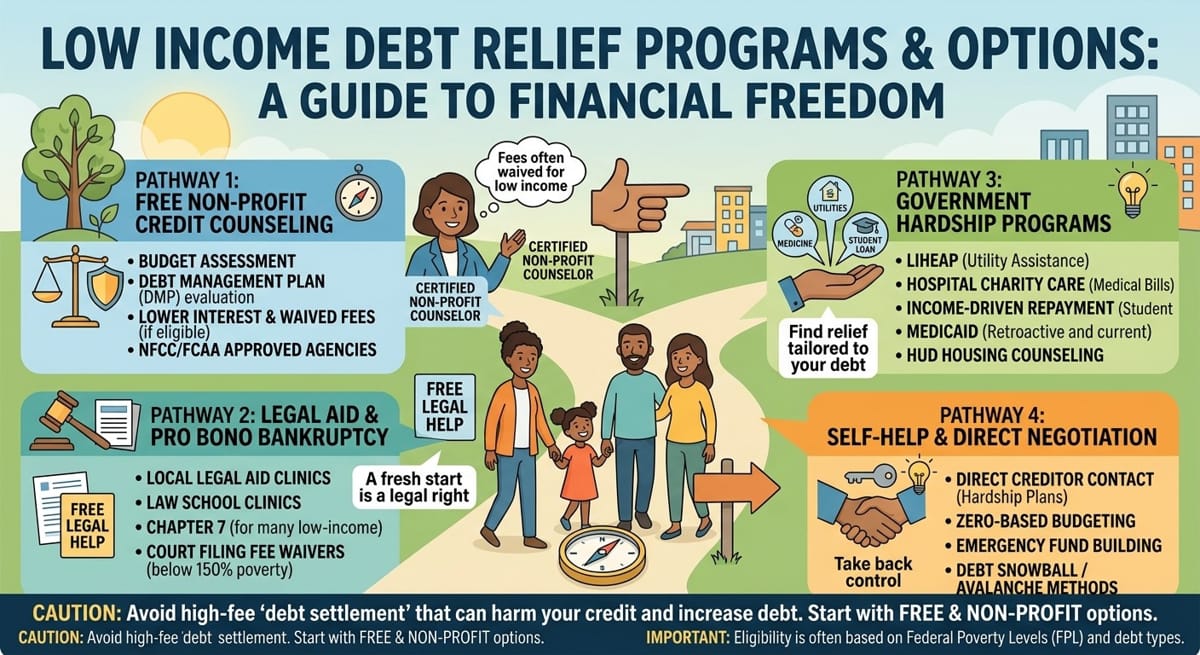
Low Income Debt Relief Programs And Options
14 min read

The Ultimate Guide To Side Hustles To Pay Off Debt
12 min read
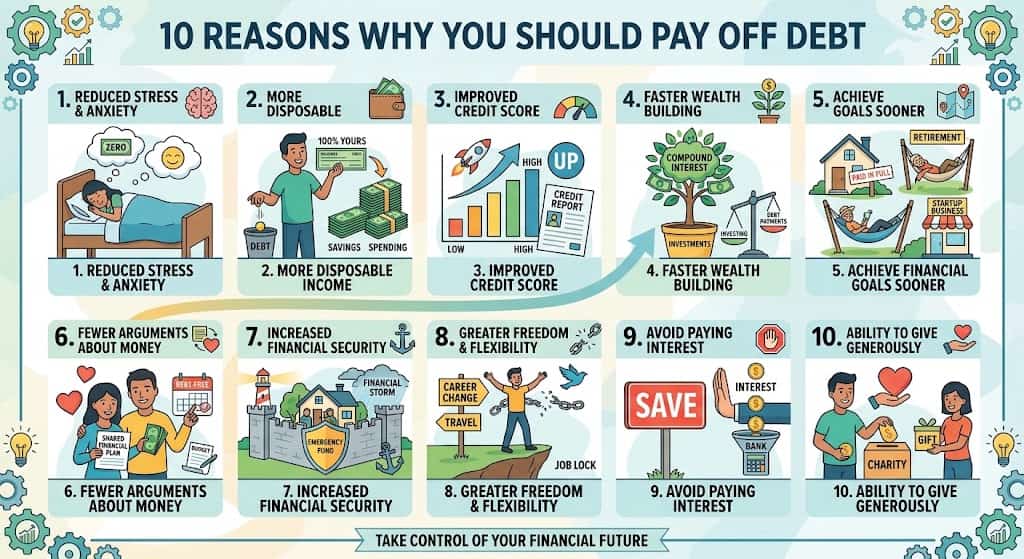
10 Reasons Why You Should Pay Off Debt
9 min read
Get Your Free Consultation
Speak with a certified debt consultant to explore your options.
Start NowNo obligation • Free consultation