Debt to Income Ratio Calculator: Find Your Number & 5 Ways To Fix A High DTI

The journey to building a secure, successful life in the United States—the "American Dream"—is often paved with hard work, professional success, and, crucially, responsible financial management. For many South Asian individuals and families who have immigrated or are established here, this journey comes with unique financial balancing acts. You may be managing significant US costs like high student loans or mortgage goals while simultaneously honoring cultural obligations like providing family support or managing remittances back home.
In this high-stakes environment, one number is arguably the most critical indicator of your financial health and your ability to achieve major milestones: your Debt-to-Income Ratio (DTI).
As a certified financial management professional specializing in helping the South Asian American community navigate US financial systems, I can attest that misunderstanding or ignoring your DTI is one of the biggest hurdles to securing competitive loans, gaining pre-approval for a house, or achieving true financial stability. Lenders, whether for a car loan, a substantial personal loan, or the mortgage for your first US home, use DTI as their primary risk assessment tool. It cuts through the complexity of your situation to give a clear picture of your total monthly debt burden versus your earnings.
Simply put, a low DTI is your financial superpower, granting you access to lower interest rates and better lending terms. A high DTI, however, can stall your ambitions, leading to costly rejections or expensive financing options that keep you tied to debt longer.
This guide will provide you with the essential expertise needed to calculate your DTI accurately and, more importantly, give you five proven strategies to fix a high DTI. Understanding and managing this number is not just good practice—it is the foundational step toward realizing your financial potential and securing the dream you worked so hard to achieve here.
Section 1: Decoding Your Debt-To-Income Ratio: The Foundation of Financial Relief
The Debt-to-Income Ratio, or DTI, is the single most objective metric lenders use to gauge your ability to take on and successfully manage new debt. While your credit score reflects your past borrowing history, your DTI provides a real-time assessment of your current financial leverage and monthly cash flow. Understanding this metric is the foundational step in any serious debt relief or financial management plan. It serves as a vital creditworthiness metric, helping institutions perform an accurate risk assessment before offering you favorable terms.
What DTI Really Measures: Beyond Just Your Credit Score
Your DTI is the percentage of your gross monthly income that goes toward paying your recurring monthly debts. It measures capacity—specifically, your capacity to absorb an additional monthly payment. Unlike your credit score, which is a historical report, DTI is a snapshot of your current financial situation. It determines how much cushion you have left each month after covering your financial obligations. For lenders, a lower DTI signals a larger buffer against financial hardship, making you a much safer and more attractive borrower.
The Two Types of DTI: Front-End vs. Back-End
When you apply for a loan, particularly a mortgage, lenders often look at two distinct DTI figures:
Front-End DTI (Housing Ratio): This calculates the percentage of your gross monthly income that goes solely toward housing costs (mortgage principal, interest, property taxes, and insurance). Lenders generally prefer this number to be under 28%.
Back-End DTI (Total Debt Ratio): This calculates the percentage of your gross monthly income that covers all monthly debt payments, including housing, credit cards, auto loans, and student loans.
As experts, we focus heavily on the Back-End DTI because it provides the most comprehensive and critical picture of your financial health. Most lenders cap their tolerance for total monthly debt burden at a Back-End DTI of 43%. If your total debt exceeds this threshold, the chances of loan approval diminish significantly, regardless of how stellar your credit score may be.
Why a Low DTI is Your Ultimate Financial Advantage in the US
A low DTI is not just a good number; it is a strategic tool, especially for South Asian individuals navigating the US financial landscape. The community often faces unique financial pressures, including substantial US educational loans and the ambitious goal of purchasing property shortly after immigrating or settling.
Here is why a low DTI is non-negotiable for success:
Competitive Mortgage Rates: For professionals on visas (e.g., H-1B holders) or recent Green Card holders, lenders may already have stricter qualification criteria. A DTI below the 36% mark can overcome these hurdles, ensuring you qualify for the lowest possible interest rates and maximizing your ability to afford a home.
Refinancing Power: High-interest debt, such as older student loans or credit card balances, can be crippling. A strong DTI is the key requirement for qualifying for favorable refinancing terms, allowing you to restructure debt and significantly lower your monthly payments.
Higher Loan Principal: A low DTI signals to the bank that you can safely handle a larger loan amount, which is essential when purchasing expensive assets in major US metropolitan areas.
Section 2: Find Your Number: A Step-by-Step DTI Calculation Guide
To effectively manage your debt and plan for major financial moves, you must first establish your current Debt-to-Income Ratio (DTI). This calculation is straightforward, but it requires precision and a commitment to including all monthly obligations. Follow these three steps to find your number and gain clarity on your financial standing.
Step 1: Summing Your Total Monthly Debt Payments
Gather the minimum monthly payment for every recurring debt you hold. This includes:
Mortgage or rent payments
Auto loan payments
US student loan payments
Minimum credit card payments (not the balance, just the minimum due)
Personal loans
Crucial Note: While formal debt only includes recurring payments reported to credit bureaus, be mindful of any significant, regular family loans being paid back, as they greatly reduce your actual spending power.
Step 2: Calculating Your Gross Monthly Income
Your Gross Monthly Income is the total amount you earn before taxes, insurance, and other deductions are taken out.
If you are a salaried employee (W-2), use your annual salary divided by twelve.
If you are a contractor or freelancer (1099 income)—common in the US tech and medical fields—use a reliable average of your last 12-24 months of earnings. If your income fluctuates, use the most conservative number to ensure your calculation is accurate and realistic.
Step 3: The DTI Formula and a Concrete Example
The DTI formula is simple:
DTI = {Total Monthly Debt Payments} /{Gross Monthly Income} * 100
Example Scenario (South Asian American Engineer):
An engineer in Texas earns a gross monthly income of $10,000. Their monthly debts include a mortgage payment of $2,200, a car loan of $400, and minimum credit card payments of $100, totaling $2,700 in recurring debt. They also remit $500 monthly to family, though this amount is not included in the formal calculation.
DTI = {$2,700}/{$10,000} * 100 = 27%
In this scenario, their formal DTI is 27%, which is excellent. However, recognizing the $500 remittance commitment, their true free cash flow is tighter than the formal DTI suggests, requiring careful budgeting.
The Gold Standard: Understanding Ideal DTI Ranges
Once you have your DTI, you can benchmark it against lending standards.
DTI Range | Assessment | Lender Action/Impact |
Below 36% | Excellent/Gold Standard | Best rates, highest likelihood of pre-approval for mortgages. |
37% to 43% | Acceptable/Max Threshold | Qualifies for most mortgages, but rates may be slightly higher. |
44% to 49% | High Risk/Concern | Difficulty obtaining conventional loans; limited to FHA or subprime lenders. |
50%+ | Critical/Very High Risk | Loan applications are routinely denied; urgent need for debt reduction. |
Knowing where you stand is the crucial first step toward correcting a high number and achieving your financial goals.
Section 3: Why DTI is a Financial Priority for South Asian Americans
For the South Asian community in the US, managing your Debt-to-Income Ratio (DTI) is more than just a matter of good credit; it's a critical element that affects major life decisions and long-term security. Because your financial wellbeing here directly impacts your immigration status, your family's future, and your ability to build generational wealth, maintaining a low DTI is a top financial priority.
DTI and Securing a US Mortgage (H-1B, Green Card Holders)
The purchase of a home is often the cornerstone of the American Dream, but the process can be complex, especially for individuals who are not yet permanent residents.1 If you are an H-1B visa holder or a recent Green Card holder seeking a mortgage, your DTI is scrutinized with an extra layer of caution.
Lenders view applicants without long-established credit or permanent residency as presenting a higher risk. To compensate, they frequently impose stricter DTI thresholds. While a US citizen might qualify for a conventional loan with a 43% DTI, non-permanent residents may be required to maintain a DTI below 36% to secure the most competitive interest rates. A high DTI can thus jeopardize your chances of homeownership or force you into unfavorable loan products, delaying a crucial step toward financial stability.
The Impact of Cultural Remittance and Support Obligations on DTI
A unique financial challenge faced by many in the South Asian American community is the commitment to family support abroad. Remittance, the regular transfer of money back to your home country, is a deeply ingrained cultural obligation.
While remittance payments are not formally counted as debt in your DTI calculation, they significantly impact your real-world financial flexibility. A high formal DTI, when combined with a substantial monthly remittance, leaves dangerously little discretionary cash flow for emergencies or unexpected US expenses. We advise clients to account for these support payments in their overall budget as if they were debt. If your DTI is high, the first line of defense must include creating a preventative budget that reduces discretionary spending here to safeguard your ability to meet both your debt obligations and your family obligations overseas.
The Cultural Stigma of Debt: Taking Control with DTI
In many South Asian cultures, there is a strong stigma associated with debt and borrowing. This cultural pressure can often lead to silence or avoidance when facing financial difficulties, preventing individuals from seeking professional help.
The DTI ratio offers a powerful, objective antidote to this stigma. It is not a moral judgment; it is a clinical metric. By focusing on your DTI, you can transform the emotional issue of "being in debt" into the manageable task of "lowering a percentage." Taking control of this number is a proactive, responsible step that demonstrates financial mastery and trustworthiness, both to lenders and to your family.
Section 4: 5 Proven, Expert-Vetted Ways To Fix A High DTI
Successfully lowering a high Debt-to-Income Ratio requires a dual approach: decreasing your debt payments (the numerator) and increasing your income (the denominator). These five strategies are practical, ethical, and designed to move your DTI back into the favorable range quickly and sustainably.
Strategy 1: Strategic Debt Payoff: The Debt-Snowball vs. Debt-Avalanche Method
The fastest and most direct way to lower your DTI is by eliminating one or more recurring monthly debt payments entirely. To do this systematically, you must choose a strategic payoff method:
Debt-Avalanche Method (Mathematical Savings): This method targets the debt with the highest interest rate first. You pay the minimum on all other debts, channeling any extra funds toward the high-interest debt. Once that debt is paid off, you roll the entire payment amount (plus the extra funds) onto the next-highest interest debt.
Expert Focus: This method is mathematically superior as it minimizes the total interest you pay over time, maximizing your savings.
Debt-Snowball Method (Psychological Momentum): This method targets the debt with the smallest balance first, regardless of the interest rate. Once the smallest debt is paid off, you gain a sense of victory, which is powerful motivation. You then "snowball" that old payment amount onto the next-smallest debt.
Expert Focus: This is ideal for those who feel overwhelmed by debt and need quick wins to maintain momentum and discipline.
The Verdict: While the Avalanche saves the most money, we often recommend the Snowball for those just starting their debt relief journey, as the psychological boost can be the difference between quitting and succeeding.
Strategy 2: Income Optimization and Side Hustles (Focus on Skilled Professionals in the USA)
Boosting your gross monthly income directly reduces your DTI percentage without you having to touch your debt. This strategy is particularly effective for skilled professionals—engineers, doctors, IT consultants, and finance professionals—who form a large part of the South Asian American workforce.
Instead of low-paying gigs, focus on high-leverage opportunities:
Consulting and Fractional Work: Leverage your specialized US experience (e.g., in software architecture, project management, or medical expertise) by taking on short-term, high-rate consulting projects outside of your primary work hours. Even one 10-hour-per-week engagement can significantly increase your W-2/1099 income.
Teaching/Tutoring: Use your professional skills to teach advanced software, financial modeling, or specialized medical test preparation. The hourly rate for specialized tutoring is often very high.
Negotiate Your Salary: If your current job is below market rate, prepare a strong case based on your contributions and US market data. A single successful negotiation offers the most efficient, permanent boost to the denominator of your DTI formula.
Remember, every extra pre-tax dollar goes directly into lowering that critical DTI percentage, making you a more attractive borrower overnight.
Strategy 3: Responsible Debt Consolidation & Refinancing (When and How to Use It Safely)
Debt consolidation is an powerful tool but it must be used with caution and expertise. It involves combining multiple high-interest debts (like credit cards or older personal loans) into a single, lower-interest payment.
When to Consolidate Safely:
You Must Achieve a Lower Rate: The consolidation loan or balance transfer must offer a significantly lower Annual Percentage Rate (APR) than the weighted average of your current debts. If the rate is similar, the strategy is pointless.
Shorter or Same Term: Ensure the new loan term does not extend your debt payoff timeline by too much, or the interest savings will be negated by paying longer.
Freeze the Old Accounts: After consolidation, you must resist the urge to use the freed-up credit card space. Cut up the cards or freeze them to prevent accumulating new debt, which would destroy the entire strategy.
The Expensive Mistake (Warning): The biggest error is taking out a consolidation loan, seeing the DTI temporarily drop, and then immediately running up balances on the old credit cards. This puts you in a far worse financial position (high DTI with even more total debt). Approach consolidation with the discipline of a final step, not an intermediate fix.
Strategy 4: Budgeting with a Cultural Lens (Balancing US Lifestyle & Family Support)
Budgeting must reflect your real life, including the unique financial demands of the desi community. The standard 50/30/20 rule (50% Needs, 30% Wants, 20% Savings/Debt) is a great starting point, but it needs adaptation.
Needs (50%): Include mortgage, car payment, utilities, and debt minimums.
Savings/Debt Acceleration (20%): This must be the priority. Dedicate a portion specifically to accelerating debt payoff (Strategy 1).
Wants (30%): This is where discipline meets culture.
Mandatory Social Expenses: Account for the large, intermittent costs that are often non-negotiable within the community—significant gifts, mandatory wedding travel or contributions, and large gathering hosting. These are not "wants"; they are obligated expenses that must be budgeted for monthly using a sinking fund, preventing them from derailing your debt relief with credit card debt.
Remittance Planning: Treat your regular family remittance as a non-negotiable "Need" in your budget. If your DTI is high, the remittance amount should be the maximum you can afford after meeting your debt minimums, not before.
By acknowledging cultural financial realities, your budget becomes a sustainable tool, not an impossible standard.
Strategy 5: Consulting a Professional Credit/Debt Relief Expert
The most trustworthy and efficient path to lowering your DTI is often through professional guidance. When dealing with high YMYL (Your Money or Your Life) topics like debt and finance, seeking expert, unbiased advice is a sign of financial maturity.
Look for US-licensed financial counselors or advisors who have:
Certifications: Check for certifications like Certified Financial Planner (CFP) or Accredited Financial Counselor (AFC).
Unbiased Compensation: Choose fee-only advisors who are not paid based on the products they sell you (e.g., specific debt consolidation loans).
Experience: Find professionals who understand the complexities of international finance, high-income debt burdens, and the US credit system.
A professional can provide a tailored plan, identify lower-interest loan options you missed, and ensure you avoid predatory debt management schemes, solidifying your path to financial freedom
Conclusion: Your Roadmap to Financial Freedom
The Debt-to-Income Ratio is far more than a simple calculation; it is your personal financial report card in the competitive US landscape. By accurately finding your number and understanding its impact on major life decisions—from securing a mortgage to managing family obligations—you take the most powerful step toward control. A low DTI is the strategic advantage that unlocks lower interest rates and financial flexibility. My commitment is to provide you with the expert, trustworthy guidance needed to navigate this path. Take these proven strategies, apply the discipline, and realize the secure, independent financial future that defines the American Dream.
Ready to Get Started?
Get a free consultation with a certified debt consultant to see if debt settlement is right for you.
Get Free ConsultationAbout the Author
Bhupinder Bajwa
Bhupinder Bajwa is a Certified Debt Specialist and Financial Counselor with over 10 years of experience helping families overcome financial challenges. Having worked extensively with the South Asian community in the U.S., he understands the cultural nuances and unique financial hurdles they may face. He is passionate about offering clear, compassionate, and actionable guidance to help individuals and families achieve their goal of becoming debt-free.
Related Articles
Can Debt Consolidation Really Help?
13 min read

The Ultimate Guide To Side Hustles To Pay Off Debt
12 min read
10 Reasons Why You Should Pay Off Debt
9 min read
7 Ways To Get Out Of Business Debt
11 min read
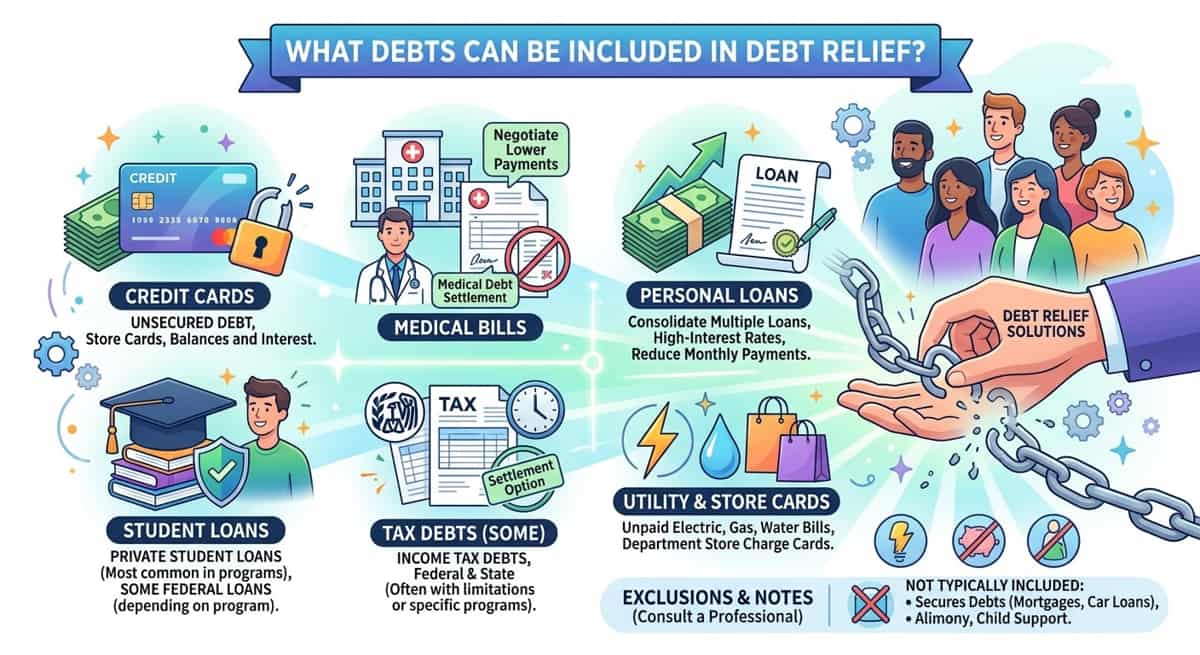
What Debts Can Be Included in Debt Relief?
13 min read
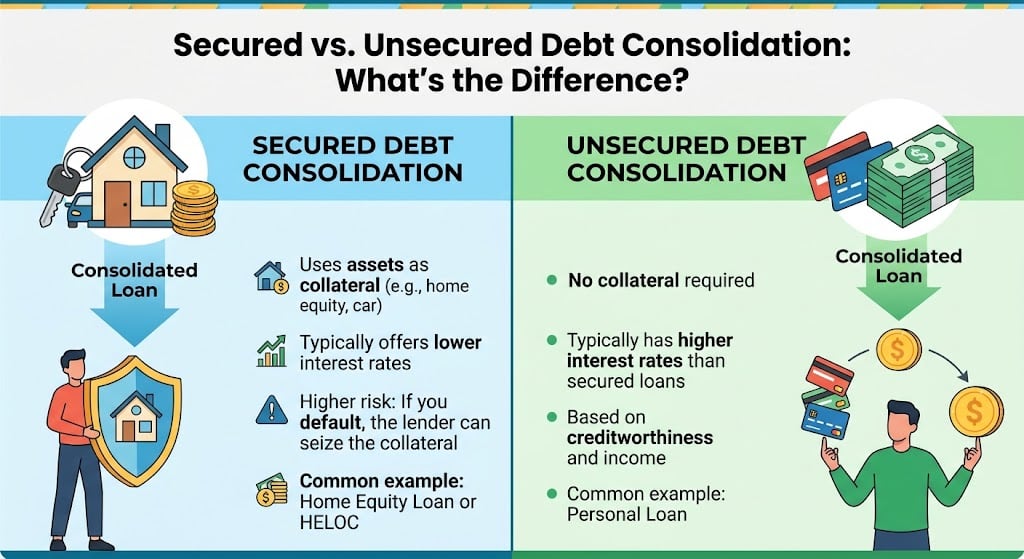
Secured vs Unsecured Debt Consolidation: What's the Difference?
8 min read
Get Your Free Consultation
Speak with a certified debt consultant to explore your options.
Start NowNo obligation • Free consultation
Related Posts
- Can Debt Consolidation Really Help?
13 min read
- The Ultimate Guide To Side Hustles To Pay Off Debt
12 min read
- 10 Reasons Why You Should Pay Off Debt
9 min read
- 7 Ways To Get Out Of Business Debt
11 min read