Credit Card Debt Forgiveness: What Is It And Who Qualifies?

The journey to financial prosperity in the United States is often marked by hard work and dedication, especially within the vibrant South Asian diaspora. However, alongside the pressures of professional life, new challenges can emerge, including navigating the complexities of credit and managing high-interest debt. For many in our community, there is the added burden of cultural expectations, such as family financial responsibilities and supporting relatives through remittance back home, which can inadvertently lead to significant credit card balances and feelings of financial hardship.
When the debt burden becomes overwhelming, the idea of "credit card debt forgiveness" often arises.1 This concept is frequently misunderstood, clouded by confusing terminology and misleading advertisements. As professional financial management experts dedicated to serving our community, we understand the need for clear, unbiased, and trustworthy information on this critical topic.
This comprehensive guide is designed to cut through the confusion and provide you with an accurate roadmap. We will clearly define what credit card debt forgiveness entails, outline exactly who qualifies for various relief options, and discuss the severe, yet often overlooked, implications like taxation and credit score impact. Our goal is to empower you with the knowledge to make informed decisions and secure your family's economic relief and long-term stability in the U.S.
Debunking the Myths: What is Credit Card Debt Forgiveness, Really?
The term "debt forgiveness" often evokes the hope of a complete, penalty-free cancellation of all outstanding balances. The reality is more nuanced and involves a formal process resulting in the cancellation of a portion of a debt, typically through one of two legal mechanisms: an agreement with the creditor or a bankruptcy filing.1 It is not an automatic right or a simple handout. Understanding the precise terminology is the first critical step toward seeking a viable solution.
Understanding Debt Settlement vs. Debt Forgiveness
In practical terms, the most common form of "forgiveness" for credit card debt is achieved through Debt Settlement. This process involves you or a third-party professional negotiating with your credit card company to pay a lump sum that is significantly less than the total amount you owe.2 Once the creditor agrees to this reduced payment and accepts it, they forgive the remaining portion of the principal balance. This remainder is officially recorded as Cancellation of Debt (COD). It is vital to recognize that the creditor is agreeing to this only to avoid losing the entire amount should you declare bankruptcy.
The Phantom Income Trap: Tax Implications
Here is a critical point that too many individuals overlook: according to the Internal Revenue Service (IRS), the amount of debt that is cancelled or forgiven (the COD) is often treated as taxable income.3 The creditor will send you a Form 1099-C if the cancelled debt is $600 or more. 4This "phantom income" must be reported on your tax return for that year. While there are exceptions (such as insolvency), neglecting this step can lead to significant tax liabilities and unexpected financial trouble. 5You must consult with a qualified tax professional before finalizing any forgiveness agreement.
The Difference Between Forgiveness, Consolidation, and Management
It is easy to confuse different strategies for tackling debt. To ensure you pursue the right path, it is important to clarify the distinct goals of the three main methods:
Debt Forgiveness/Settlement: The goal is to reduce the principal balance owed by having a portion cancelled, but this comes with major tax and credit score consequences.
Debt Consolidation: The goal is to streamline multiple high-interest debts into one lower-interest payment, such as a personal loan or balance transfer.6 The total debt amount remains the same.
Debt Management Plan (DMP): The goal is to lower your interest rates and combine payments through a non-profit credit counseling agency.7 You still pay 100% of the principal balance, but the debt is paid off faster due to lower interest.
Who Truly Qualifies for Credit Card Debt Forgiveness?
Qualification for credit card debt forgiveness is not determined by a single set of criteria, but rather by the path you choose to pursue relief. Creditors and the legal system only consider forgiveness when they believe they have exhausted all other avenues for recovery. Generally, you must demonstrate genuine and severe financial distress—you must be in a position where the creditor recognizes that receiving a fraction of the money is better than receiving nothing at all.
Negotiating Directly with Creditors (Debt Negotiation)
To qualify for a direct debt settlement with your credit card company, you typically need to demonstrate three core requirements:
Significant Documented Hardship: You must prove that a drastic change in your financial situation—such as a job loss, major medical event, or substantial income reduction—makes paying the full debt impossible.
Delinquency: Your account must usually be severely delinquent, often 90 to 180 days past due. Banks rarely negotiate with customers who are making minimum payments.
Lump Sum Offer: You must be able to offer a lump sum payment, which is often sourced from savings, investments, or loans from friends or family.
From the bank's perspective, you qualify if the cost of collections and potential litigation outweighs the benefit of recovering a portion of the debt. They view settlement as a business decision to cut losses.
The Role of Debt Settlement Companies
For many, particularly those facing language or cultural barriers in navigating complex U.S. financial systems, debt settlement companies offer a seemingly easier path. These companies negotiate on your behalf. However, they come with substantial risks and require careful vetting.
You "qualify" for their services by agreeing to stop making payments to your creditors and instead paying into an escrow account held by the settlement company. This strategy immediately damages your credit score and leaves you vulnerable to lawsuits from creditors while the company builds up the lump sum payment. Before signing any contract, you must perform a thorough trustworthiness check: examine their track record with the Consumer Financial Protection Bureau (CFPB) and the Better Business Bureau (BBB).1 Fees are often high and are usually only collected after a settlement has been achieved.
Eligibility through Bankruptcy
The most complete, legal form of credit card debt forgiveness is granted through the federal bankruptcy court system.
Chapter 7 (Liquidation): This chapter can completely wipe out (discharge) most credit card debts.2 To qualify, you must pass the "means test," which compares your average monthly income to the median income in your state. If your income is too high, you do not qualify for Chapter 7 and must explore Chapter 13.
Chapter 13 (Reorganization): This chapter is for individuals with steady income who do not pass the means test. While it doesn't offer immediate forgiveness, it restructures your debts into a three-to-five-year repayment plan. Any remaining unsecured debt (like credit cards) that is not repaid by the end of the plan is legally discharged.
Bankruptcy is a powerful, yet severe, option reserved for those with genuine financial incapacity, offering the clearest path to full legal forgiveness of outstanding unsecured debt.
Tailored Financial Strategies for South Asian Individuals in the USA
Seeking debt relief in the U.S. can feel uniquely complex for members of the South Asian community, where financial decisions are often influenced by cultural values and the intricacies of immigration status. Acknowledging these factors is essential for choosing a path that provides true relief without compromising long-term goals.
Navigating Cultural and Family Pressures on Debt
In many South Asian cultures, carrying personal debt—and especially revealing financial struggles—is often met with intense cultural stigma. The concept of izzat (honor or reputation) can create immense pressure to maintain appearances, leading individuals to avoid seeking professional help or to take on further debt to manage outstanding balances privately. It is crucial to remember that financial hardship is a reality for millions in the U.S. and is not a moral failing. The most effective, confidential, and professional solutions come from certified financial experts, not from potentially conflict-ridden discussions with family members who may not possess the necessary expertise. Prioritizing private, professional debt solutions protects both your family harmony and your financial future.
Understanding the Impact on Immigration Status
A common and highly sensitive concern for those on work visas (like the H-1B) or seeking permanent residency (a Green Card) is how financial distress or bankruptcy might affect their immigration status. While credit card debt itself is a civil matter and typically does not directly jeopardize your visa or green card application, severe unmanaged financial issues can be scrutinized.
The U.S. government maintains the Public Charge Rule, which assesses whether an immigrant is likely to become primarily dependent on government benefits.1 While debt settlement or bankruptcy is generally not considered a "public charge" factor, demonstrating consistent financial stability and sound financial management is always a positive element in immigration proceedings. Aggressively managing your debt through professional channels, rather than allowing it to spiral into lawsuits or uncontrollable collections, is key to mitigating potential risks. It is imperative to consult with an immigration attorney for advice regarding any personal financial action and its potential impact on your specific immigration case.
Key U.S. Consumer Protection Laws to Know
Financial stress is often compounded by aggressive collection tactics. Empower yourself by knowing your rights under the Fair Debt Collection Practices Act (FDCPA). This federal law prohibits third-party debt collectors from engaging in abusive, unfair, or deceptive practices.2 For example, collectors generally cannot:
Call you repeatedly or continuously.
Call you before 8:00 a.m. or after 9:00 p.m. without your permission.
Discuss your debt with anyone except you or your attorney.
Knowing the FDCPA is your first line of defense against harassment, allowing you to focus calmly on resolving your financial situation through legal means. Furthermore, the Federal Trade Commission (FTC) and the Consumer Financial Protection Bureau (CFPB) oversee these practices and are the entities where you can report violations.3
Utilizing Community-Specific Financial Literacy Resources
While federal laws apply equally, navigating the financial landscape can be easier with culturally competent guidance. Seek out local non-profit credit counseling agencies affiliated with the National Foundation for Credit Counseling (NFCC).4 Many large metropolitan areas with significant South Asian populations offer staff or resources tailored to the community, helping to bridge any language or cultural gaps in understanding complex financial products and relief programs. These agencies can provide free or low-cost counseling, often leading to a structured Debt Management Plan (DMP), which is a trusted alternative to debt settlement.
The Full Impact: Your Credit Score and Future Financial Health
While debt forgiveness offers immediate relief from overwhelming balances, it is crucial to approach the decision with a clear understanding of its long-term consequences, particularly regarding your credit score and future financial opportunities.1 Debt forgiveness is not a clean slate; it is a serious financial tool that leaves a significant record.
Immediate and Long-Term Effects on Your FICO Score
When a creditor agrees to settle your debt, your credit report will reflect the account as either "Settled for Less Than Full Balance" or "Charged Off."2 Both notations are highly negative.
"Charged Off" indicates the creditor has written the debt off as a loss, which is a major blow to your score.3
"Settled for Less Than Full Balance" is slightly better than a charge-off but is still viewed negatively by future lenders, as it signals that you did not repay the amount originally agreed upon.4
In the case of debt settlement, late payment history, and the eventual settlement notation will remain on your credit report for up to seven years from the date the delinquency was first reported.5 Bankruptcy, the ultimate form of legal forgiveness, remains on your report for up to ten years, making it difficult and expensive to secure future financing like mortgages or car loans during this period.
Rebuilding Credit After Debt Forgiveness: A 5-Step Plan
The damage to your credit score is temporary, and financial recovery is entirely possible through deliberate action. Follow this expert 5-step plan to begin rebuilding your credit after debt forgiveness:
Obtain a Secured Credit Card: This requires a cash deposit, which acts as your credit limit. Use it for small, necessary purchases and pay the balance in full every month.
Apply for a Credit Builder Loan: Offered by some credit unions, this loan places the borrowed money in a locked account while you make installment payments.6 You receive the funds only after the loan is fully paid off, demonstrating responsible repayment history.
Ensure On-Time Payments: Payment history is the single most important factor in your FICO score.7 Ensure every bill, no matter how small, is paid by the due date.
Keep Your Credit Utilization Low: Even with a low limit on a secured card, strive to use less than 10% of your available credit.
Monitor Your Reports: Obtain your free annual credit report to ensure the forgiven debt is being reported accurately by all three major credit bureaus.8
Importance of Documenting the Process for Tax and Legal Purposes
The process of debt forgiveness carries legal and tax obligations that extend beyond the settlement date.9 To protect yourself from future disputes with the IRS or collection agencies, meticulous documentation is paramount.
You must retain copies of the Debt Settlement Letter from your creditor. This document is a legal contract proving that the creditor has accepted the reduced payment and considers the debt fully satisfied. Without this, a collection agency could potentially purchase the debt and attempt to collect the remainder. Furthermore, you must carefully file the Form 1099-C (Cancellation of Debt) you receive from the creditor, as this form is necessary for accurately completing your federal tax return and dealing with the aforementioned "phantom income." Never discard these crucial legal and tax documents.
Alternatives to Full Debt Forgiveness
While debt settlement and bankruptcy offer a path to forgiveness, they are high-impact tools that severely damage your credit history.1 For many individuals, especially those with manageable debt who are primarily seeking lower payments, less damaging alternatives exist that can provide significant financial relief. Exploring these options first is often the most prudent strategy for long-term financial health.
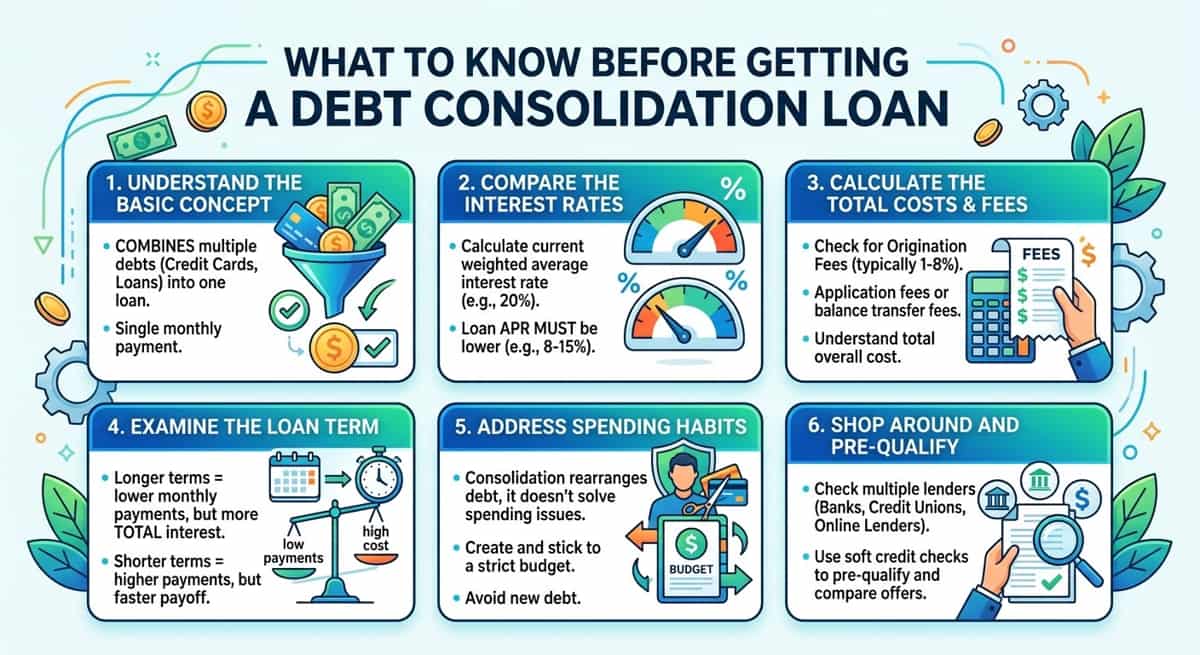
Low-Interest Debt Consolidation Loans
If you still possess a decent credit score (typically 670 or higher), a debt consolidation loan may be an excellent alternative. This involves taking out a single unsecured personal loan and using the funds to pay off multiple high-interest credit card balances. The goal is to replace several high-rate payments with one lower-rate, fixed-term payment.2 This simplifies your monthly budgeting and can save you hundreds or thousands of dollars in interest over time.3 Crucially, debt consolidation does not involve forgiveness, meaning your principal balance is fully repaid, and your credit score avoids the severe negative notation of a settlement.
Credit Counseling and Debt Management Plans (DMPs)
A Debt Management Plan (DMP), coordinated through a reputable non-profit credit counseling agency, is one of the most trusted alternatives for those with moderate debt. Under a DMP, the counselor works with your creditors to achieve lower interest rates (often significantly reduced) and waive late fees.4 You make one consolidated monthly payment to the agency, which then distributes the funds to your creditors.5
DMPs are highly effective because you pay 100% of the principal, but the debt is typically paid off within three to five years.6 Since no debt is forgiven, your credit report is not marked as "settled for less," although enrollment in a DMP is noted. While there may be small, recurring monthly service fees (usually $20–$50), the interest savings often far outweigh these costs. This option requires strong commitment and is less damaging than seeking forgiveness.7
Balance Transfer Credit Cards
For consumers with excellent credit and a lower amount of high-interest debt, a balance transfer credit card can provide a temporary solution.8 These cards often feature a promotional 0% Annual Percentage Rate (APR) on transferred balances for a set period, typically 12 to 21 months.9 This allows you to aggressively pay down your principal balance without accruing any interest during that introductory window. Be aware, however, that nearly all balance transfers require an upfront transfer fee, usually 3% to 5% of the total amount transferred.10 If you fail to pay off the balance before the promotional period ends, the remaining debt reverts to a much higher standard APR.11
Conclusion: Your Next Steps to Financial Freedom
Credit card debt forgiveness, whether achieved through negotiation, settlement, or bankruptcy, is not a simple loophole but a serious financial tool intended for individuals facing genuine, documented hardship. While it can provide necessary relief, the path is complex and carries significant long-term consequences, including impacts on your credit score and potential tax liabilities on the forgiven amount. Understanding the crucial difference between forgiveness and less damaging alternatives like Debt Management Plans is essential before committing to any course of action.
We urge you to avoid making a hasty decision driven by stress or desperation. Before taking any irreversible step toward debt forgiveness, your absolute next move must be to consult a Certified Credit Counselor or a Financial Advisor. These professionals can objectively review your entire financial profile, explain the exact implications of a Form 1099-C, and recommend the strategy that minimizes damage while maximizing your long-term stability. Taking this diligent, professional approach is the best way to secure genuine financial freedom and build a strong, stable foundation for your American future.
Ready to Get Started?
Get a free consultation with a certified debt consultant to see if debt settlement is right for you.
Get Free ConsultationAbout the Author
Bhupinder Bajwa
Bhupinder Bajwa is a Certified Debt Specialist and Financial Counselor with over 10 years of experience helping families overcome financial challenges. Having worked extensively with the South Asian community in the U.S., he understands the cultural nuances and unique financial hurdles they may face. He is passionate about offering clear, compassionate, and actionable guidance to help individuals and families achieve their goal of becoming debt-free.
Related Articles
How to Use a Debt Validation Letter to Protect Yourself
10 min read
Which Debt Should I Pay Off First?
10 min read
How to Settle SBA Loan Debt: Complete Guide to Debt Relief Options
11 min read

Does Debt Settlement Work? What to Know Before You Start
11 min read
What Ignoring Credit Card Debt Really Costs You
10 min read
What to Know Before Getting a Debt Consolidation Loan
10 min read
Get Your Free Consultation
Speak with a certified debt consultant to explore your options.
Start NowNo obligation • Free consultation