Everything You Need To Know About Consolidating Credit Card Debt
If you're juggling payments on three or four credit cards every month and it feels like you're never actually getting ahead, you're not alone. Many South Asian families in the U.S. find themselves in this exact spot supporting family back home, saving for a child's education, managing a mortgage, and still trying to keep up with credit card minimums that never seem to shrink.
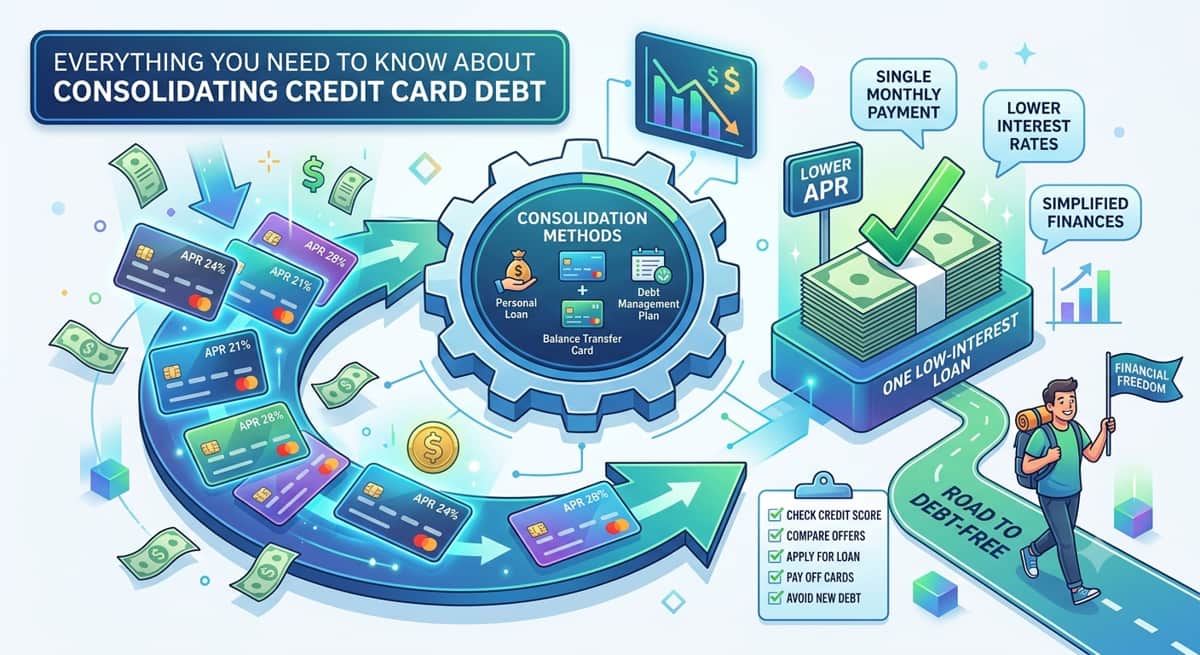
Credit card debt consolidation is simply the process of combining multiple credit card balances into one single payment, ideally at a lower interest rate. Instead of tracking five due dates and five different interest rates, you deal with one loan or one plan.
What Is Credit Card Debt Consolidation?
Credit card debt consolidation means taking several credit card balances and rolling them into a single new payment usually through a loan, a balance transfer card, or a structured repayment plan. The goal is simple: fewer payments to track, and ideally, a lower overall interest rate so more of your money goes toward the actual debt instead of interest charges.
It's easy to confuse consolidation with two other terms: debt settlement and bankruptcy. They are not the same thing.
Debt consolidation means you still pay back everything you owe you're just organizing it more efficiently and often at a lower rate.
Debt settlement means negotiating with creditors to pay back less than what you owe, usually because you can't pay the full amount. This can seriously damage your credit.
Bankruptcy is a legal process for when debt has become unmanageable, and it stays on your credit report for years.
Consolidation is generally best suited for people who have steady income, can commit to a monthly payment, and want to pay off what they owe just in a more organized and less expensive way.
How Does Credit Card Debt Consolidation Work?
The idea is straightforward: instead of paying, say, $150 to one card, $200 to another, and $90 to a third each with a different interest rate you take out one loan or one line of credit that pays off all three. From that point forward, you're only making one payment, at one interest rate, until it's paid off.
The interest rate (APR) you qualify for depends heavily on your credit score. The better your score, the lower your rate is likely to be, and the more you'll save. Lenders will also look at your repayment term (how many months or years you have to pay it back) and your debt-to-income ratio basically, how much you owe compared to how much you earn.
Most consolidation options require a credit check, and some require proof of income, so it helps to have your recent pay stubs or tax documents ready when you apply.
Main Ways to Consolidate Credit Card Debt
There isn't one "correct" way to consolidate debt the right method depends on your credit score, how much you owe, and whether you own a home. Here's a look at the most common options.
Balance Transfer Credit Cards
A balance transfer card lets you move your existing credit card balances onto a new card, often with a 0% introductory interest rate for a set period usually 12 to 21 months. During that window, every payment you make goes straight toward the balance instead of interest, which can help you pay things down much faster.
The catch: there's usually a transfer fee (commonly 3–5% of the amount you move), and once the introductory period ends, the interest rate can jump significantly. This option works best if you're confident you can pay off most or all of the balance before the 0% period ends.
Debt Consolidation Loans (Personal Loans)
A debt consolidation loan is a personal loan you use specifically to pay off your credit cards. It typically comes with a fixed interest rate and a fixed monthly payment, so you know exactly what you'll owe and for how long usually two to five years.
These loans are offered by banks, credit unions, and online lenders. Credit unions often offer more competitive rates, especially if you already have a relationship with one. Approval and rate depend largely on your credit score, so it's worth comparing offers from a few lenders before committing.
Home Equity Loan or HELOC
If you own a home, you may be able to borrow against the equity you've built up to pay off credit card debt. These loans (a Home Equity Loan or a Home Equity Line of Credit, known as a HELOC) often come with lower interest rates than credit cards or personal loans.
That said, this option comes with real risk: you're turning unsecured debt (credit card debt, which isn't tied to any asset) into secured debt (tied to your home). If you're unable to keep up with payments, your home could be at risk. This is worth thinking through carefully, and ideally discussing with a financial advisor before moving forward.
Nonprofit Debt Management Plans (DMPs)
A Debt Management Plan is set up through a nonprofit credit counseling agency. The agency works directly with your creditors to potentially lower your interest rates, and you make one monthly payment to the agency, which then distributes it to your creditors.
This can be a strong option if your credit score isn't high enough to qualify for a good loan or balance transfer rate, since DMPs don't typically require a credit check to enroll. Keep in mind that most DMPs also ask you to close the credit card accounts involved, and the plan usually takes three to five years to complete.
Retirement Account (401k) Loans - Usually a Last Resort
Some people consider borrowing from their 401k to pay off credit card debt. While it's technically possible, this is generally not recommended. If you leave your job or are let go before the loan is repaid, the remaining balance can become due quickly, and if you can't repay it, it may be taxed as income and hit with an early withdrawal penalty. This option should typically only be considered after speaking with a financial professional.
Pros and Cons of Consolidating Credit Card Debt
The upsides:
One monthly payment instead of several, which makes budgeting easier
Potentially lower interest rate, meaning more of your payment goes toward the actual debt
A clear payoff timeline, so you know exactly when you'll be debt-free
Less stress from juggling multiple due dates
The trade-offs:
Balance transfer fees or loan origination fees can add to the cost
Your credit score may dip slightly at first due to the credit check and new account
If you're not careful, it's possible to run up new balances on the old cards while still paying off the consolidation loan which leaves you with more debt, not less
Options like HELOCs carry real risk if payments are missed
Consolidation works best when it's paired with a real plan to stop adding new debt otherwise, it just delays the problem.
How Does Debt Consolidation Affect Your Credit Score?
When you apply for a consolidation loan or a new balance transfer card, the lender will usually do a hard credit inquiry, which can cause a small, temporary dip in your score. Opening a new account can also slightly lower the average age of your credit history, which is another factor in your score.
However, consolidation can actually help your credit over time. One of the biggest factors in your credit score is your credit utilization how much of your available credit you're using. If consolidation lowers your credit card balances to $0, your utilization drops significantly, which can boost your score. Making consistent, on-time payments on your new loan also builds a positive payment history, which is the single biggest factor in your credit score.
In short: a small dip upfront, with the potential for real improvement over the following months if you stay consistent.
Special Financial Considerations for South Asian Families in the U.S.
Managing debt in the U.S. often comes with a layer of complexity that's specific to immigrant and first-generation households. Here are a few things worth thinking through.
Credit Invisibility for New Immigrants and Visa Holders
If you recently moved to the U.S. on an H1B, F1, or other visa, or you're in the process of getting a green card, you may have little to no U.S. credit history even if you've managed money responsibly your entire life. This is called being "credit invisible," and it can make it harder to qualify for a consolidation loan or get a good interest rate, since lenders rely heavily on your credit file.
The good news is this is a temporary situation, not a permanent barrier. Building a credit history through a secured card, becoming an authorized user, or using a credit-builder product can open up better consolidation options over time.
Cultural Attitudes Toward Debt and Family Expectations
For many South Asian families, debt isn't something that's talked about openly even within the household. There can be real pressure to appear financially stable, especially when family back home may be depending on you, or when there's an expectation to contribute to a sibling's wedding, a parent's medical costs, or a joint family expense.
This silence can make it harder to ask for help early, which sometimes lets a manageable situation turn into a bigger one. There's no shame in using a nonprofit credit counselor or discussing your finances with a trusted advisor these conversations stay confidential, and getting ahead of debt early almost always leads to a better outcome.
Balancing Remittances with Debt Repayment
Sending money home is often non-negotiable, even while you're working on paying off debt here. If this is your situation, it helps to treat remittances as a fixed line item in your monthly budget just like rent rather than something flexible that comes out of whatever's left over. Being upfront with family about what you can realistically send each month, especially while you're actively paying down debt, can prevent the situation from adding more financial strain than it needs to.
Building or Rebuilding Credit as a Newcomer
If you're newer to the U.S. financial system, a few tools can help you build credit alongside or before consolidating debt:
Secured credit cards, which require a deposit but report to the credit bureaus like a regular card
Credit-builder loans, offered by many credit unions and community banks
Becoming an authorized user on a family member's well-managed credit card
These steps can improve your credit profile over time, which puts you in a stronger position to qualify for better consolidation rates down the line.
How to Choose the Right Debt Consolidation Method for You
There's no single best option it depends on your situation. A few questions to ask yourself:
What's your credit score? Higher scores generally qualify for balance transfer cards and personal loans with the best rates. Lower or limited credit history may point toward a nonprofit debt management plan.
How much do you owe? Smaller balances may be manageable with a balance transfer card. Larger balances often make more sense with a fixed-term personal loan.
Do you own a home? If so, a home equity option may offer a lower rate but only if you're confident in your ability to keep up with payments.
How disciplined are you with new spending? If you're worried about running up the old cards again, a DMP (which usually closes the old accounts) may offer more built-in structure.
Method | Best For |
Balance Transfer Card | Good credit, smaller balances, can pay off within the intro period |
Personal Loan | Fixed payment preference, moderate to good credit |
Home Equity Loan/HELOC | Homeowners comfortable using their home as collateral |
Debt Management Plan | Limited/lower credit, want third-party structure and support |
Step-by-Step Guide: How to Consolidate Credit Card Debt
Add up everything you owe. List each card, its balance, and its interest rate.
Check your credit score. This helps you understand which options you're likely to qualify for.
Compare your options. Look at interest rates, fees, and repayment terms across a few lenders or a nonprofit credit counselor.
Apply and get approved. Have income documents ready, such as pay stubs or tax returns.
Pay off the old balances. In most cases, the new loan or card pays these off directly.
Decide what to do with the old cards. Consider keeping one open with no balance to maintain your credit history but avoid using it regularly.
Set up a monthly budget. Build your new consolidated payment into your budget as a fixed expense, just like rent or utilities.
Common Mistakes to Avoid When Consolidating Debt
Reopening or reusing old cards. This is the most common way consolidation backfires you end up with the new loan payment and new credit card debt.
Choosing based on marketing instead of the real cost. Always compare the full picture: interest rate, fees, and repayment term not just a flashy 0% offer.
Missing payments on a debt management plan. Missed payments can cause the agency to lose the reduced rates they negotiated with your creditors.
Ignoring the root cause. If overspending or an unexpected expense caused the debt in the first place, consolidation alone won't fix the underlying issue a realistic budget will.
When Should You Talk to a Credit Counselor or Financial Advisor?
If you're only able to make minimum payments, if your balances are growing rather than shrinking, or if you're unsure which option fits your situation, it's a good time to speak with a professional. A certified, nonprofit credit counselor can review your full financial picture and walk you through realistic options often at little to no cost.
To avoid scams, only work with agencies accredited by the National Foundation for Credit Counseling (NFCC). Their website includes a directory of legitimate, nonprofit counselors you can search by location.
Alternatives to Debt Consolidation
Consolidation isn't the only path forward. Depending on your situation, you might also consider:
The debt snowball or avalanche method —paying off cards yourself, either smallest balance first (snowball) or highest interest rate first (avalanche), without taking out a new loan.
Debt settlement — negotiating to pay less than what's owed. This can significantly hurt your credit and should be approached carefully.
Bankruptcy — typically a last resort, used when debt has become truly unmanageable.
Choosing a Path That Fits Your Financial Life
There's no one-size-fits-all answer when it comes to consolidating credit card debt. The right choice depends on your credit score, how much you owe, whether you're a homeowner, and how much structure you want built into the process. What matters most is taking a clear-eyed look at your situation and choosing a path you can realistically stick to.
If you're not sure where to start, speaking with a nonprofit NFCC-accredited credit counselor is a good first step it's confidential, often free, and can help you understand exactly which option makes the most sense for your life.
Ready to Get Started?
Get a free consultation with a certified debt consultant to see if debt settlement is right for you.
Get Free ConsultationAbout the Author
Bhupinder Bajwa
.
Related Articles
Low Income Debt Relief Programs And Options
14 min read
What Debts Can Be Included in Debt Relief?
13 min read

Debt Settlement for $20,000 in Credit Card Debt: What to Expect
11 min read
What Happens If You Can’t Pay Your Business Credit Card?
11 min read
How Much Tax You Pay On Lawsuit Settlements
9 min read

Dismiss Your Credit Card Lawsuit: Winning Strategies
10 min read
Get Your Free Consultation
Speak with a certified debt consultant to explore your options.
Start NowNo obligation • Free consultation