
What Is The Difference Between Criminal Tax Penalties And Civil Tax Penalties?
Not all tax penalties are created equal. Many are civil issues, others evolve into criminal cases with far more serious ramifications. Anyone filing taxes, running a business or defaulting on taxes needs to know the difference. Page penalties and failure to file penalties both penalize you for the same thing: not complying with US tax laws, pretty similar to how IRS assesses taxes on all income earned by non-US citizens that reside here.
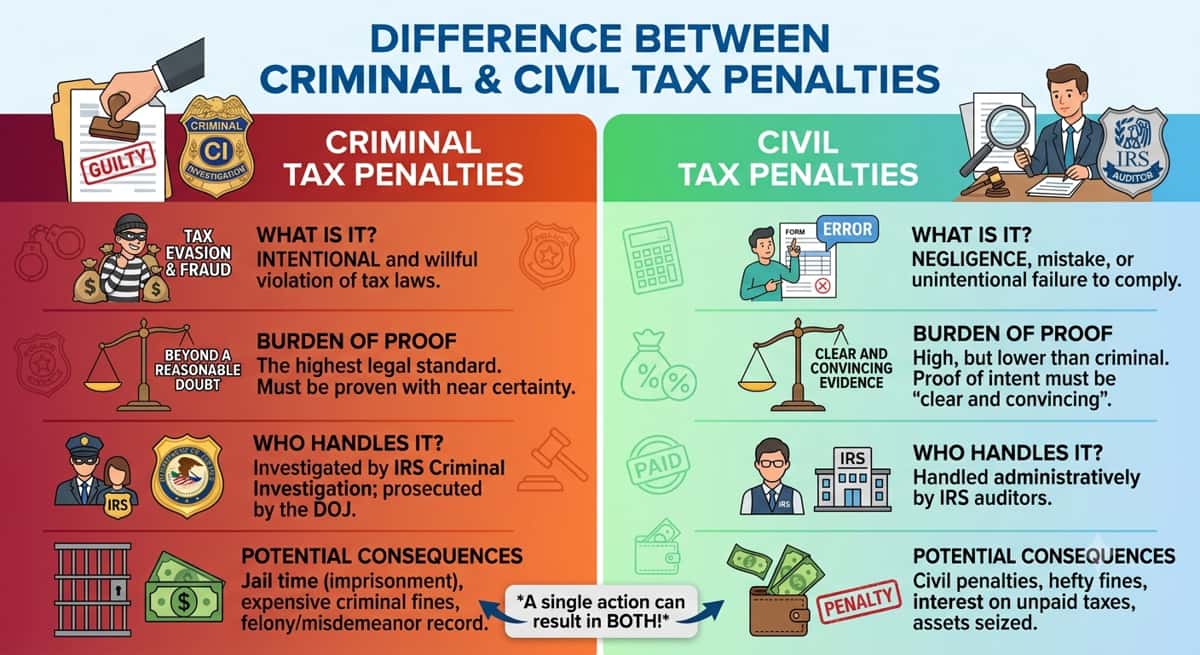
Civil tax penalties are usually imposed due to the taxpayer making mistakes, filing late, failing to meet minimum payment standards or not following certain filing requirements. Punishments often consist of fees and interest, added on as consequences of improper disclosures, but imprisonment is usually not a part of this punishment. Criminal tax penalties involve the willful commission of acts of tax fraud or tax evasion, and prosecution of a person in committing such offenses. For these cases, the government must show that you willfully broke the law and penalties could include heavy taxes due, criminal history, or even jail time.
Having an understanding of where the line is appropriately drawn between civil and criminal tax penalties can enable taxpayers to navigate decisions that must be made.
What Are IRS Tax Penalties, in Plain English?
The IRS actually handles tax problems via two systems, and they are entirely separate: civil and criminal. These civil penalties are monetary fines, interest, along with likely repayment strategies. Criminal penalties require your case to go to court, which can end in jail time. Additionally, the two systems have different standards of proof. All a civil case needs is a "preponderance of the evidence" (a 51% likelihood that you did something wrong). Criminal cases, on the other hand, require proof "beyond a reasonable doubt," a much higher standard. This difference in proof is almost the single most important reason why so many tax matters remain civil: because it is far, far more difficult for the government to prove a criminal case.
Civil Tax Penalties Explained
What Counts as a Civil Tax Penalty?
A civil tax penalty is a financial consequence, not a criminal charge. There's no arrest, no courtroom trial, and no jail time attached. These penalties are usually added automatically when you file late, pay late, or make an error on your return, or they show up after an audit. The good news is that civil penalties are almost always negotiable. You can often set up a payment plan, ask for the penalty to be reduced or removed, or work out a settlement with the IRS.
Common Types of Civil Tax Penalties
Failure-to-file penalty — charged when you don't file your tax return by the deadline, even if you can't pay what you owe.
Failure-to-pay penalty — charged when you file on time but don't pay the full amount owed.
Accuracy-related or negligence penalty — applies when your return has errors from carelessness, not intentional dishonesty.
Civil fraud penalty (IRC §6663) — a steeper financial penalty for cases where the IRS believes there was an intent to deceive, but it's still handled as a money matter, not a criminal case.
FBAR civil penalties — for failing to report foreign bank accounts, which matters a lot if you or your family have accounts, land, or property back home that weren't reported.
Estimated tax underpayment penalty — for not paying enough tax throughout the year, common among small business owners and the self-employed.
How the IRS Handles Civil Penalties
Civil cases usually start with a notice in the mail explaining what you owe and why. If you disagree, you have the right to appeal. If you agree but can't pay, you have options: an Offer in Compromise (settling for less than you owe), an installment agreement (a monthly payment plan), or penalty abatement, where the IRS forgives the penalty either because it's your first time missing a deadline or because you had a reasonable cause, like illness or a natural disaster.
Real-World Example of a Civil Penalty Situation
Picture a family that runs a small restaurant. Business is cash-heavy, and one year they underreport some of that cash income by mistake, without a bookkeeper catching it. Separately, they also forget to report a joint bank account held with parents back home. The IRS flags both issues during a routine review. Because there's no sign of intentional deception just sloppy recordkeeping and unfamiliarity with foreign account rules the IRS treats this as a civil matter. The family ends up owing back taxes, interest, and a penalty, which they resolve through a payment plan.
Criminal Tax Penalties Explained
What Makes a Tax Violation Criminal?
The difference between a civil mistake and a criminal offense almost always comes down to one word: willfulness. Willfulness means you knew what the tax law required and you deliberately chose to break it.penalty abatement An honest mistake, a misunderstanding of confusing rules, or simple carelessness is not willful, and it is not a crime. The IRS has to show that you intentionally tried to cheat the system not that you got something wrong.
Common Criminal Tax Charges
Tax evasion (IRC §7201)—deliberately trying to avoid paying taxes you know you owe, such as hiding income or assets.
Willful failure to file or pay (IRC §7203)—intentionally refusing to file a return or pay taxes you know are due.
Filing a false return (IRC §7206)—knowingly signing a tax return that contains false information.
Willful failure to file FBAR (criminal tier) — deliberately hiding foreign accounts from the IRS, as opposed to simply not knowing you had to report them.
Conspiracy to defraud the IRS — working with someone else to intentionally deceive the IRS.
Potential Consequences of a Criminal Conviction
A criminal tax conviction can mean prison time, large fines, and a permanent felony record. For non-citizens, there's an added layer of risk: a conviction for certain tax crimes can affect naturalization, green card status, or visa renewals. If there's any possibility of criminal exposure and immigration status is involved, it's important to work with both a criminal tax attorney and an immigration attorney together, since the two areas of law intersect in ways that a general tax preparer or single attorney may not fully cover.
Real-World Example of a Criminal Tax Situation
Now picture a different scenario. A business owner sets up accounts under a relative's name specifically to hide income from the IRS, creates fake invoices to make the business look less profitable than it is, and moves money through a web of transfers designed to avoid detection. Unlike the restaurant example above, this involves deliberate concealment and fabricated documents clear signs of intent to deceive. This pattern of willful, planned deception is what can turn a tax problem from a civil matter into a criminal investigation.
Civil vs. Criminal Tax Penalties: Side-by-Side Comparison
The clearest way to see the difference is side by side. Civil cases are about money and mistakes; criminal cases are about proven intent to deceive. Here's how the two compare across the factors that matter most.
Factor | Civil Tax Penalty | Criminal Tax Penalty |
Burden of Proof | Preponderance of the evidence (more likely than not) | Beyond a reasonable doubt |
Intent Required | Not usually required | Willfulness (intentional violation) |
Who Decides | IRS agents, appeals officers | Federal prosecutors, judge, or jury |
Possible Outcomes | Fines, interest, payment plans | Prison time, felony record, large fines |
Right to Jury Trial | No | Yes |
Typical Resolution Path | Payment plan, abatement, Offer in Compromise | Criminal defense, plea negotiation, trial |
Statute of Limitations | Generally 3 years (6 for substantial underreporting) | Generally 6 years |
How Does the IRS Decide Whether to Pursue Civil or Criminal Action?
When the IRS is determining whether to go forward with a case, the agency looks for one of several "badges of fraud": concealment of income, false documents or fraud by a coin dealer; that a history exists of paying more than you owe; or other unusual behavior such as maintaining two sets of books in an all-cash business. They are indicators red flags really that scream intent, not mistake. I say this again: even serious tax problems normally remain civil. Criminal referrals are rare and only for those instances where there is obvious, intentional, repetitive misconduct not for people who just made an honest mistake or misinterpreted a confusing set of rules.
Warning Signs You May Be Facing a Criminal Tax Investigation
A few signals suggest your situation may have moved beyond a routine civil matter:
You're contacted by IRS Criminal Investigation (IRS-CI) special agents, not a regular revenue agent or officer.
You're read Miranda-style warnings before being questioned.
You or your business receive a grand jury subpoena.
If any of this happens, stop talking to investigators and contact a tax attorney immediately. Don't rely on your accountant to represent or protect you here conversations with an accountant are not protected the way conversations with an attorney are, so anything you tell your accountant in a criminal matter isn't confidential.
Why This Matters More for South Asian Immigrant Families and Business Owners
Several situations that are common in South Asian immigrant communities can unfortunately trigger IRS attention, even when nothing wrong was intended:
Foreign accounts, property, or inherited assets back home. Many families have bank accounts, land, or inherited property in South Asia, and the FBAR and FATCA reporting rules around these are confusing and easy to get wrong.
Cash-intensive family businesses. Restaurants, retail shops, gas stations, and motels often deal heavily in cash, and gaps in recordkeeping can look suspicious even when they're just the result of an overwhelmed small business owner without a proper bookkeeping system.
Remittances mistaken for unreported income. Regularly sending money to family abroad is a normal part of life for many immigrant families, but it can sometimes be misread by automated IRS systems as unreported income.
Language and paperwork barriers. U.S. tax forms are hard enough for native English speakers. Genuine confusion over unfamiliar forms leads to honest mistakes which are civil issues, not criminal ones.
Fear and avoidance making things worse. In many cultures, government trouble carries real stigma, and people avoid opening IRS letters out of fear. Ignoring a manageable civil notice is often what turns it into a bigger, harder problem.
Immigration status considerations. If there's any criminal exposure at all, it needs to be handled with immigration consequences in mind from the very beginning, not as an afterthought.
What to Do If You've Received an IRS Notice or Are Worried About Penalties
Don't ignore the notice. IRS deadlines are real, and missing them can limit your options.
Figure out who you're dealing with. A letter from a regular revenue agent or officer is very different from contact by an IRS-CI special agent.
Gather your records before responding. Pull together tax returns, bank statements, and any documentation before you say anything to the IRS.
Learn about your relief options. Reasonable cause abatement, first-time penalty abatement, and Offer in Compromise can all reduce what you owe.
Know when to call a criminal tax attorney immediately. If there's any sign of a criminal investigation, don't wait to get legal help.
Get a free consultation before responding in writing. Anything you put in writing to the IRS can be used later, so it helps to know where you stand first.
Civil Tax Debt Relief Options Worth Knowing
If your situation is civil (what most people will have), there are legitimate methods to reduce or gravel what you owe. It allows you to settle or negotiate your tax debt with the IRS for less than the full amount in some cases, called an Offer in Compromise. An Installment Agreement divides your balance into affordable monthly payments. Currently Not Collectible status allows the IRS to temporarily stop collection actions if you are experiencing true economic hardship. Also, if you qualify for reasonable cause or first time relief, penalty abatement can eliminate penalties altogether. All of these deserve a deeper dive, so think of this as an introduction to what might work for you.
Choosing the Right Professional: CPA, Enrolled Agent, or Tax Attorney?
Not every tax issue requires an attorney. For return filing, fixing old problems and negotiating civil resolution payment plans or penalty abatement a CPA is often the right choice. However, if there is any indication of fraud allegations or criminal exposure, you want a tax attorney since the conversations with an attorney are protected by attorney-client privilege which the same conversation with an accountant would not be. Determining what kind of professional you need and when can truly affect the outcome of your case.
What to Do If You Receive an IRS Tax Penalty Notice
Relax if you have already gotten an IRS notice most relate to civil situations that are solvable as well as not as bad, at least in reality, than they look on the surface. The answer is to not avoid the issue, because ignoring it usually makes a digestible issue into a much larger one. If you need assistance deciphering a notice, negotiating payment terms, or feel concerned about any of this in general the right first step is calling someone and asking for a judgment-free consultation. We explain your position and work to set you on a path of resolution, without the fear that comes with circumstances involving mental illness that often prevents people from taking care of business.
Ready to Get Started?
Get a free consultation with a certified debt consultant to see if debt settlement is right for you.
Get Free ConsultationAbout the Author
Bhupinder Bajwa
.
Related Articles
Tax Return Accepted vs Approved: What the Difference Really Means
9 min read
IRS Tax Fraud: Types, Penalties, Warning Signs, and What to Do
11 min read
What Is the Difference Between Tax Fraud and an Honest Tax Mistake?
11 min read

Can You Be Charged With Tax Fraud for Not Filing Taxes?
10 min read
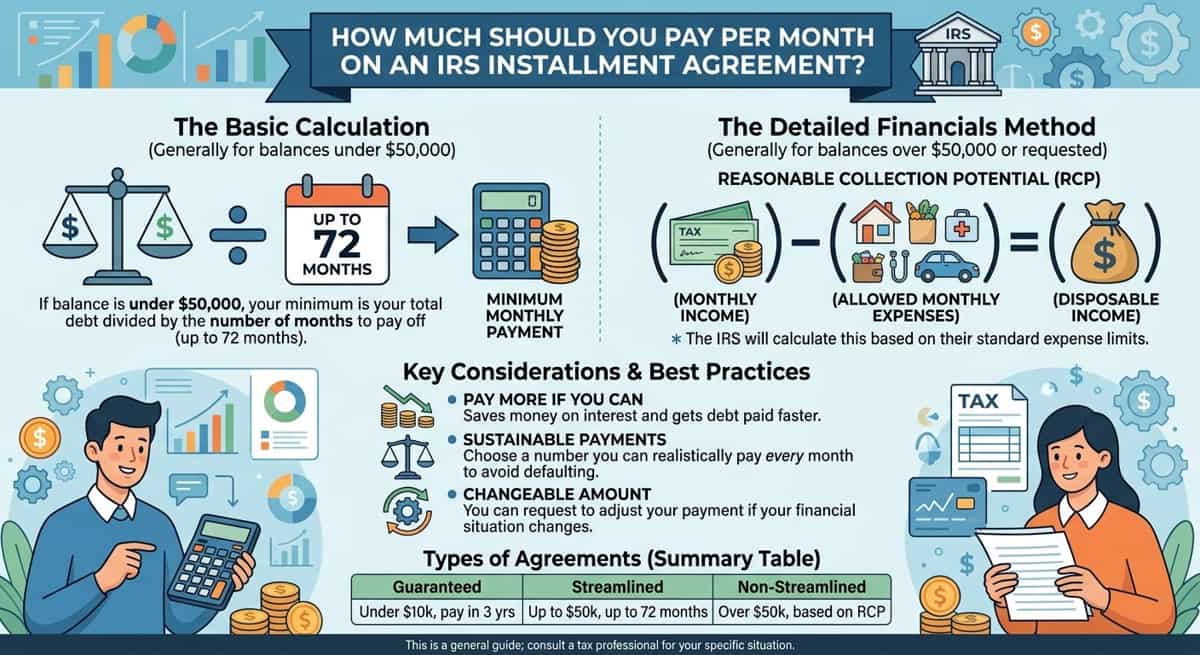
How Much Should You Pay Per Month on an IRS Installment Agreement?
10 min read
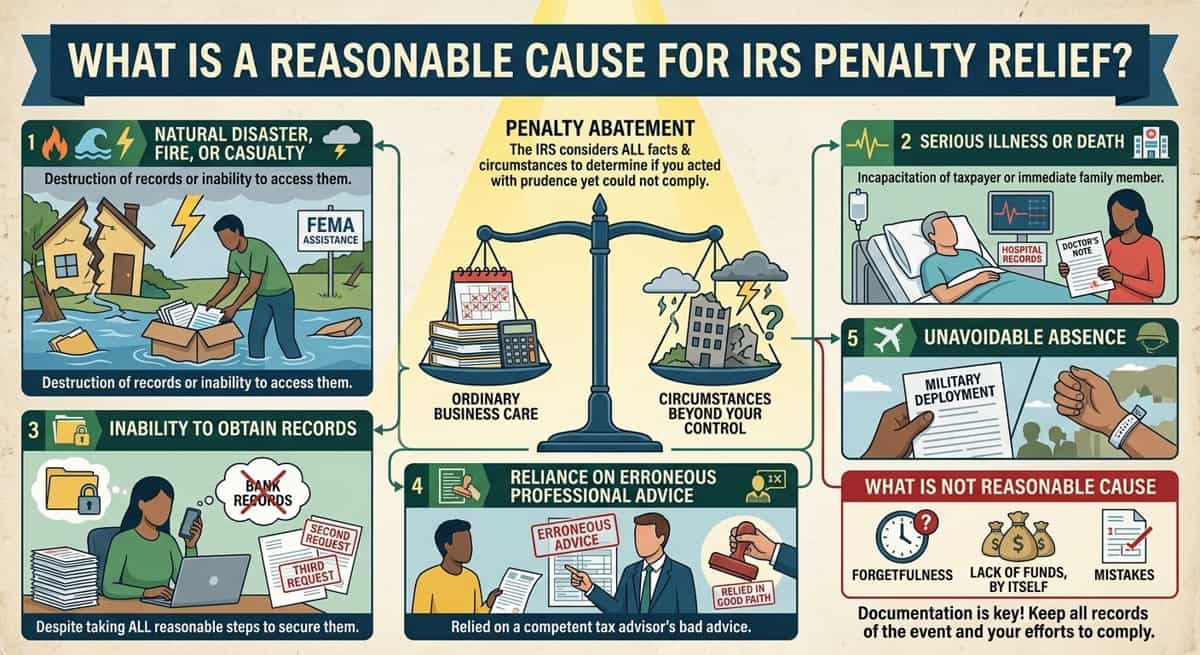
What Is a Reasonable Cause for IRS Penalty Relief
12 min read
Get Your Free Consultation
Speak with a certified debt consultant to explore your options.
Start NowNo obligation • Free consultation