
IRS Tax Fraud: Types, Penalties, Warning Signs, and What to Do
Every year, more people get an unexpected letter from the IRS and for many South Asian families in the US, that letter brings a special kind of worry. Maybe you have a bank account back home in India, Pakistan, Bangladesh, Sri Lanka, or Nepal. Maybe your family runs a motel, gas station, or restaurant where cash moves through the register every day. Maybe you send money home every month to support your parents. None of that makes you a criminal. But it does mean the tax rules can feel more complicated for you than for someone who has never had to think about a second country, a second currency, or a family business.
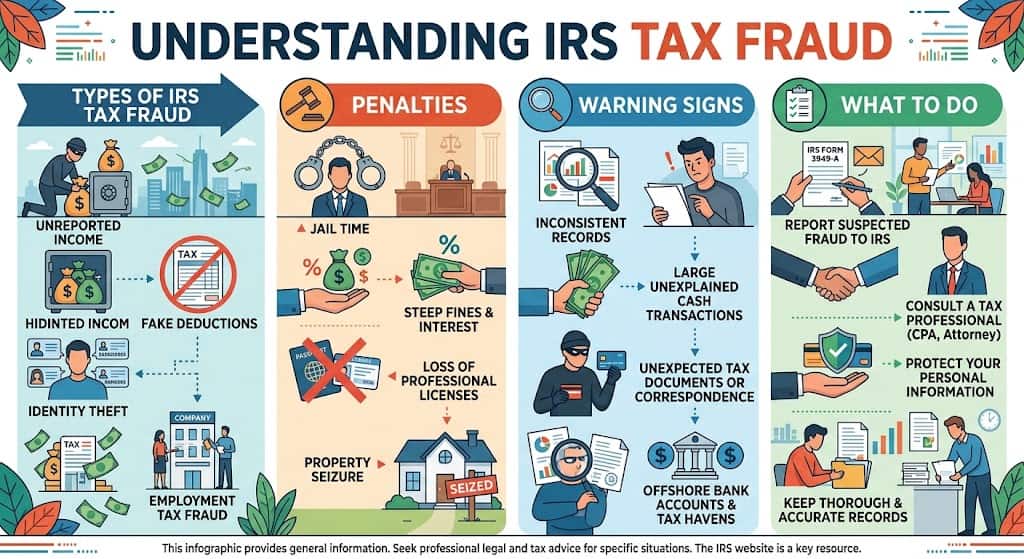
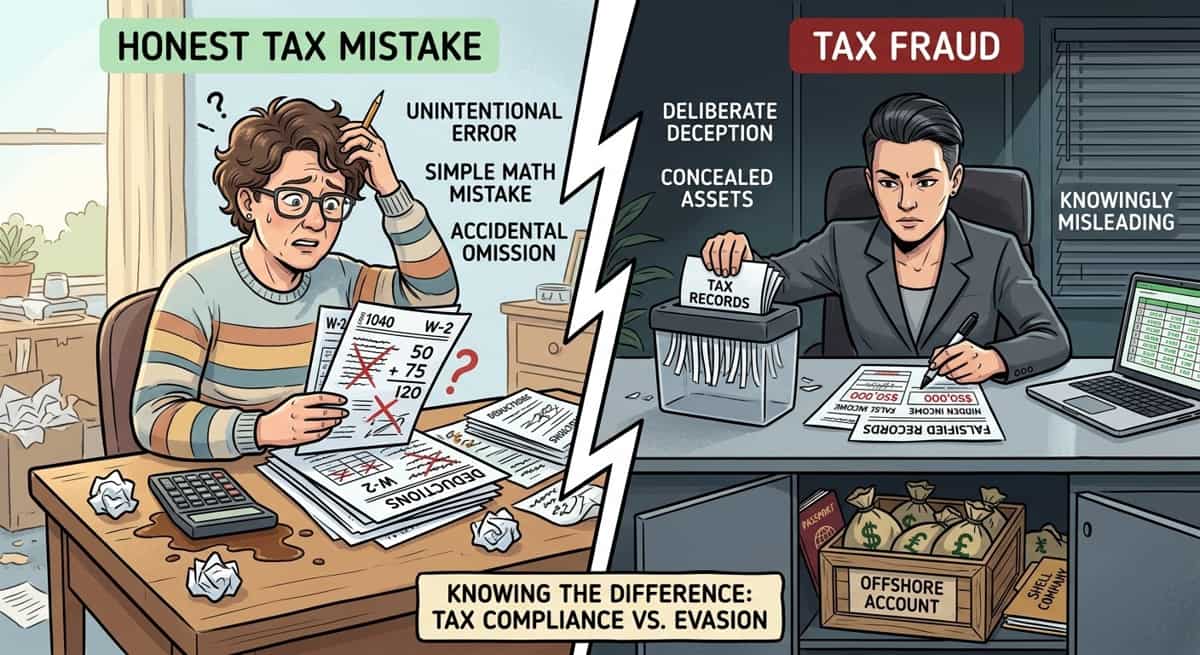
IRS tax fraud is when someone intentionally lies to the IRS to pay less tax than they owe. The key word is intentionally. An honest mistake is not fraud, and understanding that difference is where we'll start.
What Is IRS Tax Fraud?
IRS tax fraud happens when a person knowingly and willfully tries to deceive the IRS for example, by hiding income or lying on a tax form in order to pay less than they actually owe. The word "willfully" matters a lot here, because it's what separates a crime from a mistake.
A clear understanding of tax fraud can help you recognize the risks and take the right steps before a tax issue becomes more serious.
Think of it as three different levels:
Negligence is an honest error: you misunderstood a rule, forgot to report a small amount of interest income, or made a math mistake. This usually just means correcting the return and possibly paying a small penalty.
Tax avoidance is completely legal using deductions, credits, and retirement accounts the way the law intends, to lower your tax bill.
Tax evasion or fraud is illegal deliberately hiding income, inflating expenses, or lying about your situation to cheat the system.
For many immigrant families, US tax law is genuinely confusing foreign income rules, foreign account reporting, and self-employment taxes are not things most people grew up learning. The IRS knows the difference between someone who didn't understand the rules and someone who intentionally broke them, and that difference matters enormously for what happens next.
Common Types of IRS Tax Fraud
Tax fraud isn't one single thing it shows up in several different forms. Here are the ones that show up most often, including a few that are especially relevant if you have ties to South Asia.
Underreported or Unreported Income
This is the most common type. It could be cash income from a side business, gig work like driving for a rideshare app, or rental income from a property whether that property is in New Jersey or back in Kerala. If the IRS finds income that was never reported, it raises red flags fast.
False Deductions, Credits, or Exemptions
This includes inflating business expenses, claiming a dependent who doesn't actually qualify, or writing off donations that were never made. Even small exaggerations, if done deliberately, count as fraud.
Unreported Foreign Accounts and Assets — FBAR & FATCA
This one deserves extra attention, because it's where many South Asian families run into trouble without meaning to. If you have money in a savings account, fixed deposit, or property investment in your home country, and the total value of your foreign accounts goes above a certain threshold, you may be required to report it every year using a form called an FBAR (Foreign Bank Account Report) and sometimes an additional form (Form 8938).
Here's the reassuring part: the IRS treats an honest, "I didn't know I had to report this" situation very differently from someone who deliberately hid money offshore. Non-willful violations (simple oversight) carry far lighter consequences than willful ones. If this sounds like your situation, there are legitimate ways to fix it more on that below.
Identity Theft & Fraudulent Return Filing
Sometimes fraud isn't something you did, it's something done to you. If someone steals your Social Security Number or ITIN and files a fake return in your name, you may only find out when your real return gets rejected or you receive a confusing notice about income you never earned.
Employment & Payroll Tax Fraud in Family Businesses
Many South Asian families run small businesses, motels, convenience stores, restaurants, gas stations often with relatives helping out. Problems can arise when workers are paid in cash "off the books," misclassified as contractors when they're really employees, or when payroll taxes simply aren't reported correctly. Even if it feels like a family arrangement, the IRS still expects these wages to be reported.
Tax Preparer Fraud
Unfortunately, some preparers specifically target immigrant communities, promising unusually large refunds by inventing deductions or credits you never actually qualify for. Here's the hard truth: even if your preparer made the false claims, you are the one who signed the return and you can still be held responsible. Choosing a trustworthy, credentialed preparer isn't optional; it's protection.
Warning Signs You May Be Under IRS Scrutiny
You don't have to guess whether something is wrong. The IRS usually gives some kind of signal first. Here are the most common ones:
A CP2000 notice the IRS's way of saying "the income we have on file doesn't match what you reported"
An official IRS audit letter requesting documents or an in-person meeting
A delayed or frozen refund with no clear explanation
Your tax preparer is under investigation by the IRS
A letter or inquiry involving a foreign bank transfer or remittance you sent or received
A summons sent to your bank or employer requesting your financial records
It's worth understanding the difference between a routine notice and something more serious. Most letters like a CP2000 are simply the IRS flagging a mismatch and asking for clarification; they don't mean you're being treated as a criminal. Real concern starts if you see involvement from IRS Criminal Investigation (IRS-CI), which only gets involved in a small fraction of cases where willful fraud is suspected.
Civil vs Criminal Tax Fraud Penalties
Not all tax fraud cases are treated the same way. The IRS generally handles these issues through either the civil system (financial penalties) or, in more serious cases, the criminal system (which can involve prosecution).
Civil Penalties
Most tax fraud cases stay civil, meaning the consequences are financial rather than criminal. If the IRS proves civil fraud, the penalty can be as high as 75% of the underpayment caused by the fraud, on top of the tax you already owe. Less severe accuracy-related penalties (typically around 20%) may apply for carelessness that doesn't rise to fraud. Interest also builds up on unpaid amounts the longer they go unresolved.
For foreign account issues specifically, FBAR civil penalties differ sharply depending on intent; non-willful violations carry much smaller penalties than willful ones, which is exactly why getting the "was this willful or not" question right matters so much.
Criminal Penalties
Criminal charges are reserved for cases involving clear, provable intent to defraud the government actions like deliberately filing false returns or evading taxes altogether. These cases can carry significant fines (for individuals, penalties can reach into the hundreds of thousands of dollars in serious cases) and, in the most severe situations, prison time. For non-citizens, a criminal tax conviction can also carry serious immigration consequences, which is a reason to take any criminal referral extremely seriously and get legal help immediately.
Civil vs Criminal Key Differences
Civil | Criminal | |
Burden of proof | Clear and convincing evidence | Beyond a reasonable doubt |
Who investigates | IRS Examination (Audit) division | IRS Criminal Investigation (IRS-CI) |
Typical outcome | Financial penalties + interest | Fines and/or imprisonment |
Special Considerations for South Asian Immigrants and Families
Tax rules don't always account for the realities of immigrant life but your situation deserves to be understood on its own terms.
ITIN filers vs. SSN filers: If you file using an Individual Taxpayer Identification Number (ITIN) rather than a Social Security Number, your filing history and audit exposure can look a little different. It's worth knowing which category you fall into and what that means for your recordkeeping.
Sending money home: Regularly wiring money to support parents or family is common and in most cases, it's simply a personal gift, not something that needs to be reported as income. But large fixed deposits, property purchases, or accounts held in your name abroad may fall under separate reporting rules. The line between "gift" and "reportable asset" is one worth double-checking with a professional.
The silence problem: In many South Asian households, financial trouble, back taxes, federal tax liens, and IRS letters are treated as something to hide, even from close family. Unfortunately, silence is often what turns a manageable issue into a bigger one. Letters that go unopened or unanswered don't disappear; they escalate.
Getting help in your language: The IRS offers services in multiple languages, and Low Income Taxpayer Clinics (LITCs) in many cities specifically serve South Asian and other immigrant communities, often at little or no cost.
Watch out for unlicensed "helpers": In mixed-status households especially, be cautious of unlicensed preparers or so-called consultants who promise to "handle everything" without proper credentials. If something feels off, it usually is.
What to Do If You're Accused of Tax Fraud (Step-by-Step)
If you've received a notice or believe you're being investigated, here's what matters most in the first 24–48 hours: don't panic, don't ignore it, and don't respond without understanding what's actually being asked of you.
Don't ignore the notice. It won't go away, and delays can make things worse.
Don't destroy or alter any records. Even if you're worried about what they show, this can turn a civil issue into a criminal one.
Bring in a tax attorney or enrolled agent not just your regular preparer if the matter goes beyond a simple mismatch notice. This is especially important if there's any hint of a criminal investigation.
Know your rights as a taxpayer. If IRS-CI is involved, you have the right to remain silent and the right to legal representation, just like in any criminal matter.
Look into voluntary disclosure options. If your issue involves an unreported foreign account you simply didn't know you had to report, programs like the IRS Voluntary Disclosure Practice or Streamlined Filing Compliance Procedures exist specifically to help people fix past mistakes with reduced penalties.
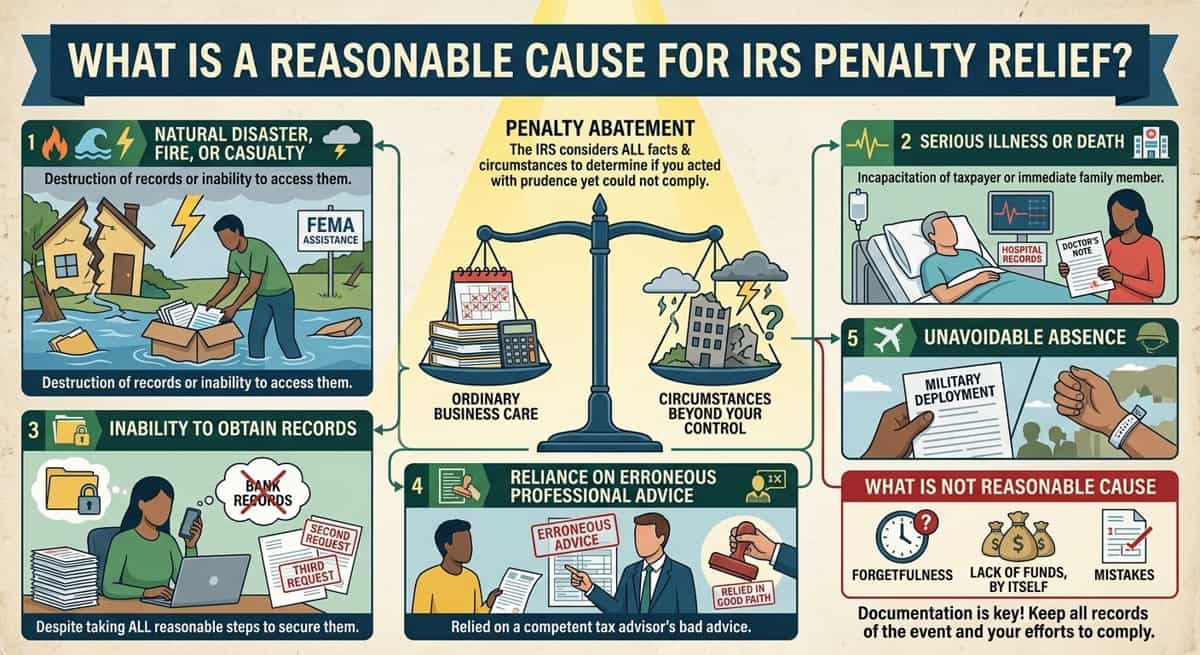
Ask about penalty relief. In some cases, the IRS offers penalty abatement for taxpayers with a reasonable cause or a clean compliance history.
One important distinction: a CPA can be a great help with paperwork and communication, but conversations with a CPA aren't legally protected the way conversations with a tax attorney are. If there's any risk of criminal exposure, attorney-client privilege matters.
How to Avoid Tax Fraud Accusations
Prevention is almost always easier than fixing a problem after the fact. A few habits go a long way:
Choose a credentialed preparer, a CPA, Enrolled Agent, or tax attorney and verify their PTIN (Preparer Tax Identification Number) before you hire them.
Keep records of foreign accounts, remittances, and cash-business income throughout the year, not just at tax time.
Review your return before signing it. Never sign a blank return, and never let a preparer estimate numbers "to save time."
Do an annual check on FBAR and foreign asset reporting if you hold accounts or property abroad thresholds and rules can change.
When to Seek Professional Help
Not every notice requires a lawyer, but some situations clearly call for one. Consider reaching out to a tax resolution professional if:
The notice involves a large dollar amount or multiple tax years
You've received any communication suggesting a criminal investigation
You're unsure whether your foreign account issue was willful or accidental
You feel overwhelmed trying to sort through the paperwork alone
Getting a second opinion early costs far less financially and emotionally than waiting until the situation has grown.
Conclusion
IRS tax fraud is a serious matter that can lead to significant financial penalties, legal consequences, and long-term tax problems. Knowing the common types of tax fraud, understanding the warning signs, and recognizing the difference between an honest mistake and intentional misconduct can help you respond appropriately.
If you suspect that you may have a tax fraud issue, do not ignore IRS notices or delay taking action. Review your tax records, gather relevant documents, and consider speaking with a qualified tax professional or attorney who can help you understand your options. Taking the right steps early can make it easier to address the issue and work toward resolving your tax situation.
Ready to Get Started?
Get a free consultation with a certified debt consultant to see if debt settlement is right for you.
Get Free ConsultationAbout the Author
Bhupinder Bajwa
.
Related Articles
What Is the Difference Between Tax Fraud and an Honest Tax Mistake?
11 min read
Can You Be Charged With Tax Fraud for Not Filing Taxes?
10 min read
How Much Should You Pay Per Month on an IRS Installment Agreement?
10 min read
What Is a Reasonable Cause for IRS Penalty Relief
12 min read
Can the IRS Seize a Small Business Bank Account for Unpaid Taxes?
11 min read
What Is an IRS Wage Garnishment and How Does It Work?
10 min read
Get Your Free Consultation
Speak with a certified debt consultant to explore your options.
Start NowNo obligation • Free consultation