How to Remove Old Debt From Your Credit Report

Maybe you opened your first credit card soon after moving to the US, missed a few payments while sending money home, and never looked back. Or a medical bill arrived after a family member's visit, and you didn't realize it had gone to collections. Years later, that old debt is still on your credit report, and it may be costing you an apartment, a car loan, or a better interest rate.
Here is the good news. Some old debt can be removed, and the rest will fall off on a set schedule. The hard part is knowing which is which.
Accurate negative items, like late payments and collections, usually come off your credit report after seven years, counted from the date you first fell behind. Depending on the chapter you file, how bankruptcy affects your credit score and how long it lasts can extend up to 10 years. . If an item is wrong, outdated, or can't be verified, you can dispute it and ask for it to be removed. No one can legally promise to erase accurate debt early, so be careful with anyone who does.
What Counts as "Old Debt," and How Long Can It Stay?
A federal law called the Fair Credit Reporting Act limits how long most negative information can appear on your credit report. For late payments, collections, and charge-offs, the clock usually starts on the "date of first delinquency." That is the first missed payment that led to the problem.
It is not the day a collector bought the debt, and it is not the day you last paid. Selling the debt to a new collector does not restart the clock. Paying part of it does not restart the clock either. That is why a debt can feel recent to you but be close to expiring on paper.
How long different items stay
Item | Typical reporting period |
Late payments, collections, charge-offs, repossessions | 7 years from the first missed payment |
Chapter 13 bankruptcy | 7 years (the bureaus' usual practice) |
Chapter 7 bankruptcy | Up to 10 years |
Hard inquiries (when a lender checks your credit) | 2 years |
Court judgments | Varies by type and state |
What time does not fix
When an item drops off your report, only the report entry disappears. The debt itself may still exist, and a court judgment may remain enforceable under your state's rules. Those are separate from your credit report, so don't assume that "off the report" means "gone forever."
Step 1: Pull Your Reports and Find the Real Dates
You can get your reports from Equifax, Experian, and TransUnion, and the bureaus now allow free copies as often as once a week. Never pay a website for a "free" credit report, and be careful with ads that look similar.
Pull all three reports. Each bureau may list different accounts, and an item that shows up at one may be missing at another.
Find the date of first delinquency
Look at each negative account and find the date it first went late. Many reports label it "date of first delinquency," "date of delinquency," or "first reported." Write it down next to the account.
This date matters because it decides when the item must come off. Some collectors report a newer date to make an old debt look fresh. This is called re-aging, and it is not allowed. If the date on your report doesn't match your records, that is something you can dispute.
Sort items into three groups
Go through every negative item and place it in one of these groups:
Wrong or unrecognized. The balance is off, it's a duplicate, or it isn't yours.
Correct but expired. It is accurate, but it is past the seven-year limit (or 10 for Chapter 7).
Correct and still within the legal window. It is accurate and still allowed to be reported.
Step 2: Dispute Errors and Expired Items
You can dispute anything that is wrong, incomplete, or past its reporting limit. Common examples include:
Wrong balances or payment history
Duplicate collections for the same debt
Accounts that belong to someone else, including identity theft
Wrong dates, such as a re-aged delinquency
Items that should have dropped off already
Mistakes are more common than most people think, which is why checking for errors is one of the fastest ways to repair bad credit in easy steps. A 2021 Consumer Reports investigation found that about one in three people had at least one error on their report.
How to file a dispute, step by step
Dispute with each bureau that shows the problem. An error at Experian doesn't automatically get fixed at Equifax.
Attach proof. Use statements, payment records, a letter from the original lender, or an identity theft report if it applies.
Send it online or by certified mail. Mail with a return receipt gives you proof of delivery.
Dispute with the company that reported the information, too. That could be the bank, the lender, or the collector.
Keep copies of everything. Save your letters, screenshots, receipts, and dates.
Disputing is free. You never need to pay someone to do it for you.
What happens after you file
The bureau generally has 30 days to investigate and send you the results in writing. If the item is removed or corrected, you should get an updated copy of your report.
If the bureau keeps the item and you still think it is wrong, you can add a short consumer statement to your file explaining your side. You can also file a complaint with the Consumer Financial Protection Bureau (CFPB) at, or contact your state attorney general's office.
Step 3: Use Debt Validation When Collectors Are Involved
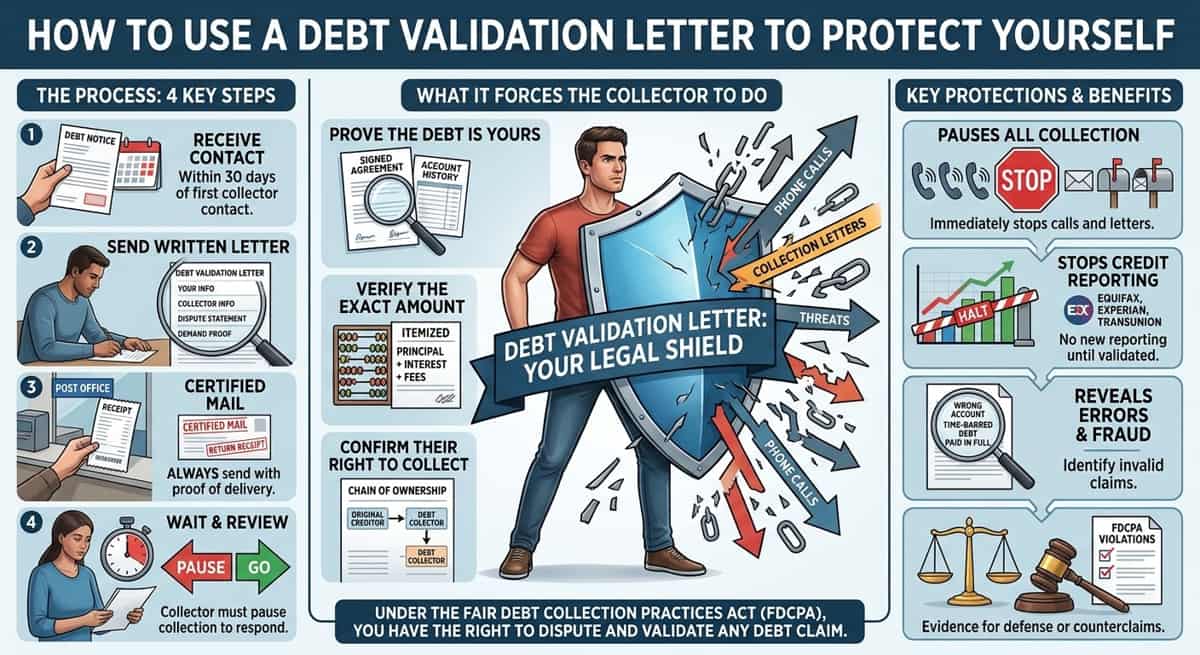
If a debt collector contacts you, you have the right to ask for proof that the debt is yours. This is called debt validation. In most cases, you have about 30 days from the time you receive their first notice to ask in writing.
In your letter, ask for:
The name of the original creditor
The amount owed and how it was calculated
Proof that the collector has the right to collect it
Send it by certified mail so you have a record. If the collector can't prove the debt, it should not stay on your report.
Be careful with very old debts
There are two separate clocks. One controls how long a debt can appear on your credit report. The other, called the statute of limitations, controls how long a collector can sue you. It is set by your state and is often between three and six years, though it varies.
In some states, making a payment or admitting the debt is yours can restart the lawsuit clock. So before you pay or sign anything on a very old debt, talk to a nonprofit credit counselor or a consumer attorney first. A small payment that feels like a goodwill gesture could create bigger problems.
Step 4: Negotiation Options: Goodwill, Pay-for-Delete, and Settlement
These options are for accurate debts that are still within the reporting window. None of them is guaranteed.
Goodwill letters
A goodwill letter asks a lender to remove a negative mark as a favor. It works best for a one-time late payment on an account that is otherwise in good shape. Keep it short and honest: explain what happened (a job loss, a hospital stay, a family emergency), say that you've been on time since, and politely ask them to consider removing it.
Be realistic. Lenders are not required to agree, and many don't. If one says no, you haven't lost anything.
Pay-for-delete
Pay-for-delete means you offer to pay a collection in exchange for it being removed from your report. It is a request, not a right. Many collectors and credit bureaus refuse it. If a collector does agree, get the promise in writing before you pay anything.
Paying in full versus settling
Paying in full usually looks better than settling for less. A settled account is often marked as "settled for less than the full balance," which can still hurt your credit.
If a lender cancels part of your debt, that amount may count as taxable income, and you may receive a Form 1099-C. A tax professional can help you plan for that before you agree to a settlement.
Special Case: Medical Debt
The rules for medical debt changed recently. A federal rule that would have removed most medical debt from credit reports was struck down by a Texas court in July 2025, so there is no federal ban.
Even so, the three big bureaus follow their own policies. Paid medical collections are removed, and unpaid medical collections under $500 are not reported. New medical debt also has a 12-month waiting period before it can show up. Some states have stricter laws of their own.
What you can do
Dispute any medical collection that is paid, under $500, or newer than one year.
Check whether your insurance was billed correctly. Many medical debts come from billing errors or denied claims.
Ask the hospital about financial assistance or a payment plan before the bill goes to collections.
Ask for an itemized bill so you can spot mistakes.
Situations Specific to South Asian Families in the US
Old debt doesn't always look the same for every family. Here are a few situations we see often in our community.
New to the US, with a short credit history
If you have only been in the US a few years, a couple of old problem accounts can weigh heavily because there is little else on your report. Some lenders do accept an ITIN instead of a Social Security number, but it depends on the lender, so ask before you apply.
Don't open lots of new accounts at once to "fix" your report. Instead, consider one secured card or a credit-builder loan, pay it on time, and give it time to build.
Family and community money arrangements
Many of us help relatives by co-signing a loan, adding someone to a card, or backing a family business. A co-signed or joint account appears on your credit report, so if the other person misses payments, your credit takes the hit.
To protect both your finances and your relationships, talk early. Agree on who pays what, ask for access to the account statements, and consider removing yourself from joint accounts when you can.
Debts back home and immigration worries
Debts owed in another country generally do not appear on a US credit report, but you should confirm by checking your reports. Your US credit matters for renting a home, buying a car, getting a card, and sometimes for jobs.
If you have a specific immigration concern, speak with an immigration attorney instead of relying on guesses or advice from friends.
Red Flags: Credit Repair Scams
When money is tight and the stress is high, "quick fix" offers can be tempting. You have to know the debt relief scam warning signs will help you spot these warning signs early:
Upfront fees. Under the Credit Repair Organizations Act, a company can't charge you before it has done the work, and it must give you a written copy of your rights.
Guaranteed results. No one can promise to raise your score by a set number of points.
"New credit identity" tricks. Using a different number or a new name to start over is illegal.
Pressure through community channels. Be careful with "agents" on WhatsApp, Facebook groups, or at events who ask for cash or personal details.
If you spot a scam, report it tothe Federal Trade Commission.
When to Get Professional Help and How to Rebuild
Consider getting help if you are being sued, if a collector won't stop contacting you, or if you have many debts at once. A nonprofit credit counselor (look for a member of the National Foundation for Credit Counseling) can review your full picture at a low cost. A consumer attorney can help with lawsuits or reports that stay wrong after disputes.
While you work on old debt, start rebuilding:
Pay every bill on time. Set up autopay for at least the minimum.
Keep card balances low, ideally below 30% of your limit.
Use a secured card or credit-builder loan if your credit is thin.
Check your reports regularly, since you can get them free.
Conclusion
Old debt can feel like it follows you forever, but it doesn't. You have three clear paths: dispute anything that's wrong, wait out items that have expired, and negotiate carefully on what remains. Start today by pulling your three free reports and writing down the date of first delinquency for each negative item.
If you'd like help reading your reports or planning your next step, book a free debt consultation with our team.
Ready to Get Started?
Get a free consultation with a certified debt consultant to see if debt settlement is right for you.
Get Free ConsultationAbout the Author
Bhupinder Bajwa
.
Related Articles
How to Use a Debt Validation Letter to Protect Yourself
10 min read
Does Paying Off Debt Improve Your Credit Score?
8 min read
How to Settle SBA Loan Debt: Complete Guide to Debt Relief Options
11 min read
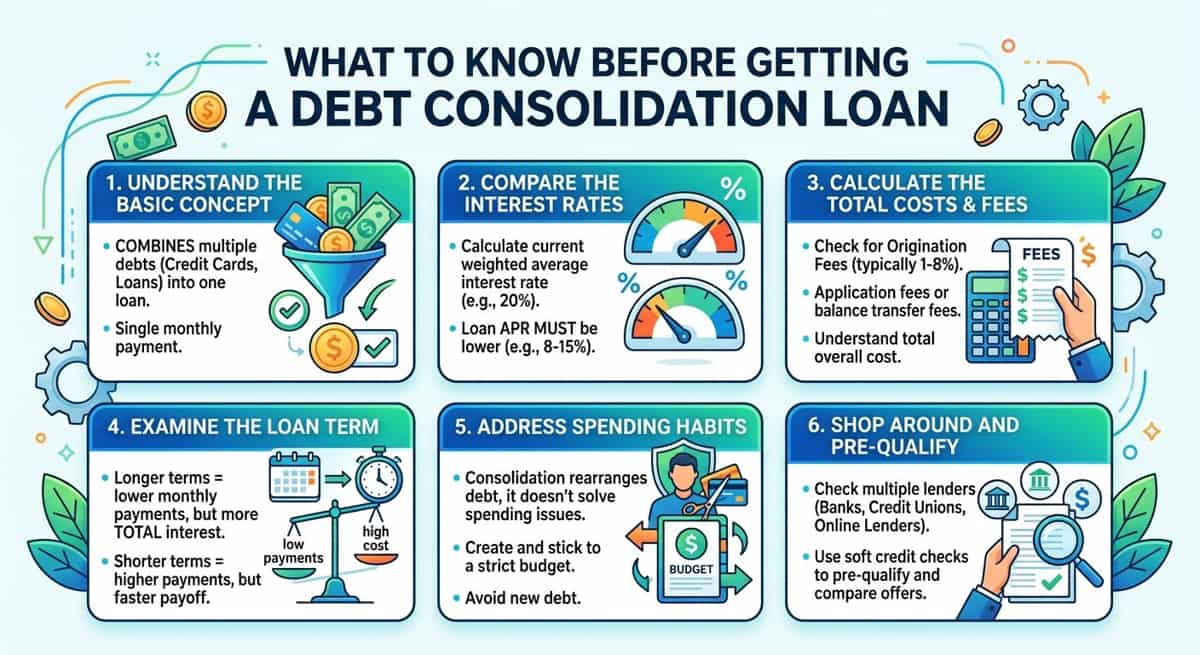
What to Know Before Getting a Debt Consolidation Loan
10 min read
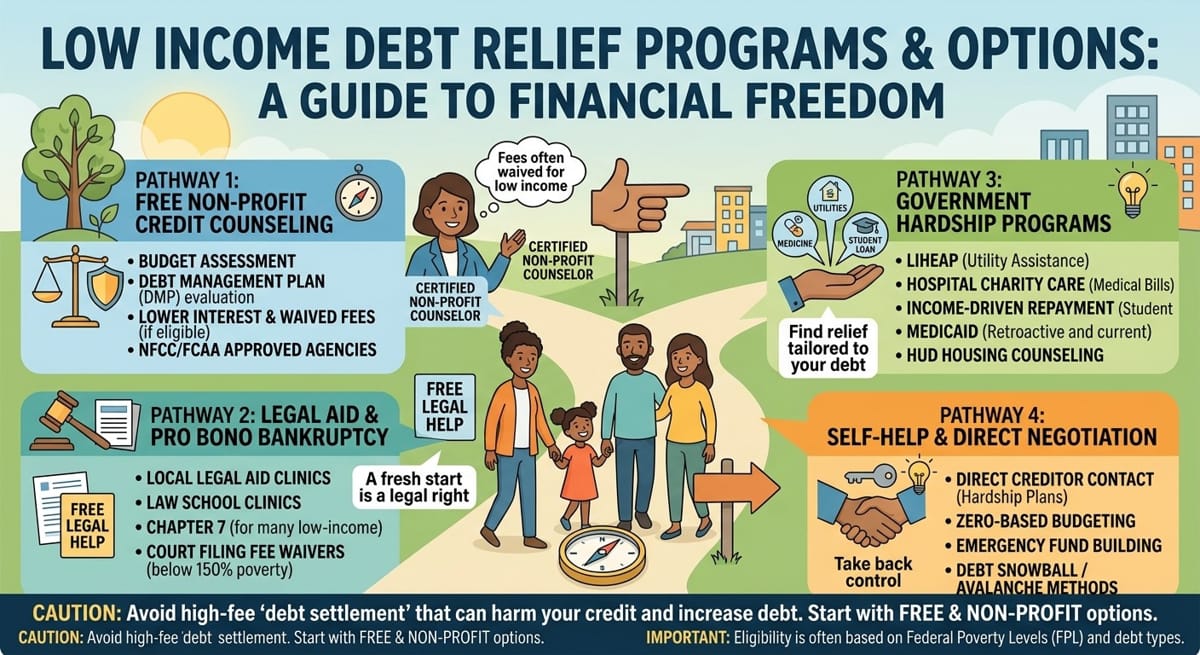
Low Income Debt Relief Programs And Options
14 min read
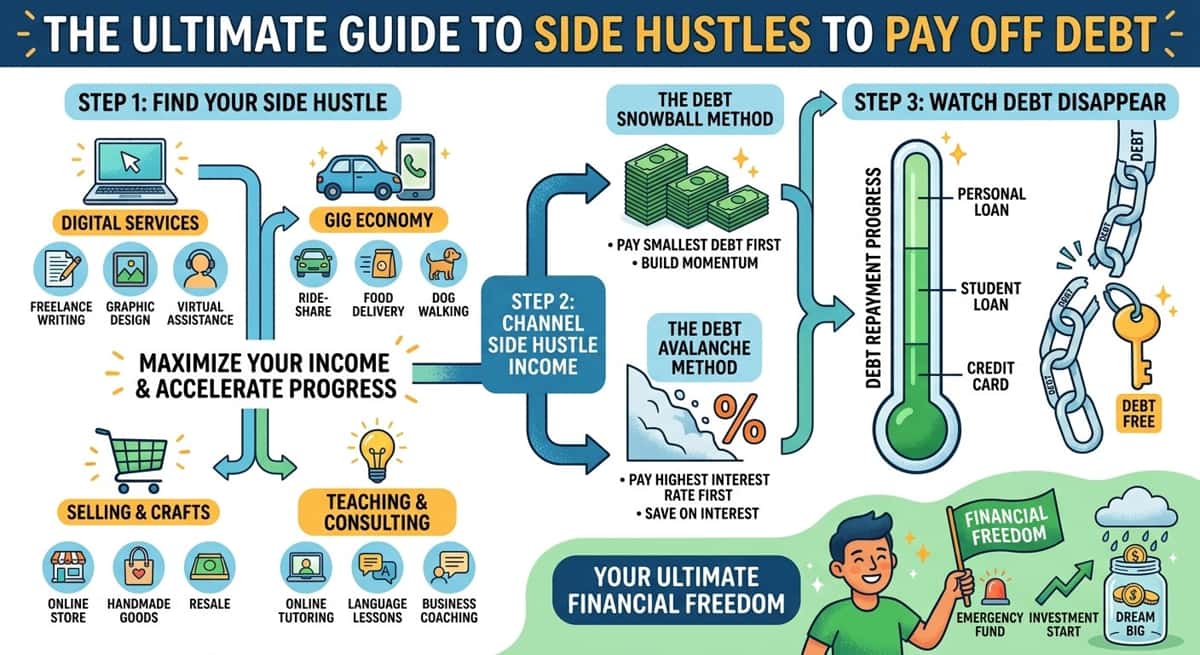
The Ultimate Guide To Side Hustles To Pay Off Debt
12 min read
Get Your Free Consultation
Speak with a certified debt consultant to explore your options.
Start NowNo obligation • Free consultation