Debt Consolidation in Illinois: Options to Compare

If you are juggling a few credit cards, a car loan, maybe a medical bill or a personal loan, you know how it feels. Different due dates, different interest rates, and a quiet worry about whether you are falling behind.
Debt consolidation can help. It means combining several debts into one payment, ideally at a lower interest rate, so you pay less over time and only have one bill to keep track of. In Illinois, the main ways to do it are a personal loan, a balance transfer credit card, a nonprofit debt management plan, or borrowing against your home.
The right choice depends on your credit, your income, and how long you have had a credit history in the US. This guide is written for South Asian individuals and families in Illinois. It explains each option in plain language so you can decide with confidence.
What Debt Consolidation Means in Illinois, and What It Doesn't
A debt consolidation service means rolling several debts into one new payment. You might do it with a new loan that pays off your cards, or through a plan run by a credit counselor. Either way, you end up with one monthly payment instead of many.
People often mix up three different things:
Consolidation: combining your debts into one payment. You still repay everything you owe.
Debt management: a counselor works with your creditors to lower your rates and sets up one monthly payment.
Debt settlement: a company tries to get creditors to accept less than you owe. This carries much more risk.
Illinois treats these separately. The Illinois Department of Financial and Professional Regulation (IDFPR) licenses and oversees debt management companies and debt settlement companies under different state laws.
One thing to remember: consolidation does not erase your debt. It reorganizes it, ideally in a way that costs you less and feels easier to manage.
Is Debt Consolidation Right for You? A Quick Self-Check
Start by answering a few simple questions:
How many accounts are you paying right now?
What interest rate does each one charge?
Could you comfortably afford one single monthly payment?
Is your main problem high interest, or is your income simply too low for your bills?
Consolidation may help if your debts have high interest rates, you have steady income, and you can keep up with a fixed payment.
It may not help if your income does not cover your basic bills, you are already being sued or facing a court judgment, or you would likely run your cards back up after paying them off (one of the most common debt consolidation mistakes to avoid).
Your credit also shapes your options:
Strong credit: you will likely have the most choices, including lower-rate loans and 0% cards.
Average credit: getting a debt consolidation loan with bad or fair credit is possible, but rates are higher. A counselor-run plan may fit better.
Limited or low credit history: loans can be costly or hard to get. A nonprofit credit counselor is a good first call.
Debt Consolidation Options in Illinois Compared
There is no single best choice. The table below puts the main options side by side so you can see the trade-offs at a glance.
Option | What it costs | Best for | Main risk |
Personal loan | Interest, sometimes a fee | Good or average credit and steady income | Higher rates if your credit is weaker |
0% balance transfer card | Transfer fee, then regular rate | Debt you can repay within the promo period | Rate jumps when the promo ends |
Nonprofit debt management plan | Monthly fees, ask for them in writing | Credit card debt, steady income, lower credit | Accounts may need to be closed |
Home equity loan or HELOC | Lower interest, closing costs | Homeowners with equity | Your home is the collateral |
401(k) loan | Borrowing from yourself | Last resort only | Lost growth, and repayment if you leave your job |
Personal Debt Consolidation Loan
You borrow a lump sum, use it to pay off your cards or other debts, and then repay the loan in fixed monthly payments, usually over a few years.
Rates vary a lot, so be careful with averages. The Federal Reserve put the average rate on a 24-month personal loan at banks around 11.40% in early 2026. But borrowers who used online marketplace Credible to consolidate debt averaged about 23% between November 2025 and October 2026. The gap exists because they measure different groups of borrowers. Your own rate depends on your credit, your income, and the lender.
Illinois also caps interest on most consumer loans at 36%. If a lender offers you more than that, treat it as a red flag.
Pros: fixed payment, clear end date, often lower than card rates.
Cons: you need decent credit for a good rate, and some lenders charge fees.
0% Balance Transfer Credit Card
You move your card balances onto a new card that charges no interest for an introductory period. When it works, every dollar you pay goes toward the debt itself.
The catches: there is usually a transfer fee, and when the promo ends, the regular rate applies to whatever is left. For comparison, Bankrate listed the average credit card rate at 19.71% on November 4, 2026.
This works best if you can realistically pay off the balance before the promo period ends.
Nonprofit Debt Management Plan
Through professional credit counseling services, a counselor looks at your whole budget, then contact your credit card companies to ask for lower interest rates. You make one monthly payment to the counseling agency, and they pay your creditors.
Debt management companies need to be licensed in Illinois. You can check any company in the IDFPR's online license lookup before you share personal information.
Ask about costs up front and get them in writing. Plans commonly run for several years, and your credit card accounts may be closed during the plan, which can affect your credit score for a while.
A plan like this often fits people with steady income, high-interest cards, and a score too low for a good loan.
Home Equity Loan or HELOC
If you own your home, you may be able to borrow against the equity at a lower rate than a credit card charges. The big warning: your home is the collateral. If you cannot repay, you could lose it. Think hard before turning unsecured debt like credit cards into debt secured by your house.
401(k) Loan
Borrowing from your own retirement savings avoids a credit check, but it is a last resort. You lose the growth that money could have earned. If you leave or lose your job, the loan may have to be repaid quickly, and you could face taxes and penalties if you cannot.
When Consolidation Isn't Enough: Settlement, Bankruptcy, and Illinois Protections
Sometimes the debt is too large for consolidation to fix. Here is what else exists, and what protections you have.
Debt Settlement: Risks First
Debt settlement process companies negotiate with creditors to accept less than you owe. Before enrolling, make sure you understand how to settle your debt. In Illinois, these companies must be licensed under the state's Debt Settlement Consumer Protection Act. The state also has a fund that can help repay people who lose money to unlicensed settlement activity.
Know the downsides before you consider it:
Your credit score will likely drop.
Creditors can refuse to settle.
Collection calls and lawsuits may continue while you wait.
Debt that is forgiven can count as taxable income (you may receive an IRS Form 1099-C).
Be wary of anyone who promises specific results.
Chapter 7 and Chapter 13 Bankruptcy
Chapter 7 and Chapter 13 bankruptcy is a legal process that can wipe out or restructure debts, but it has serious long-term effects on your credit. It is not a decision to make alone. Talk with an Illinois bankruptcy attorney, and look into free help from a legal aid organization if cost is a concern.
Illinois Protections to Know
Court first: in most cases, a creditor must sue you and win a court judgment before they can take money from your paycheck.
Limits on wage deductions: Illinois limits how much of your pay can be taken after a judgment.
Protected income: some benefits, such as Social Security, are generally protected from private creditors.
Time limits: old debts can reach a point where creditors can no longer sue. Ask a lawyer before you pay anything on a very old debt, because it can affect your rights.
Collector rules: under the federal Fair Debt Collection Practices Act, collectors cannot harass or threaten you.
Debt Help for South Asian Households in Illinois: Practical Considerations
Every family's situation is different, but many South Asian households in Illinois share a few common challenges. Here is how to think about them.
Building or rebuilding credit. If you are new to the US, your credit file may be thin or empty, which can make loans expensive. Ask lenders which forms of ID they accept, and ask a nonprofit counselor to look over your credit report. Many offer a free first review.
Immigration and status questions. If you are worried about how a financial step might affect your visa or status, speak with an immigration or bankruptcy attorney before you act. Do not rely on general advice for this.
Money sent home. Many families support relatives in South Asia. That is a real expense, not something to hide or feel guilty about. Include it honestly in your monthly budget so your plan is realistic and you can stick with it.
Family and community loans. Loans from relatives or friends, and savings circles, are common and can be a lifeline. If you owe money this way, write down the amount and the repayment plan so everyone is on the same page. Count it when you compare formal debt options.
Language. You deserve to understand what you sign. Ask whether a counselor or multilingual debt relief provider offers support in Hindi, Urdu, Bengali, Gujarati, Punjabi, Tamil, Telugu, or another language you are comfortable with.
Asking for help. Debt is common, and getting help early is a smart move. It is not something to be ashamed of.
How to Spot Scams and Check a License in Illinois
Debt help attracts scammers, so check before you sign. Search the IDFPR's database of licensed companies first. If a company is not listed, walk away.
Watch for these red flags:
Asking for fees before doing any work
Guaranteeing results
Telling you to stop paying your creditors
Claiming a link to the government
Pressuring you to sign right now
The IDFPR has taken action against companies that offered debt relief without a license. If something feels wrong, you can contact the IDFPR's Consumer Credit section, and you can also file complaints with the Consumer Financial Protection Bureau (CFPB) and the Federal Trade Commission (FTC).
How to Choose and Apply: A Step-by-Step Plan
List every debt: balance, interest rate, and minimum payment.
Check your credit reports and score so you know where you stand.
Get quotes from at least three lenders, or talk to one nonprofit counselor.
Compare the total cost, not just the monthly payment. A lower payment over a longer time can cost more.
Verify the license of any debt management or settlement company.
Set up autopay and stop adding new debt so the plan can work.
A simple example. Say you owe $15,000 across your cards and want to be debt-free in four years (48 months).
At an 11.137% loan rate, you would pay roughly $389 a month and about $3,657 in total interest.
At a 19.71% card rate, the same four-year payoff would be roughly $454 a month and about $6,800 in interest.
That is a difference of around $3,100. Your real numbers will depend on your rate and loan terms, so plug your own into a loan calculator.
Your Next Step
If you have strong credit, a loan or 0% card may save you the most. If your credit is lower and your debt is mostly on cards, a nonprofit plan is worth a look. If you own a home, think very carefully before putting it on the line. And if you are overwhelmed, a free conversation with a licensed, nonprofit counselor or booking a free debt relief consultation with our team is a good place to start.
Frequently Asked Questions
Does debt consolidation hurt your credit in Illinois?
It can dip your score slightly at first because of the credit check and new account. Over time, on-time payments and lower balances can help your score.
What is the best way to consolidate credit card debt in Illinois?
It depends on your credit and income. Strong credit often fits a loan or 0% card. Lower credit may fit a nonprofit debt management plan.
Is a debt management plan better than a consolidation loan?
Not always. A plan can work well if your credit is too low for a good loan. A loan may be better if you qualify for a low rate and want to keep your cards.
Can I get a consolidation loan with limited US credit history?
Sometimes, but rates may be high. Ask lenders which IDs and income proof they accept, and talk to a nonprofit counselor about your choices.
How do I check whether a debt relief company is licensed in Illinois?
Search the IDFPR's license lookup for the company by name. If it is not listed, do not hand over money or personal details.
Ready to Get Started?
Get a free consultation with a certified debt consultant to see if debt settlement is right for you.
Get Free ConsultationAbout the Author
Bhupinder Bajwa
.
Related Articles

5 Reasons Your Debt Consolidation Loan Was Denied
12 min read
How to Get a Debt Consolidation Loan With Bad Credit
11 min read
What Are Debt Relief Loans?
10 min read
Which Debt Should I Pay Off First?
10 min read
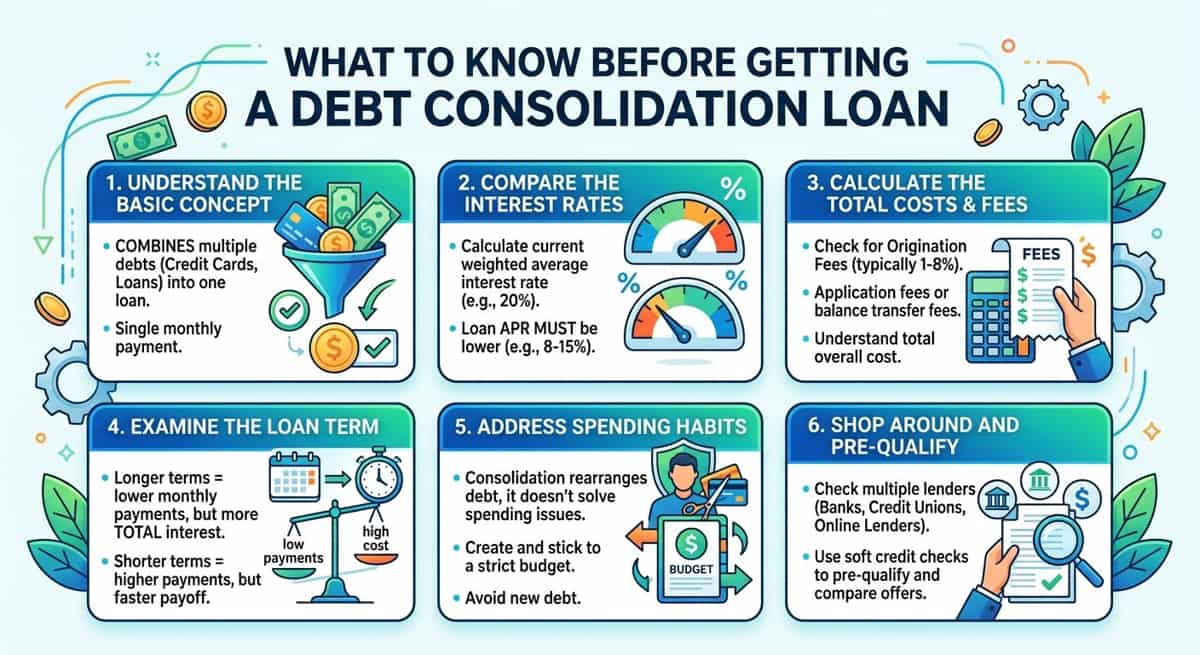
What to Know Before Getting a Debt Consolidation Loan
10 min read
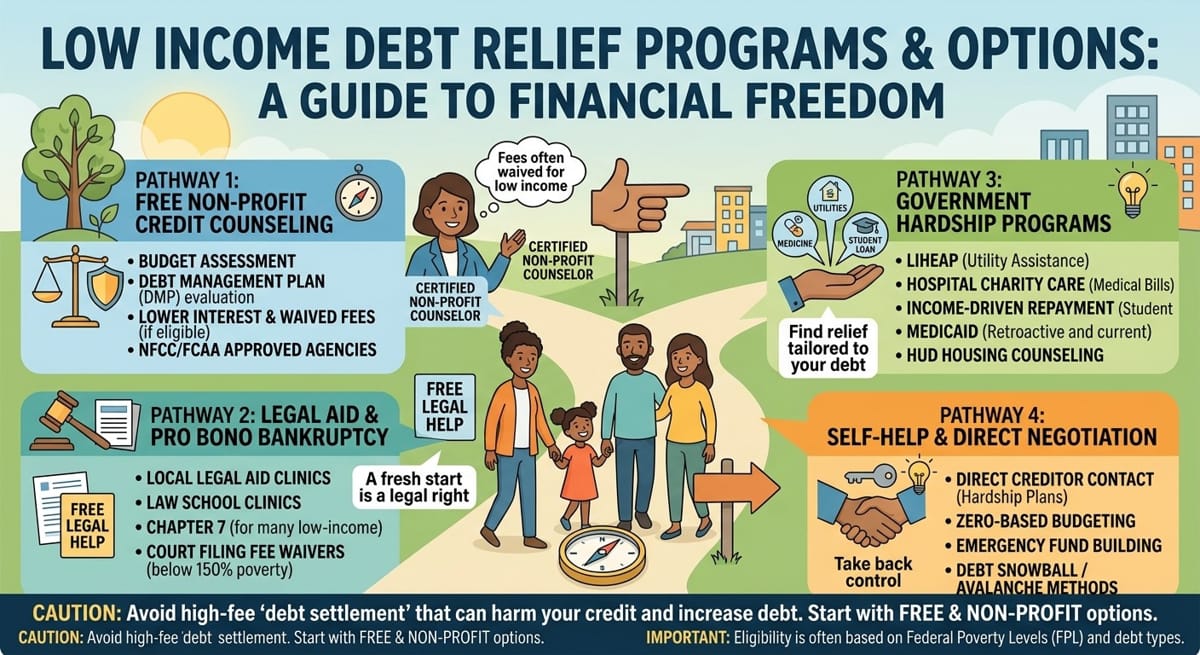
Low Income Debt Relief Programs And Options
14 min read
Get Your Free Consultation
Speak with a certified debt consultant to explore your options.
Start NowNo obligation • Free consultation
Related Posts
- 5 Reasons Your Debt Consolidation Loan Was Denied
12 min read
- How to Get a Debt Consolidation Loan With Bad Credit
11 min read
- What Are Debt Relief Loans?
10 min read
- Which Debt Should I Pay Off First?
10 min read