Moving to the United States to start a business or build a life is a proud milestone for many South Asian expats. We work hard, support our families, and invest deeply in our communities. But navigating the complex US tax system can feel overwhelming, especially when a financial deal goes sour.
If you have lent money to a business partner, extended credit to a client, or helped a friend with a loan that was never repaid, you might be dealing with what the IRS calls "bad debt." The good news is that the US tax code offers a form of IRS tax relief known as the bad debt deduction. Whether you are dealing with a corporate client who vanished or a personal loan that went unpaid, understanding the difference between a business and a nonbusiness bad debt can save you thousands of dollars.
What Exactly Is a Bad Debt?
A bad debt is money that someone genuinely owed you but that you can no longer collect, no matter how hard you try. According to the IRS, it is a debt that was real and valid when it was created but has since become uncollectible, either in part or in full. This can include a personal loan you gave to a family member, an unpaid invoice from a business customer, or even a loan you co-signed for someone else and ended up paying yourself.
The IRS lays this out in Publication 550 and under IRC Section 166, which govern how bad debts are treated for tax purposes.
But the IRS does not just take your word for it. To qualify, two things must be true:
The debt was real. It had to be a genuine, legally enforceable obligation meaning the other person actually owed you money, not that you simply expected to be paid back.
The debt became worthless. At some point during the tax year you are filing for, you had to reach a point where there was truly no reasonable chance of getting paid.
Now, here is where it gets important for many South Asian families specifically.
There is a meaningful legal difference between a loan and a gift. If you gave money to a relative without any expectation of repayment or without any agreement, even a verbal one the IRS may treat it as a gift, not a debt. And gifts cannot be deducted as bad debts.
In many South Asian households, money moves through families without paperwork, without interest, and often without a clear repayment plan. That is completely understandable; it is how trust works in tight-knit communities. But from the IRS's perspective, if there was no real agreement that the money would be paid back, it becomes very difficult to prove it was a loan at all.
This does not mean you are out of options. It just means that documentation matters more than most people realize and that is something we will come back to throughout this guide.
Types of Bad Debt Deductions: Business vs. Nonbusiness
Not all bad debts are treated the same way by the IRS. How you can deduct a bad debt and how much you can deduct depends entirely on whether the debt came from your business or from your personal life. Understanding which category your situation falls into is the first step to knowing what you can actually claim.
The IRS splits bad debts into two buckets: business bad debts and nonbusiness bad debts. Business bad debts come directly from your trade or business activity and can be fully deducted as ordinary losses. Non-business bad debts like a personal loan you gave to a friend or family member are treated differently, with stricter rules and annual limits on how much you can write off.
Business Bad Debt Deduction
If you run a business and someone owes you money because of that business, you may have a business bad debt on your hands.
This includes things like unpaid invoices from customers, advances you made to an employee that were never paid back, or credit you extended to a supplier who disappeared without settling their account. The key is that the debt has to be directly tied to your business activity, not something that happened in your personal life.
The good news is that business bad debts are treated generously by the IRS. You can deduct them directly on your business tax return on Schedule C if you are a sole proprietor, or on Form 1120 if you have a corporation, among others. And unlike personal bad debts, you do not have to wait until a debt is completely uncollectible. If a portion of what you are owed has clearly gone bad, you can deduct that partial amount right away.
To give you a real-world picture: imagine you own an Indian grocery store in New Jersey and you extended $8,000 in credit to a wholesale supplier who has since stopped responding to calls and emails. Or picture a Pakistani restaurant owner in Houston who catered a corporate event for $5,000 and never received payment after months of follow-up. Both of these would potentially qualify as business bad debts under IRS Publication 535.
Nonbusiness Bad Debt Deduction
This category is where most immigrant families find themselves and the rules here are a bit tighter.
A nonbusiness bad debt is any debt that has nothing to do with your trade or business. The most common example is a personal loan you gave to a friend, a family member, or someone in your community who never paid you back.
Here, the IRS requires that the debt be completely worthless before you can claim it. Unlike business bad debts, you cannot deduct a partial nonbusiness bad debt. You have to reach the point where there is genuinely no realistic chance of ever seeing that money again.
When you do qualify, the deduction is treated as a short-term capital loss, which you report on Form 8949 and Schedule D when you file your personal tax return. But there is an important limitation: you can only deduct up to $3,000 per year in net capital losses ($1,500 if you are married and filing separately). If your loss is larger than that, the remaining amount carries over to the following tax year and the year after that, if needed.
To make this real: say you lent $10,000 to a cousin who moved to the United States, used the money to settle in, and then fell on hard times and emigrated back without repaying a cent. If you can prove the debt is truly worthless, no assets, no income, no realistic way to collect, you could deduct $3,000 this year and carry the remaining $7,000 forward over the next few years.
It is not a full recovery, but it is something and for many families, every dollar of tax relief counts.
What Qualifies as a Bad Debt? IRS Requirements You Must Meet
Wanting to deduct a bad debt and actually qualifying for it are two different things. The IRS has a clear set of conditions that must be met before you can claim this deduction and if even one of them is missing, your claim can be denied. Here is exactly what the IRS looks for.
Requirement 1: The Debt Had to Be Real
The IRS will only recognize a bad debt if there was a genuine debtor-creditor relationship in place. That means the other person had a real legal obligation to pay you back; it was not just an understanding, a favor, or an informal arrangement that could be interpreted either way.
This is where the line between a loan and a gift becomes critical. If you gave money to a family member with the sincere intention of being repaid, that is a loan. But if the IRS looks at the situation and sees no agreement, no repayment schedule, and no interest, they may decide it was a gift all along and gifts do not qualify for this deduction.
A written loan agreement or promissory note goes a long way here. It does not need to be a complex legal document, but it should clearly state who borrowed the money, how much was borrowed, when it is to be repaid, and ideally at what interest rate.
Requirement 2: You Actually Lost Money
This one sounds obvious, but it matters legally. The IRS requires that you have what is called a "basis" in the debt meaning you genuinely parted with something of value. You lent real money, or you provided goods or services that were never paid for. If you only promised to lend money but never actually sent it, there is no basis, and therefore no deduction.
Bank transfer records, wire receipts, Zelle or Venmo transaction histories, and canceled checks are all examples of proof that money actually changed hands. Keep these records carefully.
Requirement 3: The Debt Became Worthless
You cannot claim a bad debt just because repayment is overdue or because the borrower is avoiding your calls. The IRS expects you to show that the debt has become genuinely uncollectible and that you took reasonable steps to collect it before giving up.
Evidence that supports worthlessness includes:
The borrower filed for bankruptcy
The borrower passed away with no estate to collect from
The statute of limitations on collecting the debt has expired
You sent written demand letters and received no response
The borrower has no income, no assets, and no realistic ability to repay
A Note for South Asian Families
In many South Asian households, money moves between relatives based entirely on trust. There are no signed agreements, no interest rates, and no repayment schedules just a handshake and good faith. That works beautifully within the family. But it creates a real problem when you need to prove something to the IRS.
Verbal loans are extremely difficult to document after the fact. If you lent money years ago without any paper trail, your options become limited. Going forward, even a simple written note signed by both parties and dated can make an enormous difference if things ever go wrong.
The IRS is not trying to penalize your culture. It just needs evidence. And the more clearly you can show that a real loan existed, the stronger your case will be.
How to Prove a Debt Is Worthless to the IRS
Proving that a debt is worthless is often the hardest part of claiming this deduction. The IRS does not simply accept your word that the money is gone, it wants to see that you genuinely tried to collect and that there is no realistic chance of ever getting paid back. Here is how to build that case.
What Counts as Proof
The IRS looks for clear, factual evidence that repayment is no longer possible. The strongest forms of proof include:
Bankruptcy filing by the borrower - If the person who owes you money has filed for bankruptcy and your debt is listed among their discharged obligations, that is one of the cleanest forms of proof you can have.
Death of the borrower with no estate - If the borrower has passed away and there are no assets to collect from, the debt is considered worthless.
Expiration of the statute of limitations - Every state has a deadline called the statute of limitations by which you must take legal action to collect a debt. Once that window closes, the debt is legally uncollectible, which supports your claim.
Failed collection attempts - If you have sent demand letters, made phone calls, sent emails, and the borrower has consistently ignored you or confirmed they cannot pay, document every single one of those attempts.
You do not need all of these. Even a well-documented series of collection attempts combined with proof of the borrower's financial hardship can be enough.
What Documents to Keep
Think of documentation as your safety net. The more you have, the more protected you are. Hold on to:
The original loan agreement or promissory note
Bank statements, wire transfer records, or app-based payment confirmations (Zelle, Venmo, PayPal, Remitly)
Text messages, emails, or WhatsApp conversations where repayment was discussed or promised
Any written demand letters you sent
Correspondence showing the borrower acknowledged the debt
Bankruptcy court documents if applicable
For many South Asian families, informal money transfers happen through apps or international wire services. If you send money to a relative overseas or domestically through any of these platforms, those transaction records are critically important. Screenshot them, save them, and back them up.
When to Claim It
Timing matters. The IRS expects you to claim the bad debt deduction in the same tax year that the debt became worthless, not the year the loan was made, and not whenever it feels convenient.
If you missed that window, do not panic. The IRS allows you to go back and file an amended tax return using Form 1040-X for up to seven years from the original due date of the return for the year the debt went bad. This is longer than the standard three-year amendment window precisely because proving worthlessness is often something people figure out late.
So if a debt became uncollectible two or three years ago and you never claimed it, there is still time and it is worth revisiting with a tax professional to see what you can recover.
How to Claim the Bad Debt Deduction: Step-by-Step
Once you have confirmed that your situation qualifies, claiming the bad debt deduction comes down to following the right process in the right order. Here is exactly how to do it.
Step 1: Determine Whether It Is a Business or Nonbusiness Bad Debt
This is the most important decision you will make in this entire process, because it changes which forms you use and how much you can deduct.
Ask yourself: did this debt come from your business activities like an unpaid invoice from a customer or a loan you made as part of running your company? If yes, it is a business bad debt. If the debt came from a personal loan to a family member, a friend, or anyone outside your business, it is a nonbusiness bad debt. When in doubt, a CPA can help you make this determination correctly.
Step 2: Gather All Your Supporting Documentation
Before you touch a single tax form, pull together everything that supports your claim. This includes your original loan agreement or any written record of the debt, proof that money actually changed hands (bank statements, wire transfer records, Zelle or Venmo receipts), copies of any demand letters or messages you sent, and evidence of why the debt is now worthless such as bankruptcy documents, records of failed collection attempts, or confirmation that the borrower has no means to repay.
The stronger your paper trail, the smoother the process will be — especially if the IRS ever has questions.
Step 3: Complete the Correct IRS Forms
The forms you need depend on whether your bad debt is business-related or personal.
For business bad debts, the deduction goes directly on your business tax return. That means Schedule C if you are a sole proprietor or single-member LLC, Form 1065 if you have a partnership, or Form 1120-S if you run an S-corporation. The loss is treated as an ordinary business loss.
For nonbusiness bad debts, you report the loss on Form 8949 and carry it over to Schedule D, which is part of your personal Form 1040 return. You will also need to attach a written statement explaining the nature of the debt who owed you the money, what the original amount was, what steps you took to collect, and why you now consider it worthless. The IRS requires this statement, so do not skip it.
Step 4: Calculate How Much You Can Deduct
For business bad debts, you can deduct the full amount as an ordinary loss in most cases and as mentioned earlier, you can even deduct a partial loss if only a portion of the debt has gone bad.
For nonbusiness bad debts, the annual limit is $3,000 in net capital losses per year, or $1,500 if you are married and filing separately. If your total loss is greater than that say you lent $12,000 and none of it was repaid, you deduct $3,000 this year and carry the remaining $9,000 forward. You continue carrying it forward each year until the full loss has been used up. There is no expiration on the carryover, so none of it goes to waste.
Step 5: File Your Return or Amend a Prior One
If you are claiming the deduction for the current tax year, simply include everything when you file your annual return by the standard deadline.
If you realized the debt became worthless in a previous year and you did not claim it at the time, you can still go back and fix that. File an amended return using Form 1040-X within seven years of the original return's due date for that tax year.
One important note for members of the South Asian community who file with an ITIN (Individual Taxpayer Identification Number) rather than a Social Security Number: you are still fully eligible to claim this deduction. The IRS does not require a Social Security Number to file your ITIN is sufficient for this purpose. If you are unsure about your filing status or eligibility, a tax professional familiar with immigrant tax situations can walk you through it clearly.
What Is NOT Deductible as a Bad Debt?
Knowing what qualifies is important but knowing what does not qualify can save you from a costly mistake. The IRS is specific about what it will and will not accept as a bad debt deduction, and some of the exclusions may surprise you.
Unpaid Wages or Salary You Expected to Earn
If someone owes you wages for work you performed but never got paid for, that is not a bad debt deduction at least not for most people. Cash-basis taxpayers, which includes the majority of individuals and small business owners, can only deduct money they actually had in their hands and then lost. Since you never received the wages in the first place, there is nothing to deduct. Accrual-basis businesses are a limited exception to this rule.
Gifts You Are Now Calling Loans
If you gave money to a family member without a real expectation of repayment, no agreement, no repayment plan, nothing, the IRS will likely call it a gift, not a loan. A gift cannot become a bad debt just because the relationship soured or the money was never returned. This is one of the most common mistakes South Asian families make when trying to claim this deduction.
Promises That Were Never Fulfilled
If you agreed to provide goods or services to someone, they never paid you, and you never actually delivered anything either, there is no basis for a bad debt claim. You have to have genuinely lost something of value.
Losses on Stocks or Bonds
If you invested in a stock or bond that became worthless, that loss is handled under a completely separate set of IRS rules, specifically IRC Section 165 for worthless securities. It does not fall under the bad debt deduction and cannot be claimed as one.
Informal Loans to Family Without Any Structure
Lending money to a relative is not automatically a loan in the eyes of the IRS. If there was no interest, no repayment schedule, and no documentation, the IRS may determine the arrangement lacked a genuine debtor-creditor relationship especially between close family members.
Cash Loans With No Paper Trail
If you lent money in cash and have no way to prove it, no bank withdrawal record, no receipt, no acknowledgment from the borrower the IRS will have no reason to believe the loan existed at all. Cash transactions are not disqualified outright, but without any supporting evidence, they are extremely difficult to defend.
Bad Debt vs. Debt Forgiveness vs. Debt Cancellation: What's the Difference?
These three terms often get used interchangeably, but they mean very different things and they affect different people in different ways. Understanding the distinction could save you from an unexpected tax bill or a missed deduction.
Bad Debt: The Lender's Side of the Story
When you are the one who lent money and cannot get it back, that is when the bad debt deduction comes into play. You are the creditor, the person who is owed and the IRS allows you to deduct that loss under the rules we have covered throughout this guide.
Debt Cancellation: The Borrower's Side of the Story
Now flip the situation. If you are the borrower, the person who owes money and your lender agrees to forgive part or all of what you owe, that forgiven amount does not simply disappear. The IRS treats it as income. This is called cancellation of debt income, and your lender is required to report it to the IRS by sending you a Form 1099-C.
This catches a lot of people completely off guard. You settle a $20,000 credit card debt for $8,000, feel relieved that it is behind you, and then receive a tax form in January telling you that the $12,000 that was forgiven is now considered taxable income for that year.
For South Asian families who have gone through debt settlement programs which are increasingly common among immigrants managing credit card debt, personal loans, or medical bills this is a very real situation to be aware of.
When You May Not Have to Pay Tax on Forgiven Debt
The good news is that the IRS does recognize certain exceptions where cancellation of debt income does not have to be included in your taxable income:
Insolvency: If you owed more than you owned at the time the debt was forgiven meaning your total debts exceeded your total assets you may be able to exclude some or all of the forgiven amount from income.
Bankruptcy: Debts discharged through a formal bankruptcy filing are generally not taxable.
Qualified principal residence exclusion: In some cases, mortgage debt forgiven on your primary home may also be excluded, though the rules here have changed over time.
If you receive a Form 1099-C and are unsure what to do with it, do not ignore it. Speak with a CPA or tax professional as soon as possible because how you respond to that form on your tax return can make a significant financial difference.
Take Control of Your Financial Losses
Losing money you were counting on is hard. When that loss involves someone you trusted, a family member, a longtime friend, a business partner it can feel even heavier. But as this guide has shown, the IRS does give you a legitimate way to recover at least part of that loss through the bad debt deduction.
Whether you are a small business owner dealing with an unpaid invoice or a family member who lent money in good faith and never saw it come back, this deduction exists for people in exactly your situation. The key is knowing which category your debt falls into, having the right documentation in place, and filing correctly.
Your next steps are straightforward: gather whatever records you have, think through whether your debt was business-related or personal, and sit down with a qualified professional who understands your situation. A single conversation with the right person could help you recover hundreds or even thousands of dollars you did not know you were entitled to.
If you are also dealing with broader debt challenges credit card balances, personal loans, or debt settlement questions consider speaking with a debt relief specialist alongside your tax advisor. The two often go hand in hand.
Ready to Get Started?
Get a free consultation with a certified debt consultant to see if debt settlement is right for you.
Get Free ConsultationAbout the Author
Bhupinder Bajwa
.
Related Articles
The Ultimate Guide To Side Hustles To Pay Off Debt
12 min read
10 Reasons Why You Should Pay Off Debt
9 min read
7 Ways To Get Out Of Business Debt
11 min read
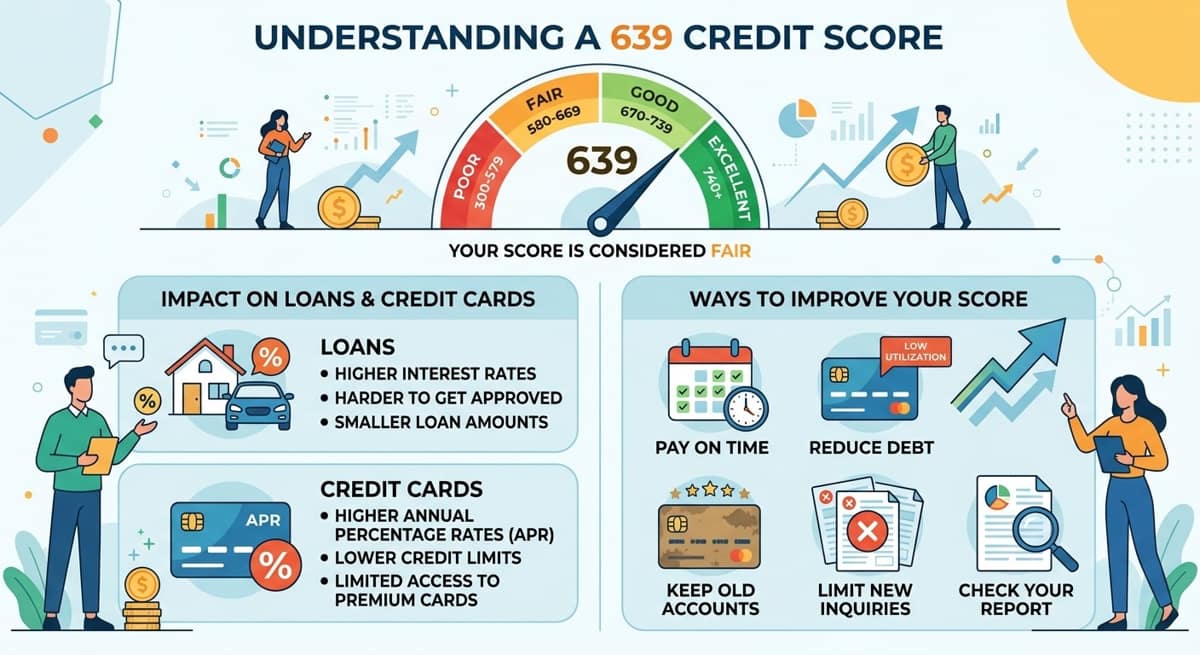
Is 639 A Good Credit Score? How It Affects Loans, Credit Cards And Ways To Improve It
12 min read
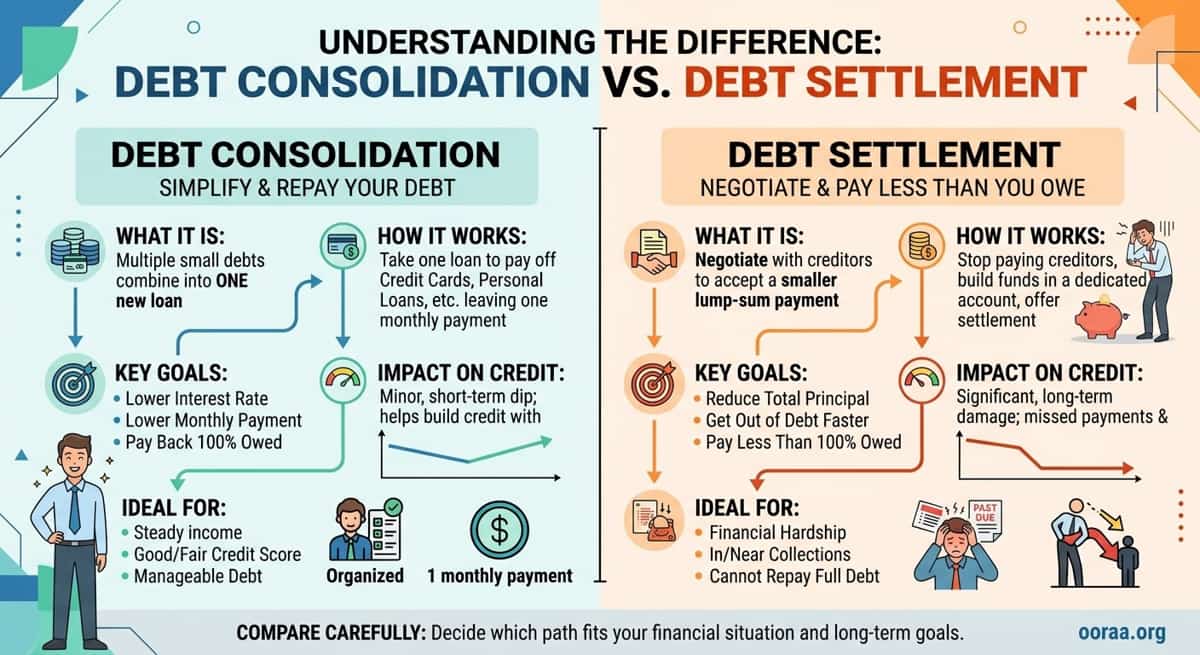
What’s The Difference Between Debt Consolidation And Debt Settlement?
12 min read
Can You Consolidate Debt With a Low Credit Score?
11 min read
Get Your Free Consultation
Speak with a certified debt consultant to explore your options.
Start NowNo obligation • Free consultation