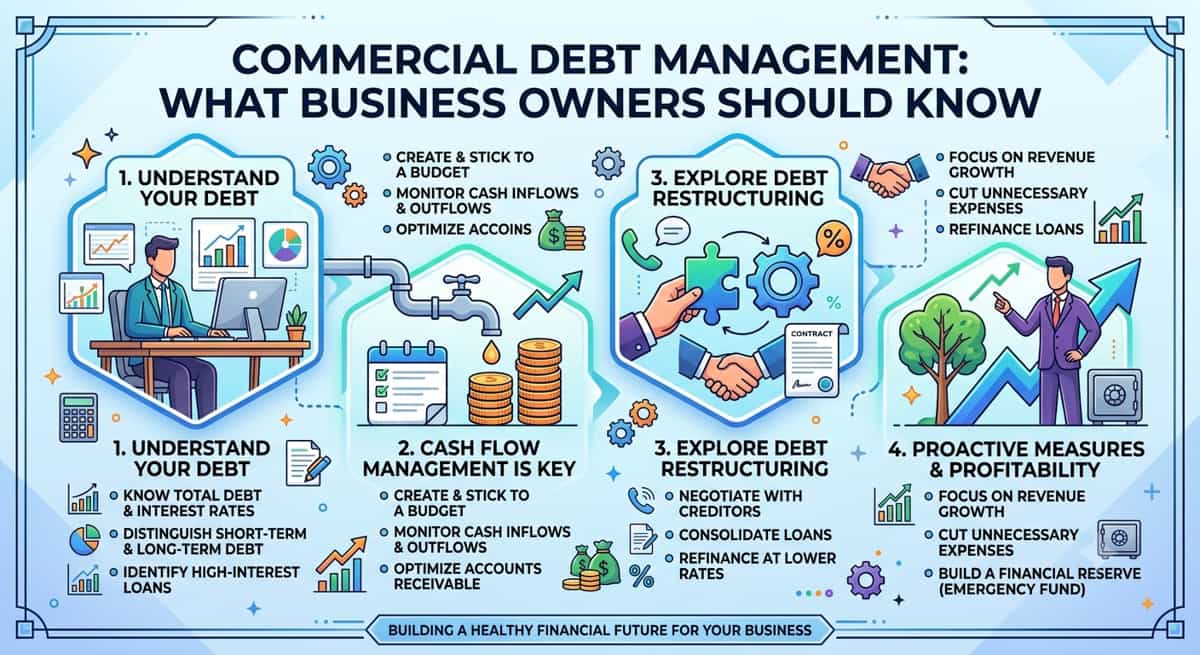
Commercial Debt Management: What Business Owners Should Know
Running a business is hard enough. Running one while quietly worrying about a loan payment, a line of credit that's maxed out, or a merchant cash advance that's eating into your daily sales that's a different kind of pressure. For many South Asian business owners in the U.S., this pressure often comes with an extra layer: family expectations, a business that may have been built with money borrowed from relatives, and a cultural instinct to keep money problems private, even from a spouse or business partner.
If any of that sounds familiar, you're not alone, and you're not doing anything wrong by looking for answers.
Commercial debt management is simply the process of understanding, organizing, and actively handling the debt your business carries loans, credit lines, vendor payments, equipment financing so it works for your business instead of against it. It's not about being debt-free overnight. It's about knowing where you stand, catching problems early, and having a clear plan.
What Is Commercial Debt Management?
Commercial debt management means keeping track of what your business owes, to whom, and on what terms and making deliberate decisions about how to pay it down, restructure it, or renegotiate it before it becomes a crisis.
It may be different from managing personal debt. If you are dealing with personal debt, you're typically talking about your own credit cards or a car loan or mortgage. Commercial debt management involves any obligations associated with your enterprise: a business loan, a line of credit used for merchandise, an equipment lease, or debts to suppliers. The stakes are different as well business debt almost always damages your employees, you vendors and in some cases even your personal assets if you signed a personal guarantee.
It matters across all the points of a business, not just when things go wrong. A repayment plan is just as important for a new business taking on its first loan as it is for an established business working its way back from a rough season. The answer, of course, is: Debt In and of itself is not the problem loads of healthy, growing businesses carry debt. The trouble comes when debt is mismanaged when nobody is tracking it, matching it against cash flow, or even questioning whether the terms still make sense.
Why Commercial Debt Looks Different for South Asian-Owned Businesses in the U.S.
If you've borrowed money from a parent or uncle to start your business, or if a peer community of mutual aid has pooled resources and you pay into a rotating credit circle, then you've already learned that not all business debt takes the form of bank loans. This is normal, and nothing to be ashamed of first-generation entrepreneurs often need capital before traditional banks will extend them credit, especially early in their venture.
However, that informal borrowing presents its own problems. A verbal agreement, no set date on when the funds should be returned, and a whole lot of unwritten rules. That works OK when things are going well. Things quickly get complicated when the business runs into trouble and your "lender" is at every family event.
The credit history is also a problem. Tons of more recent immigrant business owners do not have nearly as well built up a business credit profile in the U.S. system since they haven't had time to establish one here, though they may have been running successful businesses for years elsewhere. This thin file of credit can hurt your ability to qualify for competitively priced loans, eventually driving owners into the quicker but more expensive financing methods such as merchant cash advance.
And in some family firms, the question of who owns or controls what is not always legally unambiguous. When one family member is responsible for the loan that every family member depends on, a debt problem can no longer be said to belong with one person, which is exactly why Ms Conforti says getting clear early is vital.
Common Types of Commercial Debt
Before you can manage business debt, it helps to know what kind you're actually dealing with. Here are the most common forms:
Term loans and SBA loans (7(a) and 504 programs): Lump-sum loans repaid over a fixed period, often used for expansion, equipment, or working capital. SBA loans are backed by the government and tend to have more favorable terms, but the approval process takes longer.
Business lines of credit: Flexible borrowing you can draw from as needed, similar to a credit card, useful for managing cash flow gaps.
Equipment financing: Loans specifically for purchasing equipment, where the equipment itself often serves as collateral.
Merchant cash advances: A lump sum in exchange for a percentage of future sales. These can be fast and easy to get, but they're also one of the most expensive forms of financing and can quietly drain daily cash flow.
Trade credit or vendor financing: Buying inventory or supplies now and paying your supplier later. This is common in retail and restaurant businesses but can pile up quietly if not tracked.
Personal guarantees: Not a type of debt on its own, but something attached to many small business loans. Signing one means that if the business can't pay, you personally can be held responsible which puts your house, savings, or other personal assets at risk.
Warning Signs Your Business Debt Is Becoming Unmanageable
Debt trouble rarely shows up overnight. It usually builds slowly, and it's easy to explain away each individual sign as "just a rough month." Here's what to watch for:
You're relying on credit cards or credit lines to cover payroll or rent, not just growth expenses
You've started missing payments, or only making the minimum
You've taken out more than one merchant cash advance, or are considering "stacking" them to cover the last one
Personal assets savings, home equity, retirement funds are increasingly tied up in the business
The gap between what's coming in and what's going out keeps growing month after month
If two or more of these sound familiar, it's a strong sign to stop and take a closer look at your numbers before the situation gets harder to reverse.
Commercial Debt Management Strategies
Once you know where you stand, there are real, practical options you don't have to choose between ignoring the problem and shutting the business down.
Debt Consolidation and Refinancing
If you're juggling multiple loans or cash advances with different interest rates and due dates, consolidating into a single loan with one predictable payment can make a real difference. Refinancing existing debt replacing a high-interest loan with one at a better rate can also lower your monthly burden if your credit profile or business financials have improved since you first borrowed. This is often one of the fastest ways to regain breathing room.
Negotiating Directly With Creditors and Lenders
Many business owners don't realize that lenders would often rather renegotiate terms than have you default entirely. Reach out before you miss a payment, not after. Ask about extended repayment terms, temporary reduced payments, or interest rate adjustments. Come prepared with your numbers lenders respond better to owners who can clearly show their cash flow and a realistic repayment plan.
Improving Cash Flow Forecasting
A simple weekly or monthly cash flow forecast tracking what's coming in and what's going out can catch problems months before they become emergencies. Lenders also look at something called the debt service coverage ratio (DSCR), which compares your business income to your debt payments. A healthy DSCR shows you can comfortably cover what you owe; tracking it yourself gives you an early warning system.
When to Consider Restructuring or Bankruptcy
For serious, ongoing debt problems, formal debt restructuring or business bankruptcy (Chapter 11 for reorganizing while continuing operations, or Chapter 13 for sole proprietors) can offer legal protection and a structured path forward. This is a significant decision with long-term consequences, and it should only be made after talking with a licensed attorney or financial advisor who can walk you through what it would mean for your specific situation.
Working With Debt Relief and Financial Professionals
Getting the right help can change everything but the debt relief industry also has more than its share of bad actors, and immigrant and minority-owned businesses are frequently targeted by them.
Before working with anyone, verify their credentials. Look for a CPA, an attorney licensed in your state, or a counselor affiliated with the National Foundation for Credit Counseling (NFCC). The U.S. Small Business Administration (SBA) and the Federal Trade Commission (FTC) both publish free guidance on legitimate debt relief options and warn specifically about common scams.
Red flags to watch for:
Guarantees to "eliminate" your debt or promises that sound too good to be true
Pressure to sign quickly, before you've had time to review the agreement
Upfront fees before any actual work has been done
Reluctance to put anything in writing
Before signing anything, ask: What exactly will you do for me? What are all the fees, and when are they charged? Can I see this in writing? Can you give me references from other business owners you've helped? A legitimate professional will answer these questions clearly and without pressure.
Legal and Regulatory Considerations Business Owners Should Know
A few legal basics can save you from serious surprises down the road.
If you signed a personal guarantee on a business loan, that loan isn't just the business's problem if things go wrong your personal assets can be pursued too. It's worth knowing exactly which of your loans include one.
A UCC lien (filed under the Uniform Commercial Code) gives a lender a legal claim on specific business assets, like equipment or inventory, if you default. This can affect your ability to sell or refinance those assets later.
It's also worth knowing that the Fair Debt Collection Practices Act (FDCPA), which protects consumers from aggressive debt collection tactics, generally does not apply to business debt. That means business owners have fewer built-in protections than they might expect from personal experience with debt collectors.
Finally, lending laws including usury limits and disclosure requirements vary by state. This guide offers general information only, not legal advice specific to your situation. If you're facing a serious debt issue, a conversation with a licensed attorney in your state is worth the investment.
Talking About Business Debt in South Asian Families and Communities
For many South Asian families, money struggles are something you handle quietly, on your own, without burdening others. That instinct comes from a real place pride, a desire to protect your family from worry, or simply how you were raised to think about financial hardship. But when it comes to business debt, that same instinct can make things worse.
If other family members are co-owners, informal lenders, or simply depend on the business's success, keeping them in the dark rarely protects anyone. It usually just delays a harder conversation later, under more stressful circumstances. Bringing family into the conversation early haring the numbers honestly, explaining the plan you're putting in place tends to build more trust, not less.
Reframing the conversation can help too. Managing debt isn't a sign that you've failed. It's what responsible business owners do. Every established business, including the ones that look successful from the outside, has had to make hard decisions about debt at some point.
Building Long-Term Financial Resilience
Getting through a current debt challenge is one goal. Building a business that's more resilient going forward is the bigger one.
Start by separating your personal and business finances completel a dedicated business bank account and a business credit card, even if the business is small. This protects your personal credit and makes it much easier to track what the business actually owes and earns.
Work on diversifying where your capital comes from. Relying only on family loans or only on merchant cash advances leaves you vulnerable if either source dries up. Community Development Financial Institutions (CDFIs) are a good place to look many specifically serve immigrant-owned and minority-owned small businesses with more accessible loan terms than traditional banks, and some have staff who understand the specific realities of first-generation business owners.
Finally, build a cash reserve if you don't already have one. Even a small buffer enough to cover a few weeks of expenses can be the difference between a slow month being a minor bump or a full-blown crisis.
The Bottom Line
Having business debt also does not make you a bad business owner, and ask for help managing it doesn't mean you are failing. It is better to be early and know exactly what you owe, to whom and why than shortcuts hoping for the best. That might be restructuring a loan, engaging family members in honest discussions, or contacting a licensed expert every forward step toward clarity gives you back the upper hand on your business's future.
Ready to Get Started?
Get a free consultation with a certified debt consultant to see if debt settlement is right for you.
Get Free ConsultationAbout the Author
Bhupinder Bajwa
.
Related Articles
How to Settle SBA Loan Debt: Complete Guide to Debt Relief Options
11 min read
What to Know Before Getting a Debt Consolidation Loan
10 min read
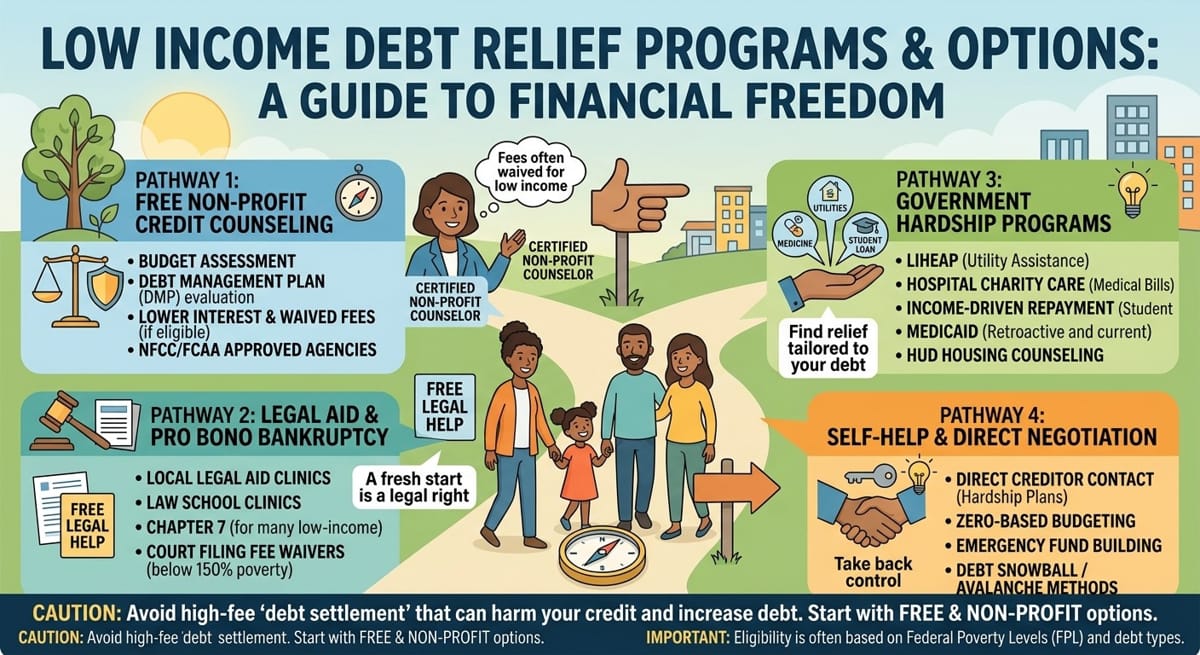
Low Income Debt Relief Programs And Options
14 min read
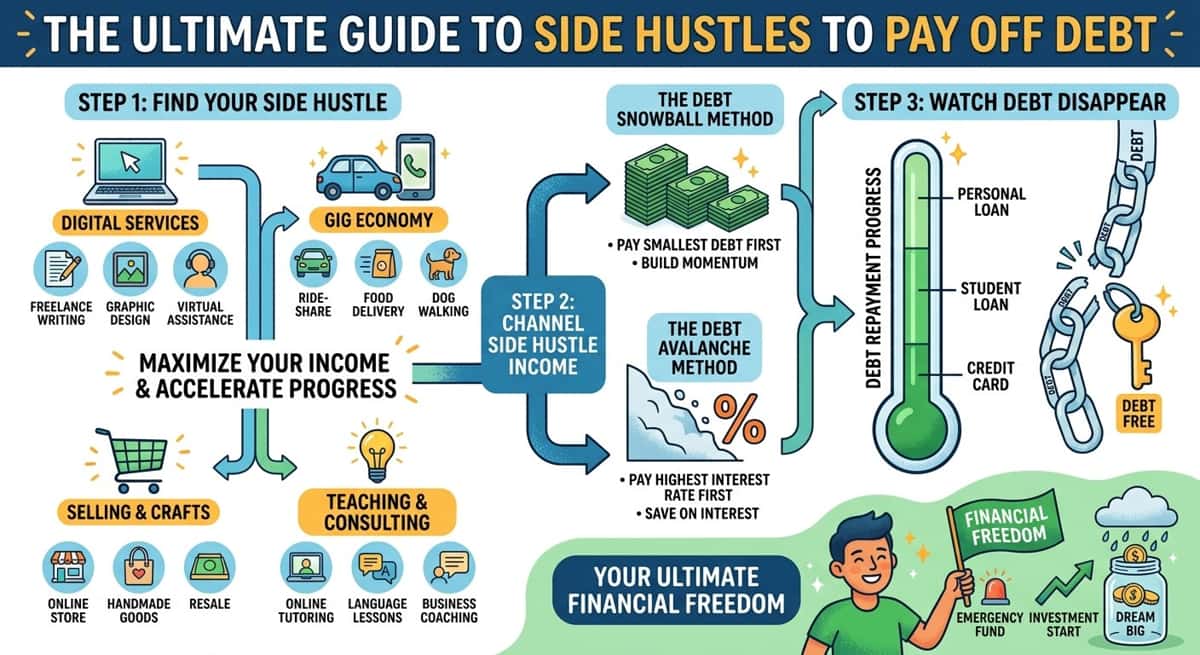
The Ultimate Guide To Side Hustles To Pay Off Debt
12 min read
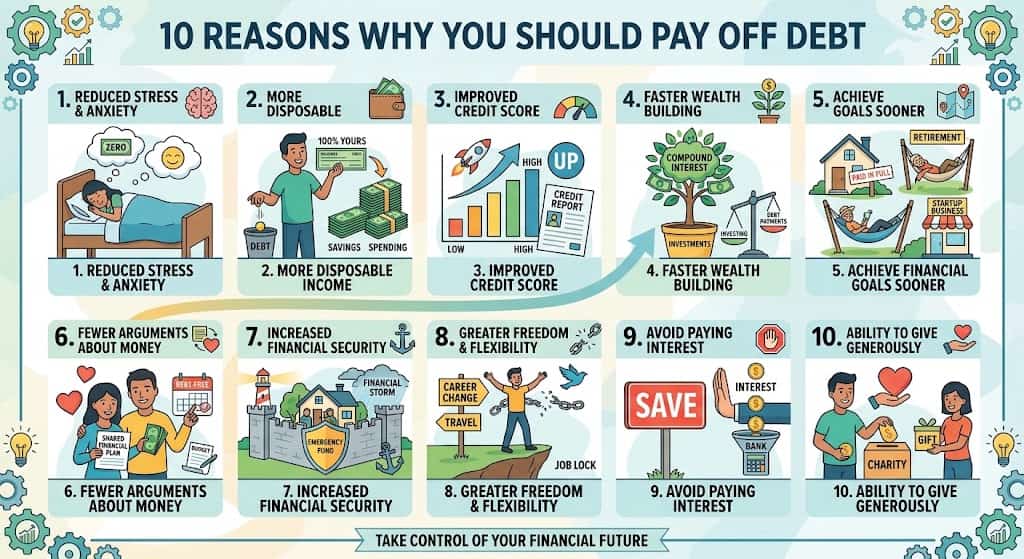
10 Reasons Why You Should Pay Off Debt
9 min read
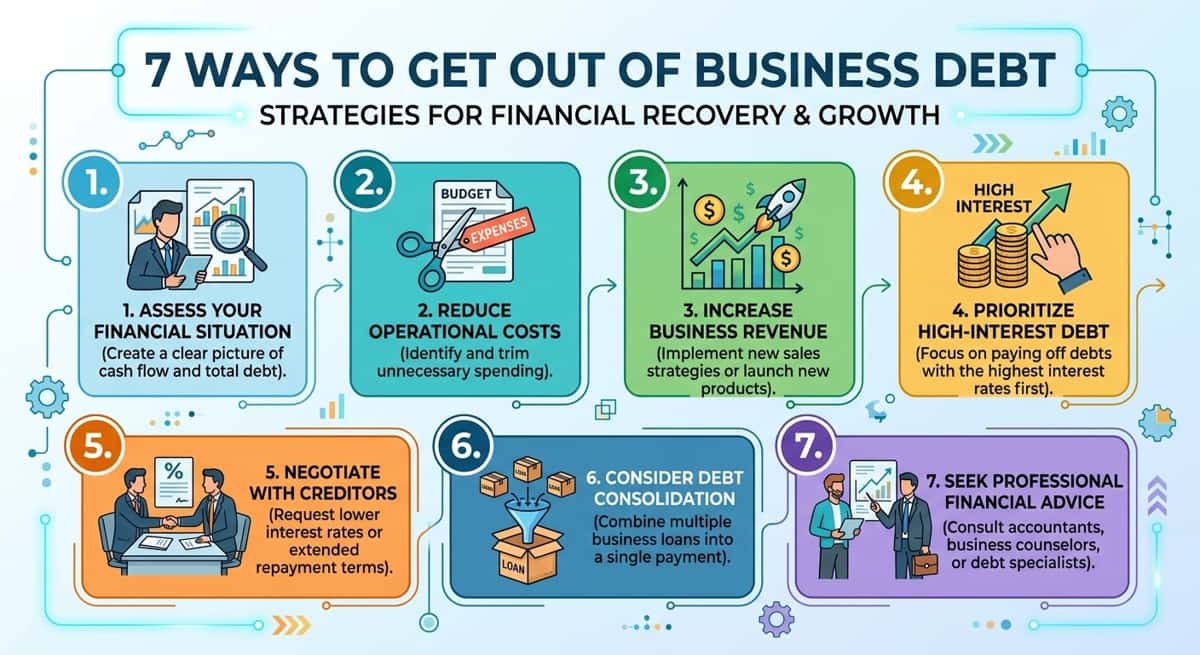
7 Ways To Get Out Of Business Debt
11 min read
Get Your Free Consultation
Speak with a certified debt consultant to explore your options.
Start NowNo obligation • Free consultation