How To Pay Off Debt Fast With Low Income
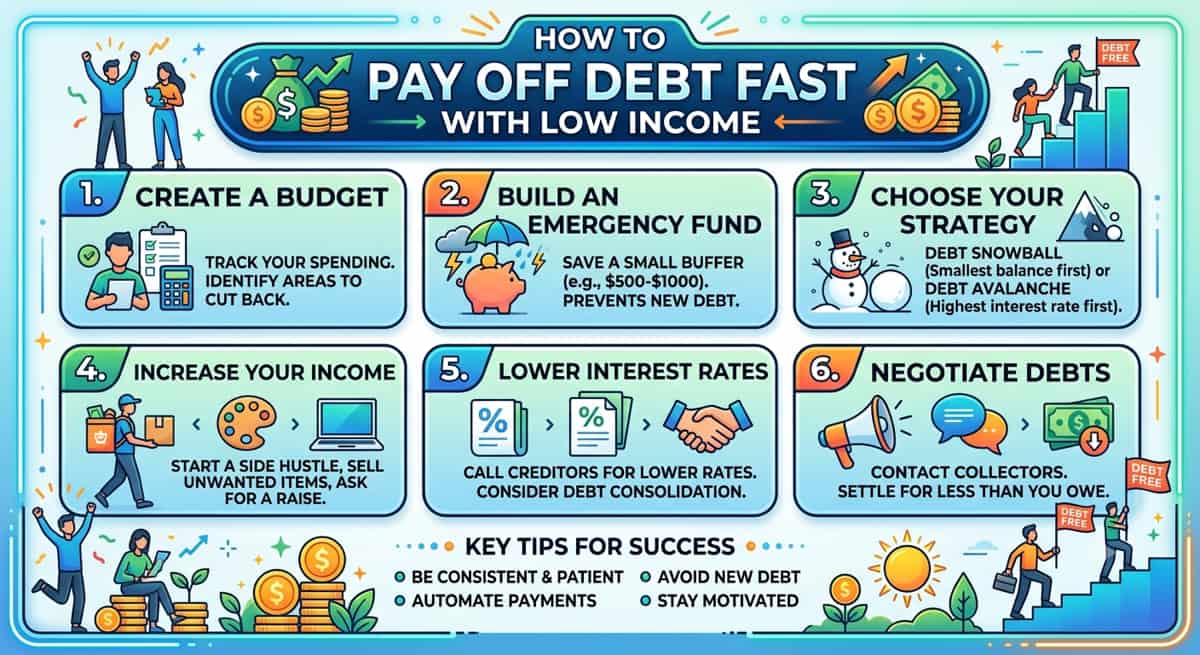
If you're reading this at midnight after the kids are asleep, calculator in one hand and a stack of bills in the other, you're not alone. A lot of South Asian families in the US are carrying the same quiet weight: a credit card balance that keeps creeping up, a medical bill from an ER visit, maybe a personal loan taken out during a rough patch all while still sending money home every month and trying to keep the household running here.
This guide isn't about cutting your chai budget or skipping your morning coffee. It's about a realistic, step-by-step way to pay off debt fast even when your paycheck is tight, your income isn't always steady, and you've got financial responsibilities that stretch across two countries. Everything here is written to be practical, not preachy and it's been checked for accuracy against current, trusted financial guidance.
Why Debt Feels Different When You're a South Asian Immigrant in the US
Debt advice written for the average American reader often misses a few things that make your situation genuinely different.
First, many of us arrive in the US with no credit history at all, even if we managed money responsibly back home for years. Banks here can't see any of that. You start from zero, which makes credit cards, car loans, and even apartment approvals harder and sometimes pushes people toward costlier borrowing options just to get started.
Second, there's the family piece. It's common to be sending money home every month to parents or siblings, while also covering rent, groceries, and bills here. That's not a "bad money habit" it's a real, ongoing commitment that most generic debt advice simply doesn't account for.
Third, there's often a stigma around admitting money trouble out loud, especially to family. Many people quietly rely on informal lending circles known as ROSCAs, committees, kameti, or chit funds instead of walking into a bank. These systems work well for a lot of families, but they come with their own risks, which we'll cover.
None of this means you're behind or doing something wrong. It just means your plan needs to fit your actual life, not a generic script.
Step 1: Get a Clear Picture of What You Actually Owe
You can't fix what you haven't written down. Before anything else, make one simple list a notebook page or a phone note is fine with every debt you have:
Credit cards
Personal loans
Medical bills
Car loans
Any money borrowed from family, friends, or a committee fund
For each one, write down the balance, the interest rate (called APR), and the minimum payment. For your official debts, you can check your free credit report at AnnualCreditReport.com or ask your bank or credit union for a full statement.
Don't skip the informal loans just because there's no paperwork. If you owe your uncle $2,000 or you're mid-cycle in a committee fund, that's still real debt, and it deserves a spot on your list. Once everything is in one place, you'll immediately feel less overwhelmed most people find the full picture is clearer, and often less scary, than the version in their head.
Step 2: Choose a Payoff Method Snowball or Avalanche
Once you know what you owe, you need a method, not just good intentions.
The debt snowball means you pay the minimum on everything, but put every extra dollar toward your smallest balance first. Once that's paid off, you roll that payment into the next-smallest balance, and so on. It doesn't save the most money in interest, but it gives you fast wins, which can be the difference between sticking with a plan and giving up on it.
The debt avalanche means you put your extra money toward the debt with the highest interest rate first, regardless of the balance size. This usually saves you more money over time, but the first "win" can take longer to feel.
Debt Snowball | Debt Avalanche | |
Best for | People who need quick motivation | People focused on saving the most money |
Order of payoff | Smallest balance first | Highest interest rate first |
Speed of first "win" | Fast | Slower |
Total interest paid | Usually more | Usually less |
There's no wrong answer here. If your motivation runs on momentum, pick snowball. If you're the type who can stay patient once you see the math, pick avalanche. The best method is the one you'll actually follow through on.
Step 3: Free Up Cash Without Breaking Your Family Commitments
This is usually the hardest part and where most generic debt advice falls short for our community.
Start with the easy wins before touching anything family-related: cancel subscriptions you forgot about, check for bank or wire transfer fees that are quietly eating into your budget, and look at cash spending habits (a lot of us carry over cash-based habits from home that make it harder to track where money actually goes).
If remittances are a big part of your monthly outflow, don't just quietly cut them or fall behind without saying anything that usually creates more stress, not less. A short, honest conversation with family about temporarily sending a smaller amount while you get through a rough stretch almost always goes better than silence, even if it feels uncomfortable to bring up.
If your visa status limits what kind of extra work you can legally take on, know your limits before you take on freelance or side gig work, since violating work authorization rules can create bigger problems than the debt itself.
One caution: it can be tempting to ask for an early payout from a ROSCA or committee fund to pay off debt fast. Be careful with this. These funds work because everyone takes their turn pulling money out early can strain relationships and may leave you without that safety net later, right when you might need it most.
Step 4: Build a Budget That Works With Irregular or Cash Income
If your income changes month to month because you're driving for a rideshare app, working retail with variable hours, or helping run a family restaurant or store a standard fixed budget won't work for you, and that's okay.
Instead, try building two versions of your budget:
A minimum survival budget: the bare essentials rent, utilities, groceries, minimum debt payments that you can cover even in your lowest-income month.
A debt attack budget: what you do with the extra money in your good months, where a bigger chunk goes straight toward your debt payoff plan.
This way, a slow week doesn't derail your whole plan, and a good week doesn't just quietly disappear into everyday spending. Track it with something simple a notebook, a free budgeting app, or even a shared spreadsheet with your spouse or family works fine. The tool matters less than the habit of checking in regularly.
Step 5: Talk to Your Creditors Before You Fall Behind
This step feels uncomfortable for a lot of people, but it can genuinely change your situation. Most credit card companies, hospitals, and lenders have hardship programs, temporary lower payment plans, or reduced interest rates available but only if you ask, and ideally before you miss a payment.
Calling a creditor and saying "I'm going through a tight financial period, what options do you have?" is a completely normal, expected thing to do in the US financial system. It's not a sign of failure, and it won't get reported anywhere as a red flag. Keep in mind that what a creditor offers can vary, and there's no guarantee every request will be approved but it costs nothing to ask, and staying silent almost never works in your favor.
Free and Trustworthy Help: Nonprofit Credit Counseling
You don't have to figure this out completely on your own, and you don't need to pay a company hundreds of dollars to get real help.
Look for agencies affiliated with the National Foundation for Credit Counseling (NFCC) or HUD-approved housing and financial counselors these offer free or low-cost sessions with a real, certified counselor who can look at your full picture and help you build a plan. Some organizations that specifically serve immigrant communities also offer sessions in Hindi, Urdu, Bengali, or other South Asian languages, which can make a real difference when you're trying to explain a complicated financial situation clearly.
A legitimate free counseling session will walk through your income, debts, and goals with you, explain your options honestly (including ones that don't make them any money), and never pressure you to sign up for anything on the spot. If a "counselor" is doing the opposite of that, that's your cue to walk away which brings us to the next section.
How to Spot Debt Relief Scams Targeting Our Community
Unfortunately, South Asian immigrants are specifically targeted by debt relief and collection scams, so it's worth knowing the warning signs clearly.
Be very cautious of:
Any company asking for upfront fees before doing any work
Guarantees that they can settle your debt for a specific percentage or "erase" it entirely
Pressure to stop paying your real creditors completely and pay the company instead
Unsolicited calls, texts, or WhatsApp messages that mention your immigration status or threaten arrest or deportation over unpaid debt this is a well-documented scam pattern aimed at South Asian communities, and it is not how debt actually works
"Community connections" someone claiming to be a trusted elder or community referral who pushes you toward a specific company
Here's an important fact to hold onto: in the vast majority of cases, unpaid debt is a civil matter, not a criminal one. You cannot be arrested or deported simply for owing money on a credit card or loan. If someone tells you otherwise and is asking for money or personal information, that's a scam. Before working with any debt relief company, you can check for complaints against them through the Consumer Financial Protection Bureau (CFPB) or your state Attorney General's office.
When Debt Consolidation or Settlement Might Make Sense
Once your basics are in place, you might come across two other options: consolidation and settlement.
Debt consolidation means combining multiple debts into one loan or one balance-transfer card, ideally with a lower interest rate. This can simplify your payments and save money, but it typically requires decent credit to qualify for good terms.
Debt settlement means negotiating with creditors to pay less than what you owe, usually through a debt management plan or a settlement company. This can hurt your credit score in the short term and may result in a tax bill, since forgiven debt over a certain amount is sometimes considered taxable income (you may get a 1099-C form for this).
Neither option is automatically right or wrong it depends on your full financial picture. This is exactly the kind of decision worth talking through with a certified, nonprofit credit counselor before you commit to anything, rather than signing up with the first company that calls you.
How Your Credit Score Affects Your Immigration and Family Goals
Your credit score isn't just a number for getting a credit card it quietly follows you into some of the biggest decisions ahead: buying a home, financing a car, cosigning for a sibling or child, or even supporting a family member's future move to the US.
If you're building credit from scratch, know that you have real options even without a long US history. You can start with an ITIN if you don't have a Social Security Number yet, or use a secured credit card or credit-builder loan, both of which are designed specifically for people with a "thin" or nonexistent credit file. Making small, on-time payments consistently over several months is what actually moves the needle there's no shortcut that works faster than time plus consistency.
Your Next Step
It is achievable to pay off debt fast on a low income base, but it needs to be backed up with planning, discipline and realistic expectation. No one size fits all approach, however, small and consistent actions will make great impact over time. Begin by making a list of all your debts, going over how much money you make and what you are spending each month with a repayment plan in mind. Focus on repaying high-interest balances, refrain from accruing new debt and explore ways to trim expenses or boost revenue, even marginally. If you feel overburdened by your debt, do not hesitate to schedule a no-obligation consultation with a nonprofit credit counselor. You can obtain professional guidance to assist you with the information needed to understand your options and develop a plan without any superfluous expenses. Bear in mind that being debt free is more about regular financial choices than annual salary. No matter how small, every payment is a step closer to increased financial security and less stress with the power to build you a better financial future.
Ready to Get Started?
Get a free consultation with a certified debt consultant to see if debt settlement is right for you.
Get Free ConsultationAbout the Author
Bhupinder Bajwa
.
Related Articles
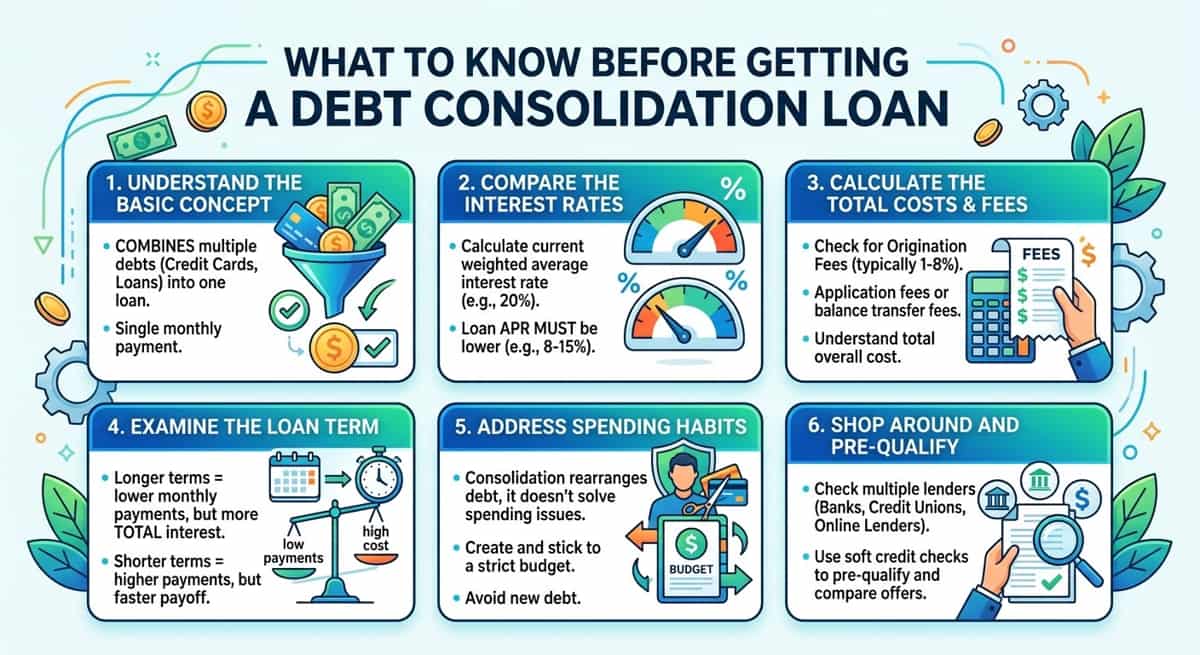
What to Know Before Getting a Debt Consolidation Loan
10 min read
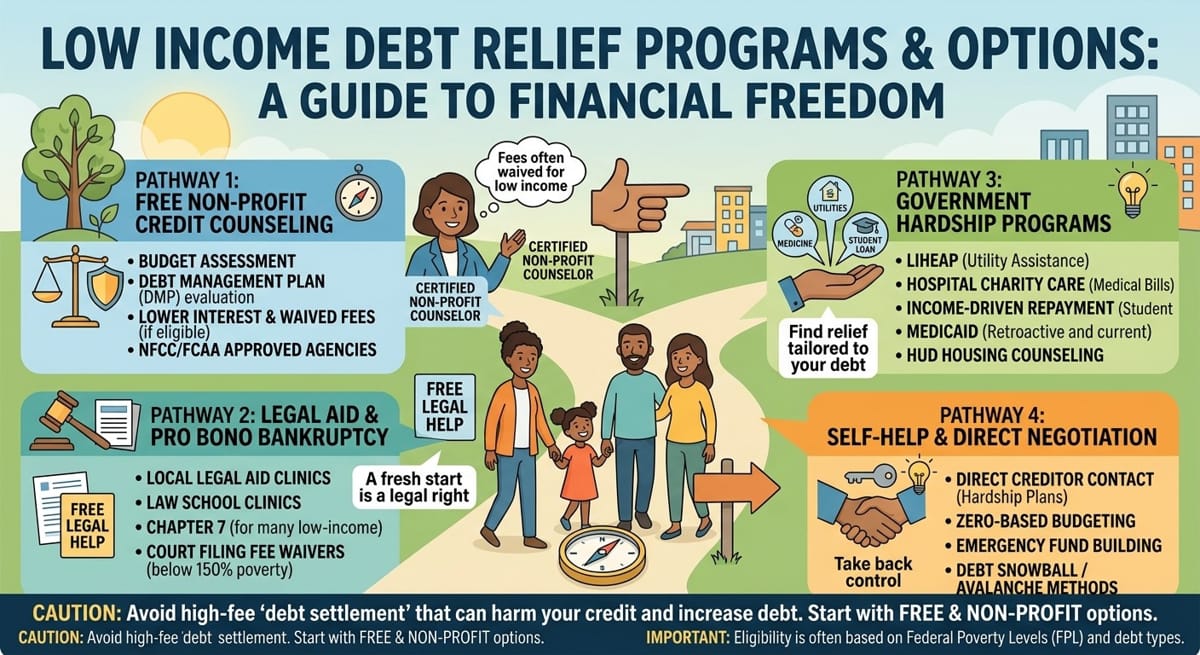
Low Income Debt Relief Programs And Options
14 min read
4 Common Debt Consolidation Mistakes to Avoid
10 min read
Can Debt Consolidation Really Help?
13 min read
The Ultimate Guide To Side Hustles To Pay Off Debt
12 min read
10 Reasons Why You Should Pay Off Debt
9 min read
Get Your Free Consultation
Speak with a certified debt consultant to explore your options.
Start NowNo obligation • Free consultation
Related Posts
- What to Know Before Getting a Debt Consolidation Loan
10 min read
- Low Income Debt Relief Programs And Options
14 min read
- 4 Common Debt Consolidation Mistakes to Avoid
10 min read
- Can Debt Consolidation Really Help?
13 min read