What Ignoring Credit Card Debt Really Costs You
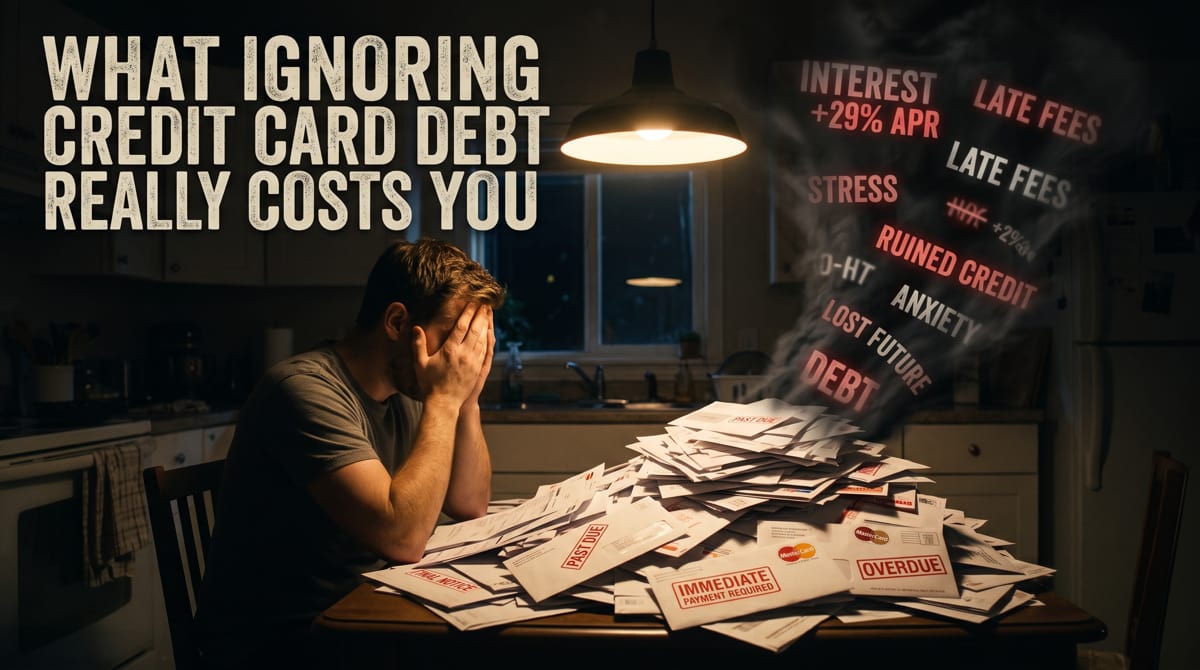
Ignoring credit card debt may seem like a way to avoid financial stress, but the problem can become more expensive over time. Missed payments can lead to late fees, higher interest charges, and a growing balance that becomes harder to repay. Your credit score may also suffer, making it more difficult to qualify for loans, rent an apartment, or access favorable interest rates in the future.
If you continue to ignore your payments, your credit card issuer may send your account to collections or take legal action, depending on your circumstances and applicable laws. However, the consequences are not the same for everyone, and there are ways to manage the situation before it gets worse.
Understanding the real cost of unpaid credit card debt can help you make informed decisions.
What Happens If You Stop Paying?
If you stop paying a credit card, interest and late fees keep adding to what you owe, your credit score drops, and collectors start contacting you. After about 180 days without payment, the card company usually writes the account off as a loss, called a charge-off, but you still owe the money. In some cases, the company or a collector may sue you.
How fast this happens depends on your state, your card company, and how much you owe. The pattern is almost always the same, though, and the earlier you act, the less it costs you.
The Cost Timeline: Month by Month
Here is what usually happens when payments stop. Timing can vary, but this is the general path.
Days 1–30: Late Fees and the First Missed Payment
Miss a due date and you will usually get a late fee, often around $30 to $40. Your card company may also send reminders by email, text, or mail. In the first weeks, nothing shows on your credit report yet. This is the cheapest moment to fix the problem, and it's also the moment most people hope it will just go away.
Months 2–3: Higher Interest and Credit Score Damage
Once you are about 30 days late, the card company can report it to the credit bureaus. A single late payment can bring your credit score down noticeably, and the drop is often bigger if your score was high to begin with.
Many card agreements also allow a "penalty rate," which is a higher interest rate triggered by late payments. That means your balance grows faster just as you are struggling to keep up.
Months 4–6: Collection Calls and Charge-Off
By now the calls and letters have become more frequent. Around the 180-day mark, the card company usually "charges off" the account. This is an accounting step for them, not forgiveness for you. The debt is still yours, and the charge-off appears on your credit report.
After Charge-Off: What "Collections" Really Means
After a charge-off, the card company may hand the account to a collection agency or sell it to a debt buyer. Now someone new is chasing you, often for a larger balance than you started with. You may get calls from a company you've never heard of about a debt you barely recognize. Always ask for the details in writing before you pay anything (more on this below).
Years 2–7: Lawsuit Risk and a Long Credit Shadow
Late payments, charge-offs, and collections can stay on your credit report for about seven years. During that time, a collector may also choose to sue. Not every one does, but it is a real risk, especially with larger balances.
A simple example (illustrative numbers only): Say you owe $5,000 at a 24% interest rate and stop paying.
Interest alone adds about $100 a month at first.
Add roughly $35 in late fees each month.
After six months, you might owe about $5,800.
After a year, you could owe around $6,700, without having spent a single extra dollar.
Your real numbers will differ, but the direction is the same: waiting makes the debt bigger.
The Hidden Costs Beyond the Balance
The balance is only part of the story. Unpaid debt follows you into other parts of life.
Compounding Interest and Fees
Interest is charged on your balance, and then on the interest that was added before. Over time, you can end up paying interest on interest. A debt that felt manageable at $5,000 can feel impossible at $8,000, and it can get there faster than most people expect.
A Higher Price for Every Future Loan
A damaged credit score makes borrowing more expensive. That can mean a higher interest rate on a car loan, a bigger deposit for an apartment or utilities, or a mortgage that costs far more each month, if you are approved at all. For families dreaming of buying their first home in the US, this is often the biggest long-term cost.
Insurance, Jobs, and Housing
In many states, car and home insurance companies use credit-based information when setting your price. Landlords often check credit before approving a lease. Some employers also review credit reports for certain jobs, such as roles that involve handling money, but they generally need your permission first. Not every situation will be affected, but it helps to know these doors can get harder to open.
Stress, Sleep, and Relationships
Debt you avoid does not go quiet. It sits in the back of your mind. Many people describe trouble sleeping, snapping at family, or avoiding calls from friends. Money worries can quietly strain a marriage or a household. Facing the numbers is hard, but it usually brings relief faster than staying silent.
Your Legal Rights and Real Risks
Knowing your rights can take away a lot of fear. Laws vary by state, so use this as a general guide and speak with a licensed attorney about your specific case.
What Debt Collectors Can and Cannot Do
Under the Fair Debt Collection Practices Act (FDCPA), collectors have to follow rules. In general, they:
Cannot call you before 8 a.m. or after 9 p.m. your local time.
Cannot threaten you with jail for owing a credit card debt.
Cannot harass you, lie about the amount you owe, or share your debt with your neighbors or coworkers.
Must send you a written notice with details about the debt, and you usually have 30 days to dispute it in writing.
You can also ask a collector in writing to stop contacting you. They may still contact you in limited ways, such as to confirm they will stop or to tell you about a lawsuit. The Consumer Financial Protection Bureau (CFPB) has free sample letters and plain-language guides on its website.
Lawsuits and Default Judgments
If a creditor or collector sues you, you will receive court papers called a summons. Do not ignore them. If you don't respond by the deadline, the court may rule against you automatically. This is called a default judgment. Depending on your state, a judgment can lead to wage garnishment (a portion of your paycheck taken directly) or a bank account freeze.
Many people who ignore a summons did not know they could respond, or assumed they would lose anyway. Showing up gives you a chance to ask the collector to prove the debt, check the amount, and sometimes negotiate.
Statute of Limitations and "Zombie Debt"
Every state sets a time limit on how long a creditor can sue over an old debt. It is often between three and ten years, depending on the state and type of debt. Once it passes, the debt is sometimes called "time-barred."
Be careful, though. In some states, making even a small payment or admitting the debt is yours can restart that clock. If an old debt resurfaces, ask for written details first and get advice before you pay or sign anything.
Does Credit Card Debt Affect Your Visa or Green Card?
This is one of the biggest fears we hear, so let's be clear. Ordinary unpaid credit card debt is generally not, by itself, a reason to be denied a visa, green card, or citizenship.
What can matter more is the larger financial picture. Things like fraud, unpaid taxes, or showing your finances for a family sponsorship can raise questions. Every case is different, and immigration rules change.
If you are worried about your status, speak with an immigration attorney before making decisions. Don't let fear stop you from dealing with your debt, because avoiding it rarely makes your overall situation safer.
Compare Your Options
The best choice depends on how much you owe, how stable your income is, and what you want your credit to look like in a few years. Compare your credit card debt relief options to find the best fit for your financial situation and credit goals.
Hardship Programs from Your Card Company
Many card companies offer hardship programs and low-income relief options. . They may lower your interest rate, waive some fees, or set up a lower payment for a limited time. It is often the simplest first step, especially if you are only a month or two behind. Call the number on the back of your card and ask directly.
Nonprofit Debt Management Plans
A debt management plan (DMP) can be coordinated through professional Credit Counselling services. The agency negotiates lower interest rates, and you make one monthly payment to them, which they split among your creditors.
Debt Settlement: Benefits and Risks
Debt settlement involves negotiating to pay less than your total outstanding balance, usually after you have fallen behind on payments. While a debt settlement program may help reduce your overall debt, it can negatively affect your credit score, and the forgiven debt may be considered taxable income.
Bankruptcy: When It Makes Sense
Bankruptcy is a legal option for managing overwhelming debt, and choosing it does not mean you have failed financially. Chapter 7 may discharge many unsecured debts, such as credit card balances, if you meet the eligibility requirements. Chapter 13 allows you to repay your debts through a court-approved plan over three to five years. Since bankruptcy debt relief options can affect your credit for several years, consult a bankruptcy attorney to understand your options before making a decision.
Which Option Fits Which Situation
Your situation | Often worth considering |
Slightly behind, steady income | Hardship program |
Several cards, steady income, want lower interest | Debt management plan |
Large balances, income too low to repay in full | Settlement or bankruptcy (get professional advice) |
Heavy debt, little hope of repaying | Bankruptcy consultation |
Each path has downsides, and a good advisor will tell you about them honestly.
Your First 7 Days: A Simple Action Plan
You do not need to fix everything this week. You just need to start.
Write it all down. List every card with its balance, interest rate, and minimum payment.
Check your credit reports for free at Annual Credit Report so you know exactly what's on file.
Open your mail and answer your calls. If a collector contacts you, ask for written details of the debt before agreeing to anything.
Figure out what you can truly afford. Include rent, food, and the money you send to family.
Reach out for help. Call your card company or a nonprofit credit counselor, such as one affiliated with the National Foundation for Credit Counseling (NFCC).
Avoid upfront-fee "debt relief" offers. If someone promises to wipe out your debt quickly for a big fee, walk away.
Take the First Step Today
Ignoring credit card debt has a real cost, and it grows every month. The good news is that acting early almost always makes things cheaper and easier.
Debt is common, and asking for help is a practical decision, not a personal failure. Whether you start with a phone call to your card company or a conversation with a trusted counselor, one small step today can lighten the load for you and your family.
Ready to Get Started?
Get a free consultation with a certified debt consultant to see if debt settlement is right for you.
Get Free ConsultationAbout the Author
Bhupinder Bajwa
.
Related Articles
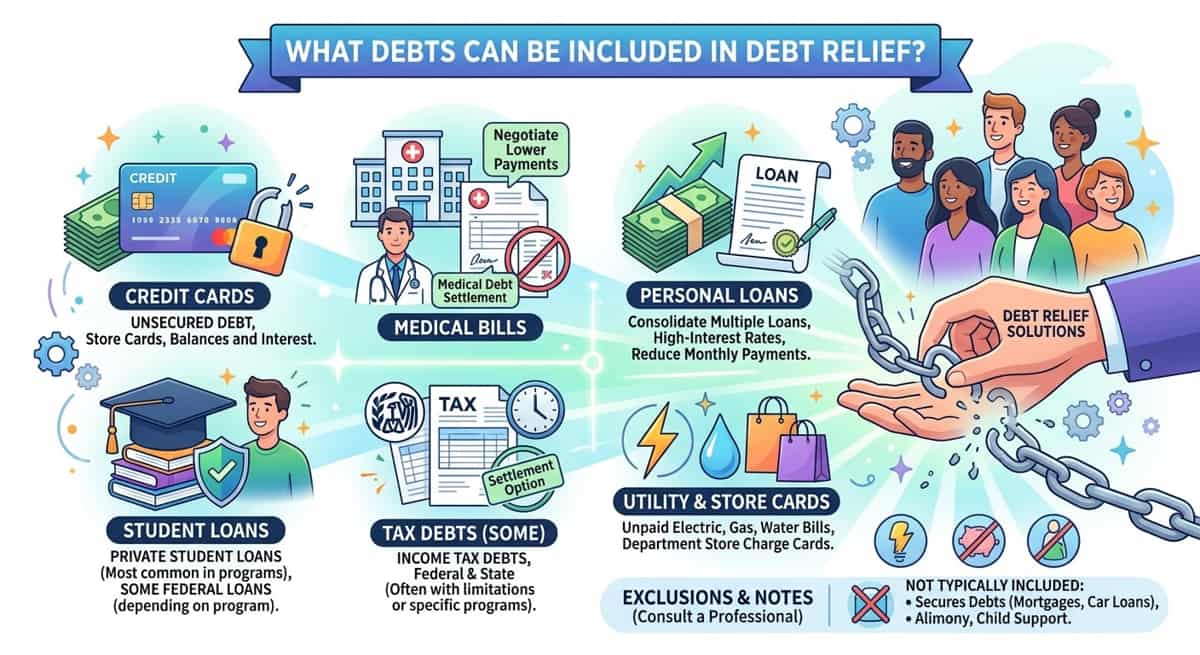
What Debts Can Be Included in Debt Relief?
13 min read

Debt Settlement for $20,000 in Credit Card Debt: What to Expect
11 min read

What Happens If You Can’t Pay Your Business Credit Card?
11 min read

Dismiss Your Credit Card Lawsuit: Winning Strategies
10 min read
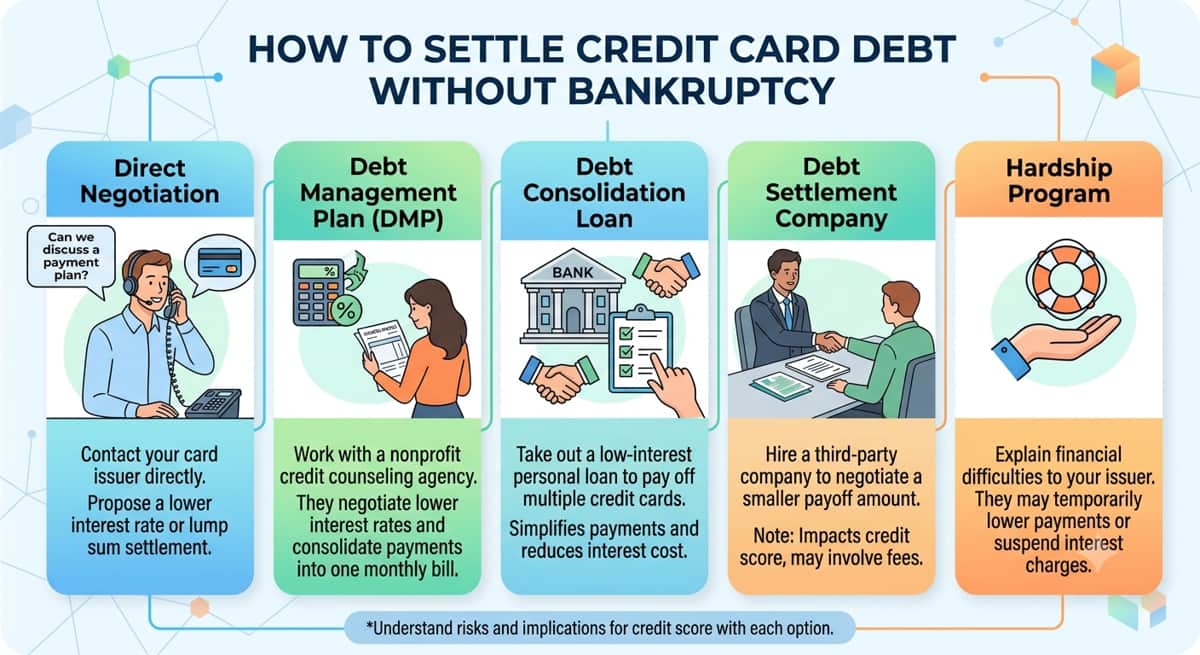
How Can You Settle Credit Card Debt Without Bankruptcy?
12 min read
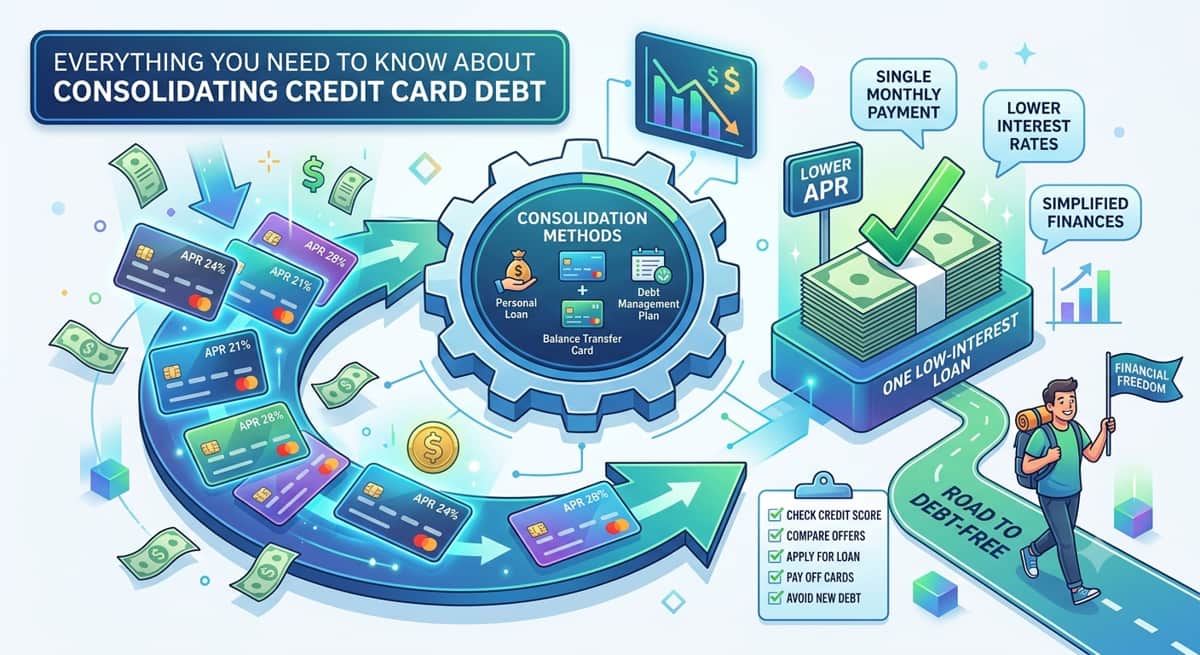
Everything You Need To Know About Consolidating Credit Card Debt
12 min read
Get Your Free Consultation
Speak with a certified debt consultant to explore your options.
Start NowNo obligation • Free consultation