
How Often Does Your Credit Score Update?

You paid down your credit card. You made every payment on time. Then you checked your score, and it looks exactly the same as last week.
That can feel discouraging, especially when you're working hard to get out of debt and just want to see some progress.
Here's the good news: your score isn't stuck. Credit scores usually update about every 30 to 45 days, but there is no single schedule that fits everyone. In this guide, we'll explain why the timing changes, how long common actions take to show up, and what to do if you're working on your debt.
How Often Credit Scores Update
Your credit score usually updates when your lenders send new information about your accounts to the credit bureaus. This commonly happens about every 30 to 45 days. Some accounts report more often, so your score may change a few times in a month. If nothing new is reported, your score may not change at all.
Here's what to keep in mind:
Lenders report on their own schedule. Your credit card company and your car loan company may send updates on different days.
The three credit bureaus can show different information. Equifax, Experian, and TransUnion don't always get updates at the same time.
Your score changes when the information behind it changes. No new information, no new score.
Free score apps may refresh daily, weekly, or monthly. The number you see may not be the most current one.
So if you checked your score the day after making a payment and saw no change, that's normal. The payment likely hasn't been reported yet.
Why Credit Scores Don't Update on One Schedule
It helps to know who is involved. Once you see the steps, the delays make a lot more sense.
How information travels: from your lender to your score
Think of it as a relay race with several runners:
You make a payment, open an account, or miss a due date.
Your lender (a credit card company, bank, or loan company) records it. Most lenders send a summary of your account to the credit bureaus about once a month.
The credit bureaus (Equifax, Experian, and TransUnion) add that information to your credit report.
The scoring company uses the report to calculate your score.
The app or lender you use shows you that score, sometimes a few days after it was calculated.
A delay at any step can slow things down. That's why a payment you made on Monday might not show up for several weeks.
Why your three credit reports can look different
If you've ever pulled all three of your reports and noticed they don't match, you're not alone. A few common reasons:
Not every lender reports to all three bureaus. Some report to just one or two.
Lenders may report to each bureau on different days. One might update Experian this week and TransUnion next week.
Collection accounts often show up at only one bureau. That can make one score noticeably lower than the others.
There are different scoring models.FICO and VantageScore each have several versions and credit score ranges.
This is why two lenders can look at you on the same day and see two different scores. Neither one is necessarily wrong.
Credit Report vs. Credit Score vs. Monitoring App: What Actually Updates?
These three things get mixed up all the time. Knowing the difference can save you a lot of worry.
Your credit report
Your credit report is a record of your credit history. It lists your accounts, balances, payment history, and any collections or public records. It updates when your lenders send new information to the bureaus.
Your credit score
Your credit score is a three-digit number calculated from the information in your report. It only changes when that information changes, or when a different scoring model is used to calculate it. That's why you can't update your score by checking it more often.
Free score and monitoring tools
Many banks, card companies, and apps offer free credit scores. These are helpful, but they may refresh on their own schedule. Some update daily, others weekly or monthly. The score you see may also come from a different scoring model than the one a lender uses, so it may not match what a lender sees.
Item | What it is | What makes it update |
Credit report | A record of your credit accounts and history | Lenders sending new information |
Credit score | A number calculated from your report | Changes in your report, or a different scoring model |
Monitoring app | A tool that shows you your score or report | The app's own refresh schedule |
How Long Until Common Actions Show Up on Your Score?
Here's a general guide. Every lender is different, so use these as rough estimates and not promises.
What you do | When it may show up | Good to know |
Pay down a credit card balance | The next time your card company reports, often around your statement date | Lower balances compared to your limit can help your score |
Pay off a loan | Often within 30 to 45 days | Closing an account can change your credit mix and the average age of your accounts |
Make a late payment | May not show until about 30 days after the due date | A payment made a few days late is often not reported right away, but your lender may still charge a late fee |
Apply for new credit | Can show up quickly as a "hard inquiry" | Inquiries usually have a small, short-term effect |
Collection account | Depends on when the collector reports | Collectors may report to only one bureau |
Dispute an error | Often about 30 days, sometimes longer | The lender has to respond, then the bureau updates your report |
The main takeaway: your score reflects what has been reported, not what you've done. There's often a gap between the two.
Say your card company reports to the bureaus on the 5th of each month. You pay off a big chunk of your balance on the 8th. That new, lower balance may not show up until the next report on the following month's 5th. Your score would stay the same in the meantime, even though you did the right thing.
What to Expect If You're Paying Down Debt or Using a Debt Relief Program
If you're working toward getting out of debt, it's normal to want to see your score improve right away. The truth is that different paths affect your score in different ways, and the timing varies. Here's what to expect.
Paying off cards or using a balance transfer or consolidation loan
Paying off debt can improve your credit score once the new balances are reported. That's because using less of your available credit is a positive sign to scoring models.
If you open a new balance transfer card or use a personal loan to consolidate credit card debt , though, there are a few things to know. The application usually creates a hard inquiry, and the new account lowers the average age of your accounts. Your score may dip a bit at first, then improve as you make on-time payments and your balances drop.
Credit counseling and debt management plans
In a debt management plan, a credit counseling agency works with your creditors to set up one monthly payment. Some creditors may close or change your accounts as part of the plan, and how that affects your score depends on your situation. A nonprofit credit counselor can explain what to expect for your specific accounts before you commit to anything.
Debt settlement
Debt settlement process works very differently, and it's important to understand the downsides before choosing it:
It can take months or even years.
Creditors may refuse to settle.
Collection calls and lawsuits can continue while you're in the process.
Your credit score will usually drop.
Debt that is forgiven may be taxable income. You may receive an IRS Form 1099-C if a creditor cancels $600 or more.
No company can promise a certain result, so be careful with anyone who does.
Why your score may not go up right away
Even when you're doing everything right, your score might not rise as fast as you hope. Common reasons include:
The new information hasn't been reported yet.
A new negative mark, like a late payment or collection, was added.
You closed an account, which lowered your total available credit.
A settled or charged-off account still shows on your report.
Progress with debt often shows up in your score slowly. Many people notice small improvements over several months as balances come down and on-time payments pile up.
How to Track When Your Score Updates
You can't control when lenders report, but you can keep a close eye on what's happening.
Check your free credit reports
You can get free credit reports from all three bureaus every week at Annual Credit Report. The bureaus made weekly access permanent in 2023. Use only that website, since other sites with similar names may charge you or try to collect your personal information. Keep in mind that these reports don't include your credit score.
Use free score tools, but know their limits
Many banks and card companies offer free scores. Check which scoring model the tool uses and how often it refreshes. It's fine to look at your score from time to time, but you don't need to check it every day. It won't change faster just because you looked.
Build a simple tracking habit
Try this easy routine:
Check your reports once a month.
Write down the statement dates for each of your accounts.
After each big payment, note the date and your score in a notes app.
Over a few months, you'll see a pattern in when your accounts report.
What to Do If Your Score Isn't Updating or Looks Wrong
If something doesn't look right, here's what to do:
Wait one full reporting cycle. After a payment, give it 30 to 45 days before you worry.
Pull your free credit reports. Compare all three and look at the account in question.
Contact your lender. If a payment still hasn't been reported, ask when they send updates to the bureaus.
Dispute any errors. You can file a dispute with the credit bureau and the lender. These investigations often take about 30 days.
Ask about a rapid rescore. If you're in the middle of a mortgage or loan application, your lender may be able to request a rapid rescore, which can speed up an update to your report, sometimes within a few days.
If you feel stuck or overwhelmed, free help is available. A nonprofit credit counselor can review your situation, and the Consumer Financial Protection Bureau (CFPB) accepts complaints about credit reporting problems.
Key Takeaways and Next Steps
Credit scores usually update about every 30 to 45 days, but there is no single schedule.
Your score reflects what has been reported, so there's often a delay after you make a payment.
Check your free credit reports weekly or monthly to stay on top of changes and catch mistakes early.
Progress with debt takes time, and the number doesn't tell the whole story. Every on-time payment and every lower balance moves you in the right direction, even if your score hasn't caught up yet.
If you're struggling with debt and want to understand your options, talk with a certified credit counselor or contact us for a free, no-obligation consultation.
Ready to Get Started?
Get a free consultation with a certified debt consultant to see if debt settlement is right for you.
Get Free ConsultationAbout the Author
Bhupinder Bajwa
.
Related Articles
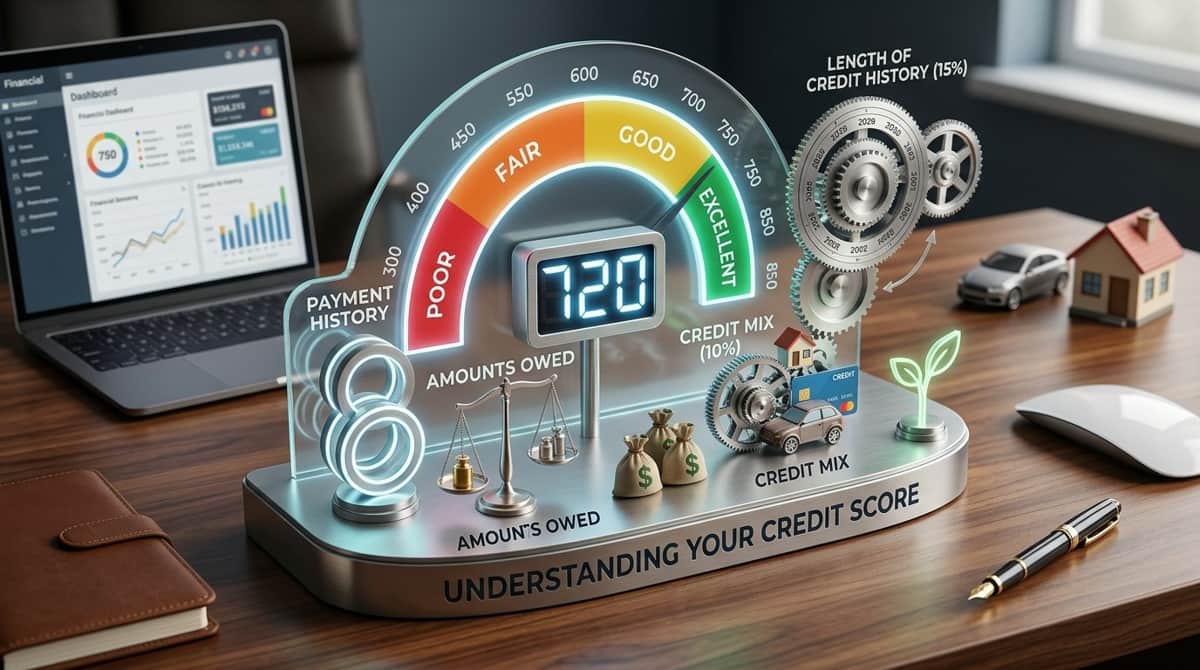
How to Raise Your Credit Score
10 min read

Credit Score Ranges: What They Mean and How They Work
10 min read

How to Remove Old Debt From Your Credit Report
11 min read
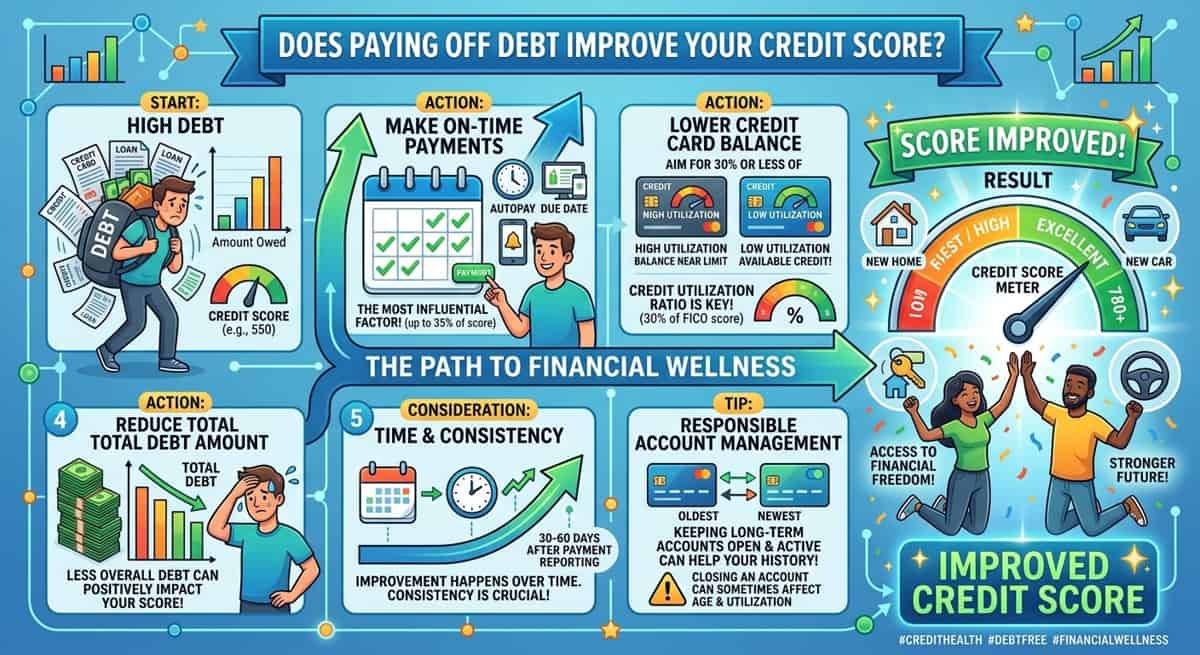
Does Paying Off Debt Improve Your Credit Score?
8 min read
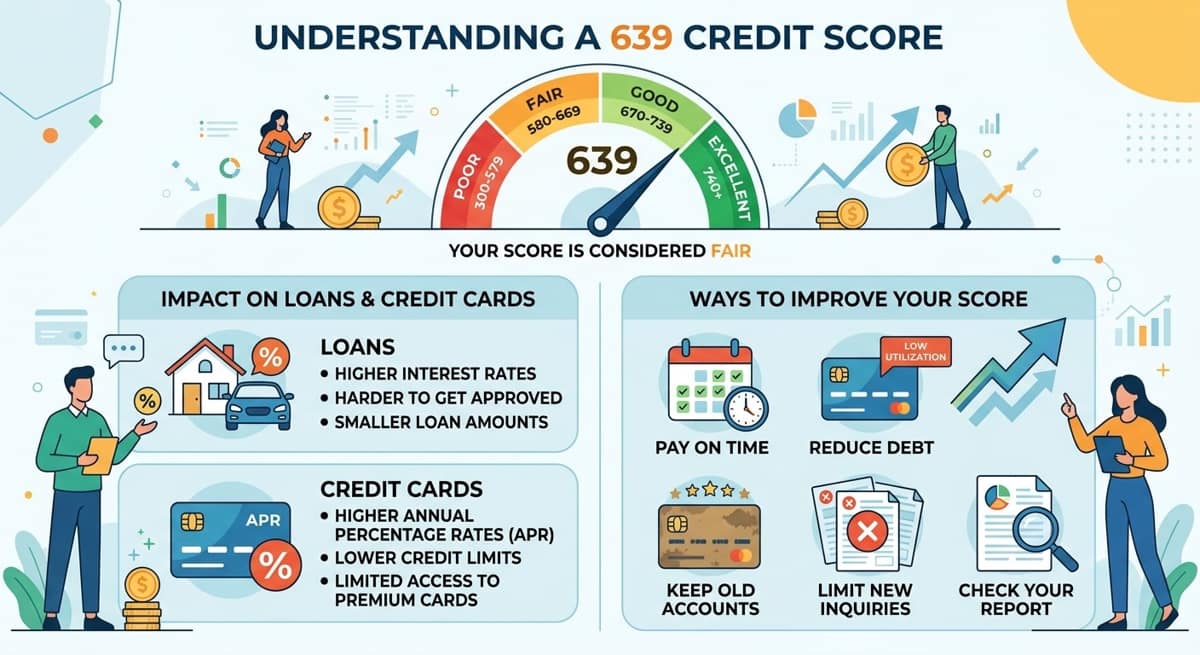
Is 639 A Good Credit Score? How It Affects Loans, Credit Cards And Ways To Improve It
12 min read

Does Debt Affect Your Credit Score?
11 min read
Get Your Free Consultation
Speak with a certified debt consultant to explore your options.
Start NowNo obligation • Free consultation