IRS Payment Plan vs. Paying Taxes in Full: Which Option Costs Less?
If you've recently moved to the U.S. on an H-1B, just gotten your green card, started a small business, or filed taxes here for the first time using an ITIN, an unexpected IRS bill can feel like a gut punch. Back home, tax season may have looked very different, maybe your employer handled everything, or there simply wasn't this much paperwork involved. Here, one missed 1099, one year of freelance income, or one mistake on a W-4 form can leave you owing thousands of dollars you didn't plan for.
And this isn't just about numbers on a page. For a lot of South Asian families in the U.S., money decisions are rarely made in isolation. There's often a parent back home who depends on a monthly transfer, a sibling's wedding to help fund, or a future home loan you're trying to build good credit for. So this decision to pay it all now, or spread it out deserves more than a quick Google search. Let's break down exactly what each option costs, and then look at the parts of this decision that spreadsheets don't usually capture.
How IRS Debt Actually Grows: Interest and Penalties Explained
An IRS balance doesn't just sit there quietly. It grows every single day you don't pay it off, through two separate charges.
The IRS charges interest on unpaid taxes, and this rate is set every quarter based on federal rates plus 3%. It's compounded daily, which means it builds on itself you're paying interest on the interest that already accrued. You can check the current rate directly on the IRS, since it does change throughout the year.
Failure-to-pay penalty. On top of interest, the IRS adds a penalty of 0.5% of your unpaid balance for every month it goes unpaid, up to a maximum of 25% of what you owe.
Failure-to-file penalty. This one catches a lot of people off guard, because it's separate from the failure-to-pay penalty and much steeper 5% per month, also capped at 25%. If you owe money and haven't even filed your return yet, this is the one to worry about most. The lesson here: even if you can't pay right away, always file on time. Filing late and paying late at the same time is the most expensive mistake you can make.
Here's what this looks like with real numbers. Say you owe $10,000 and do nothing for 12 months. Between interest and the failure-to-pay penalty, you could end up owing well over $1,000 more than your original balance money that bought you nothing except time. Pay that same $10,000 right away, and that extra $1,000-plus simply doesn't happen.
What Is an IRS Payment Plan (Installment Agreement)?
An IRS payment plan installment agreement, lets you pay off what you owe in smaller chunks over time instead of one lump sum. There are two main types.
Short-term plan. If you can pay off your balance within 180 days, there's no setup fee. Keep in mind, though interest and the failure-to-pay penalty still keep adding up during those months, just at a reduced penalty rate once you're formally in an agreement.
Long-term plan. If you need more than 180 days, you'll set up a long-term installment agreement, usually through Form 9465 or the IRS's Online Payment Agreement tool. This comes with a setup fee, though the fee is lower if you agree to automatic direct debit payments from your bank account rather than mailing a check each month.
Most individuals with a balance under $50,000 qualify for what's called a streamlined agreement, which means less paperwork and a faster approval process. If your balance is higher than that, the IRS may ask for more financial details before approving your plan.
What Happens When You Pay Your Tax Bill in Full?
Paying in full is exactly what it sounds like you send the IRS the entire amount you owe in one payment, and the clock stops immediately.
The moment your payment posts, interest and penalties stop building. There's no setup fee, because there's nothing to set up. You also won't get IRS letters reminding you about monthly payments, and there's zero risk of accidentally missing a payment and defaulting on an agreement. For a lot of people, that peace of mind alone is worth something.
The catch, of course, is the upfront hit to your cash flow. Coming up with $10,000 or $15,000 in one go isn't realistic for everyone, especially if that money is also earmarked for rent, a family member's expenses, or an emergency fund you don't want to touch. This trade-off of saving money over time versus protecting your cash today is really the heart of this whole decision, and we'll dig into it more in a moment.
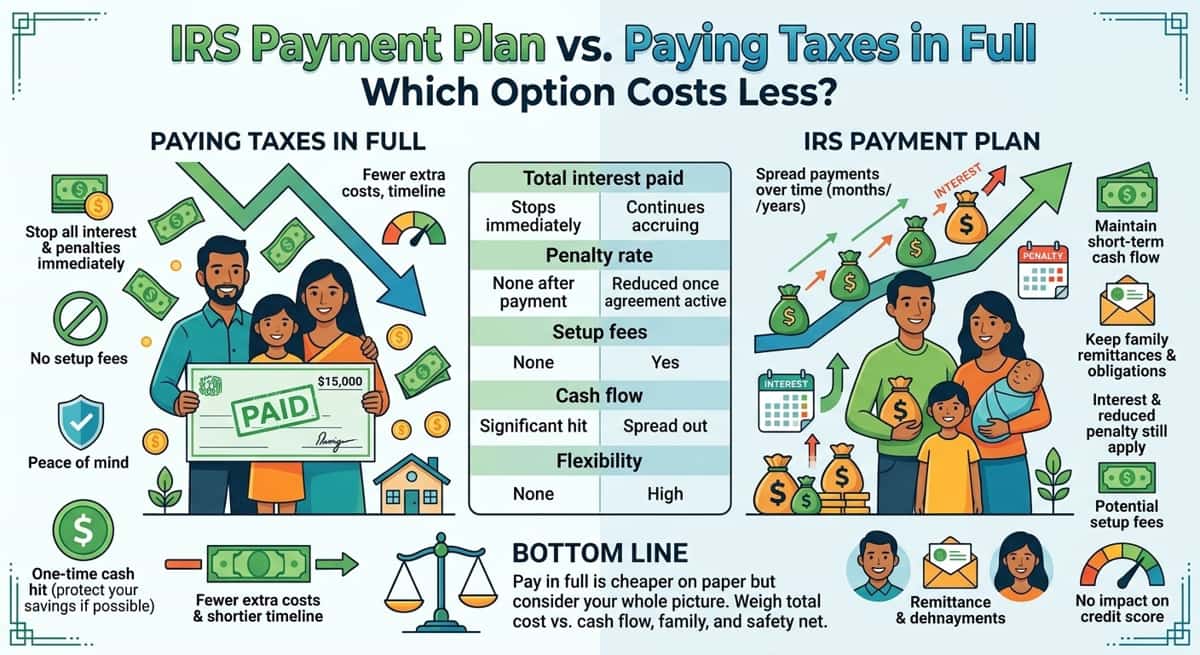
Side-by-Side Cost Comparison: Payment Plan vs. Paying in Full
Here's how the two options stack up against each other, at a glance.
Factor | Payment Plan | Paying in Full |
Total interest paid | Continues accruing until balance is $0 | Stops immediately |
Penalty rate | Reduced once agreement is active, but still applies | None after payment |
Setup fees | Yes (waived for short-term plans) | None |
Time to fully resolve | Months to years | Immediate |
Risk of default | Yes, if a payment is missed | None |
Impact on cash flow | Minimal, spread over time | Significant, all at once |
Flexibility | High - smaller monthly commitment | None - full amount needed now |
To put this in real terms: imagine you owe $15,000. Spread across a 24-month IRS installment plan, you'll likely pay a few hundred to over a thousand dollars extra in interest and fees by the time you're done, depending on the current rate. Pay that same $15,000 today using your savings, and that extra cost disappears entirely but so does $15,000 from your bank account, all at once.
The Real Math: A Worked Example
Let's make this concrete with three realistic scenarios for a $15,000 tax bill.
Option A: IRS long-term payment plan over 24 months. You'll make monthly payments of roughly $625, plus interest that compounds daily on the remaining balance. By the end of two years, your total cost will land somewhere above $15,000, typically by several hundred to over a thousand dollars, depending on how rates shift during that period.
Option B: Pay in full using savings. You pay exactly $15,000, no more. This is the cheapest option on paper, as long as depleting your savings doesn't create other problems like needing to borrow at a higher rate later for an emergency.
Option C: Pay in full using a personal loan or 0% introductory credit card offer. This is where things get interesting. If you can find a personal loan or a 0% APR credit card promotion with a lower rate than the IRS charges, paying the IRS off immediately using that borrowed money can actually cost you less overall than an IRS payment plan because you're swapping the IRS's rate for a cheaper one. But if that loan or card carries a higher rate than the IRS does, you could end up paying more than if you'd just set up the IRS plan in the first place.
The takeaway: "pay in full" is usually the cheapest choice, but only if the money you're using to pay in full doesn't come from a more expensive source. Always compare the actual interest rate you'd pay elsewhere against the IRS's current rate before assuming a loan is the better move.
Beyond the Numbers Factors South Asian Taxpayers Should Weigh
The math above tells you what's cheapest on paper. But real financial decisions rarely happen in a vacuum, and there are a few things that matter a lot to South Asian families in the U.S. that a generic cost calculator won't capture.
Remittances and family obligations. For many people, a portion of every paycheck is already spoken for sent home to support parents, siblings, or extended family. If paying the IRS in full means skipping a remittance or dipping into money set aside for a wedding, a medical bill back home, or a sibling's education, that's a real cost that doesn't show up in an interest rate calculation. A payment plan, even though it costs more overall, might genuinely be the more responsible choice if it keeps those other commitments intact.
Immigration status considerations. Some people worry that owing the IRS money could affect a future green card application, naturalization interview, or visa renewal. This is a nuanced area, and the honest answer is: it depends on your specific situation, and it's worth speaking with an immigration attorney rather than guessing. What we can say generally is that having an active, current IRS payment plan and staying compliant with it is typically viewed far more favorably than ignoring a balance altogether. If this is a concern for you, don't rely on general articles like this one. Get advice from someone who can look at your specific case.
The stigma around visible debt. In a lot of South Asian households, debt carries weight beyond dollars. It can feel like a personal or family failure, especially if it means asking relatives for help. One quiet advantage of an IRS installment agreement is that it's a private, formal arrangement between you and the government. No one else needs to know about it. For some people, that privacy makes a payment plan feel far more manageable than the alternative of borrowing from family or community networks, even if it technically costs a bit more.
ITIN filers and limited access to credit. If you file taxes with an ITIN rather than a Social Security number, you may not have access to the same loans or credit cards that would let you pay the IRS off cheaply. This sometimes pushes people toward informal lending circles or borrowing from friends and family instead of using the IRS's own payment plan even though the IRS plan is often the safer, more transparent, and sometimes cheaper option. If a low-interest loan isn't realistically available to you, the IRS's own installment agreement may be your best borrowing option, not a last resort.
Does an IRS Payment Plan Affect Your Credit Score?
Good news here: an IRS payment plan itself is not reported to the three credit bureaus, so simply having one won't lower your credit score. Since 2018, federal tax liens have also been removed from standard credit reports, which changed things for the better.
That said, if the IRS files a formal Notice of Federal Tax Lien against you which typically only happens with larger, more serious unpaid balances that lien is still public record. It won't show up on your credit report directly, but banks, mortgage lenders, and even immigration paperwork in some cases can turn it up during background or financial checks. If you're planning to apply for a mortgage, sponsor a family member's immigration paperwork, or take out a major loan in the near future, it's worth resolving your IRS balance through either option before that lien becomes a factor.
When a Payment Plan Makes More Sense Than Paying in Full
A payment plan is often the smarter move if:
Paying in full would wipe out your emergency savings, leaving you exposed if something unexpected comes up
You run a small business with seasonal income, and cash is tighter during certain months than others
You'd otherwise have to rely on high-interest credit card debt to pay the IRS off immediately, which could cost more than the IRS plan itself
It's also worth knowing that a standard payment plan isn't your only option if money is genuinely tight. If you're facing real financial hardship, the IRS offers programs like an Offer in Compromise, which can let you settle for less than you owe, or Currently Not Collectible status, which pauses collection entirely while you get back on your feet. These are more involved to qualify for, but they exist for exactly these situations.
When Paying in Full Is Clearly the Cheaper Choice
On the other hand, paying in full tends to be the better call if:
You have the savings available and won't be left in a vulnerable financial position afterward
You have access to a lower-interest loan or credit option than what the IRS charges
Your balance is small enough that a plan's setup fees and added interest would barely be worth the flexibility
You're trying to fully resolve your tax situation before a green card interview, mortgage application, or other major life event where a clean record matters
Step-by-Step: How to Set Up an IRS Payment Plan
If you've decided a payment plan is the right fit, here's how to actually set one up.
Confirm your exact balance. Log into your IRS online account at IRS to see precisely what you owe, including any penalties and interest already added.
Decide between short-term and long-term. If you can realistically pay off the balance within 180 days, choose the short-term option to avoid setup fees.
Apply through the IRS Online Payment Agreement tool or Form 9465. Most individuals can apply online in one sitting rather than mailing in paperwork.
Set up direct debit payments. Linking your bank account for automatic monthly payments usually lowers your setup fee and removes the risk of forgetting a payment.
Stay current going forward. Keep filing and paying future tax years on time. Falling behind again can void your existing agreement and restart the clock on penalties.
Making the Right Call for Your Situation
On paper, paying your tax bill in full is almost always the cheaper option, since it stops interest and penalties in their tracks. But "cheaper" isn't the same as "right for you." If paying in full means missing a remittance to family, draining an emergency fund, or borrowing at a worse rate than the IRS charges, a payment plan might be the more sensible path even at a slightly higher cost.
The best approach is to run the actual numbers for your situation, be honest about what else that money needs to cover, and choose the option you can realistically stick to without falling behind. If your situation is more complicated, a large balance, immigration concerns, or genuine financial hardship it's worth having a conversation with a tax professional who can look at your full picture rather than relying on general guidance alone.
Ready to Get Started?
Get a free consultation with a certified debt consultant to see if debt settlement is right for you.
Get Free ConsultationAbout the Author
Bhupinder Bajwa
.
Related Articles
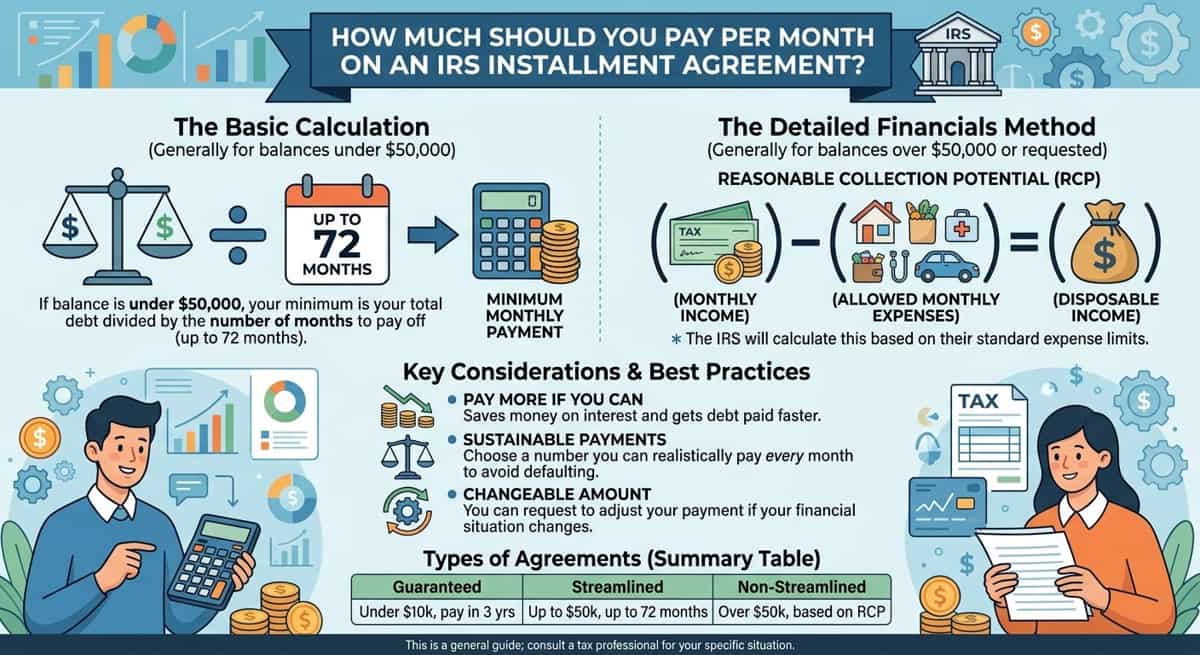
How Much Should You Pay Per Month on an IRS Installment Agreement?
10 min read
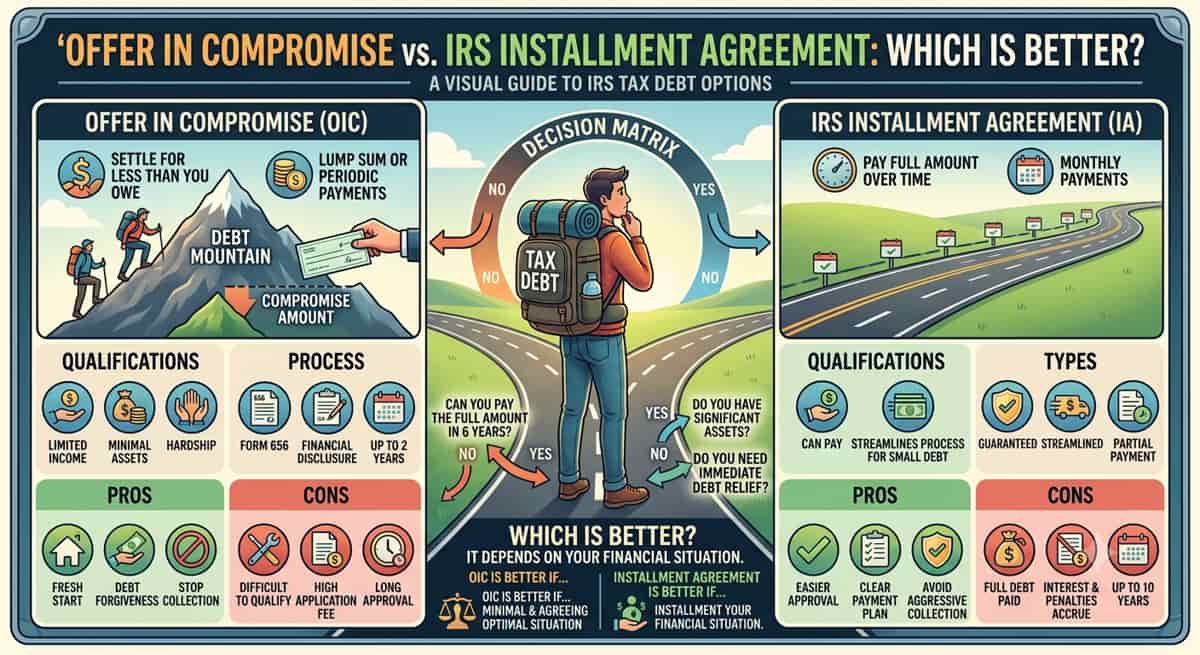
Offer in Compromise vs. IRS Installment Agreement: Which Is Better?
10 min read
Gross Or Net Income: What Is The Difference?
17 min read

What Is A Personal Guarantee? What You Need To Know Before Signing
18 min read

What Percent Of Revenue Should Go To Payroll? A Comprehensive Guide
11 min read

Is A Merchant Cash Advance The Right Solution For Your Business?
14 min read
Get Your Free Consultation
Speak with a certified debt consultant to explore your options.
Start NowNo obligation • Free consultation