
When The IRS Pursues Criminal Charges: Things You Need To Know

You run a small restaurant in New Jersey. You came to the United States from South Asia fifteen years ago, built your business from nothing, and supported your entire family including relatives back home. Then one morning, two people in suits knock on your door and identify themselves as IRS Special Agents.
For many South Asian immigrants in the United States whether from India, Pakistan, Bangladesh, Sri Lanka, or Nepal this kind of situation can feel absolutely terrifying. Questions start flooding in: Will I be deported? Did I do something wrong? What happens to my family?
The truth is, IRS criminal charges are rare. But when the IRS does decide to pursue a criminal case, the consequences are serious. We are talking potential prison time, heavy fines, and real immigration consequences. This article is here to help you understand exactly what IRS criminal charges mean, what triggers them, how to recognize the warning signs, and what you can do to protect yourself. Knowledge is your first and most powerful defense.
The IRS Criminal Investigation Division: What It Is and How It Works
Most people who have an IRS problem are dealing with a civil matter meaning they owe back taxes, missed a filing, or are being audited. This is handled by regular IRS revenue agents, and it is resolved through payments, penalty programs, or settlement options.
But there is a completely separate branch of the IRS that most people never want to meet: the IRS Criminal Investigation Division, commonly known as IRS-CI. This is the law enforcement arm of the IRS. The special agents who work in CI are federal law enforcement officers. They carry badges, firearms, and the authority to arrest you.
IRS-CI focuses specifically on financial crimes that involve intentional wrongdoing, such as tax fraud, money laundering, and identity theft schemes. According to IRS data, CI typically initiates roughly 2,000 to 3,000 investigations per year which sounds like a lot, but it is a tiny fraction of the hundreds of millions of tax returns the IRS processes annually.
Most people will never encounter IRS-CI. But if you do, it is a completely different situation from a routine audit.
Civil Audit vs. Criminal Investigation — What Is the Difference?
Understanding this difference could be one of the most important things you ever learn about U.S. tax law.
A civil audit is essentially the IRS reviewing tax return to see if you made mistakes or owe more money. If they find a problem, you pay the additional taxes plus interest and possibly penalties. Stressful? Yes. But it is a financial and administrative issue not a criminal one.
A criminal investigation is fundamentally different. The IRS is no longer just saying you made a mistake, they are building a case that you intentionally broke the law. The key legal concept here is "willfulness." To pursue criminal charges, the IRS must prove that you knew what you were doing was wrong and did it anyway. That is a much higher bar.
In short: civil means you owe money; criminal means you could go to prison.
What Triggers IRS Criminal Charges? Common Red Flags
So what actually causes the IRS to shift from treating someone as a civil case to opening a criminal investigation? Here are the most common triggers, several of which are particularly relevant for South Asian business owners and families in the U.S.
Underreporting income — This is the number one trigger. If your tax return shows significantly less income than what actually came into your business, especially over multiple years, the IRS takes notice. This is especially common in cash-heavy businesses like restaurants, convenience stores, retail shops, and taxi or rideshare operations — industries where many South Asian immigrants work or own businesses.
Falsifying tax returns — Deliberately claiming deductions you are not entitled to, inflating business expenses, or reporting fake losses are all forms of tax fraud.
Hiding foreign bank accounts (FBAR violations) This is critically important for the South Asian community. Many immigrants maintain bank accounts in their home countries India, Pakistan, Bangladesh, Sri Lanka to send money to family or manage inherited property. What most people do not know is that if you are a U.S. person and have foreign financial accounts totaling more than $10,000 at any point during the year, you are legally required to report those accounts to the U.S. government. Failing to do so especially if done intentionally can be a federal crime.
Payroll tax fraud — If you own a business and withhold taxes from employees' paychecks but do not send that money to the IRS, this is treated very seriously. The IRS considers it theft from the government.
Filing fraudulent refund claims — Submitting returns that claim refunds you are not entitled to, especially at scale, draws immediate criminal scrutiny.
Tax-related identity theft — Using someone else's information to file fraudulent returns.
Are Immigrants at Particular Risk?
The honest answer is: not more than anyone else for criminal intent but potentially more exposed to accidental violations due to unfamiliarity with U.S. tax law. Many South Asian families in the U.S. face unique situations that can create tax risk without even realizing it:
Relying on informal community tax preparers who may not be licensed or properly trained
Earning income from foreign sources rental properties back home, overseas investments without knowing they must be reported
Maintaining foreign bank accounts for family remittances without knowing about FBAR reporting requirements
Running cash-based businesses without proper bookkeeping systems
It is important to be clear: your immigration status does not shield you from IRS criminal charges. In fact, a criminal tax conviction can have very serious immigration consequences, including deportability for non-citizens. Awareness and getting qualified professional help early is everything here.
How Does an IRS Criminal Investigation Actually Unfold?
If the IRS Criminal Investigation Division opens a case against someone, the process unfolds in a very specific way and it can move slowly and quietly for years before you ever know it is happening. Here is how it typically works:
Referral — CI does not just randomly investigate people. A case is usually flagged through a civil audit that uncovered suspicious activity, a tip from a whistleblower or former employee, a referral from another government agency such as the FBI or FinCEN, or CI's own data analytics that detected unusual patterns in your filing history.
Preliminary Investigation — Before anyone contacts you, a special agent begins gathering evidence in the background pulling bank records, reviewing your tax filings, interviewing third parties like your bank or accountant. You likely have no idea this is happening.
Subject Interview Request — At some point, agents may approach you directly at your home or business and ask to speak with you. This is a major red flag that you are the target of an investigation, not just a witness.
Grand Jury / DOJ Referral — If CI builds a strong enough case, they recommend prosecution to the U.S. Department of Justice Tax Division. A grand jury may be convened to review the evidence.
Indictment and Prosecution — If the DOJ agrees to prosecute, formal criminal charges are filed in federal court. At this stage, the situation is extremely serious and requires immediate experienced legal representation.
If an IRS special agent contacts you or shows up at your home or place of business, do not answer questions without a tax attorney present. You have the right to remain silent. Anything you say can and will be used against you in a federal criminal case.
What Are the Penalties for IRS Criminal Charges?
This is where the stakes become very real. Criminal tax convictions carry severe penalties and they can compound on top of each other. Here is a breakdown by offense type:
Offense | Max Prison Sentence | Max Fine |
Tax Evasion (26 U.S.C. § 7201) | 5 years | $250,000 |
Filing a False Return (§ 7206) | 3 years | $250,000 |
Failure to File (§ 7203) | 1 year | $25,000 |
FBAR Willful Violation | 5 years | $500,000 |
Tax Fraud / Identity Theft | Up to 20 years | Varies |
These penalties can also stack with separate civil penalties, additional fines, interest, and accuracy-related charges on top of whatever criminal sentence is handed down. For non-citizens, a criminal tax conviction can also trigger immigration consequences, including deportability and inadmissibility. This means you could face losing the right to remain in the United States in addition to everything else.
Warning Signs That the IRS May Be Investigating You Criminally
One of the most unsettling things about an IRS criminal investigation is that it often happens in complete secrecy. The IRS deliberately keeps the investigation quiet while agents gather evidence. Here are the warning signs that should immediately put you on high alert:
An IRS special agent not a regular revenue examiner or auditor contacts you or shows up in person. Special agents only work criminal cases.
A civil audit you were going through suddenly stops with no explanation. This can happen when CI takes over the case.
Your bank or financial institution receives a summons or subpoena for your account records without informing you.
Current or former employees, business partners, or associates tell you that IRS agents have been asking them questions about you or your business.
You receive a "target letter" from the U.S. Department of Justice this is formal notice that you are a criminal investigation target.
Do not make the mistake of thinking that silence from the IRS means everything is fine. Criminal investigations are designed to be invisible until the government is ready to move.
The IRS CI Division maintains a conviction rate exceeding 90%. Once you are indicted, the odds are heavily stacked against you. This is exactly why early legal intervention before charges are ever filed makes all the difference.
What to Do If You Are Under IRS Criminal Investigation
If you believe you are being investigated or if an IRS special agent has already contacted you here is what you need to do. Stay calm, but act quickly.
Do not speak to IRS agents without an attorney. You have a constitutional right under the Fifth Amendment to remain silent. Use it. Politely decline to answer questions until your attorney is present. Even innocent, well-intentioned answers can be twisted into evidence against you.
Hire a qualified tax attorney immediately. Not just any accountant you specifically need an attorney, because only attorneys provide attorney-client privilege protection. What you tell your CPA can potentially be compelled in court. What you tell your attorney cannot.
Do not destroy any records. Destroying, hiding, or altering documents once you know you are under investigation is a separate federal crime called obstruction of justice. Preserve everything.
Ask your attorney about Voluntary Disclosure. The IRS offers a Voluntary Disclosure Program that may significantly reduce your criminal exposure if you come forward before charges are filed. For South Asian immigrants specifically, there is also the Streamlined Filing Compliance Procedures program, which is designed for people with unreported foreign income or accounts who were not intentionally hiding them.
Understand your civil options too. Even alongside a criminal defense, there are civil debt relief tools that can be part of your overall strategy including installment agreements, Offers in Compromise, and penalty abatement programs.
A note for those in the South Asian community: we understand that hiring an attorney can feel intimidating, expensive, or even culturally unfamiliar. There may be a tendency to rely on community contacts or informal advice instead. But a federal criminal tax case is not something to handle informally. The cost of early legal help is a fraction of what it costs to defend yourself once charges are filed.
Can You Resolve IRS Tax Debt Before It Ever Becomes a Criminal Matter?
Absolutely and for the vast majority of people, this is entirely possible. The critical thing to understand is that almost all IRS tax problems start as civil matters. They only escalate to criminal status when there is evidence of deliberate, willful wrongdoing.
If you have back taxes, unfiled returns, or tax debt, you have real options available to resolve these before the situation ever escalates:
Installment Agreements — A structured monthly payment plan that lets you pay what you owe over time without facing collection action.
Offer in Compromise (OIC) — A program that allows qualifying taxpayers to settle their tax debt for less than the full amount owed. This is sometimes called "settling with the IRS" and can be a genuine lifeline for people in financial hardship.
Currently Not Collectible (CNC) Status — If you truly cannot afford to pay right now, the IRS can temporarily halt collection activity while you stabilize your finances.
Penalty Abatement — First-time offenders can often have significant penalties removed, which can dramatically reduce the total amount owed.
Taking action proactively even when you are behind or have made mistakes signals to the IRS that you are trying to comply. That posture dramatically reduces the chance of criminal escalation. A qualified tax debt relief professional can help you review all of your options before things go any further.
Frequently Asked Questions
Can the IRS put you in jail simply for not paying your taxes?
Not paying your taxes alone is generally treated as a civil matter meaning you will face penalties, interest, and collection actions, but not prison. Criminal charges arise when there is intentional deception: willful fraud, deliberate concealment of income, or knowingly filing false returns. That said, repeated and deliberate non-payment can escalate to criminal scrutiny over time.
What is the difference between tax fraud and tax evasion?
Tax evasion, defined under 26 U.S.C. § 7201, involves willfully failing to pay taxes that you legally owe for example, hiding income. Tax fraud more broadly refers to filing false or fraudulent returns for example, claiming fake deductions. Both are federal criminal offenses. Tax evasion carries the heavier maximum sentence of five years in prison.
How long does an IRS criminal investigation typically take?
IRS criminal investigations are known for moving slowly and quietly. Most CI investigations run for two to three years before the case is referred to the Department of Justice for prosecution. From the beginning of an investigation to a final sentencing, the entire process can take four to six years during which time you may not even know you are being investigated.
Do I have to report my bank accounts in India, Pakistan, or Bangladesh to the IRS?
Yes, if you are a U.S. person including a green card holder and your foreign financial accounts had a combined value exceeding $10,000 at any point during the year, you are required to file an FBAR (FinCEN Form 114) annually. Willfully failing to file this report is a federal crime with penalties up to five years in prison and $500,000 in fines. If you have accounts you have not reported, speak to a tax attorney about the Streamlined Filing Compliance Procedures. This program was specifically created to help people come into compliance without criminal prosecution.
Can a tax attorney help me even if I have not been formally charged?
Absolutely and this is actually the best possible time to seek help. Before charges are filed, your attorney has the most options available to protect you: challenging the investigation, pursuing voluntary disclosure, negotiating with the IRS, or getting you into compliance through amnesty programs. Once an indictment is filed, your options narrow significantly. Do not wait.
Conclusion — The Best Defense Is Acting Early
Here is the most important thing to take away from everything you have read: IRS criminal charges are rare. The IRS pursues criminal prosecution in only a small fraction of all tax cases. But when it does, the consequences of prison, massive fines, and for immigrants, potential deportation are life-altering.
For South Asian individuals and families in the United States, navigating U.S. tax law comes with real challenges: foreign bank accounts, remittances to family abroad, cash-based businesses, and sometimes a reliance on informal tax help within the community. All of these create risk that can be managed but only if you know about it and address it proactively.
Whether you are worried about past tax filings, have unreported foreign accounts, are running a business and unsure about your payroll obligations, or have received any kind of contact from the IRS please do not wait. Consult a licensed tax attorney or a qualified debt relief specialist. The earlier you act, the more options you have, and the better your outcome will be.
Knowledge is your first defense. Professional help is your strongest one.
Ready to Get Started?
Get a free consultation with a certified debt consultant to see if debt settlement is right for you.
Get Free ConsultationAbout the Author
Bhupinder Bajwa
.
Related Articles
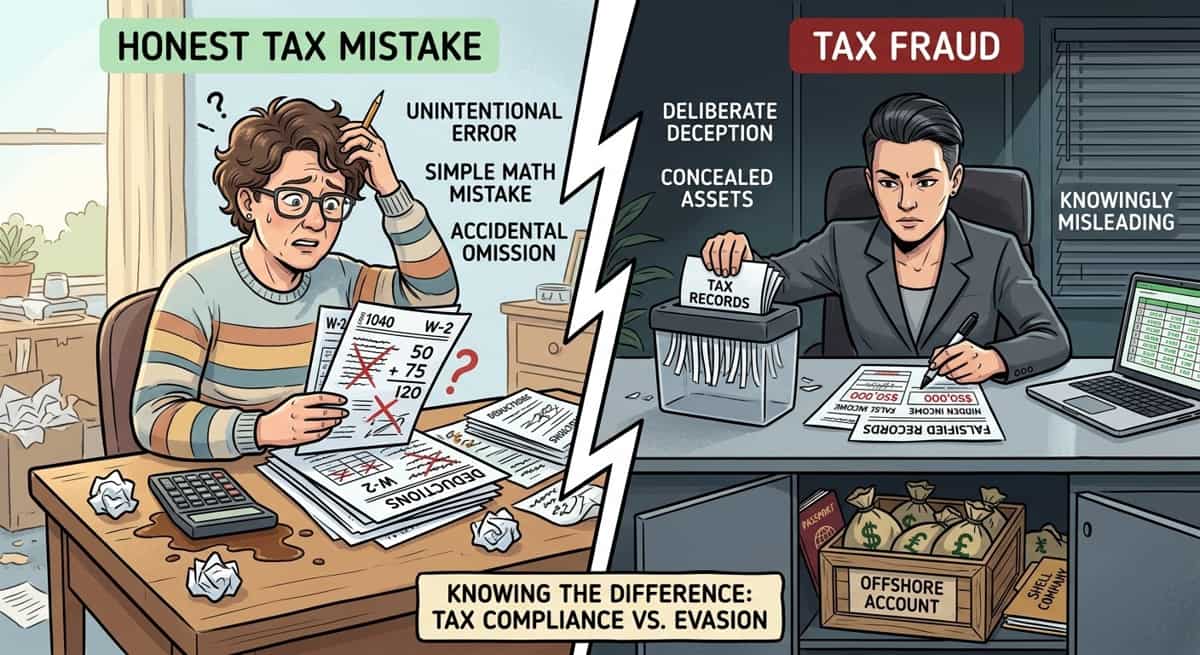
What Is the Difference Between Tax Fraud and an Honest Tax Mistake?
11 min read

Can You Be Charged With Tax Fraud for Not Filing Taxes?
10 min read
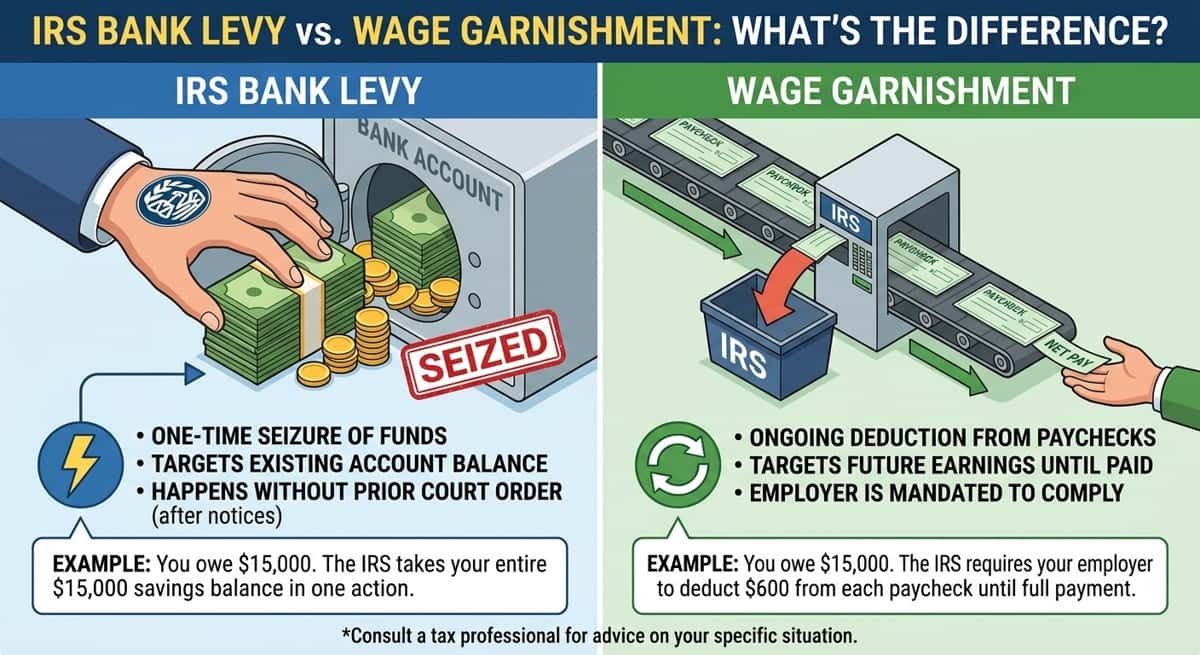
IRS Bank Levy vs. Wage Garnishment: What's the Difference?
11 min read
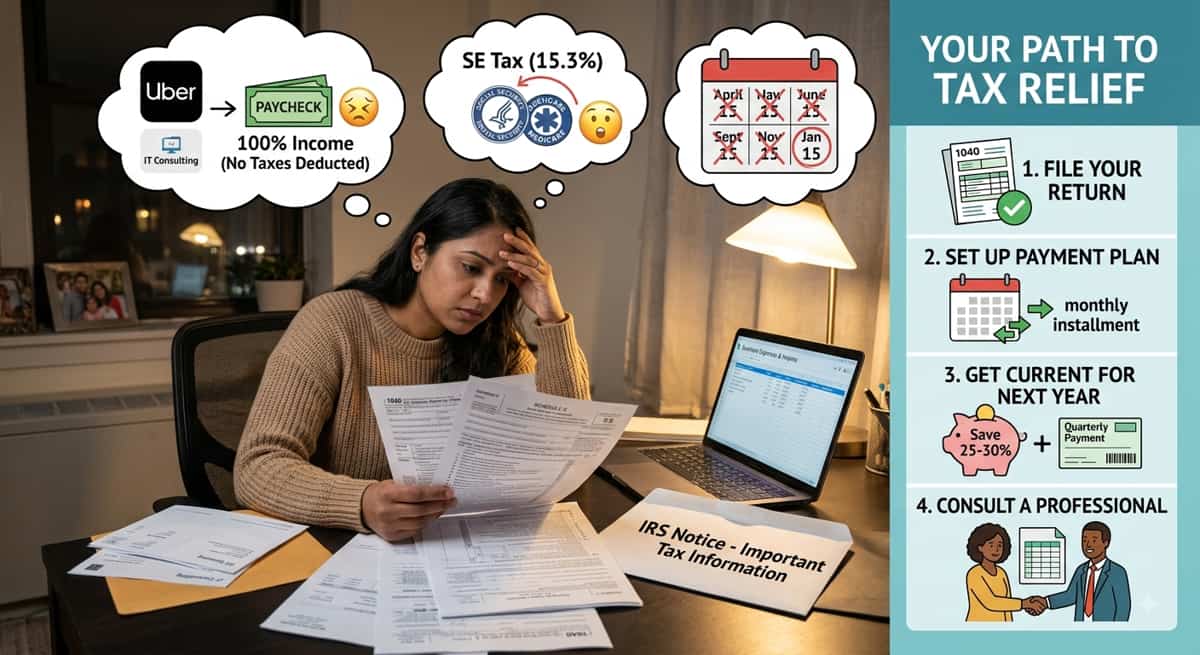
Self-Employed and Owe Taxes? A Guide for 1099 Workers
11 min read

Unfiled Tax Returns: What Should You Do?
11 min read
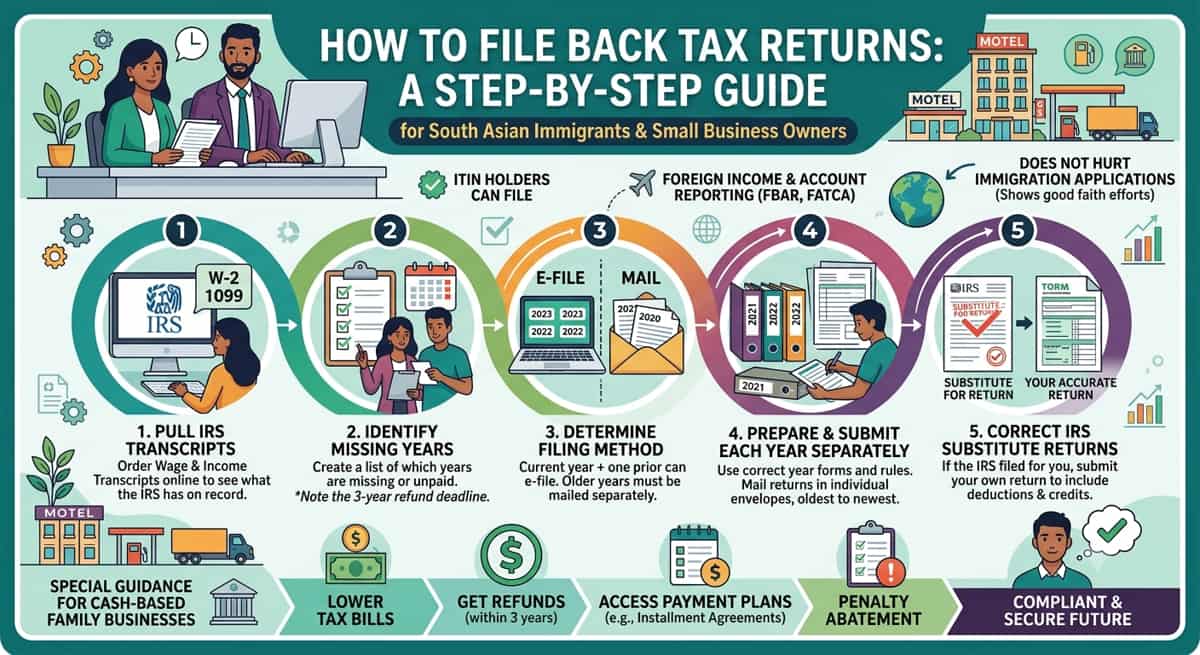
How Do I File Returns For Back Taxes?
12 min read
Get Your Free Consultation
Speak with a certified debt consultant to explore your options.
Start NowNo obligation • Free consultation