The IRS Partial Payment Installment Agreement: Do You Qualify?
Ramesh came to the United States from Gujarat fifteen years ago with almost nothing. He worked hard, saved carefully, and eventually opened a small convenience store in New Jersey. For years, business was steady, not spectacular, but enough to support his family and send a little money home to his parents every month.
Then the pandemic hit. Sales dropped. He fell behind on payroll. And before he fully understood what was happening, the IRS letters started arriving. By the time he sat down to sort it all out, he owed over $60,000 in back taxes more than he could realistically pay off in this lifetime at his current income.
If this story sounds familiar, you are not alone.
Thousands of South Asian immigrants across the United States whether from India, Pakistan, Bangladesh, Sri Lanka, or Nepal find themselves in situations just like Ramesh's. Many are self-employed, run small businesses, or work multiple jobs. Life gets busy, tax deadlines get missed, and suddenly the number on that IRS notice feels impossible.
But here is something many people in our community don't know: there is a legitimate IRS program designed for exactly this situation. It is called the Partial Payment Installment Agreement, or PPIA. It is not a loophole. It is not a scam. It is an official IRS arrangement that allows you to pay back your tax debt in smaller monthly amounts based on what you can actually afford and in many cases, have the remaining balance cleared after a set period of time.
There is also a reason many South Asians hesitate to ask for help with tax problems. Financial difficulty carries a sense of shame in our culture. The idea of admitting you owe the government money especially to a professional, a community member, or even a family member can feel deeply uncomfortable. Some people worry that dealing with the IRS will somehow affect their immigration status. Others simply don't know where to start, or fear that reaching out will make things worse.
What Is a Partial Payment Installment Agreement (PPIA)?
When you owe money to the IRS and cannot pay it all at once, you can ask to pay in monthly installments like a payment plan. Most people have heard of this. It is called an Installment Agreement.
But what if even a monthly payment plan based on your full balance is too much? What if your income simply does not leave enough room to make those payments and still keep your family fed, housed, and healthy?
That is exactly where the Partial Payment Installment Agreement (PPIA) comes in.
PPIA is an IRS payment plan designed to help taxpayers pay off tax debt through manageable monthly installments. Where your monthly payment is based on what you can actually afford, not on how much you owe. If the IRS determines that you genuinely cannot pay your full tax debt before their legal collection window closes, they may agree to accept smaller payments. And here is the important part: whatever balance remains unpaid when that window closes may no longer be collectible.
In plain terms you could end up paying back only a portion of what you owe.
How Is It Different from a Regular IRS Installment Agreement?
Many people confuse the two. Here is a simple side-by-side comparison:
Regular Installment Agreement | Partial Payment Installment Agreement (PPIA) | |
Do you pay the full amount? | Yes | No — only what you can afford |
What is your monthly payment based on? | Your total balance | Your disposable income after living expenses |
Can any balance be forgiven? | No | Yes — remaining balance may expire |
How hard is it to qualify? | Easier | Harder — financial documents required |
Does the IRS review your finances? | Rarely | Yes — every two years |
The key difference is simple: a regular installment agreement is just a structured way to pay everything you owe. A PPIA acknowledges that you may never be able to pay everything and gives you a legal, IRS-approved path forward based on your real financial situation.
The IRS Collection Clock — and Why It Matters
Here is something most people do not know: the IRS has a legal deadline to collect tax debt.
By law, the IRS generally has 10 years from the date your tax debt is officially assessed to collect what you owe. This deadline is called the Collection Statute Expiration Date (CSED).
Once that 10-year clock runs out, the IRS loses its legal right to collect the remaining balance and the debt is effectively cleared.
Under a PPIA, your monthly payments are calculated so that you will not fully pay off your debt before the CSED arrives. That means if you stay in compliance filing on time, making every payment the leftover balance disappears when the clock expires.
This is not a trick or a workaround. It is simply how the law works, and the IRS knows it when they approve a PPIA.
Is This the Same as an Offer in Compromise?
No, and this is an important distinction.
An Offer in Compromise (OIC) is a separate IRS program where you propose a one-time lump sum settlement for less than you owe. It requires a significant upfront payment and a very strict financial review. Many people are rejected.
A PPIA is a monthly payment plan with no lump sum required. You pay what you can afford each month over time. Both programs can reduce how much you ultimately pay, but they work very differently and suit different financial situations.
If you have seen advertisements from companies promising to "settle your IRS debt for pennies on the dollar," they are usually referring to the OIC and those promises are often misleading. The PPIA is a quieter, less advertised option that may actually fit your situation better.
Do You Qualify for an IRS Partial Payment Installment Agreement?
The PPIA is not available to everyone. The IRS has specific requirements, and they will look closely at your finances before approving anything. But the criteria are more flexible than many people expect, and a surprising number of working South Asian families especially those running small businesses or dealing with years of back taxes do meet them.
Here is what the IRS looks at.
Basic Eligibility Requirements
Before the IRS even reviews your finances in detail, you need to meet a few straightforward conditions:
You owe a meaningful amount in tax debt. While there is no official minimum written into law, in practice the PPIA makes most sense when you owe at least $10,000 or more. Below that, a standard installment agreement is usually easier and faster.
You cannot realistically pay off your full balance before the IRS collection deadline expires. This is the core test. If your income and assets suggest you could pay everything given enough time, the IRS will push for a regular payment plan instead.
You are currently on all your tax filings. This is non-negotiable. If you have unfiled tax returns from previous years, you must file them before applying. The IRS will not negotiate with someone who has not met their basic filing obligations.
You are not currently in bankruptcy. Active bankruptcy proceedings affect how the IRS can collect, so a PPIA cannot be processed while a bankruptcy case is open.
You do not already have an active Offer in Compromise. You cannot have two IRS resolution arrangements running at the same time.
Financial Hardship Criteria the IRS Evaluates
This is where the real work happens and where having a knowledgeable tax professional on your side makes a significant difference.
The IRS will ask you to complete Form 433-A (the Collection Information Statement for individuals) or Form 433-B if you own a business. These forms document your income, expenses, assets, and debts in detail. Based on what you submit, the IRS calculates two things:
1. Your monthly disposable income The IRS takes your gross monthly income and subtracts your allowable monthly living expenses. What remains is what they believe you can afford to pay each month. These allowable expenses are not based on what you actually spend, they are based on IRS-published National and Local Standards, which set fixed limits for categories like food, clothing, housing, transportation, and healthcare.
For example, the IRS may only allow a specific dollar amount for housing costs based on your county, regardless of what your actual rent or mortgage is. If your real expenses are higher than the IRS standard, that gap will not automatically be counted in your favor unless you can document and justify it.
2. Your reasonable collection potential (RCP) This is the total amount the IRS believes it can realistically collect from you combining your monthly disposable income over the remaining CSED period plus the equity value of any assets you own. If your RCP is lower than your total tax debt, a PPIA may be appropriate.
Assets the IRS considers include:
Home equity (your property's market value minus what you still owe on the mortgage)
Vehicle equity (market value minus any loan balance)
Bank account balances
Retirement account balances though these are often discounted
Business assets, if applicable
The lower your RCP compared to what you owe, the stronger your case for a PPIA.
Special Considerations for South Asian Applicants
The standard IRS eligibility framework was not designed with South Asian immigrant families in mind. There are several situations that come up frequently in this community that deserve specific attention.
Sending money home — do remittances count as expenses? Many South Asian families send regular money transfers to parents or relatives in India, Pakistan, Bangladesh, or elsewhere. This is a deeply rooted obligation not a luxury. Unfortunately, the IRS does not automatically recognize remittances as an allowable expense. However, in some cases, if you can demonstrate a documented legal or financial dependency for example, that you are the sole financial support for an elderly parent abroad a tax professional may be able to make a case for including a portion of these transfers.
Joint filers and a spouse's income If you file taxes jointly with your spouse, both incomes are counted when the IRS assesses your ability to pay. Even if only one spouse has the tax debt, the household income picture matters. In some situations, filing separately may change the calculation but this has broader tax implications and should be discussed with a professional.
H-1B visa holders and Green Card holders Immigration status does not affect your eligibility for a PPIA. The IRS is a tax agency, not an immigration authority. Whether you are on an H-1B visa, hold a Green Card, or are a naturalized citizen, you have the same rights to request a payment arrangement. Importantly, entering a PPIA does not trigger any immigration consequences.
Small business owners — LLC and sole proprietors If you own a business, the IRS will look at both your personal and business finances. Business assets, equipment, receivables, and bank balances all factor into the RCP calculation. This does not mean business owners cannot qualify many do but the financial picture is more complex and almost always requires professional guidance.
Extended family financial obligations In many South Asian households, supporting elderly parents living in the same home, contributing to a sibling's education, or covering medical expenses for a family member are real and significant costs. Some of these may qualify as allowable expenses if properly documented. Keeping clear records bank transfers, receipts, medical bills strengthens your case considerably.
PPIA vs. Other IRS Debt Relief Programs — Which Is Right for You?
The IRS offers more than one path out of tax debt. That is actually good news but it also means you need to understand your options before choosing one. Picking the wrong program can cost you time, money, and in some cases, put you in a worse position than when you started.
PPIA vs. Offer in Compromise (OIC)
An Offer in Compromise is the program you have probably seen advertised on television or social media the one promising to settle your IRS debt "for less than you owe." That part is technically true. With an OIC, you propose a lump-sum settlement amount, and if the IRS accepts it, your debt is considered resolved.
But here is what those advertisements leave out:
The IRS rejects the majority of OIC applications from people who do not meet very strict financial criteria
You must make a non-refundable upfront payment just to apply even if you are rejected
The approval process can take 12 to 24 months
During that time, interest and penalties continue to accumulate on your balance
The PPIA, by contrast, requires no lump sum. You simply pay what you can afford each month. For someone with steady but modest income, a small business owner, a rideshare driver, a freelance IT consultant the PPIA is often a more realistic and achievable path than an OIC.
A word of caution for our community: There are companies that specifically target South Asian and other immigrant communities with aggressive OIC marketing. They charge large upfront fees, make promises they cannot legally guarantee, and often disappear after collecting payment. If any company guarantees a specific settlement amount before reviewing your complete financial picture, walk away. A legitimate tax professional will never do that.
PPIA vs. Currently Not Collectible (CNC) Status
Currently Not Collectible status is exactly what it sounds like the IRS temporarily stops trying to collect from you because your financial situation is so difficult that even a minimum payment would cause genuine hardship.
CNC does not forgive your debt. It simply presses pause on collection activity: no levies, no wage garnishments, no aggressive letters. However, interest and penalties keep growing during this period, and the IRS will review your situation periodically to determine whether your finances have improved.
CNC makes the most sense when your situation is truly dire. You have no disposable income whatsoever after covering basic living expenses, or you are facing a serious medical crisis, sudden job loss, or other emergency.
The key difference: CNC is a temporary pause. A PPIA is a structured path forward. If you have any amount of disposable income, even a small amount, the PPIA is generally the stronger long-term strategy because it actively works down your debt while the collection clock counts down.
PPIA vs. Full-Pay Installment Agreement
A standard Full-Pay Installment Agreement is simply a monthly payment plan designed to pay off your entire tax balance with interest before the CSED expires.
If the IRS calculates that your income and assets are sufficient to pay everything you owe before the collection deadline, they will push you toward this option rather than approving a PPIA. The PPIA is only appropriate when a full payoff within the remaining CSED window is genuinely not possible given your financial situation.
Side-by-Side Comparison
PPIA | Offer in Compromise | Currently Not Collectible | Full-Pay IA | |
Monthly payment required? | Yes — based on disposable income | No — lump sum instead | No payments | Yes — based on full balance |
Can debt be forgiven? | Yes — remaining balance at CSED | Yes — agreed settlement amount | No — debt grows with interest | No |
How hard is it to qualify? | Moderate | Very difficult | Moderate | Easier |
Upfront payment needed? | No | Yes — non-refundable | No | No |
Does IRS review your finances? | Yes — every 2 years | Once during review | Periodically | Rarely |
Collection activity stopped? | Yes — while in compliance | Yes — while pending | Yes | Yes — while in compliance |
A Note on Cultural Pressure — and Why It Can Work Against You
In many South Asian families, carrying debt, especially government debt, feels like a mark of failure. There can be enormous pressure, spoken or unspoken, to pay it off as fast as possible and put the whole thing behind you.
That instinct is understandable. But acting on it without a clear strategy can cause real financial harm.
Draining your savings account to make a large IRS payment. Cashing out a retirement fund and paying a 10% early withdrawal penalty on top of taxes. Borrowing from relatives and creating family tension. These are choices people make out of shame and urgency and they often leave families financially worse off in the long run.
A PPIA allows you to resolve your tax debt responsibly, protect your family's financial stability, and keep your savings and retirement accounts intact. Paying less than you owe through a legitimate government program is not something to be ashamed of. It is simply smart financial management.
What Is the IRS Collection Statute Expiration Date (CSED) and Why Does It Matter?
The IRS does not have forever to collect your tax debt.
By law, the IRS generally has 10 years from the date your tax debt is officially recorded called the assessment date to collect what you owe. Once that 10-year window closes, the remaining balance is legally extinguished. The IRS cannot pursue it further. This deadline is called the Collection Statute Expiration Date, or CSED.
The IRS has 10 years from the date a tax debt is assessed to collect it. After that deadline passes, any remaining unpaid balance is legally cleared and the IRS can no longer pursue collection.
This one fact is the entire foundation of how a PPIA works.
When the IRS approves a PPIA, they are essentially agreeing to accept monthly payments they know will not cover your full balance because they have calculated that the CSED will arrive before you could ever pay it off completely. Your payments reduce the debt. The clock keeps running. When the deadline hits, whatever is left is gone.
The Clock Can Be Paused — and That Changes Everything
Here is where many people get caught off guard: certain events legally pause the CSED clock. When the clock is paused, those months do not count toward your 10 years. Your collection deadline gets pushed further into the future.
Events that pause the CSED include:
Filing for bankruptcy — the clock stops for the entire duration of the bankruptcy case, plus an additional six months
Submitting an Offer in Compromise — the clock pauses while the IRS reviews your application, which can take one to two years
Requesting an installment agreement — there is a brief pause during the review period
Living outside the United States — if you reside abroad for six months or more, the clock may pause for that entire period
Signing certain IRS waivers — some agreements ask you to voluntarily extend the collection period; read everything carefully before signing
This matters enormously for PPIA strategy. If your CSED has been paused multiple times over the years through a prior bankruptcy, a rejected OIC application, or time spent living outside the US your actual remaining collection window may be significantly shorter than 10 years. Or it may be longer than you expect.
Why You Must Know Your CSED Before You Apply
Your CSED is not just a background detail. It is the single most important number in your entire PPIA strategy.
If you apply for a PPIA without knowing your accurate CSED, you could:
Agree to monthly payments that are higher than necessary
Lock yourself into an arrangement that does not actually benefit you
Miss an opportunity where CNC status or a different strategy would serve you better
Calculating your CSED correctly requires pulling your IRS account transcripts and accounting for every event that may have tolled the clock over the years. This is not something to estimate or guess.
Before you apply for a PPIA or any IRS debt resolution program have a licensed IRS Enrolled Agent or CPA pull your transcripts and calculate your exact CSED. This single step can completely change which option makes the most financial sense for your situation.
Common Mistakes South Asian Taxpayers Make When Applying for a PPIA
Applying for a PPIA is not complicated but it does require honesty, preparation, and a clear understanding of how the process works. A single mistake on your application can delay approval, reduce your benefits, or in serious cases, create legal problems that are far worse than the original tax debt.
These are the mistakes that come up most often and how to avoid them.
Understating Income or Hiding Assets
This is the most dangerous mistake of all. Some people, hoping to qualify more easily or reduce their monthly payment, leave out income sources or fail to mention assets like a second property, a savings account, or a vehicle.
The IRS has access to your tax returns, bank records, property records, and third-party income reports. They will cross-check what you submit. Deliberately providing false information on a federal financial disclosure form is not just a paperwork error it is fraud. The consequences can include penalties, rejection, and in serious cases, criminal charges.
Be complete. Be accurate. Let your real numbers tell your story because in most genuine hardship cases, the real numbers are already enough.
Not Claiming All Your Allowable Expenses
This mistake works in the opposite direction and it is just as costly.
Many applicants only list their obvious monthly expenses and forget about others the IRS actually allows: out-of-pocket medical costs, childcare, certain insurance premiums, court-ordered payments, and more. Every allowable expense you leave off your Form 433-A reduces your disposable income figure which means your calculated monthly payment goes up unnecessarily.
You should not be paying more than you legally have to. Know every expense category the IRS permits and document them all.
Failing to Disclose Foreign Bank Accounts or Overseas Assets
This is a particularly important point for South Asian applicants.
If you have a bank account in India, Pakistan, Bangladesh, or any other country, even one you rarely use or that holds a modest balance, you are generally required to disclose it. The same applies to property owned abroad, shares in a family business back home, or significant assets held in a relative's name on your behalf.
Failing to disclose foreign financial accounts can trigger separate legal issues under FBAR (Foreign Bank Account Report) rules entirely apart from your tax debt situation. A licensed tax professional can help you navigate disclosure correctly and legally, without unnecessary panic.
Applying Before You Are Current on All Tax Filings
The IRS will not process a PPIA application if you have unfiled tax returns. This is a hard stop. Before you apply for anything, make sure every return that was due has been filed even if you could not pay when it was due. Filing and paying are two separate obligations, and the IRS treats them that way.
Trusting Unqualified "Tax Relief" Companies
There are companies, some of them actively marketing to South Asian communities in multiple languages, that promise fast IRS settlements, charge large upfront fees, and then deliver little or nothing. Some disappear entirely after collecting payment.
Red flags to watch for: guaranteed outcomes before reviewing your finances, pressure to sign quickly, no verifiable credentials, and fees demanded before any work begins.
Work only with licensed professionals: IRS Enrolled Agents or tax attorneys. These professionals have legal obligations to act in your interest.
Forgetting That the IRS Reviews Your PPIA Every Two Years
A PPIA is not a set-it-and-forget-it arrangement. Every two years, the IRS will review your financial situation. If your income has increased a promotion, a new business contract, a spouse returning to work your monthly payment will be recalculated upward.
This is not a punishment. It is simply how the program works. But it means you should plan accordingly and not make major financial decisions like taking on new debt or significantly increasing your lifestyle expenses without understanding how those changes might affect your PPIA.
Thinking PPIA Means the IRS Forgives Everything
To be absolutely clear: a PPIA is not a forgiveness program.
You are still obligated to make every monthly payment for the life of the agreement. The portion of the debt that ultimately goes away is only what remains unpaid when the CSED expires and that only happens if you stay in full compliance the entire time. Miss payments, stop filing, or default on the agreement, and the IRS can terminate it immediately and resume aggressive collection.
A Note on Disclosure and Family Money
In many South Asian households, finances are a family affair. Money may be pooled between relatives for immigration expenses, business investments, or property purchases back home. These arrangements are common and completely understandable but they can create complications when the IRS asks you to document your complete financial picture.
Some people under-report out of fear worrying that disclosing family financial arrangements will create problems for relatives or draw unwanted attention. This fear, while human and understandable, can lead to mistakes that create far bigger problems.
If your financial situation involves complex family arrangements, work with a licensed tax professional. Communications with an Enrolled Agent or tax attorney are protected by confidentiality rules. You can speak honestly, get accurate guidance, and handle the disclosure process correctly without putting yourself or your family at unnecessary risk.
Taking the First Step Toward IRS Tax Relief
Tax debt has a way of following you everywhere.
It is there when the mail arrives. It is there when the phone rings from an unknown number. It is there at the back of your mind during family gatherings when everyone else seems to be moving forward and you are quietly carrying something heavy that nobody knows about.
If that is where you are right now, the most important thing to understand is this: you are not stuck, and you are not out of options.
The IRS Partial Payment Installment Agreement is a real, well-established program that has helped thousands of taxpayers including many first-generation immigrants and small business owners resolve tax debt they could never have paid in full. It is not a loophole. It is not a last resort. It is a structured, legal arrangement that the IRS itself offers to people in genuine financial hardship.
But here is what matters most right now: the earlier you act, the more options you have.
The longer you wait, the more your balance grows with interest and penalties. The closer the IRS gets to initiating enforced collection wage garnishments, bank levies, property liens. The shorter your remaining CSED window becomes, which directly affects how much you may ultimately need to pay.
Waiting does not make the problem smaller. Taking one step forward does.
Ready to Get Started?
Get a free consultation with a certified debt consultant to see if debt settlement is right for you.
Get Free ConsultationAbout the Author
Bhupinder Bajwa
.
Related Articles
Low Income Debt Relief Programs And Options
14 min read
The Ultimate Guide To Side Hustles To Pay Off Debt
12 min read
10 Reasons Why You Should Pay Off Debt
9 min read
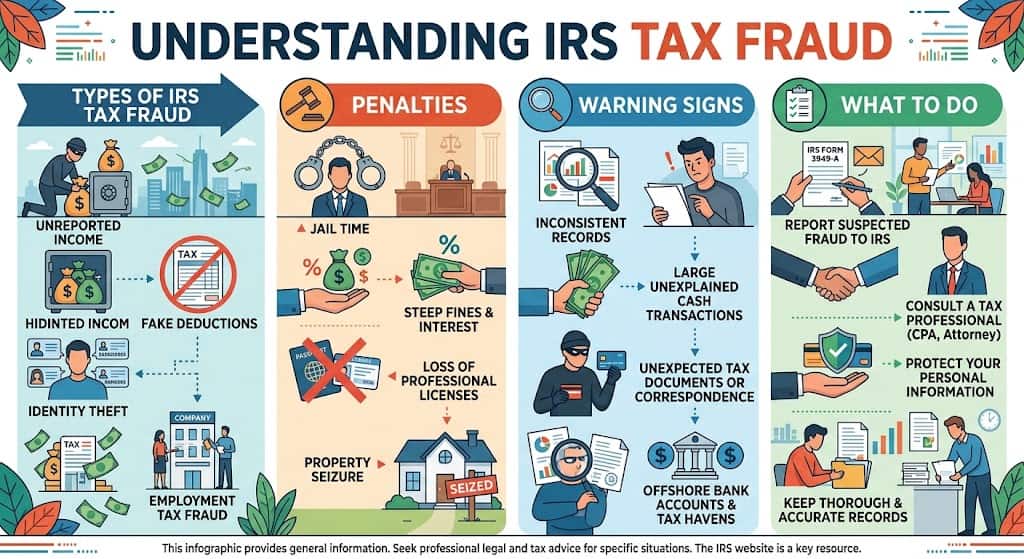
IRS Tax Fraud: Types, Penalties, Warning Signs, and What to Do
11 min read
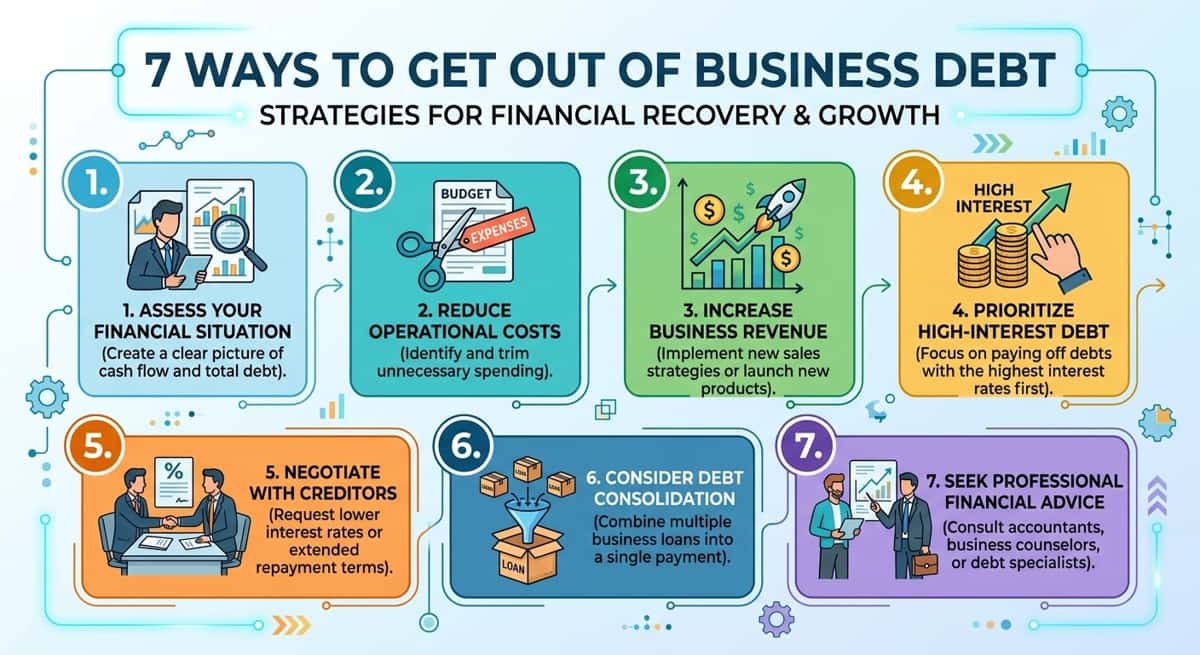
7 Ways To Get Out Of Business Debt
11 min read
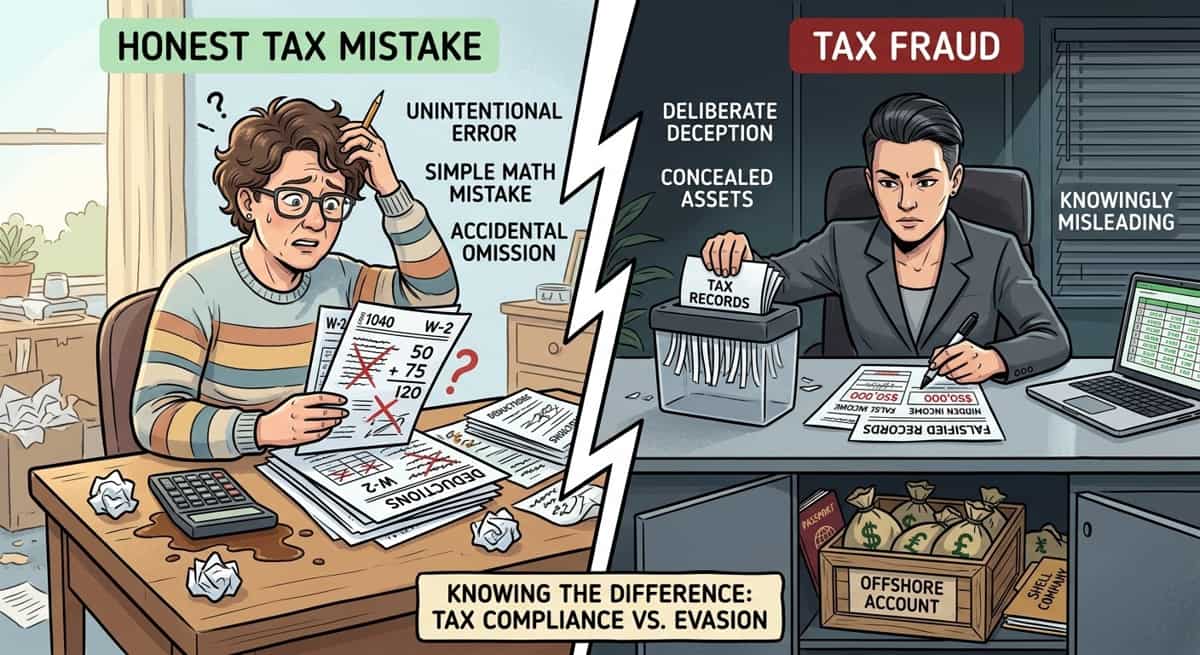
What Is the Difference Between Tax Fraud and an Honest Tax Mistake?
11 min read
Get Your Free Consultation
Speak with a certified debt consultant to explore your options.
Start NowNo obligation • Free consultation