How to Settle Debt With Bank of America in 2026

If you owe Bank of America money and you've fallen behind, here's the short version: Bank of America usually becomes open to settling once an account is about 150 to 180 days late, and settlements typically land somewhere between 30% and 60% of what you owe. That's the headline. The rest of this guide walks you through exactly how to get there.
But there's something else worth saying first. For a lot of South Asian families in the US, the hardest part of this isn't the math, it's making the call. Staying quiet feels safer than admitting there's a problem. The thing is, silence is exactly what costs you the most money and the most stress. It's a step-by-step path so you know what to say, who to talk to, and what to watch out for.
Why Talking About Debt Feels Different - And Why Silence Costs You More
If picking up the phone to talk about a credit card bill feels heavier than it should, you're not imagining it. Researchers who study immigrant communities have noted that many South Asian households carry a strong sense that debt reflects on the whole family's reputation, not just one person's situation. The idea of "what will people think" can be just as loud as the actual bill. That pressure is real, and it's not something to feel embarrassed about.
Here's what helps: the person on the other end of the phone at Bank of America doesn't know your family, your community, or your background. To them, this is one account number among thousands. Negotiating a settlement is a private, ordinary financial conversation the kind banks have every single day. It's not a confession. It's a transaction. The sooner it feels like that to you, the sooner you can actually use the steps below instead of avoiding them.
What "Settling Debt" With Bank of America Actually Means
Settling a debt means you and Bank of America agree that you'll pay a lump sum or sometimes a short payment plan that's less than your full balance, and in exchange, they close the account as "settled" instead of continuing to chase the full amount.
This is different from a few other things you may have heard about:
A hardship program usually lowers your interest rate or minimum payment but still expects you to pay the full balance over time.
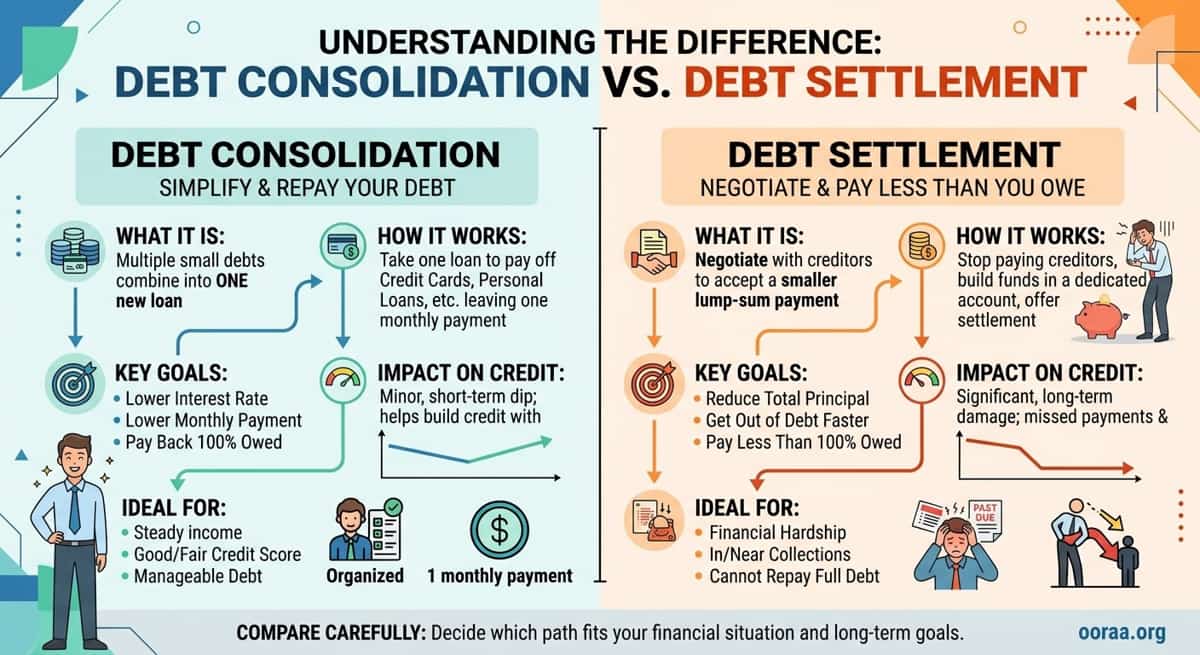
Debt consolidation combines multiple debts into one new loan you're still paying 100% of what you owe, just in a different shape.
Bankruptcy is a legal process that can wipe out debt entirely, but it has much bigger long-term consequences and isn't something to consider lightly.
One honest thing worth saying upfront: settling still shows up on your credit report as a negative mark. It's not a clean fix. But it's generally considered less damaging than letting an account sit unpaid and charged off, and it stops the bleeding both financially and mentally.
Does Bank of America Actually Settle Debt?
Yes. Bank of America does negotiate settlements, but generally only after an account is significantly behind commonly once it's around 150 to 180 days delinquent. If you're currently on payments or only a few weeks late, settlement usually isn't on the table yet.
One detail that matters: Bank of America has not sold off its charged-off debt to outside debt buyers since 2015. That means for many accounts, Bank of America itself or a collection law firm it has assigned the account to still owns the debt and has the authority to negotiate with you directly. Knowing who actually holds your account is the first thing to figure out, because it determines exactly who you need to talk to.
The Bank of America Delinquency Timeline (And When You Have the Most Leverage)
Where your account sits in this timeline changes how much negotiating power you have. Here's roughly how it plays out:
30 to 60 days late: The account gets flagged internally. Bank of America may offer a hardship program at this stage, but they're unlikely to discuss settlement yet they still expect full repayment.
90 to 120 days late: Internal collections efforts pick up. You'll get more calls and letters. Settlement conversations sometimes start here, but the bank's offers tend to be less generous.
Around 150 to 180 days late: This is typically the window of maximum leverage. The account becomes "charge-off eligible," meaning Bank of America is preparing to write it off internally as a loss. Once a bank expects to collect nothing, accepting a partial payment starts looking a lot better to them than it did a few months earlier.
After charge-off: The debt doesn't disappear, you still legally owe it. At this point, it either stays with Bank of America's internal recovery team or gets handed to a third-party collection agency or law firm. You can still settle here, but you'll need to confirm exactly who you're negotiating with.
The short version: the deeper into delinquency you go (without crossing into a lawsuit), the more willing the bank usually is to accept less than the full amount. That's not a loophole, it's simply how the math works for them once they've already counted the debt as a likely loss.
Step-by-Step: How to Negotiate a Bank of America Settlement
Confirm who currently owns the debt. Check your most recent letter or call Bank of America directly to ask whether the account is still with them or has been assigned to a collection agency or law firm.
Pull your latest statement and check your credit report. You want the exact balance, the last payment date, and the account status before you negotiate anything.
Decide your real number before you call. Figure out what lump sum you can actually pay, or what a short 2–3 month payment plan would look like. Don't go into the call without this it's your anchor.
Call Bank of America's recovery or settlement department (the number is usually on your statement or collection letter). If a law firm has already taken over the account, you'll respond to them in writing instead.
Ask directly and simply: "Is this account eligible for a settlement, and what percentage of the balance would you accept as payment in full?" Let them give the first number.
Negotiate down from their opening offer. If they open at 70%, it's reasonable to counter lower prices; many settlements end up in the 30% to 60% range, though this varies by account.
Get the agreement in writing before you pay anything. This is the one step you cannot skip. A verbal "yes" over the phone means nothing if there's a dispute later.
Pay using a traceable method: a bank transfer, cashier's check, or debit card payment, never cash and ask for written confirmation that your balance is now zero and the account is marked settled.
Sample Script for Calling Bank of America About a Settlement
You don't need to memorize anything fancy. Something like this works:
You: "Hi, I'm calling about my account ending in [last 4 digits]. I've fallen behind, and I'd like to ask about settling this account for less than the full balance. Is that something you can help me with today?"
Rep: [explains options or gives a number]
You: "I appreciate that. Based on what I can actually afford, I'd like to offer [your number] as a final payment to close this account. Can we get that in writing?"
If they say no the first time, that's not the end of the conversation. You can ask to speak with a supervisor, or simply call back another day. Sometimes a different representative has more flexibility, especially as the account gets closer to charge-off.
How Much Will Bank of America Settle For?
In practice, settlements commonly fall somewhere between 30% and 60% of the original balance. Where you land within that range depends on a few things:
How delinquent the account is closer to charge-off generally means more room to negotiate
Whether you can document a real hardship (job loss, medical bills, reduced income)
Lump sum vs. payment plan a single upfront payment usually gets a better discount than a plan spread over months
Who owns the debt Bank of America directly, or a law firm/collection agency it has assigned the account to
How close the debt is to your state's statute of limitations older debts nearing that deadline sometimes settle for less
None of these numbers are guaranteed. Every account and every conversation is a little different, so treat these ranges as a realistic expectation, not a promise.
What Happens to Your Credit Score and Taxes After Settling
Your credit report: A settled account still shows up as a negative mark. It will say something like "settled" or "paid for less than full balance" rather than "paid in full." That said, it's generally viewed as a step up from an account that's sitting unpaid or charged off with no resolution. Like most negative marks, it can stay on your credit report for up to seven years from the original delinquency date, though its impact on your score tends to fade well before then.
Your taxes: If Bank of America forgives $600 or more of your debt, they're required to send you a Form 1099-C, and the IRS generally treats that forgiven amount as taxable income. There are some exceptions for example, if you were technically insolvent at the time of settlement but figuring out whether one applies to you isn't something to guess at. This is exactly the kind of detail worth bringing to a tax professional rather than handling on your own, since getting it wrong can mean an unexpected tax bill later.
Common Mistakes That Hurt Your Settlement
A few things tend to trip people up, especially the first time around:
Paying before getting the agreement in writing. If something goes wrong, you have no proof of what was promised.
Volunteering too much financial information. You don't need to explain your entire financial picture. The more the bank thinks you can pay, the less room you'll have to negotiate.
Not confirming the exact wording on your account status. "Settled" and "paid in full" are not the same thing, and it matters for future lenders.
Waiting too long and missing the charge-off window. Leverage shifts once an account moves to a lawsuit stage instead of simple collections.
Assuming silence makes the problem go away. It doesn't. Ignoring calls and letters can eventually lead to a lawsuit, and that's a much harder position to negotiate from especially before your state's statute of limitations on the debt has expired.
When to Get Help Instead of Negotiating Alone
Plenty of people handle a straightforward credit card settlement on their own, and there's no need to pay anyone else if that's your situation. But it's worth bringing in outside help if:
You've already been served with a lawsuit
You're juggling settlements with multiple creditors at once
You'd feel more confident having these conversations in a language you're more comfortable in, or with someone translating the back-and-forth for you
The balance is large enough that a mistake would be costly
A nonprofit credit counselor (look for ones affiliated with the NFCC) is a solid option. One thing to be careful of: for-profit "debt relief" companies that promise to settle everything for a flat fee. Some are legitimate, but the industry has its share of companies that charge upfront fees and deliver very little. If you go this route, look them up carefully before signing anything.
Key Takeaways
Bank of America typically opens the door to settlement once an account is 150–180 days delinquent, and most settlements fall between 30% and 60% of the balance. Always confirm who owns your debt, get any agreement in writing before paying, and expect both a credit report mark and possibly a 1099-C tax form afterward. None of this requires breaking your family's trust or anyone else's approval; it's a private financial decision you're allowed to make on your own terms.
Ready to Get Started?
Get a free consultation with a certified debt consultant to see if debt settlement is right for you.
Get Free ConsultationAbout the Author
Bhupinder Bajwa
.
Related Articles
7 Ways To Get Out Of Business Debt
11 min read
What Debts Can Be Included in Debt Relief?
13 min read

Debt Settlement for $20,000 in Credit Card Debt: What to Expect
11 min read
Is 639 A Good Credit Score? How It Affects Loans, Credit Cards And Ways To Improve It
12 min read
What’s The Difference Between Debt Consolidation And Debt Settlement?
12 min read
Can You Consolidate Debt With a Low Credit Score?
11 min read
Get Your Free Consultation
Speak with a certified debt consultant to explore your options.
Start NowNo obligation • Free consultation