Converting Chapter 13 To Chapter 7: What You Should Know

When you first started your Chapter 13 bankruptcy plan, you did it with the best intentions. You committed to a three-to-five-year plan to pay back what you owed, hoping it would provide a clear path forward. But life rarely stays predictable.
Perhaps a sudden job loss, a medical emergency, or a downturn in your family business completely changed your financial reality. For many South Asian immigrants living in the United States, unexpected pressures like helping parents or extended family back home during a crisis can also stretch a tight monthly budget past its breaking point.
If you are finding it impossible to keep up with your Chapter 13 payments, you are not alone, and you have not failed. The legal system actually has a built-in safety valve for this exact situation called a conversion.
Simply put, a conversion allows you to switch from a structured repayment plan (Chapter 13) to a debt erasure plan (Chapter 7). Instead of struggling for years to pay off your debts, converting can allow you to wipe out eligible debts like credit cards and medical bills in just a few months. This guide will walk you through exactly how the process works, who qualifies, and how it can help you protect your family's future.
What Does It Mean to Convert From Chapter 13 to Chapter 7?
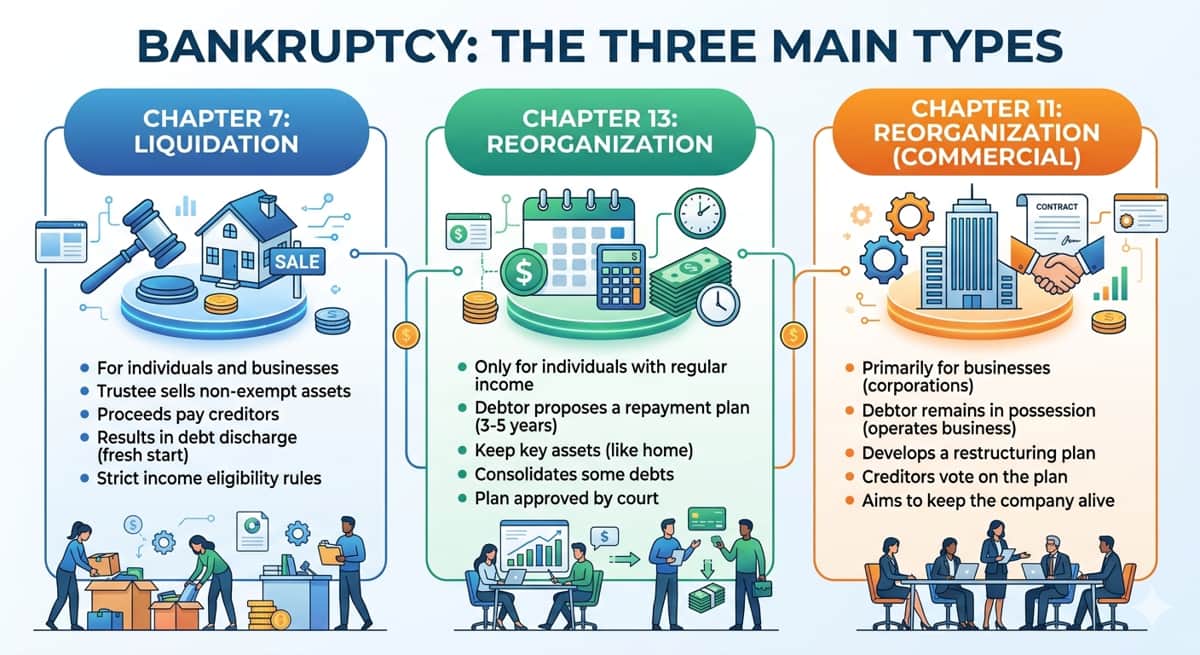
When you file Chapter 13 bankruptcy, you agree to a structured repayment plan typically lasting three to five years where you pay back a portion of your debts every month. It's designed for people who have a steady income and want to protect their assets, like a home or a car, while catching up on what they owe.
Chapter 7 works differently. Instead of a long repayment plan, most of your eligible debts are wiped out usually within three to six months. It's faster, but the tradeoff is that a court-appointed trustee may sell certain non-exempt assets to repay creditors.
Converting from Chapter 13 to Chapter 7 means formally asking the bankruptcy court to switch your case from one chapter to the other. It's not as simple as just opting out, it's a legal process with specific requirements you'll need to meet.
For many South Asian families, Chapter 13 feels safer because it helps protect the home and other valuables. But if your income has dropped or your monthly payments have become impossible to manage, Chapter 7 may actually give you faster, more complete relief.
Who Is Eligible to Convert Chapter 13 to Chapter 7?
Most people can convert from Chapter 13 to Chapter 7 if they qualify under Chapter 7 bankruptcy rules. Eligibility typically requires passing the means test, which compares your income to state median income levels, and meeting other legal requirements. The court may also review your case for good faith and compliance with bankruptcy laws.
The Means Test
The biggest factor is your income. To qualify for Chapter 7, your household income generally needs to fall below your state's median income level. If it's above that threshold, you may still qualify but you'll need to pass what's called the "means test," which looks at your monthly expenses and how much disposable income you actually have left after covering basic living costs.
This matters a lot for South Asian households where multiple family members contribute to the income of a spouse, an adult child, or even a relative living in the same home. Combined household income can push you over the limit even if individually no one earns much. An experienced bankruptcy attorney can help you run the numbers accurately.
Other Eligibility Blockers
There are a few situations that can disqualify you:
If a previous Chapter 7 case was dismissed within the last 180 days due to fraud, misconduct, or violating court orders, you won't be able to convert
If the court believes you're filing in bad faith meaning you're misrepresenting your finances or gaming the system your conversion request can be denied
If you're unsure where you stand, a quick consultation with a bankruptcy attorney can give you a clear picture of your options.
Reasons You Might Want to Convert From Chapter 13 to Chapter 7
When you first filed Chapter 13, your financial situation may have looked very different. Life changes sometimes quickly and without warning and what made sense then may no longer be manageable today.
Here are some of the most common reasons people choose to convert:
Job loss or reduced income - A layoff, business slowdown, or reduced hours can make your monthly repayment plan impossible to sustain. This is especially common among South Asian small business owners and those working in the service, hospitality, or retail industries
Unexpected medical bills - A serious illness or family health emergency can drain savings fast, leaving nothing left for plan payments
Family financial emergencies - Whether it's supporting aging parents, sending money back home, or covering a sudden crisis, these responsibilities don't pause because you're in bankruptcy
You simply can't keep up - Missing Chapter 13 payments can lead to your case being dismissed entirely, leaving you with no protection at all
You want a faster resolution - Chapter 7 can discharge most debts in just three to six months, giving you a real chance to start fresh sooner
It's worth saying clearly: choosing to convert is not giving up. It's making a smart, legal decision based on your real circumstances. Many people who convert find it gives them the breathing room they needed all along.
What Happens to Your Assets When You Convert?
This is one of the most important things to understand before you decide to convert and it's where getting proper legal advice really matters.
When your case converts to Chapter 7, the bankruptcy court doesn't look back at what you owned when you first filed Chapter 13. Instead, it looks at what you own on the date of conversion. That means any assets you acquired during your Chapter 13 plan savings you built up, a car you purchased, or money you received could now be part of your bankruptcy estate.
What about your home and other valuables?
Each state has its own exemption laws that protect certain assets from being sold to pay creditors. The homestead exemption, for example, can protect some or all of the equity in your home. This is especially relevant if you own property in states with large South Asian communities California, Texas, New York, and New Jersey all have exemption rules worth understanding carefully.
However, any assets that fall outside your state's exemption limits are considered non-exempt. A Chapter 7 trustee has the authority to sell those assets to repay what you owe.
This is not a step to navigate alone. A licensed bankruptcy attorney can review exactly what you own, what's protected in your state, and what's at risk before you make any decisions.
How to Convert From Chapter 13 to Chapter 7: Step-by-Step
If you've decided that converting makes sense for your situation, here's a clear breakdown of how the process works.
Step 1: File a Notice of Conversion - You'll submit an official document Form B 1017 with your bankruptcy court, formally requesting to convert your case from Chapter 13 to Chapter 7. This is the document that sets everything in motion.
Step 2: Pay the Conversion Fee - There is a court filing fee to convert your case. As of recent court schedules, this is approximately $25 but confirm the current amount with your attorney or local bankruptcy court, as fees can vary.
Step 3: Qualify Under the Means Test - The court will assess whether your income makes you eligible for Chapter 7. If your household income falls below your state's median or if your disposable income is low enough you'll clear this step.
Step 4: Submit Updated Financial Documents - You'll need to provide current financial paperwork, including updated schedules of your assets, debts, income, expenses, and a statement of financial affairs. These must reflect your situation at the time of conversion, not when you originally filed.
Step 5: Attend the 341 Meeting of Creditors - A new meeting will be scheduled where a trustee reviews your case. Creditors can attend and ask questions, though many don't. This is standard procedure not something to fear.
Step 6: Receive Your Discharge - Once everything is reviewed and approved, most people receive their discharge within three to six months of conversion marking a legal end to most of their eligible debts.
Your attorney will guide you through each of these steps. This is not a process to navigate on your own. Small mistakes can cause delays or put your assets at risk.
Potential Risks and Downsides of Converting to Chapter 7
Converting to Chapter 7 can be the right move but it's important to go in with a full picture. Here are some things to weigh carefully before you decide.
You could lose certain assets. Any property that isn't protected under your state's exemption laws can be sold by the trustee to repay creditors. This includes savings, a second vehicle, or personal valuables. For many South Asian families, gold jewelry holds deep cultural and sentimental value. It's worth knowing upfront that depending on your state's exemption limits, it may not be fully protected.
Not all debts go away. Chapter 7 does not discharge every type of debt. Student loans, recent tax debts, child support, and alimony will still be owed after your case closes.
Your credit report takes a longer hit. A Chapter 7 bankruptcy stays on your credit report for 10 years, compared to 7 years for Chapter 13. This can affect future loan applications, housing, and even some job opportunities.
Homeowners behind on mortgage payments face real risk Unlike Chapter 13, Chapter 7 doesn't give you a structured way to catch up on missed mortgage payments. If you're behind, foreclosure remains a possibility.
None of this means conversion is the wrong choice, it simply means the decision deserves careful thought and the right legal guidance.
Chapter 13 vs. Chapter 7: Quick Comparison Table
Sometimes the clearest way to make a decision is to see everything side by side. If you're still weighing your options, this table gives you a quick snapshot of how the two chapters compare across the factors that matter most.
Chapter 13 | Chapter 7 | |
Duration | 3 to 5 years | 3 to 6 months |
Asset Protection | Stronger - keeps home, car, valuables | Limited - non-exempt assets may be sold |
Eligibility | Requires regular income | Must pass the Means Test |
Debt Discharge | Partial - repay then discharge remainder | Most unsecured debts discharged fully |
Credit Impact | Stays on credit report for 7 years | Stays on credit report for 10 years |
Best For | Those with income who want to protect assets | Those with little income or assets needing a fast fresh start |
No single option is right for everyone. Your income, your assets, and your family's needs all play a role in which path makes more sense for you.
When to Speak With a Bankruptcy Attorney
Converting from Chapter 13 to Chapter 7 is not a failure. It is a practical solution when your financial situation has changed and you can no longer keep up with your repayment plan.
Chapter 7 may eliminate many debts and reduce the stress of overwhelming monthly payments. This can free up money for essential expenses such as housing, food, and your family's future needs.
Before making a decision, speak with a bankruptcy attorney or They can review your situation, explain your options, and help you choose the best path forward.
Ready to Get Started?
Get a free consultation with a certified debt consultant to see if debt settlement is right for you.
Get Free ConsultationAbout the Author
Bhupinder Bajwa
.
Related Articles
What Debts Can Be Included in Debt Relief?
13 min read
How Much Tax You Pay On Lawsuit Settlements
9 min read

Filing For Business Bankruptcy? You Need To Know This First
10 min read
Is Bankruptcy Discharge Public Record?
9 min read
Bankruptcy: What Are The Three Main Types?
13 min read
The Pros And Cons Of Filing Chapter 7 Bankruptcy
14 min read
Get Your Free Consultation
Speak with a certified debt consultant to explore your options.
Start NowNo obligation • Free consultation