Things To Keep In Mind If You are Looking To Consolidate Debt
Debt consolidation means combining several debts like credit cards or personal loans into one single payment, usually with a lower interest rate. It can simplify your finances and save you money, but only if you understand exactly what you're signing up for first.
If you're a South Asian immigrant or first-generation American managing debt, this decision often comes with extra layers. Maybe you're sending money home every month to support your parents. Maybe your credit history in the US is still thin because you only moved here a few years ago. Maybe debt isn't something your family talks about openly, so you're figuring this out mostly on your own.
What Is Debt Consolidation, Exactly?
Debt consolidation is when you combine multiple debts into a single new loan or credit account, ideally with a lower interest rate, so you make one payment instead of several. The goal is to pay less in interest and make your monthly bills easier to track.
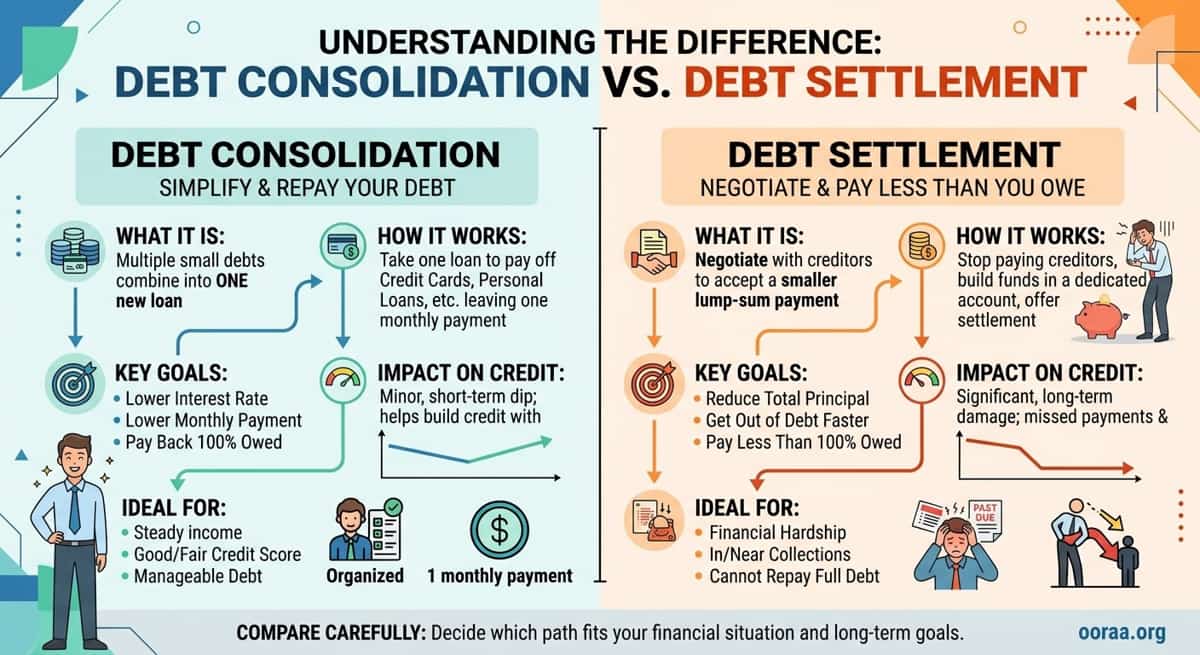
It's easy to confuse this with debt settlement or bankruptcy, but they're not the same thing.
Debt settlement means negotiating with creditors to pay back less than you owe, which can seriously damage your credit.
Bankruptcy is a legal process that wipes out or restructures debt but stays on your credit report for years.
Debt consolidation, on the other hand, doesn't reduce what you owe, it just restructures how you pay it back. The two most common ways people do this are a debt consolidation loan or a balance transfer credit card.
Is Debt Consolidation a Good Idea for You?
Debt consolidation can genuinely help if your main problem is high interest rates spread across multiple accounts. Combine into one lower-rate payment can save you real money and reduce stress. But it won't fix the problem if the real issue is that you're spending more than you earn each month.
Here's a simple way to think about it:
It might be a good fit if:
You have steady income and can reliably make one fixed monthly payment
Your current debts carry high interest rates (think credit cards above 20%)
You're disciplined about not running up new credit card balances afterward
It might not be the right move yet if:
You're not sure why the debt built up in the first place
You'd be tempted to use your now-empty credit cards again
Your income is irregular or unstable right now
Check Your Total Debt-to-Income Picture First
Your debt-to-income ratio (DTI) compares how much you owe each month to how much you earn. Lenders and credit counselors use this number to decide if consolidation will actually make your payments more manageable, or just shuffle the same problem around.
Here's where it gets a little different for many South Asian households: a US lender's DTI calculation only looks at debts that show up on your credit report, credit cards, loans, your car payment. It won't include the $300 or $500 you send to your parents every month, or what you're setting aside for a sibling's wedding back home. Those obligations are real and they affect what you can actually afford, even if no lender ever asks about them. Before you consolidate anything, write down your true monthly numbers including remittances and family support so you know what you can realistically commit to.
Difference Between Secured and Unsecured Consolidation Options
A secured consolidation loan is backed by something you own, like your home or a savings account, which usually gets you a lower interest rate but puts that asset at risk if you can't pay. An unsecured loan doesn't require collateral, but the interest rate is typically higher because the lender is taking on more risk.
Loan Type | Collateral Required | Typical APR Range | Risk Level |
Secured personal loan | Yes (savings, home equity) | 6–12% | Lower rate, but you risk losing the asset |
Unsecured personal loan | No | 10–25% | Higher rate, but nothing pledged as collateral |
Home equity loan/HELOC | Yes (your home) | 7–11% | Lowest rates, but your home is on the line |
Balance transfer credit card | No | 0% intro, then 18–29% | Good short-term, risky if not paid off in time |
If you're not 100% confident you can keep up with payments, think hard before putting your home or savings on the line just to get a slightly better rate.
Compare a Debt Consolidation Loan vs. a Balance Transfer Card
A balance transfer card works best for smaller debts you can realistically pay off within the 0% introductory period, usually 12 to 21 months, and it generally requires good credit to qualify. A fixed-rate consolidation loan tends to be the safer choice for larger balances, since it locks in one predictable payment over a set number of years.
The catch with balance transfer cards is the fee most charges 3% to 5% of the amount you transfer, right up front. And if you don't pay off the full balance before the 0% period ends, the remaining amount jumps to a regular interest rate, which can be just as high as what you started with, sometimes higher. A consolidation loan won't offer 0% interest, but it won't surprise you with a rate spike either, since the rate and payoff date are fixed from day one.
Understand How It Will Affect Your Credit Score - Especially With a Thin File
Debt consolidation can lower your credit score slightly at first, because applying for a new loan or card creates a hard inquiry and adds a new account. Over time, though, it can actually help your score, since it usually lowers your credit utilization and gives you one on-time payment to manage instead of several.
This matters more if you don't have a long credit history in the US yet. When your credit file is thin, say, you've only had credit here for a year or two, a single hard inquiry or new account carries more weight than it would for someone with 15 years of credit history, simply because there's less other data to balance it out. If you're planning to apply for a mortgage, a car loan, or anything tied to a visa or green card process in the next several months, it's worth timing your consolidation carefully so it doesn't bump your score right when you need it most.
Read the Full Terms Before You Sign Anything
Before you agree to any consolidation loan, check the APR (and whether it's fixed or variable), any origination fees taken out of your loan upfront, prepayment penalties if you pay it off early, and how many years you'll be repaying it.
Here's the trap a lot of people fall into: a longer loan term often means a lower monthly payment, which feels like a win. But stretching the same debt over more years usually means paying significantly more in total interest, even at a lower rate. Don't just ask "what's my new monthly payment?" Ask "what's the total dollar amount I'll pay back, start to finish?" That single question reveals whether a deal is actually good or just looks good on the surface.
Consider Nonprofit Credit Counseling Before a Loan
A nonprofit credit counseling agency, especially one certified by the National Foundation for Credit Counseling (NFCC), can set you up with a Debt Management Plan (DMP) that consolidates your payments without taking on a new loan at all. They negotiate directly with your creditors, often lowering your interest rates in the process.
This route can be a better fit if your family is uncomfortable taking on new interest-based debt for cultural or religious reasons. For some South Asian families, particularly those who follow Islamic finance principles that discourage interest-bearing loans, a counseling-based plan that works with existing debt rather than adding a new loan on top of it may sit better than a traditional consolidation loan. It's worth exploring before committing to anything that adds a new interest-bearing account.
Factor in Family and Cross-Border Financial Obligations
The financial picture US lenders see is rarely the whole picture for South Asian households. Many families are also managing remittances to parents overseas, contributing to a joint family budget, or saving for a major event like a wedding, none of which shows up on a credit report, but all of which affects what you can truly afford each month.
Consider a household carrying $8,000 in credit card debt while also sending $400 home every month to support aging parents. On paper, a debt consolidation loan might look perfectly affordable based on US income alone. But once you add that monthly remittance back into the equation, the "affordable" payment might actually stretch the budget too thin. Before consolidating, sit down and map out everything you're financially responsible for, not just what shows up on your credit report so the payment you commit to is one you can actually sustain.
When Debt Consolidation Isn't Enough?
If your debt-to-income ratio is still too high even after consolidating, or you're still struggling to cover minimum payments, or you keep relying on credit cards just to cover everyday essentials, consolidation alone probably won't solve the underlying problem.
In those cases, it may be time to look at other paths, like a more structured debt management plan, debt settlement, or in some cases bankruptcy. These are bigger decisions with real legal and financial consequences, so this isn't something to figure out from a blog post alone; a nonprofit credit counselor can walk you through what actually fits your situation.
How to Get Started Safely
Pull your free credit reports from all three bureaus at AnnualCreditReport.com so you know exactly what you owe and to whom.
Calculate your true monthly obligations, including remittances and family support, not just what appears on your credit report.
Get quotes from at least two or three options: a nonprofit credit counselor and a couple of licensed lenders before deciding.
Compare total repayment cost, not just the monthly payment, across every offer you're considering.
Verify any company through the CFPB complaint database and Better Business Bureau before paying anything.
Conclusion: Taking Control of Your Financial Future in the US
Navigating the complex US credit system is difficult enough without carrying the heavy emotional weight of cultural stigma. In many South Asian households, debt is mistakenly viewed as a personal or familial failure, a blemish to be hidden away. But the reality of living, working, and building a life in America is that credit is a tool, and structural debt is a temporary financial challenge, not a reflection of your character.
Choosing to consolidate your debt isn't a sign of defeat; it is a strategic, proactive business decision for your household. It protects your future immigration transitions, preserves your ability to support family back home, and shields your peace of mind.
If self-directed consolidation feels out of reach due to strict visa restrictions or high debt loads, you don't have to walk this path alone. Reach out to a certified non-profit credit counseling agency .They offer professional, confidential guidance to help you restructure your finances safely, legally, and with the dignity you deserve.
Ready to Get Started?
Get a free consultation with a certified debt consultant to see if debt settlement is right for you.
Get Free ConsultationAbout the Author
Bhupinder Bajwa
.
Related Articles
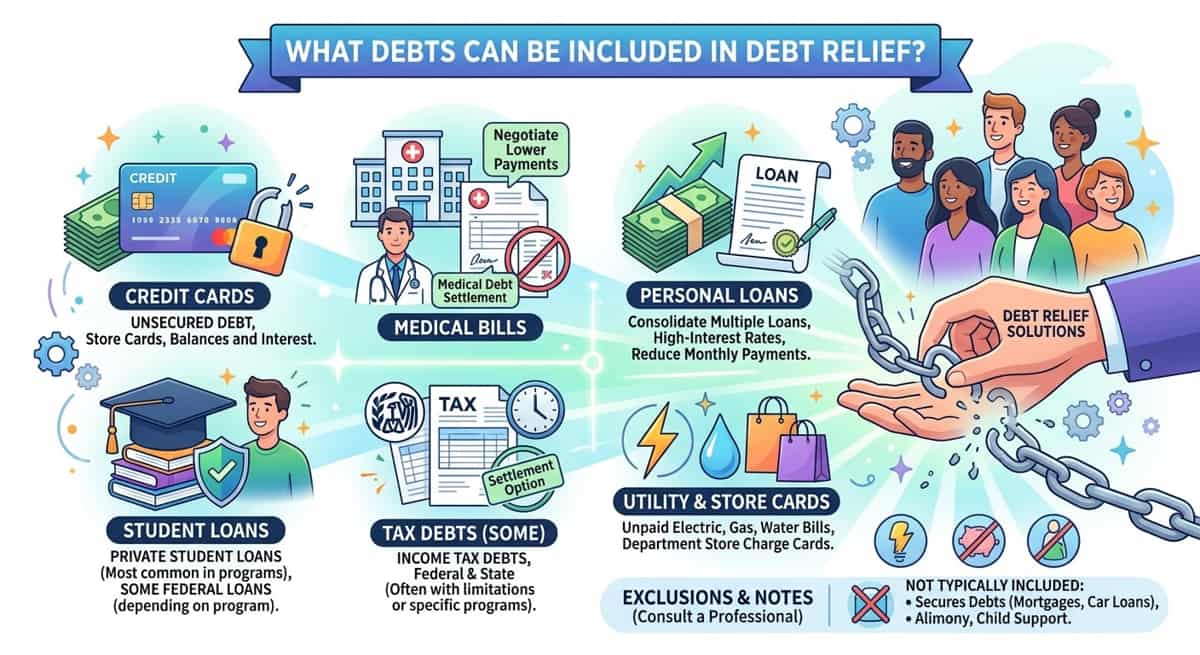
What Debts Can Be Included in Debt Relief?
13 min read
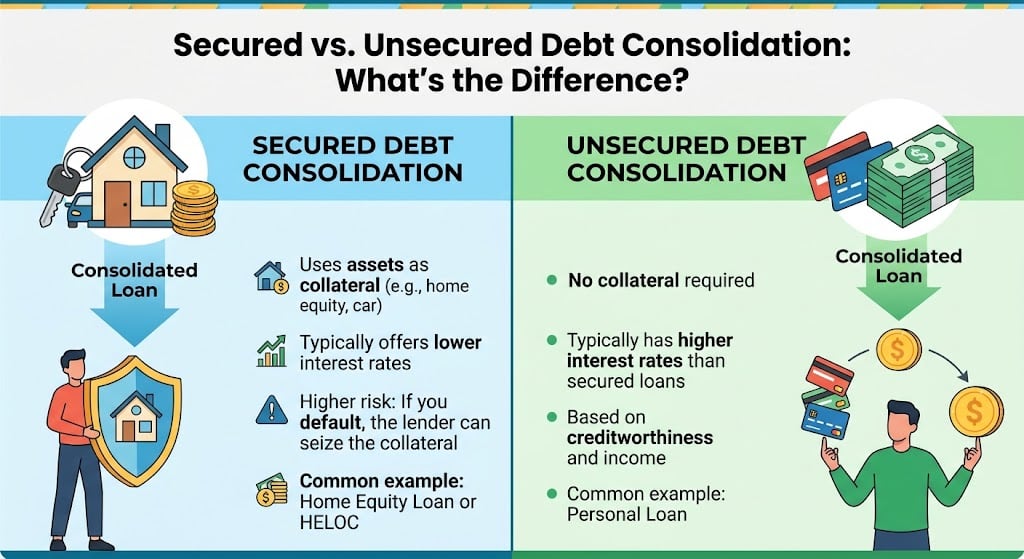
Secured vs Unsecured Debt Consolidation: What's the Difference?
8 min read
What’s The Difference Between Debt Consolidation And Debt Settlement?
12 min read
Debt Consolidation vs. Debt Relief: Which Option Fits Your Situation?
10 min read
Can You Consolidate Debt With a Low Credit Score?
11 min read
When a Debt Consolidation Loan Truly Solves the Problem
11 min read
Get Your Free Consultation
Speak with a certified debt consultant to explore your options.
Start NowNo obligation • Free consultation