4 Reasons Why Filing for Bankruptcy Should Be Your Last Option
If you're lying awake at night doing math in your head rent, credit card minimums, the money you send home, your child's school fees you're not alone. Many South Asian families in the US carry financial pressure quietly, because talking about debt still feels taboo in our communities. Somewhere in your research, the word "bankruptcy" probably came up as a way out. It's a real legal option, and for some people, it's the right one. But it's also permanent, public, and life-changing in ways that aren't always obvious at first glance. Before you make that decision, it's worth understanding exactly what you'd be signing up for and what else is available to you first.
Bankruptcy can erase certain debts, but it also stays on your credit report for up to 10 years, can affect major life plans like buying a home, and carries emotional weight in many South Asian households. In most cases, it makes sense to try debt consolidation, credit counseling, or direct negotiation with creditors first and treat bankruptcy as the final step, not the first one.
What Does Filing for Bankruptcy Actually Mean?
Bankruptcy is a legal process, filed through a US federal court, that helps people who can no longer keep up with their debts. When you file, a court-appointed official called a trustee reviews your finances and either helps you sell off certain assets to pay creditors or sets up a repayment plan. At the end of the process, some of your remaining debts may be "discharged," meaning you're no longer legally required to pay them.
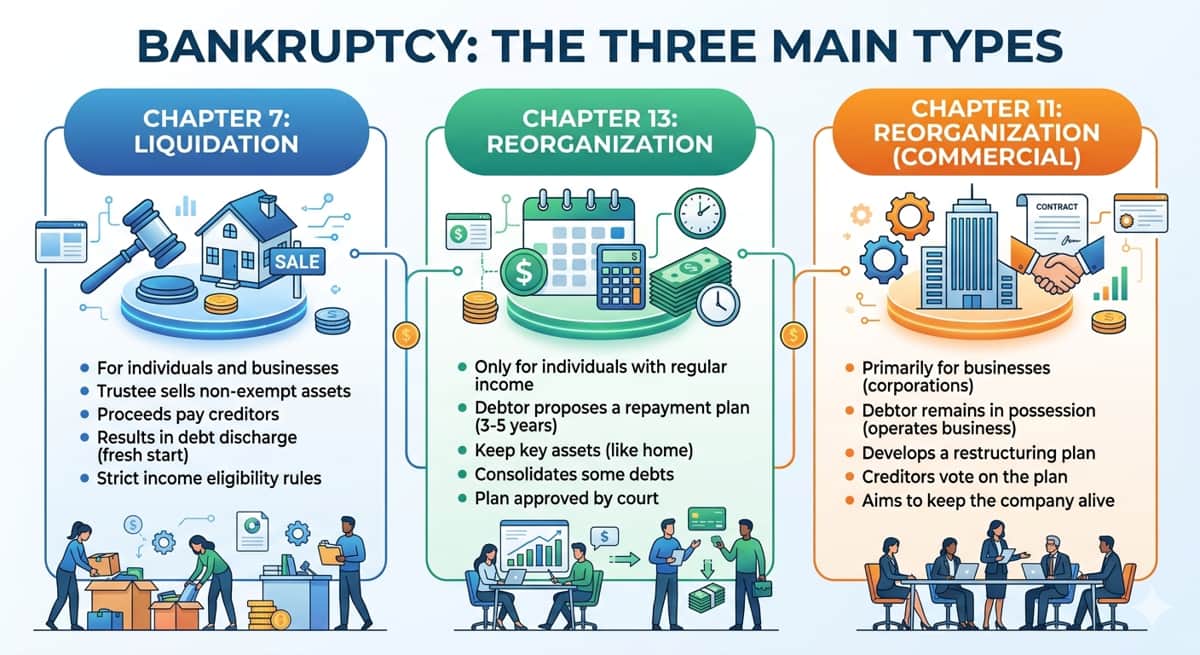
Most individuals file under one of two chapters. Chapter 7 typically clears unsecured debts like credit cards fairly quickly, but may require giving up certain property. Chapter 13 lets you keep your assets while repaying debts over three to five years. Every situation is different, and only a licensed bankruptcy attorney can tell you which one if either fits yours.
Why Bankruptcy Often Feels Like the Only Option for South Asian Families
For a lot of South Asian households, debt doesn't happen in isolation. Money is often shared between spouses, parents, siblings, even across countries. You might be paying off a loan you took out to help a family member, sending remittances back home every month, or covering costs for aging parents while also trying to build your own life here. On top of that, many first-generation immigrants arrive with little exposure to the US credit system, no credit history, no understanding of how interest compounds, and no family playbook for what to do when the bills start piling up.
Then there's the silence around it. Debt is often treated as something to hide, not something to talk about, even with close family. That isolation can make bankruptcy feel like the only door left, simply because no one talked through the other options with you. But there almost always are other options you just may not have heard about yet.
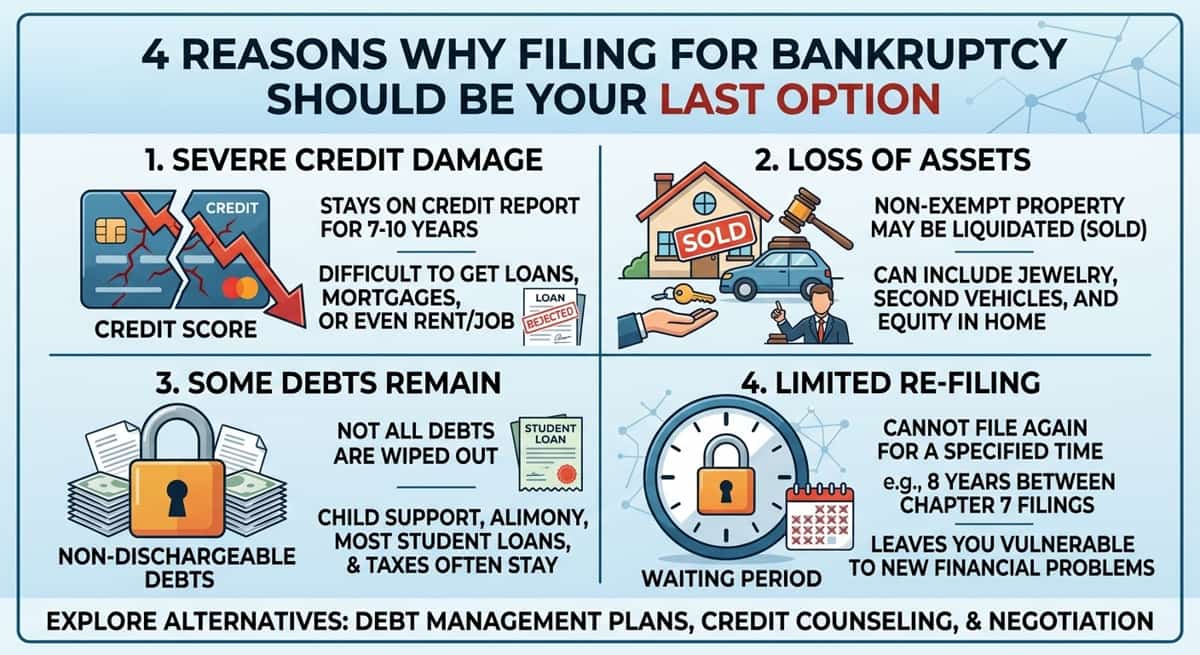
4 Reasons Why Filing for Bankruptcy Should Be Your Last Resort
1. Long-Term Damage to Your Credit History
Bankruptcy stays on your credit report for 7 to 10 years, depending on the chapter you file under. That's not a short-term setback, it's nearly a decade. During that time, it can be harder to qualify for credit cards, auto loans, or personal loans, and if you do qualify, you'll likely face much higher interest rates.
For South Asian families who are often trying to build credit from scratch after moving to the US, this can set that progress back significantly. Landlords and some employers also check credit history, so bankruptcy can quietly follow you into apartment applications and job offers, not just loan approvals. Rebuilding trust with lenders after a bankruptcy takes real time and deliberate effort years of on-time payments, secured credit cards, and patience. Compare that to alternatives like debt consolidation, which may lower your credit score temporarily but don't leave the same lasting mark.
2. It Can Complicate Major Life and Financial Goals
Many South Asian families place enormous value on milestones like owning a home, starting a business, or helping their children get a head start financially. Bankruptcy can delay all of these. Mortgage lenders typically require a waiting period after bankruptcy before they'll even consider your application, often two to four years, sometimes longer. Business loans become harder to secure too, which matters if entrepreneurship has always been part of your family's plan.
If you're not a US citizen, you may also wonder whether bankruptcy affects your immigration status or future visa or green card applications. This is an important and valid concern but it's not something to guess about. Speak with a qualified immigration attorney who can look at your specific case, since the answer depends on your individual status and history.
3. Emotional and Social Stigma Within the Community
This part doesn't show up on any credit report, but it's real. In many South Asian communities, debt and bankruptcy carry a weight that goes beyond finances; it can feel tied to family honor, reputation, or even marriage prospects. Some people worry about what relatives will think, or what will be said at the next family gathering.
That stigma can make the decision to file feel heavier than it should, but it can also work the other way: fear of judgment sometimes pushes people toward bankruptcy simply because they're avoiding the discomfort of asking for help or renegotiating debt in a way others might notice. Whatever path you choose, you deserve to make that decision based on your actual financial picture not on assumptions about what people will say. And if shame is part of what's driving this decision, know that struggling with debt doesn't make you irresponsible. It makes you human.
4. Alternatives Often Preserve More of Your Assets and Relationships
Bankruptcy can affect jointly held property, cosigned loans, and even relationships with creditors you may want to work with again someday. If you've cosigned a loan for a sibling or parent common in many South Asian families your bankruptcy filing can directly impact their finances too, not just yours.
Alternatives like debt consolidation or negotiated settlements tend to be more contained. You keep more control over which debts get addressed and how, and you're less likely to put a family member's credit or property at risk in the process. That's often the biggest reason financial counselors recommend trying every other option before bankruptcy; it doesn't just affect you, it can ripple out to the people you're financially connected to.
Debt Relief Alternatives to Explore Before Filing
Nonprofit Credit Counseling
Nonprofit credit counseling agencies, many accredited by the National Foundation for Credit Counseling (NFCC), offer free or low-cost consultations to review your full financial picture. A counselor can help you build a realistic budget and may set up a debt management plan that consolidates payments and reduces interest rates often within weeks, not months.
Debt Consolidation Loans
A debt consolidation loan combines multiple debts into a single monthly payment, ideally at a lower interest rate than what you're currently paying across several cards or loans. This won't erase your debt, but it can make it more manageable and easier to track, especially if you're juggling payments to several creditors at once.
Debt Settlement Programs
The debt settlement program involves negotiating with creditors to pay a reduced lump sum instead of the full balance owed. It can lower your total debt, but it usually requires stopping payments temporarily, which can hurt your credit short-term and may involve fees. It's worth researching settlement companies carefully before signing up, since not all of them operate the same way.
Direct Negotiation With Creditors
You don't always need a third party. Many creditors, credit card companies, hospitals, even some lenders are willing to negotiate directly, especially if you've hit a temporary hardship like job loss or medical bills. A simple phone call explaining your situation can sometimes lead to a lower interest rate, a payment plan, or a reduced balance.
Community & Family-Based Financial Planning
Some of the most effective tools already exist within South Asian communities. Rotating savings groups sometimes called committees, chit funds, or similar names depending on your background allow families to pool and access money without relying on high-interest credit. Holding an honest, judgment-free conversation with close family about shared financial goals can also relieve pressure that's been building silently for years. These approaches don't replace professional advice, but they can be a meaningful part of a bigger plan.
When Bankruptcy Might Still Be the Right Choice
None of this means bankruptcy is never the answer. If your debt is overwhelming compared to your income, if you're facing wage garnishment or repeated lawsuits from creditors, or if you've already tried consolidation and settlement without success, bankruptcy may genuinely be the most responsible path forward. It exists as a legal protection for exactly these situations, and using it isn't a personal failure it's a tool the law provides for a reason.
The key is making sure you've explored what else is available first, with a full understanding of the trade-offs, rather than filing out of panic, shame, or lack of information. A conversation with both a credit counselor and a bankruptcy attorney can help you see clearly whether this is truly your best option.
How South Asian Families Can Build a Healthier Relationship With Debt
Building financial stability often starts with small, consistent habits. If you're new to the US credit system, a secured credit card or credit-builder loan can help establish history safely, even with a small starting limit. It also helps to separate remittances from your monthly budget as a fixed line item, rather than an afterthought this makes it easier to see what you can realistically save or invest here.
Perhaps most importantly, consider opening up the conversation about money within your family, even if it feels uncomfortable at first. Many financial problems grow larger simply because they were never discussed early enough. A short, honest conversation about shared expenses, debt, or savings goals even once a year can prevent a lot of stress down the road, for you and for the next generation.
Steps to Take Before Considering Bankruptcy
Get a free consultation with an NFCC-accredited nonprofit credit counselor to review your full financial situation.
List every debt you owe, including interest rates, so you can see the full picture clearly.
Call your creditors directly and ask about hardship programs or reduced payment plans.
Compare debt consolidation options, including loans and credit union programs.
Research debt settlement companies carefully, checking reviews and complaint records before signing anything.
Talk to a bankruptcy attorney for a consultation, even if you're not sure you'll file, so you understand your options clearly.
Involve trusted family, if relevant, especially if cosigned debts or shared property are involved.
Final Thoughts
Debt can feel isolating, especially when cultural expectations make it hard to talk about openly. But you have more options than it might seem right now, and reaching out for help whether that's a free credit counseling session or an honest conversation with family is not a sign of failure. It's a sign that you're taking your financial future seriously.
If bankruptcy does turn out to be the right step for you, that's okay too. Just make sure it's a decision you make with full information, not out of fear or silence. Consider speaking with a certified credit counselor or financial advisor to walk through your specific situation before deciding what's next.
Ready to Get Started?
Get a free consultation with a certified debt consultant to see if debt settlement is right for you.
Get Free ConsultationAbout the Author
Ooraa Team
Our team of certified debt consultants has over 10 years of experience helping families become debt-free. We specialize in debt settlement strategies and financial education.
Related Articles
What Debts Can Be Included in Debt Relief?
13 min read
How Much Tax You Pay On Lawsuit Settlements
9 min read
Filing For Business Bankruptcy? You Need To Know This First
10 min read
Is Bankruptcy Discharge Public Record?
9 min read
Bankruptcy: What Are The Three Main Types?
13 min read

Converting Chapter 13 To Chapter 7: What You Should Know
10 min read
Get Your Free Consultation
Speak with a certified debt consultant to explore your options.
Start NowNo obligation • Free consultation