
How To Deal With A Merchant Cash Advance Lawsuit?
If you've just been handed legal papers over a merchant cash advance, take a breath. This happens to thousands of small business owners every year, and it is not the end of your business. But it is a moment where what you do in the next few days matters a lot.
In short: if you've been sued over a merchant cash advance (MCA), the most important thing is to respond before your deadline never ignore it. Ignoring the lawsuit is what leads to frozen accounts and lost court cases, not the lawsuit itself. This guide walks you through exactly what to do, what your rights are, and how to protect your business and your family, in plain language.
We know this hits differently when it's your family's motel, your brother's gas station, or the restaurant your parents built from nothing. A lot of the advice out there is written for a generic "business owner," but the reality for many South Asian families is that the business, the home, and the family's financial future are all tied together.
What Exactly Is a Merchant Cash Advance Lawsuit?
A merchant cash advance isn't technically a loan it's structured as the lender buying a piece of your future sales. You get a lump sum of cash upfront, and in exchange, the company takes a daily or weekly cut from your business bank account until it's paid back, usually with a hefty fee on top.
Because MCAs aren't legally classified as loans in most states, they don't have to follow the same rules banks do. That's part of why the terms can be so aggressive, requiring specialized commercial debt management strategies when revenue slows.
An MCA lawsuit happens when the funding company claims you broke the agreement usually because payments stopped, your revenue dropped and you couldn't keep up with the daily debits, or you closed the bank account they were pulling from. At that point, the company has two main ways to come after you: filing a lawsuit in court, or in some cases using something called a "confession of judgment" to skip court altogether. We'll explain that second one in detail below, because it's the part that catches the most people off guard.
Why South Asian Business Owners Get Caught in This So Often
This isn't a coincidence, and it's worth talking about honestly. Merchant cash advances are especially common in industries where South Asian families are heavily represented in the U.S. gas stations, convenience stores, motels, restaurants, trucking companies, and grocery stores. These are often cash-flow-tight businesses that can get approved for an MCA in a day or two, which is appealing when traditional bank loans feel out of reach making structured business debt relief solutions essential when cash flow contracts.
That's often exactly the problem. Many immigrant business owners don't yet have the credit history or paperwork a bank wants, so MCA brokers specifically target these communities, sometimes even going through community referrals a cousin's friend, someone from the same temple or mosque or gurdwara, a fellow shop owner. Once one family in a network uses an MCA broker, others often follow, and predatory lenders can spread through a community quickly this way.
On top of that, many owners simply aren't familiar with how the U.S. court system works, and that unfamiliarity combined with a language barrier for some means lawsuits sometimes go unanswered simply because the person didn't realize how serious, or how fast-moving, they were.
What to Do the Moment You're Served
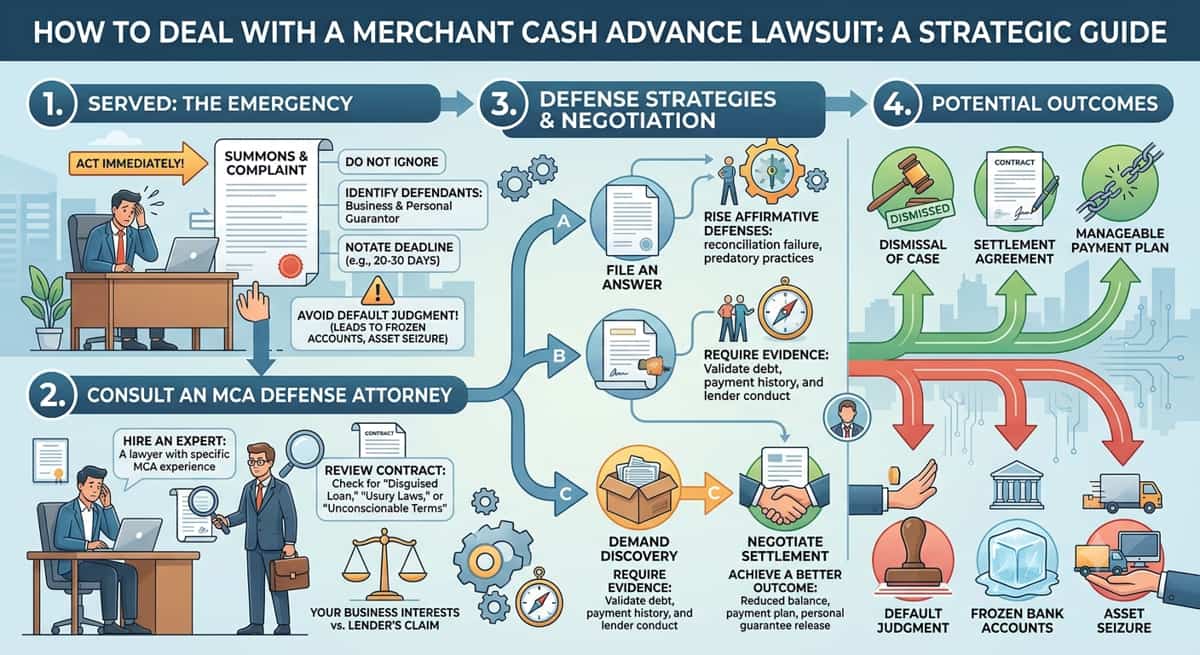
If papers just landed on your counter or your desk, here's exactly what to do, in order.
1. Confirm you were actually served properly. There are legal rules about how a lawsuit has to be delivered to you. If it wasn't done correctly, that can sometimes be a defense in itself but don't count on this alone, and don't ignore the case while you figure it out.
2. Find your deadline and write it down. You typically have somewhere between 20 and 30 days to respond, depending on your state and how you were served. This is not a soft deadline. Missing it can mean the company automatically wins the case without you ever getting to explain your side.
3. Don't panic, but don't wait either. It's normal to feel overwhelmed. Many owners freeze up and put the papers in a drawer hoping the problem goes away. It won't. The single biggest mistake in these cases is doing nothing.
4. Gather your paperwork. Pull together your MCA agreement, your business bank statements, your payment history, and any emails, texts, or calls you've had with the lender. This is the evidence that will shape your defense.
5. Call an attorney who specifically handles MCA cases. This is a specialized area. A general consumer debt lawyer or a family friend who's "good with legal stuff" isn't the same as someone who deals with MCA litigation and confessions of judgment regularly. Many offer a free initial consultation.
6. File a formal answer before your deadline. This is what actually protects you. It tells the court you're contesting the case and preserves your right to raise defenses instead of letting the company win automatically.
Confession of Judgment: The Clause That Catches Owners Off Guard
Here's something a lot of business owners don't realize they signed until it's too late: many MCA agreements include a clause called a "confession of judgment," often shortened to COJ.
In plain terms, a confession of judgment lets the MCA company go straight to a judge and get a judgment against you without a hearing, without you being able to tell your side first the moment they claim you've defaulted. It's essentially you agreeing in advance, buried in the fine print, to skip your day in court.
Most of these are filed in New York courts, because that's historically been the MCA industry's preferred venue, even for business owners who live and operate thousands of miles away. Important update: New York changed its law in 2019 to stop companies from using confessions of judgment against out-of-state business owners. If you're outside New York and a confession of judgment was filed against you after that change, it may not hold up but this needs to be reviewed by an attorney, since exceptions and procedural details matter here.
Why does this matter so much? Because once a confession of judgment is entered, enforcement can move fast sometimes accounts get frozen within days, before the business owner even fully understands a judgment exists. This is exactly why reading your MCA contract carefully before signing anything in the future, and acting fast if one has already been filed, makes such a big difference.
Defenses That Can Get an MCA Lawsuit Dismissed or Reduced
You do have options here, and cases against MCA companies are won regularly. Whether a specific defense applies to you depends on your contract, your state, and the details of what happened but here are the main ones an attorney will typically look at:
The advance was really a disguised loan. If the terms function like a high-interest loan rather than a genuine purchase of future sales, your attorney may be able to argue the deal was usurious meaning the interest rate was illegally high which can weaken or void the company's claim.
The court doesn't actually have authority over you. If you don't do business in the state where the lawsuit was filed, and there isn't a real connection between you and that state, your attorney may be able to challenge the court's jurisdiction entirely.
The contract itself was unfair or based on misleading information. If you were misled about the terms, pressured into signing, or the contract was so one-sided it's considered unconscionable, that can be raised as a defense.
Something was done improperly on the company's end. This includes being served incorrectly, or if a confession of judgment was filed procedural mistakes like the wrong court, an expired filing window, or notarization errors. If a confession of judgment has already been entered against you, your attorney can file what's called a motion to vacate to try to have it thrown out on these grounds.
What Happens If You Just Ignore the Lawsuit?
This is the scenario every attorney wants business owners to avoid: doing nothing.
If you don't respond by your deadline, the court will typically enter what's called a default judgment meaning the MCA company automatically wins, without ever having to prove their case, because you didn't show up to contest it. Once that happens, the company gets full legal power to freeze your bank accounts, place liens on business property, and go after anyone who personally guaranteed the debt.
This can move fast sometimes within days of the judgment. And once it's entered, you've lost your chance to raise any of the defenses above. This is really the whole reason timing matters so much throughout this guide: the earlier you respond, the more options and leverage you have.
Frozen Bank Accounts and Business Liens
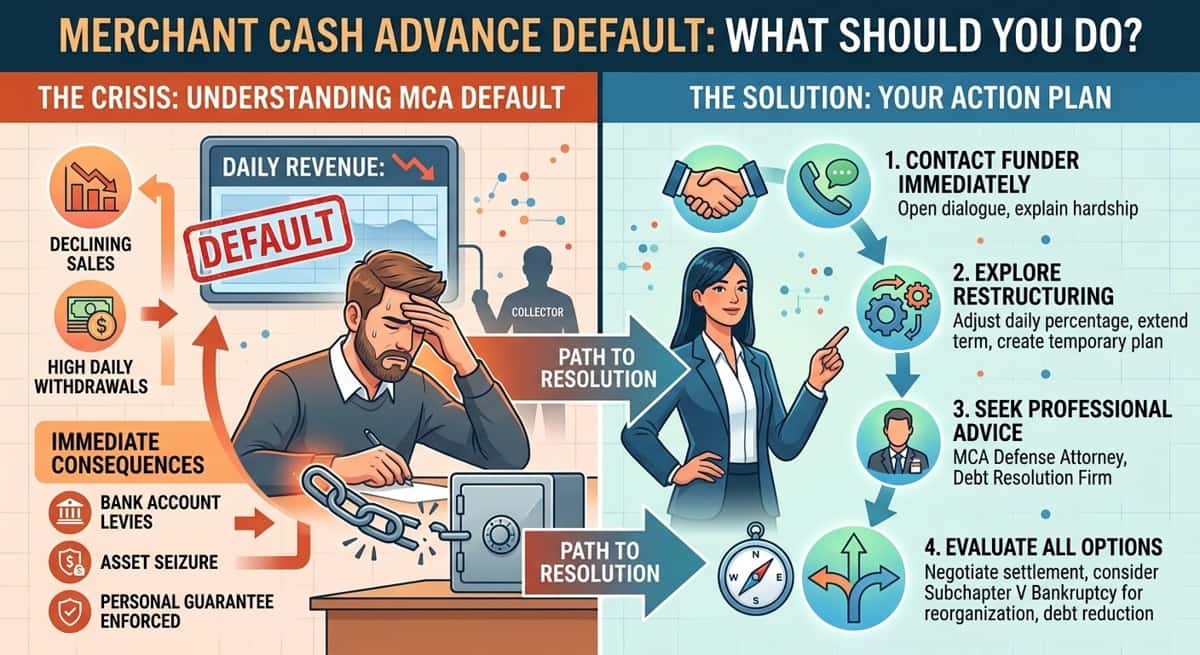
If a judgment does get entered whether through a lawsuit or a confession of judgment the company can use a few tools to collect. The most common is freezing your business bank account through what's called a restraining notice, which can stop you from accessing funds you need for payroll, rent, or inventory. They may also place what's called a UCC lien on your business assets, giving them a legal claim over things like equipment or receivables.
If this happens, know that it's not necessarily permanent or immediate game-over. Attorneys can sometimes file an emergency motion to release enough funds to cover essentials like payroll while the case moves forward. If you have employees and for many family businesses, some of those employees are relatives this step can matter enormously.
Settlement, Fighting in Court, or Consolidating: Choosing Your Path
There's no single "right" answer here it depends on how many advances you have out, whether a judgment already exists, and what your business can realistically afford going forward.
Negotiating a settlement. Many MCA companies would rather accept a reduced lump sum than spend money in court. When evaluating whether to settle or restructure, understanding the difference between credit counseling and debt settlement will help you protect your business's cash flow.
Contesting the lawsuit in court. If you have a strong defense say, a solid usury argument or a real jurisdiction problem fighting it out may get the case dismissed or significantly reduced. This takes longer and costs more upfront, but can be worth it.
Consolidating multiple advances. If you've taken out several MCAs and multiple companies are pulling from your account daily, consolidation can combine those into one manageable payment. This works best done proactively before any lawsuits are filed so it's worth exploring early if you sense trouble coming, not just after you've been served.
Personal Guarantees: Protecting Your Family's Assets
Here's a part that deserves special attention for this audience. Most MCA agreements include what's called a personal guarantee, which means that if the business can't pay, you personally are on the hook not just the business.
For a lot of South Asian family businesses, this is especially serious, because the family home is often tied to the business in some way, whether it's used informally as collateral, co-owned across generations, or simply the family's biggest asset. A judgment against the business can, in some cases, reach personal savings, a personal guarantor's credit, or even threaten a home, depending on your state's protections.
Some states have "homestead" laws that shield a certain amount of home equity from creditors, but these vary widely and have specific rules. This is exactly the kind of detail where a conversation with an attorney early before things escalate can make a real difference in what's protected and what isn't.
Is Bankruptcy an Option?
For some business owners, especially those juggling several stacked MCAs on top of other debts, Subchapter V bankruptcy version designed for small businesses can be a way to reset and reorganize rather than let creditors pick the business apart piece by piece.
It's generally considered a last resort, after settlement or litigation options have been explored, because it comes with real trade-offs: it affects your credit, involves court costs, and can disrupt day-to-day operations for a while. Whether it makes sense for you depends heavily on your full financial picture, and it's a decision worth making with both an attorney and a financial advisor, not alone.
Getting Help Without Losing Face
We want to say this plainly, because it matters: needing help with a business debt problem is not a failure, and it's not something to hide from your family or your community.
We understand the instinct. In many South Asian households, financial trouble feels like something to keep quiet a fear of "what will people think," of embarrassing the family, of being judged by relatives or the community. But going through this alone, or relying only on informal advice from friends or acquaintances who "heard about someone in a similar situation," often does more harm than good. Community advice, however well-meaning, is not the same as guidance from someone who actually knows the law.
The good news is that help exists that respects your privacy and your comfort level. There are attorneys and financial counselors who work in Hindi, Urdu, Punjabi, Gujarati, and Bengali, and who understand the cultural weight this carries. A conversation with a qualified professional stays confidential it's not something that has to become community knowledge. Protecting your business is something to be proud of, not ashamed of.
How to Choose the Right Attorney for This
Not every lawyer is the right fit here this is a specialized corner of law. When you're evaluating who to work with, look for:
Specific experience with MCA lawsuits and confessions of judgment, not just general business or consumer debt
A track record of actual cases handled, not just advertising language
A clear, upfront explanation of fees before you commit to anything
Someone who's willing to explain your options honestly, including when settling might be smarter than fighting
A short phone consultation is usually enough to get a feel for whether an attorney understands MCA cases specifically, so don't be afraid to ask direct questions before hiring anyone.
Key Takeaways
Respond to the lawsuit before your deadline this is the single most important step
Gather your MCA agreement, bank statements, and all communications right away
Understand whether a confession of judgment was used, and whether it can be challenged
Know that real legal defenses exist usury, jurisdiction, unfair contract terms, and procedural errors among them
If you signed a personal guarantee, act early to understand what's at risk and how to protect it
Getting help is a sign of strength, not something to hide from your family or community
If you're currently facing an MCA lawsuit or overwhelming daily debits, don't wait for accounts to freeze. You can request a free, confidential consultation with Ooraa to explore customized debt relief options designed for family-owned businesses.
Ready to Get Started?
Get a free consultation with a certified debt consultant to see if debt settlement is right for you.
Get Free ConsultationAbout the Author
Bhupinder Bajwa
.
Get Your Free Consultation
Speak with a certified debt consultant to explore your options.
Start NowNo obligation • Free consultation