Merchant Cash Advance Default: What Should You Do?
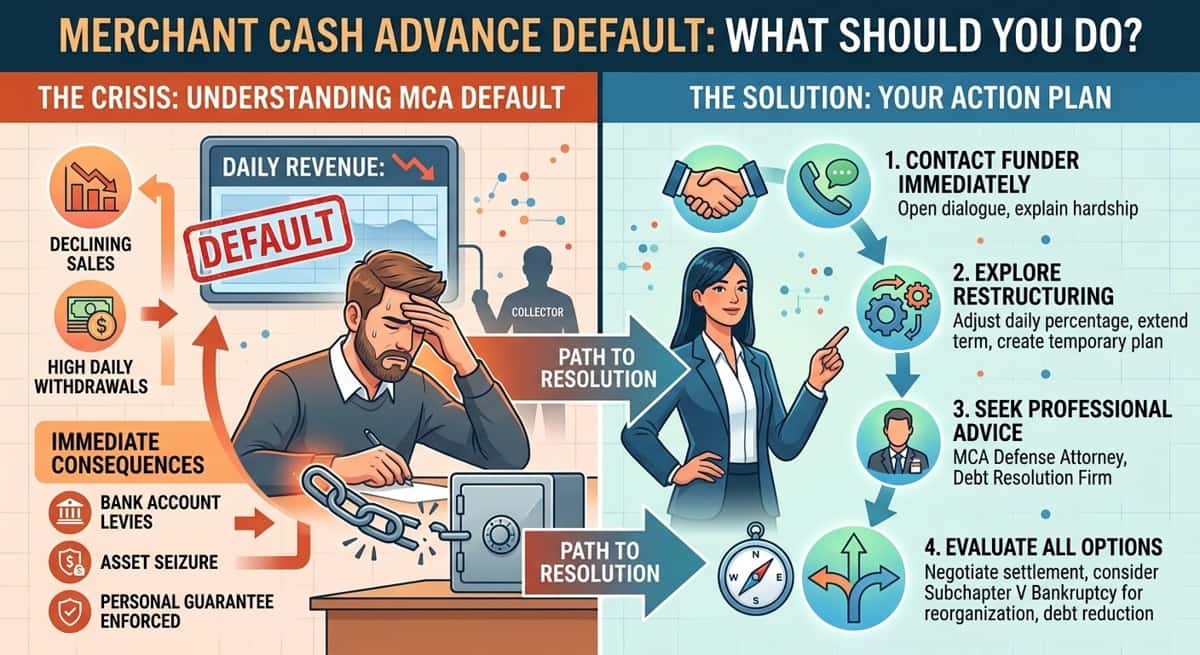
Defaulting on a merchant cash advance (MCA) can feel overwhelming, especially when your business is already struggling with cash flow. Unlike traditional loans, MCAs are typically repaid through a percentage of future sales or fixed daily or weekly payments, which can become difficult to manage when revenue drops. A default may lead to collection efforts, legal action, additional fees, or serious financial pressure on your business. However, a default does not necessarily mean you have run out of options.
Understanding your MCA agreement, communicating with the provider, and reviewing possible solutions can help you determine the best path forward. Depending on your circumstances, you may be able to negotiate revised payment terms, settle the balance, or seek professional legal or financial guidance. Taking action early is often better than ignoring the problem and allowing the situation to escalate.
What Is a Merchant Cash Advance (MCA)
A merchant cash advance isn't technically a loan. It's a lump sum a company gives you in exchange for a cut of your future sales usually taken out automatically, either daily or weekly, straight from your business bank account or your card sales. Because it's structured as a "sale" of future revenue instead of a loan, MCAs aren't covered by the same interest rate caps (usury laws) that apply to traditional bank loans in most states.
This is a big reason MCAs are everywhere in South Asian-owned businesses across the US gas stations, motels, convenience and liquor stores, restaurants, trucking companies, and rideshare fleets. Many of these businesses are newer, run by first-generation immigrants without a long US credit history, and banks often turn them down for a traditional loan or line of credit. MCA companies don't ask for that kind of credit history. They approve fast, sometimes within a day, with no collateral required. For an owner who needs cash for payroll, inventory, or rent by Friday, that speed is the whole appeal.
The catch is the cost. Instead of an interest rate, MCAs use something called a "factor rate" for example, 1.4 means you repay $1.40 for every $1 you borrowed. That can translate into an effective annual rate far higher than most business owners realize when they sign. Combined with daily or weekly automatic withdrawals, it doesn't take much one slow month, one broken piece of equipment, one seasonal dip to fall behind.
What Does It Mean to "Default" on a Merchant Cash Advance?
Defaulting on an MCA generally means one of a few things has happened: you've missed payments, your account doesn't have enough money when the withdrawal is due, you've blocked or changed your bank account to stop the debits, or your business has closed. Any of these can trigger a default under your contract.
Here's an important nuance most people don't know: because an MCA is legally structured as a purchase of future receivables and not a loan, "default" doesn't work exactly the same way it does with a bank loan. You're not defaulting on a loan, you're breaching a purchase agreement. That distinction matters, because it affects what the lender can legally do next, and it's one of the first things a good attorney will look at.
Common Default Triggers
Most defaults don't come out of nowhere. The most common triggers are seasonal slowdowns (a motel with fewer winter bookings, a restaurant during a slow month), and "stacking" taking a second or third MCA to cover payments on the first one. Stacking is extremely common in this community because MCA brokers often refer clients to each other, and a broker who helped you get your first advance may call a few months later offering another one "to help with cash flow." Other common triggers include a drop in card sales, an unexpected rent increase, or a big inventory or repair expense hitting at the same time as a repayment cycle.
What Happens Immediately After You Default?
Increased or Accelerated ACH Withdrawal Attempts
Some MCA contracts allow the lender to attempt withdrawals more frequently, or all at once, if you default. This can mean multiple withdrawal attempts hitting your account in the same day, which often leads to overdraft fees stacking on top of the debt you already owe.
Calls and Collection Letters
Expect calls, emails, and letters first from the MCA company itself, and later possibly from a third-party debt collector if the account is sold or assigned. These can escalate quickly and feel aggressive, especially in the first few weeks after a missed payment.
Confession of Judgment (COJ) Risk
Some older MCA contracts include a clause called a "confession of judgment," where you agree in advance to let the lender get a court judgment against you without a hearing, essentially skipping the normal legal process. Some states, including New York, have banned COJs against merchants located outside that state, which closed a loophole many MCA companies used to rely on. Whether a COJ clause in your contract can actually be enforced depends on your state and the exact wording of your agreement, so this is something a business attorney should review directly.
UCC-1 Lien Enforcement and Bank Account Freezes
When you signed your MCA agreement, the lender likely filed a UCC-1 lien against your business assets. After a default, the lender may use this lien to notify banks or other companies that owe you money, which can result in your business bank account being frozen or funds being redirected before you ever see them.
Lawsuit and Judgment Risk, Including Personal Guarantee Exposure
If the MCA company sues and wins, they can pursue collection through bank levies or liens on business assets. This is especially serious if you signed a personal guarantee which many South Asian family businesses do, often with a spouse or close relative co-signing to get approved. A personal guarantee means the lender isn't just limited to business assets; they can potentially come after personal accounts and property tied to whoever signed.
Will an MCA Default Affect Your Personal Credit or Immigration Status?
This is one of the biggest fears we hear from business owners in this community, so let's address it directly.
Personal credit: An MCA default itself typically doesn't show up on your personal credit report unless you personally guaranteed the advance, or unless the lender obtains a judgment against you, which can become part of the public record and affect your credit and future borrowing ability.
Immigration status: Falling behind on a business debt is a civil financial matter, not a criminal one. For most existing visa holders, green card holders, and citizens, a business debt default on its own is generally not something immigration authorities review. That said, immigration cases can involve individual circumstances that a financial article can't account for, so if you have any specific concerns about how this might intersect with your status, it's worth a conversation with a licensed immigration attorney rather than relying on general information including this article.
Family exposure: If a spouse, sibling, or parent co-signed the personal guarantee, they carry the same legal exposure you do. It's worth having an honest conversation with them early, rather than after a lawsuit is already filed.
7 Steps to Take Right Now If You've Defaulted on a Merchant Cash Advance
1. Gather every MCA contract and repayment record. Pull together every agreement you've signed, including any renewals or "stacked" advances, along with your recent bank statements. You can't make a good decision about what to do next until you know exactly what you owe, to whom, and under what terms.
2. Calculate your true daily or weekly cash flow exposure. Add up every automatic withdrawal scheduled to come out of your account across all your advances. Many business owners are surprised to see the real total once they lay it all out. This number is what will guide every decision from here.
3. Do not simply stop communicating with the lender. It's tempting to let calls go to voicemail, but silence often triggers faster, more aggressive collection action. A short, professional response even just acknowledging you're reviewing your options buys you time and shows good faith, which can matter later.
4. Understand your contract's default and confession-of-judgment clauses. Read the fine print, or better, have someone qualified read it with you. Knowing exactly what happens on default, and whether a confession of judgment clause exists, tells you how much urgency you're really dealing with.
5. Talk to a business debt attorney or MCA-specific debt relief advisor before signing anything new. Before you agree to a new repayment plan, settlement offer, or refinancing deal, get a second set of eyes from someone who specializes in MCA debt. Lenders often present "solutions" that favor them more than you.
6. Explore restructuring or settlement not another MCA. It can feel like the fastest fix, but taking a new advance to pay off an old one almost always makes things worse. It's the single most common mistake we see, and it usually leads to a deeper hole rather than a way out.
7. Protect personal and family assets. If a personal guarantee is involved, talk to an attorney early about what steps, if any, make sense to protect personal and family finances while you work through a resolution.
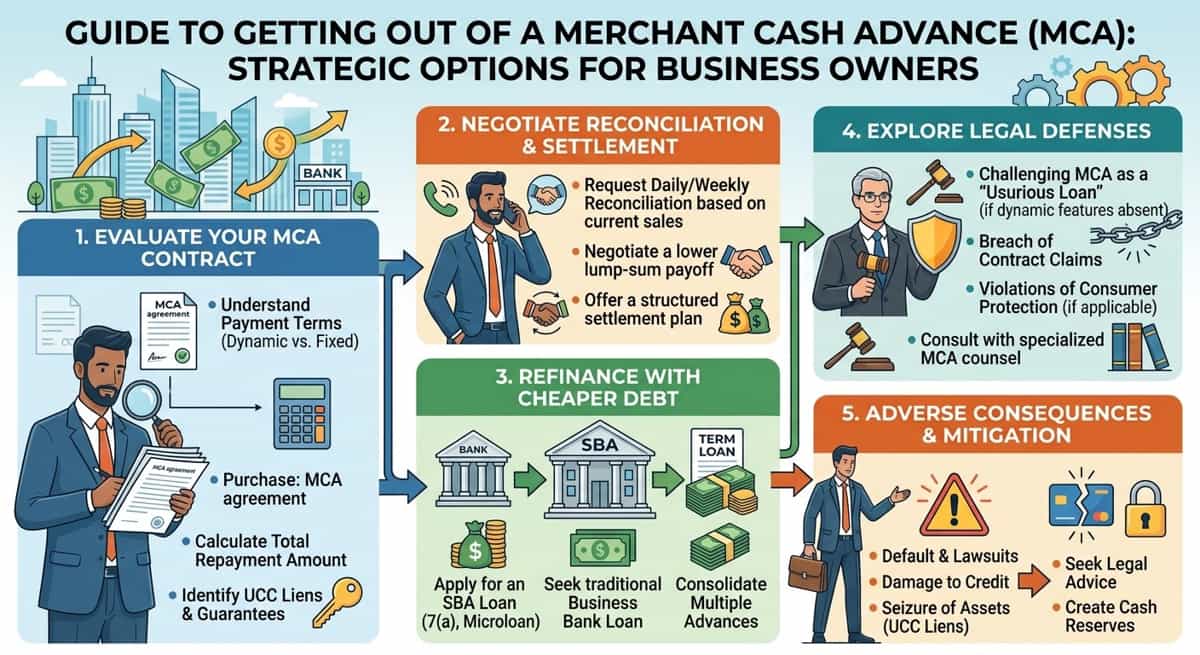
What Are Your Real Options After an MCA Default?
MCA Debt Settlement or Negotiation
Many MCA companies would rather negotiate a reduced lump-sum or restructured payment than spend money pursuing a lawsuit with uncertain results. A debt relief advisor experienced with MCA companies can often negotiate a settlement for less than the full amount owed. This process typically takes weeks to a few months, and results vary based on your specific lenders and how many advances are involved.
Restructuring or Renegotiating Payment Terms
Rather than a lump-sum settlement, some lenders will agree to lower payments spread over a longer period. This can ease the daily or weekly cash crunch without needing a full settlement, though it usually means paying more in total over time.
Consolidation Through a Business Debt Relief Program
If you're juggling multiple stacked MCAs, a consolidation program can combine them into a single, more manageable payment often negotiated down from the combined total. This is different from taking out a new loan to pay off old ones; a legitimate consolidation program negotiates with existing lenders directly.
Business Bankruptcy (Chapter 11 or Subchapter V)
For businesses with debt that's become unmanageable across multiple lenders, bankruptcy protection can pause collection efforts and give you a structured way to reorganize. This is a serious step and not right for every situation, but it's worth knowing that MCA debt is often treated as unsecured or disputed in bankruptcy proceedings, which can shift negotiating leverage with bankruptcy significantly in your favor. This decision should always be made with a bankruptcy attorney who understands your full financial picture.
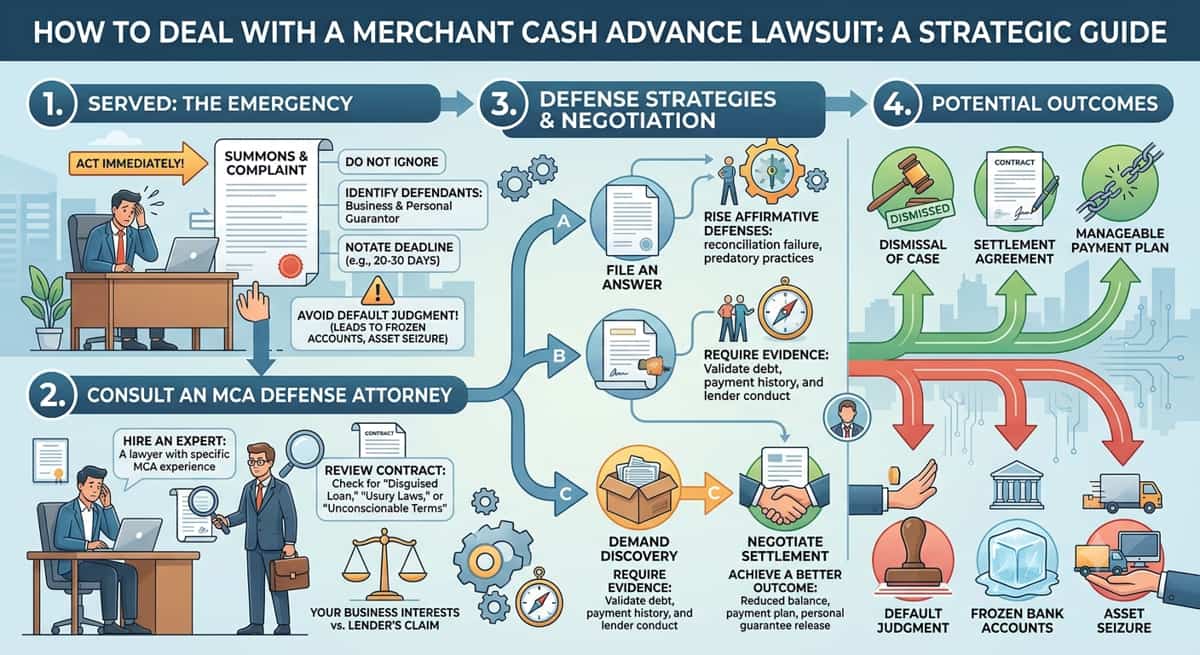
Litigation Defense If You're Already Sued
If an MCA company has already filed a lawsuit, you still have options. Attorneys experienced in this area sometimes raise defenses arguing that a particular MCA was really structured like a loan in disguise ("true lender" or recharacterization arguments), which can open the door to usury law protections that wouldn't otherwise apply. Every case is different, and this only works with proper legal representation.
Mistakes to Avoid When You're Behind on an MCA Payment
Taking a second or third MCA to cover the first ("stacking"). This is the trap that turns a manageable problem into an unmanageable one.
Ignoring calls and letters entirely. Silence tends to speed up aggressive collection, not slow it down.
Closing your bank account without a plan. This can trigger acceleration or breach clauses in your contract and make your situation worse, not better.
Relying only on informal advice from friends or community members. Every MCA contract and every state's laws are different. What worked for someone else's situation may not apply to yours.
Signing a new contract or settlement without legal review. Read everything carefully, or have someone qualified read it, before you sign.
How to Protect Your Business From Future MCA Debt Traps
Going forward, it helps to vet MCA brokers and lenders carefully, especially ones referred through informal community networks and ask direct questions about factor rates, repayment frequency, and default terms before signing anything. Always compare the factor rate to what it actually works out to as an annual percentage rate, so you know the real cost. It's also worth building a relationship with an SBA-approved lender or a community development financial institution (CDFI) that works specifically with immigrant-owned businesses; these often offer far more reasonable terms than an MCA, even if approval takes a bit longer. Finally, building even a small cash reserve tied to your slowest season can make the difference between a rough month and a full-blown crisis.
When to Talk to a Debt Relief Professional
If you're dealing with more than one stacked advance, facing a lawsuit threat, have a frozen bank account, or worry that family assets are at risk because of a personal guarantee, it's time to bring in someone qualified. A good debt relief consultant can help you understand your real options, negotiate on your behalf, and tell you honestly what's realistic and what isn't but they can't make debt disappear overnight, and you should be cautious of anyone who promises guaranteed results.
Every MCA contract and every business's circumstances are different, so before making any major decision, talk to a licensed attorney or an accredited debt relief professional who can review your specific situation.
Ready to Get Started?
Get a free consultation with a certified debt consultant to see if debt settlement is right for you.
Get Free ConsultationAbout the Author
Bhupinder Bajwa
.
Get Your Free Consultation
Speak with a certified debt consultant to explore your options.
Start NowNo obligation • Free consultation