7 Signs Your Debt Is Becoming Financially Dangerous in 2026
Debt rarely announces itself as a crisis. It sneaks in quietly - a missed payment here, a balance that doesn't quite go down there - until one day you look up and realize the weight you've been carrying feels much heavier than it used to.
You're not alone. In Q1 2026, total U.S. household debt reached a record $18.8 trillion, according to the Federal Reserve Bank of New York. The average American household now carries $105,444 in debt across mortgages, auto loans, credit cards, and student loans. Behind that number are millions of real people navigating real stress — lying awake at night, avoiding phone calls, feeling like no matter how hard they try, the balances just won't budge.
One of the most important things you can do for your financial future is to recognize the warning signs early on. This isn’t about shame or judgment — it’s about awareness. Because the first step in building something better is understanding where you stand today.
Here are 7 signs your debt may be becoming financially dangerous — and what you can do about it.
Sign #1: You're Only Making Minimum Payments
If you scan your credit card statements and every month, without fail, you pay only the minimum due — that's one of the clearest early warning signs of a debt problem.
It might not feel dangerous. After all, you're paying something, right? But here's the reality: on a $6,715 credit card balance (the current U.S. average in 2026), making only minimum payments at a typical interest rate could take years to pay off and cost you thousands more than you originally borrowed. Interest compounds relentlessly, and minimum payments barely put a dent in your principal.
This cycle is designed to keep you in debt longer. If minimum payments are your consistent strategy — not an occasional bridge — your debt is likely growing faster than you realize.
Ask yourself: When did I last look at my actual balance, not just the minimum due?
Sign #2: Collection Calls Are Increasing
One collection call is stressful. Getting them regularly – from several creditors, for several accounts – indicates that your debt situation has become more than manageable, it has become financially perilous.
Bad debts have been rising in a number of major categories. Data from the New York Fed show 4.8% of all outstanding household debt was delinquent at the end of 2025 and that number keeps rising as pandemic-era relief programs wind down. Once accounts go to collections, the original balance is usually the least of your worries. The fees, penalties and damaged credit ratings add up fast.
Collection calls can also be psychologically damaging. These trigger shame, anxiety and avoidance which can make things worse by creating inaction at exactly the moment when action is needed most.
If the phone is ringing and you're not picking up, that's your signal to pay attention.
Sign #3: You're Using Credit Cards for Essentials
There's a significant difference between using a credit card for convenience and using a credit card because your paycheck doesn't stretch far enough to cover groceries, utilities, or gas.
When credit cards become a survival tool — used to buy food, pay your electric bill, or cover a co-pay — your income and expenses are fundamentally out of alignment. And with average credit card APRs hovering around 20–24% in 2026, every essential purchase you charge and carry a balance on becomes exponentially more expensive over time.
This is one of the most emotionally heavy signs of financial distress, because it touches basic dignity. No one expects to struggle to afford groceries. But if this is your reality right now, know that it's more common than you think — and it's a clear sign that outside support may be needed.
Using credit for necessities is not a money management problem. It's a structural debt problem.
Sign #4: You Avoid Looking at Your Bank Account
Be honest with yourself: how long has it been since you actually opened your banking app or checked your balance without anxiety?
Avoidance is one of the most underrecognized signs of financial distress. When the act of checking your account feels frightening — when you'd rather not know — it usually means some part of you already does know, and the reality feels too overwhelming to face.
Financial psychologists call this "financial denial." It's a protective mechanism, but a destructive one. Avoiding your finances doesn't pause the interest accruing on your debt. It doesn't stop late fees from hitting. It doesn't pause the clock. It simply removes you from a situation where you might actually be able to do something.
If opening your bank account or reviewing your statements fills you with dread rather than a sense of control, that emotional signal is worth taking seriously.
Sign #5: You're Falling Behind on Multiple Payments
Missing one payment occasionally — a bill you forgot, a paycheck that came in late — is different from consistently falling behind across multiple accounts.
When you're juggling which bill to pay and which to delay, when you're regularly choosing between your car payment and your rent, when late fees have become a predictable monthly line item — your debt has created a financial snowball effect that is difficult to stop without intervention.
Late payments damage your credit score, which in turn raises the interest rates you're offered on future credit, which makes debt more expensive to carry, which makes falling behind more likely. It's a cycle that feeds itself.
In 2025 and into 2026, serious delinquency rates — meaning accounts 90+ days past due — have been rising across credit cards and auto loans. If you find yourself routinely in that window across multiple accounts, a structured debt relief strategy may be the most practical path forward.
Sign #6: Debt Is Affecting Your Mental Health
This might be the most important sign on this list, and it's the one least often talked about.
Debt stress doesn't stay in your bank account. It moves into your sleep, your relationships, your ability to concentrate at work, your mood, your self-worth. Research consistently links high debt levels to increased rates of anxiety, depression, irritability, and social withdrawal. Experts describe this as "debt stress syndrome" — a real, recognized pattern of psychological distress tied directly to financial pressure.
Think about how debt has shown up in your life beyond finances. Are you sleeping worse? Feeling more irritable or hopeless than usual? Withdrawing from friends or family because you don't want to discuss money? Snapping at loved ones over small things that feel connected to larger financial fears?
These aren't personality flaws. They're symptoms of a real stressor. And just like you'd seek help for a physical health issue that was affecting your daily life, financial distress that's harming your mental health is a sign that something needs to change.
You deserve to feel calm. Chronic money anxiety is not something you simply have to accept.
Sign #7: You Don't See a Way Out
Perhaps the heaviest sign of all: you've done the math, looked at your balances, estimated how long it would take to pay everything off — and you genuinely can't see how you get there from here.
This feeling of hopelessness around debt is more common than most people admit. When balances grow faster than you can pay them down, when you're working harder but not gaining ground, when every financial decision feels like plugging one hole while another opens — the absence of a visible path forward is a warning sign worth acting on.
But here's what's important to understand: not seeing a way out doesn't mean there isn't one. It means you likely need a different approach than the one you've been trying.
Debt relief options — including debt settlement, structured repayment plans, and professional debt counseling — exist precisely for moments like this. They're not for people who've "failed." They're tools designed for people who've been carrying more than any one person should carry alone.
What You Can Do Next
If several of these signs feel familiar, the most important thing you can do is resist the urge to keep waiting for things to improve on their own. Debt, by its nature, compounds — and inaction tends to make most debt situations more difficult, not less.
Here are meaningful steps to consider:
Review your full picture. Write down every debt you carry — the balance, the interest rate, the minimum payment. Many people discover their situation is either better or worse than they imagined. Either way, clarity is the starting point.
Explore a budget reset. A zero-based budget — where every dollar of income is assigned to a specific category — can reveal spending patterns and free up cash you didn't realize you had.
Understand your debt relief options. Depending on your situation, options may include debt consolidation, debt settlement negotiations, or working with a certified credit counselor through a nonprofit agency. These aren't last resorts — they're legitimate tools.
Talk to someone. Whether a certified financial counselor or a debt relief specialist, having someone review your full situation can surface options you haven't considered.
How OORAA Helps
At OORAA, we work with people who are tired of feeling like their debt is running their life.
OORAA's debt relief specialists take the time to understand your full financial picture — not just your balances, but your goals, your situation, and what matters to you — and help you map a path toward resolution that's realistic and built around you.
Whether you're dealing with credit card debt, personal loans, or a combination of accounts that feel impossible to manage, OORAA can help you explore options that may reduce what you owe, lower your monthly obligations, and give you a clear timeline toward being debt-free.
Understanding the warning signs early may help you explore better financial options before debt becomes harder to manage.
Learn more about OORAA's debt relief options →
Frequently Asked Questions
How do I know if my debt is serious?
Your debt may be serious if you're consistently making only minimum payments, missing payments across multiple accounts, using credit cards for daily essentials, or experiencing anxiety and avoidance around your finances. If your balances aren't decreasing despite regular payments, that's a strong signal to seek guidance.
What is considered too much debt?
A common benchmark is the debt-to-income (DTI) ratio — the percentage of your gross monthly income that goes toward debt payments. A DTI above 43% is generally considered high-risk by most lenders and financial advisors. However, the emotional and psychological impact of debt is just as important as the numbers.
Can debt affect mental health?
Yes, significantly. Research links high debt levels to increased anxiety, depression, disrupted sleep, and strained relationships. What's known as "debt stress syndrome" reflects the real psychological burden of financial pressure. If debt is affecting your daily mood, relationships, or ability to function, that's a meaningful sign your situation needs attention.
When should I seek debt help?
If you're falling behind on multiple accounts, can only afford minimum payments, feel anxious or hopeless about your finances, or simply don't see a realistic path to paying down what you owe — those are all valid reasons to explore professional debt relief. Reaching out earlier generally leads to better outcomes than waiting until accounts are in severe delinquency.
The information in this blog is for educational purposes only and does not constitute financial or legal advice. Please consult a qualified financial professional for guidance specific to your situation.
Ready to Get Started?
Get a free consultation with a certified debt consultant to see if debt settlement is right for you.
Get Free ConsultationAbout the Author
Ooraa Team
Our team of certified debt consultants has over 10 years of experience helping families become debt-free. We specialize in debt settlement strategies and financial education.
Related Articles
Low Income Debt Relief Programs And Options
14 min read
What Debts Can Be Included in Debt Relief?
13 min read

Debt Settlement for $20,000 in Credit Card Debt: What to Expect
11 min read
What’s The Difference Between Debt Consolidation And Debt Settlement?
12 min read
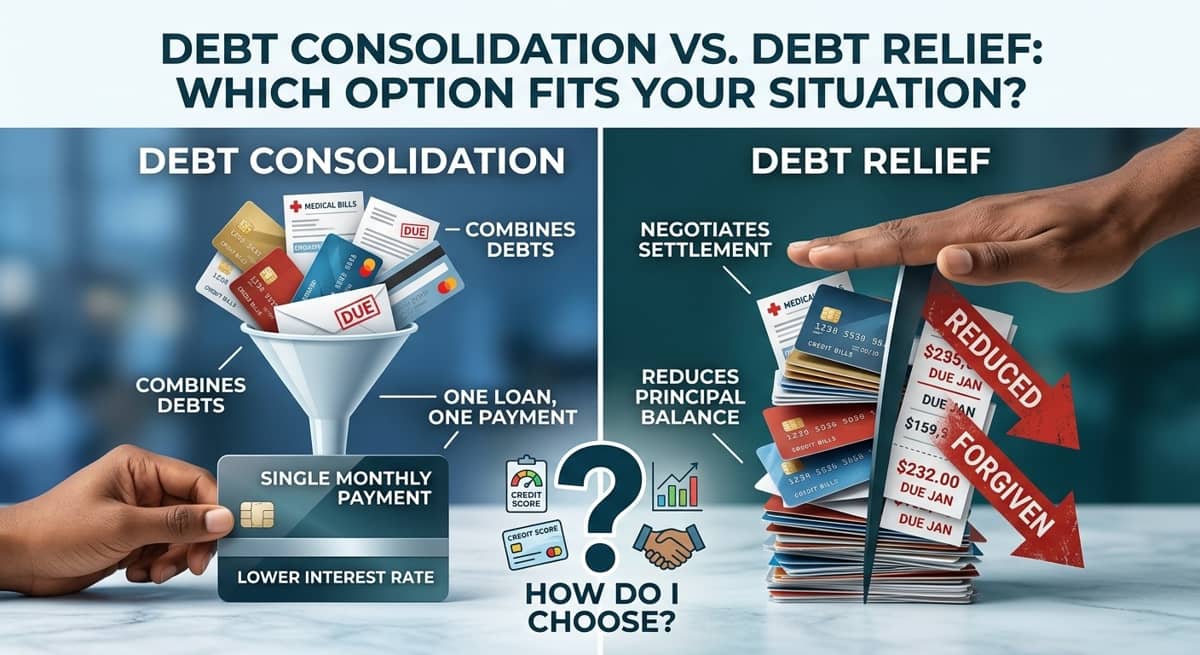
Debt Consolidation vs. Debt Relief: Which Option Fits Your Situation?
10 min read
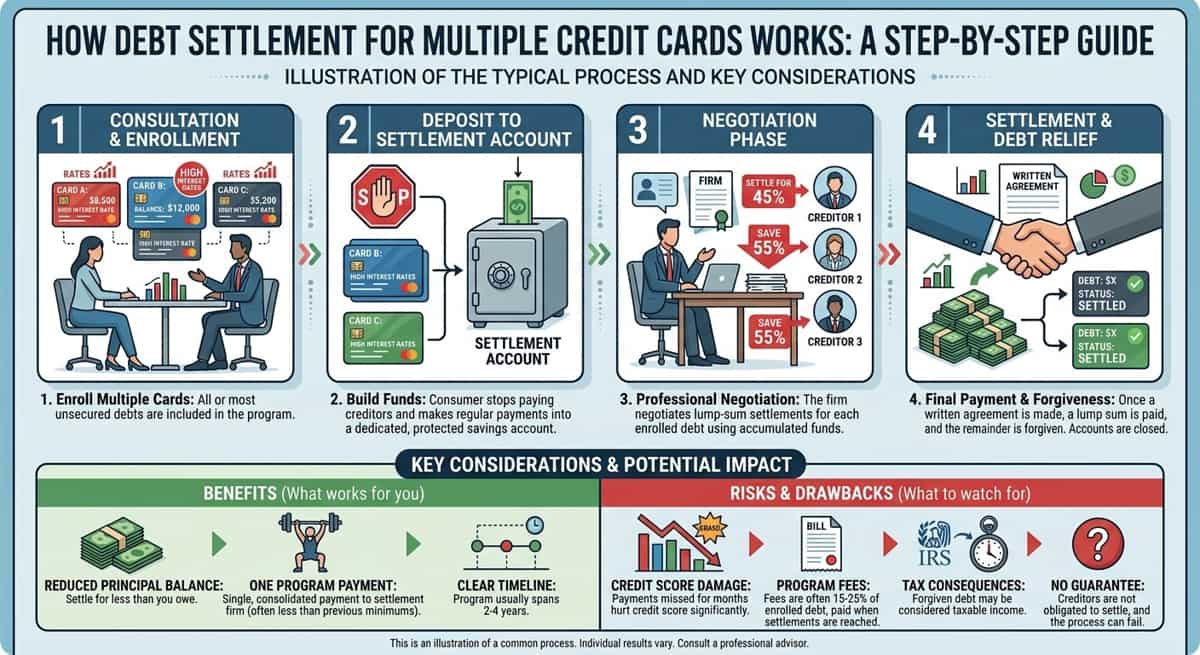
Debt Settlement for Multiple Credit Cards: How Does It Work?
10 min read
Get Your Free Consultation
Speak with a certified debt consultant to explore your options.
Start NowNo obligation • Free consultation