What Is Unsecured Debt? Types And Examples
Unsecured debt is a financial obligation that is not backed by collateral, such as a house or a car. Because there is no physical asset for a lender to seize if payments stop, these loans including credit cards and personal loans are granted based primarily on your creditworthiness and income.
For many South Asian individuals and families transitioning to life in the United States, the American credit system can feel like a double-edged sword. While back home "debt" might carry a heavy social stigma or be limited to informal family circles, in the U.S., it is often a necessary tool for building a financial footprint. However, without a clear strategy, high-interest unsecured debt can quickly transform from a ladder for growth into a burden that stalls your "American Dream."
As a financial management expert with over a decade of experience helping the diaspora navigate the complexities of the U.S. banking system, I’ve seen firsthand how cultural nuances like the pressure of remittances or funding large family weddings interact with American lending. Understanding the mechanics of unsecured debt is the first step toward true financial mastery and long-term security for your family.
What Is Unsecured Debt? (A Concise Definition)
In the United States, unsecured debt refers to any loan or credit agreement that is not "secured" by a physical asset. Unlike a mortgage (where the house is collateral) or an auto loan (where the car is collateral), an unsecured lender has no legal right to seize a specific piece of your property if you fail to make payments. Instead, the lender relies entirely on your written promise to pay them back.
Because these loans represent a higher risk for banks, they rely heavily on your FICO® Credit Score and income history to determine eligibility. For many South Asian residents, especially those who are new to the country or are on professional visas this means your "financial reputation" is your most valuable currency. A high credit score signals to lenders that you are a reliable borrower, often resulting in lower interest rates and higher credit limits. Conversely, carrying high balances on unsecured debt can lower your score, making it more difficult to transition into secured investments, like buying a family home or a business.
To help you distinguish between these two financial paths, here is a quick reference comparison:
Comparison: Secured vs. Unsecured Debt
Feature | Secured Debt | Unsecured Debt |
Collateral Required | Yes (House, Car, Savings) | No (Signature-based) |
Asset at Risk | The collateral can be seized | No specific asset seized (but credit score drops) |
Interest Rates | Generally Lower | Generally Higher |
Typical Examples | Mortgages, Auto Loans | Credit Cards, Personal Loans |
Borrowing Limit | Based on Asset Value | Based on Credit Score & Income |
Common Types of Unsecured Debt for South Asian Households
In the United States, unsecured debt manifests in several forms, some of which carry unique cultural weight for South Asian families. Navigating these requires a balance between Western financial mechanics and traditional community values.
Credit Cards: The "Plastic Debt"
Credit cards are the most prevalent form of unsecured debt. For many new residents, a credit card is the primary tool used to establish a "credit history." However, they often carry the highest interest rates. In the South Asian community, it is common to see credit cards used for high-value purchases during visits back home or for gold investments. While convenient, carrying a revolving balance can lead to a "debt trap" where monthly payments barely cover the accumulating interest.
Personal Loans: Weddings, Business, and Emergencies
Personal loans are fixed-term unsecured debts. Because they offer a lump sum of cash, they are frequently utilized by the diaspora for:
Grand Weddings: Cultural expectations often lead families to take out "wedding loans" to cover multi-day celebrations.
Business Startups: Many South Asian entrepreneurs use personal loans as seed capital for franchises or small businesses when traditional commercial loans are unavailable.
Family Emergencies: Sending a large sum of money back to India, Pakistan, or Bangladesh for a relative's medical care often necessitates a quick personal loan.
Student Loans: Investing in the Future
Education is a cornerstone of South Asian culture. Many students and parents acting as co-signers take out federal or private student loans to fund degrees in medicine, engineering, or technology. While federal student loans offer certain protections (like income-driven repayment), private student loans are strictly unsecured contracts with fewer safety nets. It is vital to distinguish between the two, as they impact your debt-to-income ratio differently when you later apply for a mortgage.
Medical Bills: The US Healthcare Maze
Coming from countries with different healthcare structures, many South Asian immigrants are blindsided by the American medical billing system. A single ER visit or an unexpected procedure can result in thousands of dollars in unsecured debt. These bills do not carry interest initially, but if left unpaid, they are sold to collection agencies, which can severely damage your credit score. Navigating insurance "out-of-pocket" maximums is a critical skill for financial management in the U.S.
Unstructured Family Loans: The Cultural Nuance
A unique aspect of South Asian financial life is the "hand loan" or borrowing from relatives and friends. While these loans are "unsecured" in the literal sense, they are governed by social trust rather than legal contracts.
The Downside: These loans do not report to credit bureaus (Experian, Equifax, or TransUnion). You could repay a $50,000 loan to an uncle perfectly, yet your U.S. credit score will remain unchanged.
The Risk: In the U.S. financial system, documented debt is often safer because it follows clear legal regulations. Mixing family and finances without a formal agreement can lead to social friction and lacks the consumer protections found in bank-issued unsecured loans.
Understanding these specific categories allows you to categorize your liabilities and prioritize which ones to pay off first, generally starting with the high-interest "plastic debt" before moving to lower-interest personal or student loans.
Why Interest Rates Matter: The "Cost" of Unsecured Debt
When managing unsecured debt, the most critical number to watch is not the total balance, but the Annual Percentage Rate (APR). The APR represents the total cost of borrowing money over a year, including interest and any mandatory fees. Because unsecured debt lacks collateral, the APR acts as the lender's primary "insurance policy" against the risk that you might not pay them back.
The Mathematics of Risk
In the U.S. financial system, interest rates are essentially a reflection of risk. When you take out a mortgage, the lender is protected by the house; if you default, they sell the property. Because this risk is low, interest rates are typically lower. With unsecured debt, the lender has nothing to seize. Consequently, they charge significantly higher interest rates to offset the statistical possibility of loss. While a mortgage might have an interest rate of 6% or 7%, a credit card the most common unsecured debt can easily carry an APR of 24% to 30%.
The "Immigrant Experience" and the Credit Trap
For many South Asian individuals, especially those newly arrived on H-1B or L-1 visas, the initial lack of a U.S. credit history is a major hurdle. Without a "thick" credit file, you are often viewed as a "high-risk" borrower by traditional banks. This can lead to a frustrating cycle where you are only approved for "subprime" credit cards or personal loans with predatory interest rates.
It is common for newcomers to accept these high rates just to establish a footprint. However, if these balances are not paid in full every month, the compounding interest can quickly outpace your income. For example, carrying a $10,000 balance at a 25% APR means you are paying over $2,000 a year just in interest—money that could otherwise be used for family remittances or savings.
Avoiding Predatory Lending
Within various immigrant communities, "payday lenders" or "no-credit-check" personal loan companies often advertise heavily. These lenders target those who feel excluded from mainstream banking. Their APRs can sometimes exceed 300%, creating a debt spiral that is nearly impossible to escape. As a rule of financial management, always compare the APR of any unsecured loan against the national average. If a lender is offering "easy money" regardless of your credit score, the hidden cost is almost always an unsustainable interest rate.
The Risks of High Unsecured Debt
While unsecured debt is often the easiest type of credit to obtain, carrying high balances introduces significant risks that can stall your long-term financial goals in the United States. Unlike secured loans, where the risk is limited to a specific asset, the risks of unsecured debt permeate your entire financial identity.
The Debt-to-Income (DTI) Bottleneck
One of the most critical metrics used by American lenders is your Debt-to-Income (DTI) ratio. This is the percentage of your gross monthly income that goes toward paying debts. Even if you never miss a payment, having high credit card balances or large personal loan installments increases your DTI. Most mortgage lenders prefer a DTI below 36–43%. If your unsecured debt payments are too high, you may be denied a home loan, even if you have a significant down payment saved. For South Asian families looking to move from renting to owning their first "American Dream" home, high unsecured debt is often the primary obstacle.
The Impact on Future Mortgage Applications
Beyond the DTI ratio, the utilization of your unsecured credit limits directly affects your credit score. If you are using more than 30% of your available credit card limits, your score will drop. A lower credit score translates to higher interest rates on a future mortgage, potentially costing you tens of thousands of dollars over the life of a 30-year loan. In essence, today’s high-interest credit card debt makes tomorrow’s home much more expensive.
Legal and Personal Consequences
If unsecured debt becomes unmanageable and payments stop, the consequences move beyond credit scores. While a lender cannot take your car immediately, they can sue you in civil court. If they win a judgment, they may be granted the right to garnish your wages (taking a portion of your paycheck before you receive it) or place a lien on your bank account. Furthermore, for those on specific work visas, a history of financial instability or legal judgments can occasionally complicate the "financial character" checks required for certain types of permanent residency applications or high-level security clearances.
Debt Relief Strategies for the South Asian Community
Managing unsecured debt requires more than just making minimum payments; it requires a structured "exit strategy" that respects both your financial reality and your cultural obligations. For South Asian households, where multi-generational support and community standing are paramount, choosing the right relief method is essential.
Debt Consolidation: Streamlining Your Obligations
Debt consolidation is the process of taking out a single, lower-interest personal loan to pay off multiple high-interest credit cards or medical bills.
The Benefit: Instead of tracking five different due dates with varying APRs, you have one fixed monthly payment. This often reduces your total monthly out-of-pocket cost and, more importantly, stops the "interest bleed."
The South Asian Context: If you have a stable income from a professional field like IT, healthcare, or engineering, you are an ideal candidate for consolidation. It allows you to protect your credit score, a vital asset for future mortgage applications while systematically reducing what you owe.
The Snowball vs. The Avalanche: Which Fits You?
Two popular mathematical strategies dominate the debt relief landscape. Choosing between them often depends on your personal psychological profile.
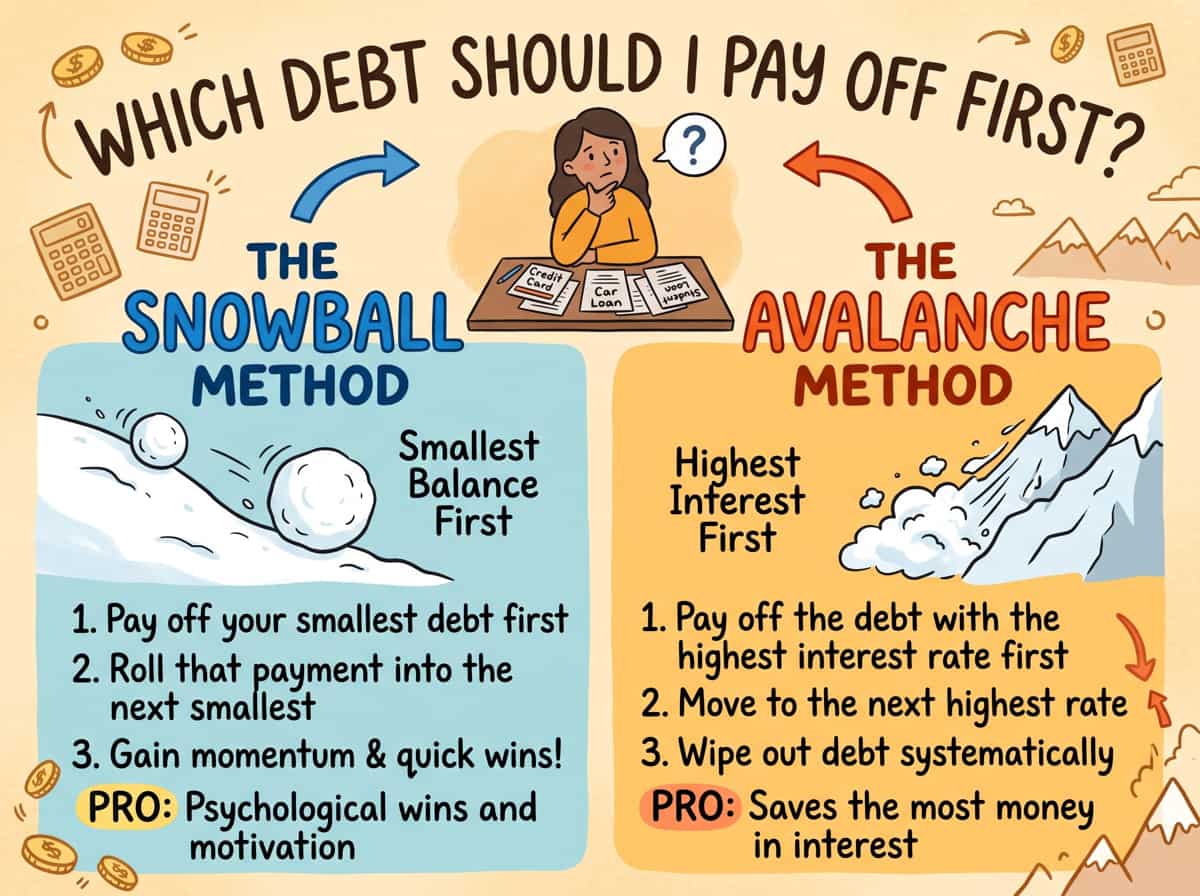
The Debt Avalanche (The Mathematical Choice): You list all your debts by interest rate and pay as much as possible toward the one with the highest APR first (usually a credit card), while making minimum payments on the rest.
Best for: Analytical thinkers who want to pay the least amount of interest over time.
The Debt Snowball (The Psychological Choice): You pay off your smallest total balance first, regardless of interest rate. Once that is gone, you move that payment to the next smallest.
Best for: Those who need "quick wins" to stay motivated. In many South Asian households where financial stress is felt collectively, seeing a debt disappear entirely can provide a much-needed morale boost for the whole family.
Debt Settlement: A Path for Hardship
Debt settlement involves negotiating with creditors to pay a lump sum that is less than the total amount you owe. This is typically reserved for those in significant financial hardship who can no longer meet their minimum payments.
The Pros: It can significantly reduce the principal balance of your debt.
The Cons: It will severely damage your credit score for several years and may have tax implications (the IRS often views "forgiven" debt as taxable income). For those on H-1B or L-1 visas, be aware that a drastically lowered credit score can make it difficult to pass background checks for new employment or lease agreements.
The Remittance Balance: Managing Global Obligations
A unique challenge for the South Asian diaspora is the "Double Debt" burden: the pressure to pay off U.S. credit cards while simultaneously sending money (remittances) back home for parents’ retirement, siblings’ education, or community projects.
Strategic Tip: To manage this, treat your remittances as a fixed "expense" in your budget, but prioritize high-interest U.S. debt first. Mathematically, it is often better to send a slightly smaller amount home for 12 months while aggressively killing a 25% APR credit card. Once that U.S. debt is gone, the money previously spent on interest can be redirected back to your family in India, Pakistan, or Bangladesh, providing them with even greater support in the long run.
By choosing a strategy whether it’s the efficiency of the Avalanche or the simplified structure of a Consolidation Loan you move from being reactive to being proactive. This shift is the hallmark of sophisticated financial management in the American system.
Expert Advice: When to Seek Professional Help
Recognizing when unsecured debt has shifted from a manageable tool to a "debt spiral" is the most important step in protecting your family’s financial future. A debt spiral occurs when you are no longer paying down the principal balance, but are instead borrowing new money just to service the interest on old loans.
Signs You Are in a Debt Spiral
The Minimum Payment Trap: You only pay the minimum on credit cards, meaning it will take 20+ years to clear the balance.
Robbing Peter to Pay Paul: You take cash advances from one card to pay the bill of another.
Using Credit for Essentials: Relying on credit cards for groceries, rent, or remittances because your "take-home" pay is consumed by debt installments.
Maxed-Out Limits: Your credit utilization is consistently above 90%, causing your FICO score to plummet.
Choosing the Right Path: Non-Profit Credit Counseling
If you see these signs, seek an accredited non-profit credit counseling agency. Reputable organizations, such as those affiliated with the National Foundation for Credit Counseling (NFCC), provide holistic financial management. They can enroll you in a Debt Management Plan (DMP), where they negotiate with your creditors to lower interest rates and consolidate your debt into one affordable monthly payment without the drastic credit damage caused by settlement.
Warning: Avoiding "Quick-Fix" Scams
In the South Asian community, predatory companies often advertise "guaranteed debt elimination" or "government-approved relief" in native languages to gain trust. Be extremely wary of any service that:
Demands Upfront Fees: It is illegal for debt settlement companies to charge fees before they settle a debt.
Tells You to Stop Communicating with Creditors: This often leads to lawsuits and wage garnishment.
Guarantees Results: No one can guarantee a creditor will "forgive" your debt.
As a financial management expert, I recommend verifying any agency via the U.S. Department of Justice list of approved credit counselors to ensure you are receiving legitimate help that protects your legal standing and credit health.
Conclusion: Taking Control of Your Financial Future
Navigating the complexities of unsecured debt is a fundamental part of mastering the American financial system. For the South Asian community, this journey is not just about numbers; it is about balancing the drive for upward mobility in the U.S. with the cultural values of family support and community integrity. By understanding that unsecured debt, whether in the form of credit cards, personal loans, or medical bills, is a tool that requires disciplined management, you can prevent high-interest rates from eroding your hard-earned wealth.
The key takeaways are clear: prioritize high-interest APR balances, maintain a healthy Debt-to-Income ratio to protect your future home-buying power, and choose debt relief strategies that align with your psychological and professional goals. Whether you use the "Avalanche" method to save on interest or a consolidation loan to simplify your life, the goal is the same financial sovereignty.
Living in the USA offers incredible opportunities for wealth creation, but it requires a new type of financial literacy. Taking control of your debt today ensures that you are not just working for your money, but that your money is working for you and your family across generations. You have the tools and the knowledge; now is the time to build your secure financial future.
Ready to Get Started?
Get a free consultation with a certified debt consultant to see if debt settlement is right for you.
Get Free ConsultationAbout the Author
Bhupinder Bajwa
.
Related Articles
How to Use a Debt Validation Letter to Protect Yourself
10 min read
Which Debt Should I Pay Off First?
10 min read
How to Settle SBA Loan Debt: Complete Guide to Debt Relief Options
11 min read
Does Debt Settlement Work? What to Know Before You Start
11 min read
What to Know Before Getting a Debt Consolidation Loan
10 min read
Low Income Debt Relief Programs And Options
14 min read
Get Your Free Consultation
Speak with a certified debt consultant to explore your options.
Start NowNo obligation • Free consultation