
Discover What Is A Confession Of Judgment: Essential Insights You Need To Know
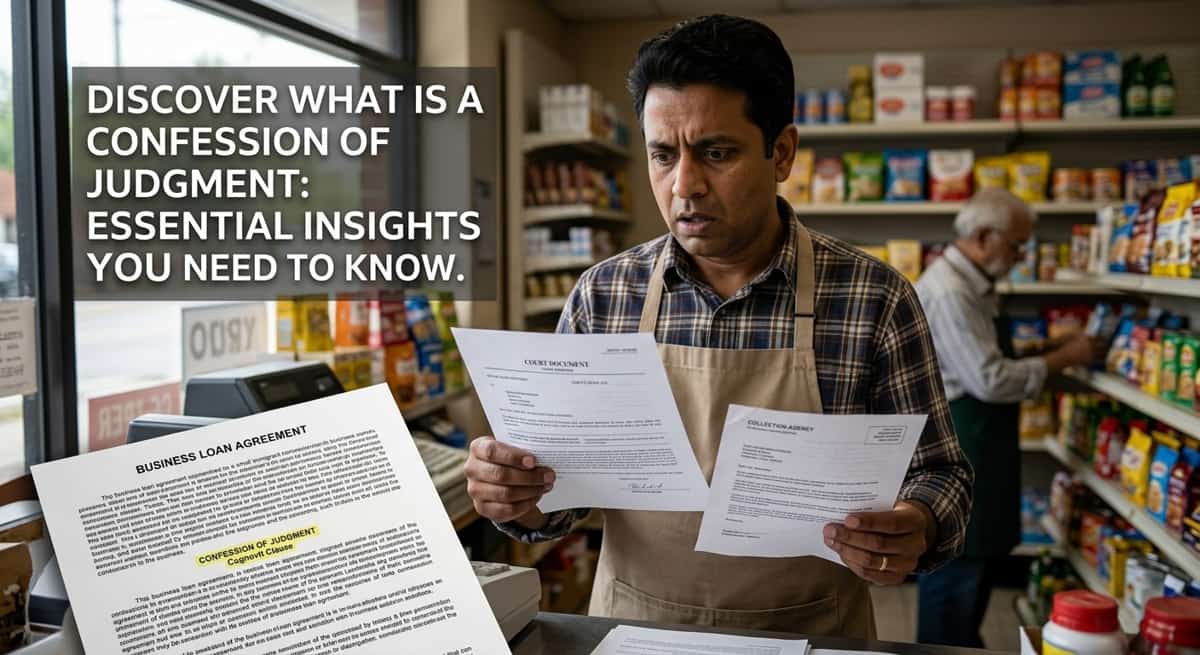
Imagine your family runs a small grocery store, gas station, or restaurant. Business is slow one month, so you take out a quick loan to cover payroll. A few months later, a letter arrives saying a court has already ruled against you for an amount you didn't even know was owed, in a lawsuit you never got to attend. That is exactly what a confession of judgment can do, and it happens more often than most people realize, especially to immigrant families who run small businesses on tight margins.
A confession of judgment is a clause hidden inside a loan or lease agreement where you agree, in advance, to let the lender win a court case against you without a trial, without a hearing, and often without you even knowing the case was filed.
What Is a Confession of Judgment?
A confession of judgment is a clause in a loan, lease, or business financing contract where you agree ahead of time to let the lender go straight to a court judgment against you if you fall behind on payments skipping the part where you get to explain your side.
Normally, if someone wants to sue you for money you owe, they have to go to court, prove their case, and give you a chance to respond. A confession of judgment flips that entirely. By signing it, you're basically saying, "If I don't pay, you don't need to prove anything in court, just tell the judge I already agreed I owe this, and the judge will sign off."
In legal terms, the company suing you is called the judgment creditor, and you're the judgment debtor. This kind of clause has an old-fashioned name too a cognovit clause or warrant of attorney because it technically gives the lender's lawyer the authority to appear in court on your behalf and "confess" that you owe the debt, even though you're not there and never agreed to what's being said in that specific moment.
The scary part isn't the debt itself. It's that you lose your normal right to defend yourself, sometimes called your "day in court" the moment you sign.
How Does a Confession of Judgment Work?
Here's what typically happens, step by step, from the day you sign the paperwork to the day a judgment shows up on your record.
Step 1 – The Clause Is Signed With the Loan or Contract
The confession of judgment clause is usually buried in the fine print of a loan agreement, lease, or financing contract often on one of the last pages, right near where you sign. Most people don't notice it, especially if they're reading quickly or the loan was recommended by someone they trust.
Step 2 – The Borrower Misses a Payment or Defaults
Once you fall behind even by a small amount, or even if there's a dispute about what you actually owe the lender now has the right to act on that clause.
Step 3 – The Creditor Files the Confession With the Court
Instead of filing a lawsuit and waiting to prove their case, the lender simply files the signed confession with a court. Because you already agreed to it in writing, many courts will accept it almost automatically.
Step 4 – The Court Enters Judgment Often Without Notice
This is the step that catches families off guard. A judgment can be entered against you without a hearing, and sometimes without you being notified until after it's already final. Once that judgment exists, the lender can move to freeze your bank account, place a lien on your property, or start garnishing wages all backed by a real court order.
Why Are Confessions of Judgment Common in Merchant Cash Advances (MCAs)?
If you own a small business, a restaurant, a convenience store, a gas station, a trucking company, a salon there's a good chance you've been offered a Merchant Cash Advance, or MCA, at some point. MCAs are marketed as fast, easy funding: little paperwork, quick approval, no need for years of US credit history or a traditional bank relationship. For a lot of South Asian entrepreneurs who are still building credit in this country, or whose businesses are funded with family savings rather than bank loans, MCAs can feel like the only realistic option.
That convenience comes at a cost. MCA companies know that if a borrower stops paying, a normal lawsuit can take months and isn't guaranteed to win. A confession of judgment clause solves that problem for them: it lets them collect fast, without having to prove anything in a courtroom.
For a family business, this isn't just a legal technicality. When business cash flow drops, understanding debt consolidation and debt relief options can prevent you from taking on predatory loans where family savings or homes are put on the line.
A single missed payment during a slow season something that happens to almost every small business can trigger sudden judgments. Enrolling in a tailored debt relief program can help restructure overwhelming liabilities before creditors resort to extreme enforcement tactics.
Is a Confession of Judgment Legal in Your State?
Whether this clause can actually be enforced against you depends heavily on where you live and where the contract was signed. Laws here have changed a lot in recent years, especially after MCA companies were criticized for using confession of judgment clauses aggressively against small business owners across state lines.
Broadly, states fall into a few categories:
Category | What It Means |
Banned for consumer debt | Many states no longer allow confession of judgment clauses in consumer loans (personal loans, credit cards, etc.), though business loans can be treated differently. |
Restricted or reformed | Some states, New York is the best-known example, tightened their rules after years of being a hotspot for MCA-related confession of judgment filings, especially against out-of-state small business owners. |
Still allowed with conditions | A number of states still permit these clauses, sometimes only for business debt, sometimes with specific requirements about how the clause must be worded. |
Because these laws keep changing and can be different for personal debt versus business debt, don't assume you're safe or stuck based on what you've heard secondhand. Look up your state's current rules or, better yet, ask a licensed attorney to check the specific agreement you signed.
Confession of Judgment vs. Other Debt & Legal Terms
It's easy to confuse a confession of judgment with other scary-sounding legal terms. Here's a quick comparison.
Term | What It Actually Is |
Confession of Judgment | You agree in advance to let the creditor win a court judgment without a trial. |
Judgment Lien | A claim placed on your property (like your home or business) after a court has already ruled you owe money can happen with or without a confession of judgment. |
Wage Garnishment Order | A court order that lets a creditor take a portion of your paycheck to repay a debt is usually a result of a judgment, not a separate process. |
Regular Debt Collection Lawsuit | The normal legal process, where you're notified, can respond, and the creditor has to prove you owe the money before a judge rules. |
The key difference to remember: with a confession of judgment, you gave up your chance to fight back before anything even went wrong.
Warning Signs: How to Know If You've Signed a Confession of Judgment Clause
Many people don't realize they've signed one of these clauses until a judgment already exists. Here's what to look for if you're reviewing a contract yours or a relative's:
Look near the signature page. These clauses are rarely on page one; they're often tucked in near the end, in dense paragraphs.
Watch for the words "confession of judgment," "cognovit," or "warrant of attorney."
Be cautious of phrases like "waive the right to a hearing," "waive notice," or "consent to judgment."
If the document is long, dense, and written entirely in complex legal English, don't sign it just because a broker, salesperson, or even a well-meaning family friend says it's "standard."
If English isn't your first language, or the paperwork is confusing even in English, it's worth pausing to get help from a bilingual financial advisor, a community organization, or an attorney before you sign anything.
What to Do If a Confession of Judgment Has Been Filed Against You
If you've just found out a judgment has already been entered against you, the most important thing is to act quickly. Here's where to start:
Confirm the judgment is real and check the details. Court records are usually public; you or an attorney can look up the case to see exactly what was filed and when.
Move fast deadlines are short. Courts often give you a limited window to challenge, or "vacate," a judgment. Waiting even a few weeks can close that door.
Reach out to a debt attorney or legal aid clinic. Reach out to a debt attorney, explore professional debt settlement solutions, or contact a legal aid clinic. Many cities have free or low-cost legal aid organizations, and specialized debt resolution advocates can help you navigate aggressive creditor demands.
Ask about vacating the judgment. If you weren't properly notified, if the clause was worded improperly, or if the lender didn't follow the rules for your state, a judge may be willing to undo the judgment.
Learn your rights around garnishment and asset protection. Even after a judgment, there are limits on how much of your paycheck can be taken and, in some cases, protections for certain assets.
This is general guidance, not legal advice. Every state and every contract is different, so the right next step really does depend on your specific situation.
How to Protect Yourself Before Signing Any Loan or Lease Agreement
The best time to deal with a confession of judgment clause is before you ever sign anything. A few habits can make a real difference:
Read every single page, not just the summary a salesperson gives you. If it's long, take it home and read it slowly, or ask for time.
Get it translated or explained if needed. Never rely only on a verbal explanation from a broker, lender, or even a trusted friend asking to see the actual words in the contract.
Ask directly: "Does this agreement include a confession of judgment or cognovit clause?" A legitimate lender should be able to answer this clearly.
Compare your options. SBA loans, community development financial institutions (CDFIs), and immigrant-focused credit unions often offer more borrower-friendly terms than a fast MCA even if approval takes a little longer.
Build your US credit history over time. The stronger your credit profile, the less likely you'll need to rely on high-risk, fast-cash financing that tends to carry these clauses.
Key Takeaways
A confession of judgment is a clause that lets a lender win a court judgment against you without a trial, something that shows up far too often in fast financing options like merchant cash advances used by immigrant-owned small businesses. Whether it's enforceable depends on your state, and the rules are still evolving. If you've already been hit with one, the most important thing is to act fast and get help from a qualified attorney or legal aid resource. And if you haven't signed anything yet, slow down, read every page, ask direct questions, and explore safer financing options before committing your family's savings or business to a single signature.
Ready to Get Started?
Get a free consultation with a certified debt consultant to see if debt settlement is right for you.
Get Free ConsultationAbout the Author
Bhupinder Bajwa
.
Get Your Free Consultation
Speak with a certified debt consultant to explore your options.
Start NowNo obligation • Free consultation